




Third-Party Maintenance Growing
Third-party logistics companies set a template in the transportation industry that has guided the rise of third-party maintenance providers, according to Larry Chaplin, president of Master Fleet LLC, at TMW's annual user conference.

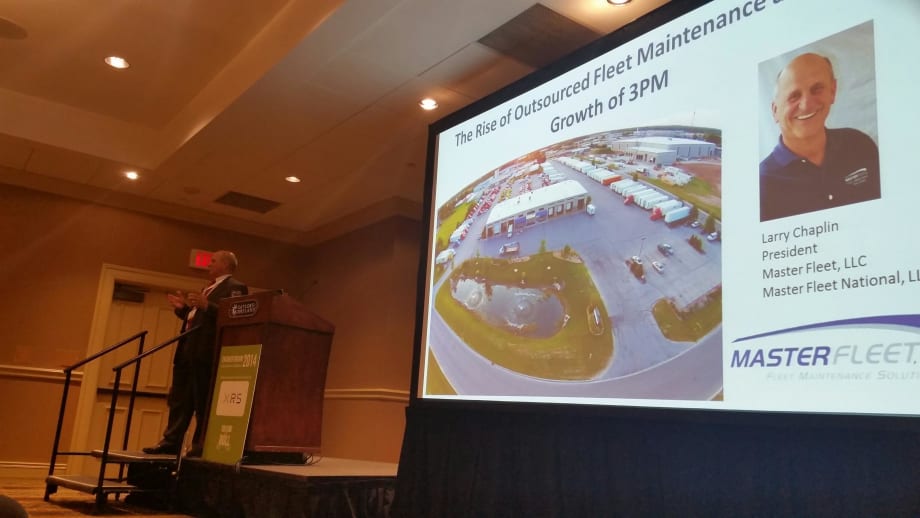
Larry Chaplin speaks at TMW's Transforum on the rise of outsourced maintenance. Photo: Master Fleet
Larry Chaplin speaks at TMW's Transforum on the rise of outsourced maintenance.Photo: Master Fleet
NASHVILLE -- Third-party logistics companies set a template in the transportation industry that has guided the rise of third party maintenance providers, according to Larry Chaplin, president of Master Fleet LLC, a Wisconsin-based maintenance provider.
Speaking at a session on outsourced maintenance at TMW Systems’ Transforum user conference here on Sept. 23, Chaplin noted that 3PLs were able to succeed because of they were able to meet the needs of both shippers and carriers and to do so more efficiently than either entity could on its own.
Chaplin said third-party logistic providers were able to drive billions of dollars in costs out of the supply chain because of five key reasons:
They invested in superior technology.
They recruited and hired superior, experienced supply chain experts.
They were able to aggregate volume by using technology to take thousands of loads, put them in a basket and find the right carriers for each one.
3PLs have developed best practices and benchmarking because they were able to take the best solutions and practices from the shippers and carriers they work with and put them to work.
And finally, they “stuck to the knitting” and focused on their core competencies.
They were able to cut supply chain costs because they eliminated waste within the supply chain. Shippers did OK, carriers did OK, it was “truly a win-win-win solution,” he said.
There are similar forces at work in the outsourced fleet maintenance sector now, he said. Building a maintenance facility is a huge cost for a fleet, and the question has always been, where to put them, he noted. Should they be at the terminal, along a company’s major lanes, or somewhere else?

But there have been huge changes in trucking in recent years. Freight lanes change, there’s more intermodal freight, retailers and manufacturers are moving their distribution centers closer to population centers.
“There are constant changes where you need maintenance support as the distribution patterns change,” he said.
These changes mean fleets need flexibility in where they have their trucks serviced, and outsourcing that maintenance to third-party providers gives them that flexibility. Instead of spending millions on a facility that may not meet their needs down the road, fleets are instead moving those costs off their balance sheet onto the third-party service provider’s balance sheet, he said.
In this scenario, carriers are essentially sharing the cost of shops. “If they don’t need maintenance [today], they don’t pay. If the next day they have 10 trucks show up, there are people there to handle them,” he said. Fleets have taken a big fixed cost (their maintenance shop) and made it a flexible cost.
As with 3PLs, third-party maintenance providers enjoy volume efficiencies. They can spread their overhead around. They can use technology to make sure there is a demand and capacity match. Outside shops have extended hours of coverage.
Many third-party logistics providers have grown into huge businesses, and the same is true of maintenance providers, Chaplin said, with some companies operating hundreds of service locations. As with drivers, there is also a shortage of trained truck mechanics. While that is a problem for all types of maintenance operations, Chaplin said small shops have a harder time getting people, as the larger outfits are going straight to the tech schools and getting the “cream of the crop” by offering internships, tools and other incentives to go to work for them when techs finish their training. And the larger operations have developed a career path for the young people joining their firms.
Other advantages the larger operations have include being able to afford the various diagnostic tools required to work on trucks from different OEMs and the ability to invest in maintenance management technologies and software systems. “In a small shop, they can’t do that,” he said.
Large providers can work on their customers' trucks when and where needed, whether that means using mobile units to work on them in a customer’s yard or working on the vehicles at night and weekends. And they provide web access so their customers can check on the status of their vehicles at any time and from anywhere.
More Aftermarket

What Three Fleets Are Doing Differently When Buying Truck Parts in 2026
With freight improving but costs still climbing, fleet maintenance executives explain how they're balancing price, quality, and supplier relationships.
Read More →
ConMet Expands Aftermarket Brake Drum Lineup With TruCast
A new heavy-duty truck brake drum option in the aftermarket gives customers more flexibility within the ConMet product family.
Read More →
Phillips Opens High-Tech Distribution Center for Faster Parts Delivery
Phillips Industries’ new Cincinnati-area distribution center is now shipping aftermarket trucking parts nationwide, aiming to speed up delivery times for customers.
Read More →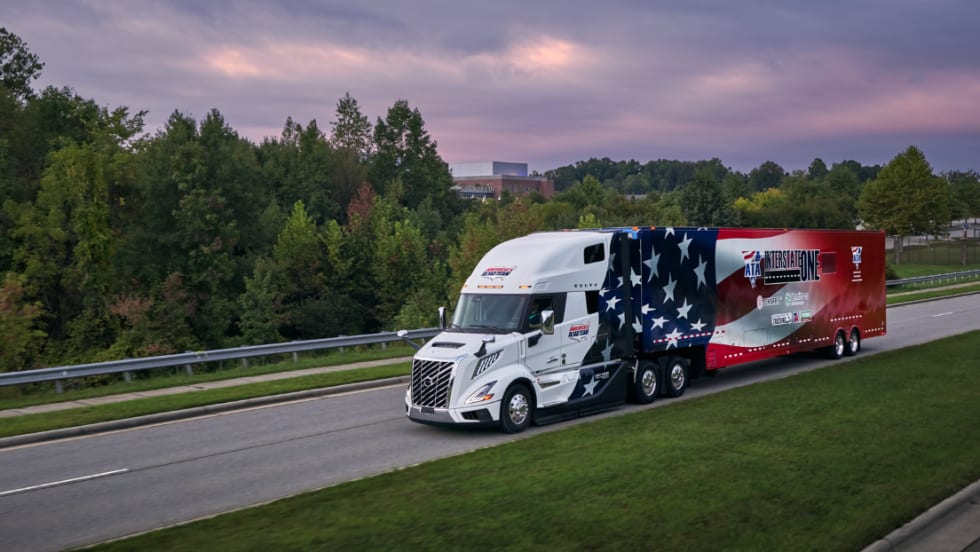
Volvo to Sponsor America’s Road Team for 2025
Volvo Trucks announced that it is extending its exclusive sponsorship of America’s Road Team for 2025.
Read More →
Webb to Start Taking Orders for UltraSet Pre-Adjusted Wheel Hubs
Webb, which recently acquired the Stemco Trifecta pre-adjusted hub program, will soon start taking orders for its replacement pre-assembled hub, the UltraSet.
Read More →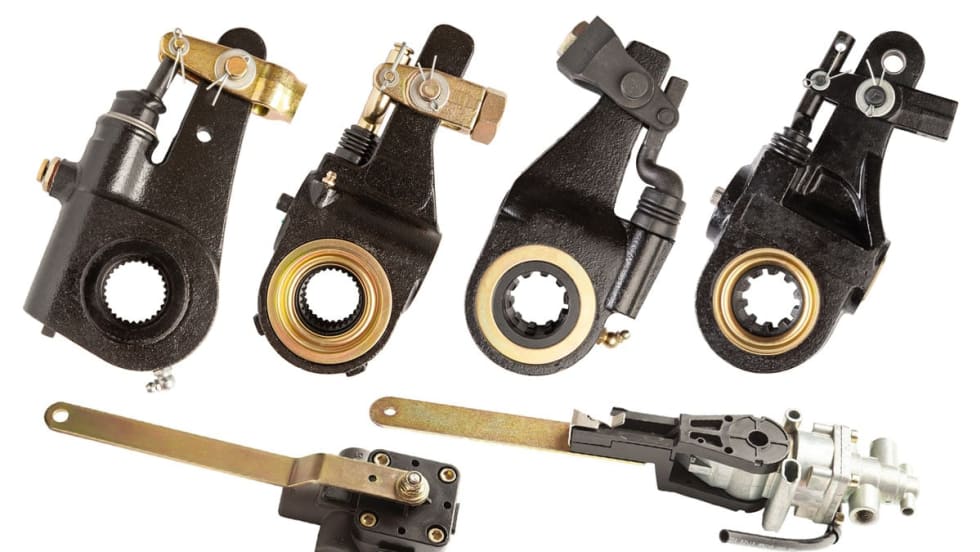
All-Makes Automatic Brake Adjusters, Ride Height Control Valves from Midland
SAF-Holland has added automatic brake adjusters and ride height control valves to its Midland All-Makes Program.
Read More →
ZF Aftermarket Expands [pro]Academy Training
ZF Aftermarket said it is expanding its ZF [pro]Academy training and will be adding 40 new modules this year.
Read More →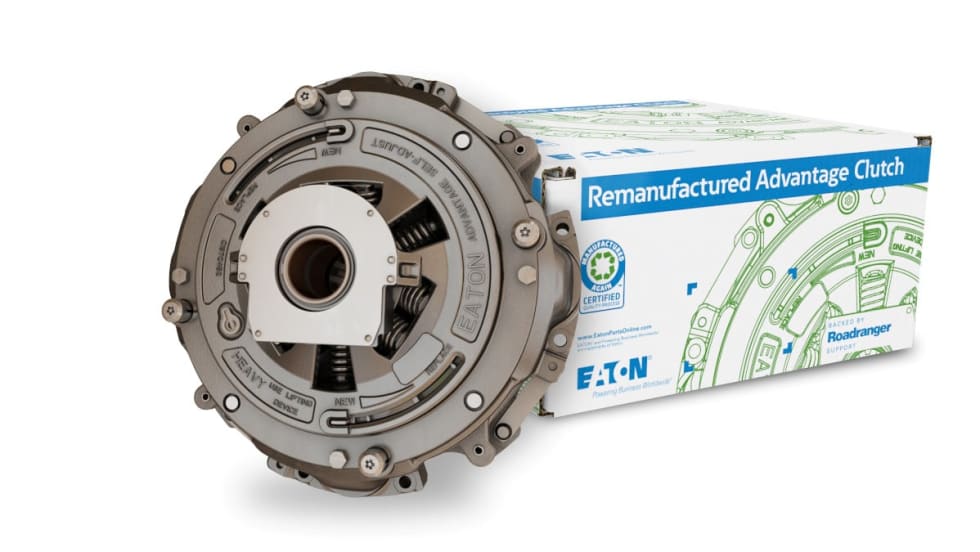
Eaton Adds Remanufactured Advantage Line of Clutches
Eaton has added its Advantage clutches to its remanufactured product line. The clutches feature a unique strap drive intermediate plate designed to allow customers to choose the latest OE specification
Read More →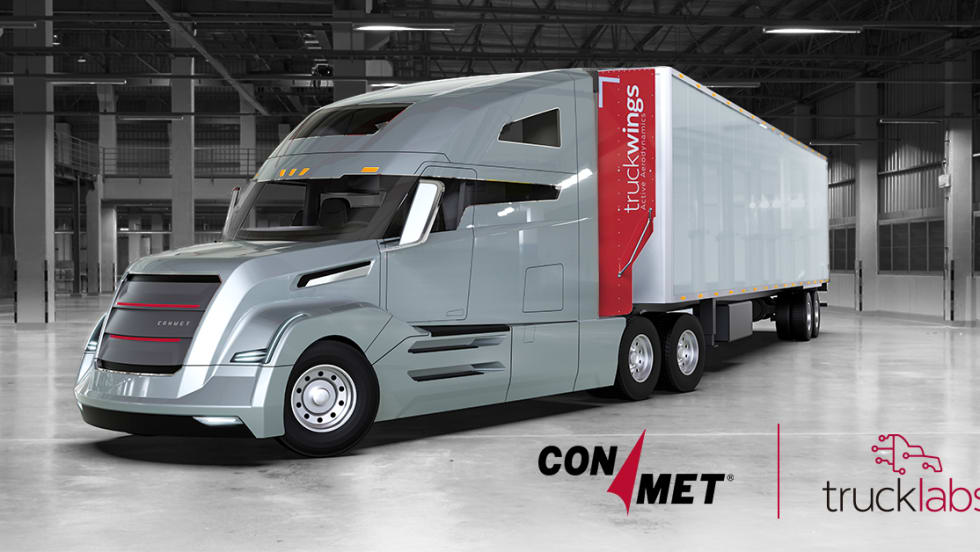
ConMet Acquires TruckLabs, the Creator of TruckWings
Commercial truck and trailer parts provider ConMet acquired TruckLabs, the company that created TruckWings, an aerodynamic device that attaches to truck cabs and deploys to close the gap between truck and trailer. TruckLabs now operates as a subsidiary of ConMet.
Read More →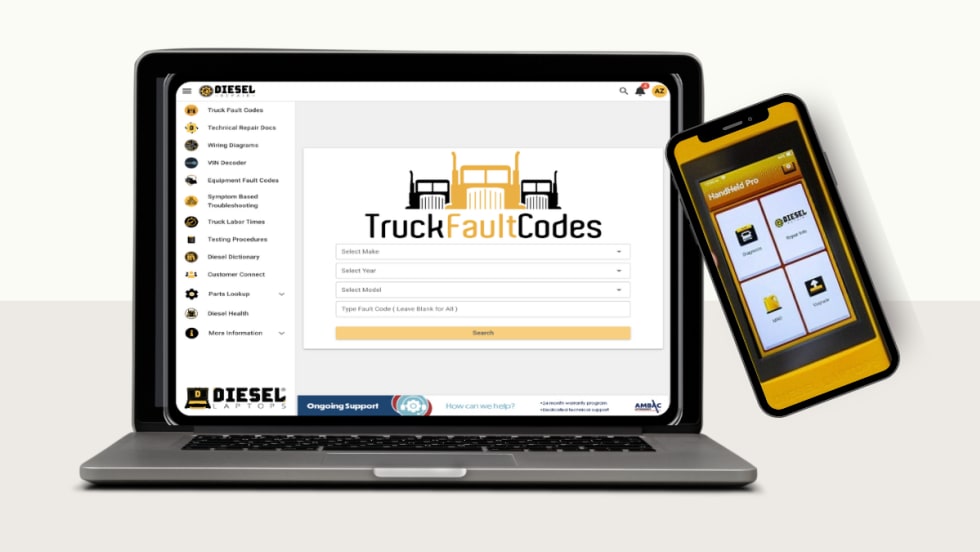
Diesel Laptops Releases Fault-Code-to-Part-Number Tool
Diesel Laptops said its Truck Fault Codes allows users to input a fault code and immediately identify and order the parts needed to complete repair work.
Read More →