




Related: Possible Photo of Tesla’s Electric Truck Leaks on Reddit
Tesla Delays Electric Truck Launch Again
Tesla founder Elon Musk said the company was pushing back the launch of its electric truck in order to help stabilize the power grid in Puerto Rico in the wake of Hurricane Irma.
by Staff
October 9, 2017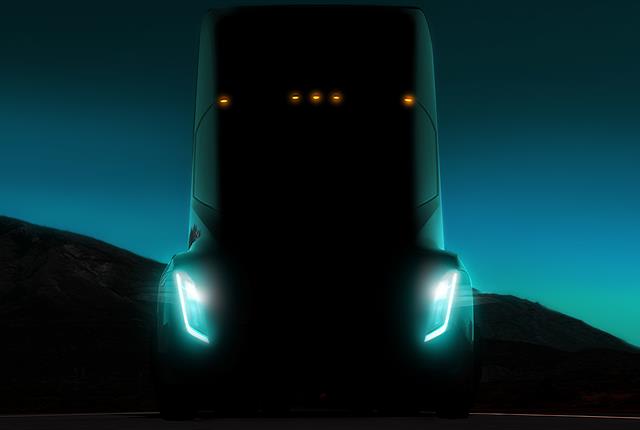
Telsa has opted to move the launch of its electric truck back two weeks in order to focus on fixing Model 3 production issues and assist with power grid repair efforts in Puerto Rico. Image via Tesla
2 min to read
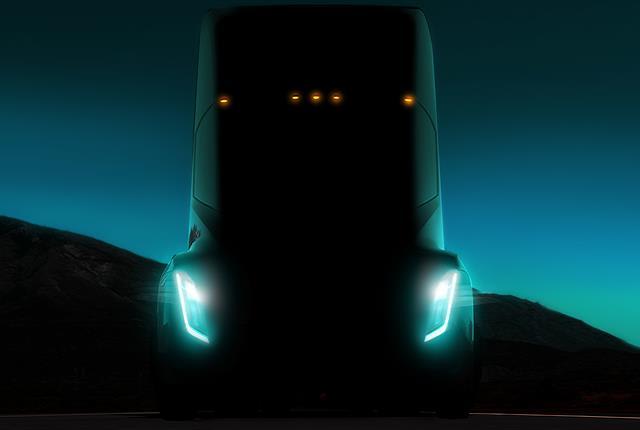
Telsa has opted to move the launch of its electric truck back two weeks in order to focus on fixing Model 3 production issues and assist with power grid repair efforts in Puerto Rico.Image via Tesla
Tesla chief executive officer Elon Musk announced on Twitter late last week that the company was pushing back the launch of its new electric truck from Oct. 26 to Nov. 16. as it focuses on meeting production demands for its Model 3 sedan and assisting with recovery efforts in Puerto Rico in the aftermath of Hurricane Irma, according to a report by
The delay was caused by Tesla focusing on meeting production demands for its Model 3 sedan and assisting with recovery efforts in Puerto Rico in the aftermath of Hurricane Irma, according to a report by Electrek, a magazine covering the North American electric vehicle market.
Tesla is apparently working on correcting production “bottlenecks” that held Model 3 production to only 260 units in September bottlenecks”. Additionally, Musk said on Twitter that Tesla will “increase battery production for Puerto Rico & other affected areas.”
Electrek also reported that Musk and the governor of Puerto Rico, Ricardo Rossello have talked about ways for Tesla Energy to help rebuild the power grid destroyed by the two hurricanes that recently hit the Caribbean. Per reports, Musk was talking about a scalable energy storage and solar power solution with the governor on Twitter.
Tesla Semi unveil now Nov 16. Diverting resources to fix Model 3 bottlenecks & increase battery production for Puerto Rico & other affected areas.
— Elon Musk (@elonmusk) October 6, 2017
In an official statement released by Tesla, the company offered to refund any airfares already purchased for the Oct. 26 event and said, “The first Tesla Truck prototype is completed, but we’re going to push the unveiling event to Nov. 16 so we can devote resources to fixing Model 3 bottlenecks and increasing battery production for Puerto Rico and other affected areas.
"If this delay causes any non-refundable or non-changeable travel expenses, please send invoices for travel booked prior to this communication to ReferralSupport@tesla.com and we’ll take care of those for you. We look forward to hosting you in Hawthorne on Nov. 16.”
More Fuel Smarts

How Volvo Updated Its D13 for EPA 2027 [Watch]
Volvo’s updated D13 promises lower emissions without sacrificing performance or fuel economy. Take a closer look at what changed inside the engine in this HDT Spotlight video.
Read More →
Diesel Price Spike Shortens Payback for Natural Gas Trucks, Report Says
Energy Vision estimates fleets could recover the higher purchase price of an RNG-fueled Class 8 tractor in 1.3 to 2.8 years under current fuel-price scenarios.
Read More →
Calstart Becomes Catalyst Mobility, Reflecting Broader Focus
Calstart is now Catalyst Mobility, reflecting the nonprofit’s growing national role in clean transportation, including zero-emission trucks, infrastructure and incentive programs.
Read More →

Record Diesel Prices Squeeze Trucking Fleets
Average U.S. diesel prices have climbed to nearly $6 a gallon, surpassing the 2022 record as tight refinery capacity and Middle East disruptions keep fuel costs elevated.
Read More →
Sponsored•September 9, 2026
How Fuel Delivery Shapes Engine Performance
Fuel delivery depends on more than what happens at the injector. For fleet, maintenance and technical professionals, looking at the full path from pump to injector can provide useful context for understanding engine performance.
Read More →
East Coast Port Launches $45M Electric Truck Push
The Port Authority of New York and New Jersey announced millions in incentives for zero-emission drayage trucks, yard tractors, and new charging hubs near the port.
Read More →
California Bill Could Shed Light on Electric Truck Prices
Why do battery-electric Class 8 trucks remain so expensive? A California bill headed to Gov. Gavin Newsom would give fleets and state agencies more visibility into what manufacturers charge.
Read More →
Detroit Opens Orders for EPA 2027 Engines
Detroit isn’t starting from scratch to meet EPA 2027 diesel emissions standards. Its Gen 6 DD13 and DD15 engines keep much of today’s platform while updating the fuel and aftertreatment systems.
Read More →
Zero-Emission Truck Corridor Planned for West Coast
California, Oregon, Washington, British Columbia and Baja California are coordinating plans for truck charging and hydrogen fueling from Canada to Mexico.
Read More →
A Closer Look at Kenworth’s Electric T880E Vocational Truck [Video]
Learn more about Kenworth's T880E battery-electric vocational truck at the Paccar Technical Center, including its range, applications, upfitting considerations, and PTO options, in this HDT Spotlight video.
Read More →