




Survey Confirms Tight Capacity
Trucking capacity is indeed tight, according to the third-quarter 2014 Fleet Sentiment Report survey conducted in July by CK Commercial Vehicle Research, and carriers are trying many methods to improve productivity.

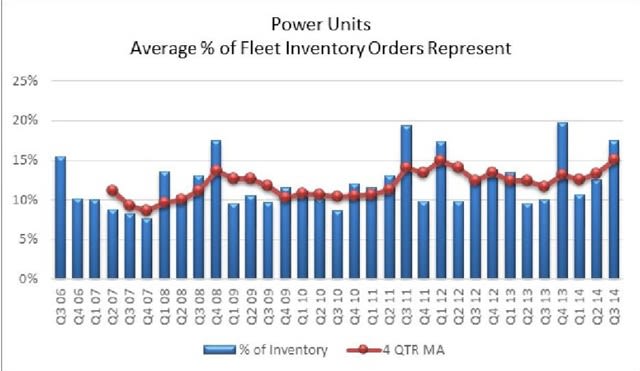
Trucking capacity is indeed tight, according to the third-quarter 2014 Fleet Sentiment Report survey conducted in July by CK Commercial Vehicle Research.
Reported vehicle utilization rates along with responses to questions regarding a fleet’s capacity vs. demand ratio, indicate that there is little available capacity for new freight among the survey participants, explain the researchers. Capacity is primarily constrained by the inability of fleets to grow their driver pool and many reported they would add equipment if they could hire qualified drivers.
CKCVR’s Q3 2014 FSR Buying Index fell to a reading of 83.3, primarily impacted by a smaller percentage of fleets planning to purchase equipment in the next three months. This index measures the number of fleets planning to buy trucks and trailers as well as the expected volume of those orders. However, the unit volume measure of the planned orders was positive in quarter over quarter and year over year comparisons.
Increasing number of fleets adding some capacity but most units are still for replacement.
Survey respondents reported good business conditions overall.
Because of the tightening capacity environment, a number of survey questions centered around increasing productivity – what the fleets are doing themselves and what they would like manufacturers to do to help them. There were some general categories into which most of the answers fit:
Operations/logistics (less deadhead, route optimization, etc.) 37%
Equipment (higher use of day cabs/slip seat operations, increasing cargo capacity, etc.) 24%
Driver (paying more, assessing hours of service to increase on-duty time, etc.) 18%
Maintenance improvement (such as doing more maintenance in-house so trucks don't sit at dealership) 11%
Add technology (such as GPS, trailer tracking) 5%
Add freight 5%
The Q3 Fleet Sentiment Report includes additional feedback from fleets on how they are improving productivity in the current tight environment.
CK Commercial Vehicle Research is a business of CK Marketing & Communications located in Columbus, Ohio. CKCVR surveys fleet advisors representing a mix of large, medium and small for-hire, private and government fleet operations.
More Drivers

Truck Drivers Need More Than Another Alert
Fleets have more visibility into truck health, safety events, and driver activity than ever. The next challenge is turning all that information into useful guidance for the person who has to decide what to do next.
Read More →
FMCSA Removes 110 Truck Driver Training Schools from Certified ELDT List
Federal regulators also are targeting more than 160 additional training providers and launching a nationwide audit of third-party CDL skills testers as part of a broader crackdown on trucking fraud.
Read More →
Hours of Service Pilot Programs: FMCSA Readies for 2027 Rollout
Two pilot programs could eventually reshape hours-of-service rules, giving truck drivers options to pause their 14-hour clock or use longer split sleeper rest periods.
Read More →
Medical Cards, English Proficiency Reshape Roadcheck Violations
Medical-card violations jumped to the top of the driver out-of-service list during CVSA’s 2026 International Roadcheck, while English-language proficiency violations appeared among the leading violations for the first time.
Read More →
Driver Trust Can Make or Break the Success of Fleet Safety Technology
New Teletrac Navman research suggests that onboarding, transparency about driver data, and positive feedback can play a significant role in how commercial drivers respond to safety and coaching technology.
Read More →
EEOC Sues KLLM Over Alleged Sex Discrimination in Driver Training
KLLM is facing a federal sex-discrimination lawsuit over policies the EEOC alleges put female truck driver trainees at a disadvantage.
Read More →
FMCSA Moves to Codify English Language Requirements for Commercial Drivers
By changing regulations on English-language proficiency requirements for commercial drivers, rather than relying on a guidance memo, the FMCSA said future administrations won't be able to walk back the Trump administration's stricter enforcement with just a memo.
Read More →
Drivers Put Western Star Trucks to the Test at Star Nation Experience
Watch to get an inside look at the Western Star trucks, technology, and community behind the Star Nation Experience 2026!
Read More →
Trump Administration Looks to Put More Veterans Behind the Wheel
The Freedom Haulers program pulls together existing and expanded programs at several federal agencies to recruit veterans to drive commercial heavy-duty trucks and cut the red tape for them to get a CDL, training, and employment.
Read More →
Putting Mack’s Command Steer to the Test
A test drive of Mack’s Command Steer active steering system evaluates how it can make truck driving easier and less tiring.
Read More →