




Study: Nation’s Road Conditions Show Slight Improvement
As Americans hit the road for the Fourth of July holiday, they’ll be driving on slightly smoother roads, crossing fewer deficient bridges and spending less time stuck in traffic jams, according to think tank the Reason Foundation and its new Annual Highway Report.
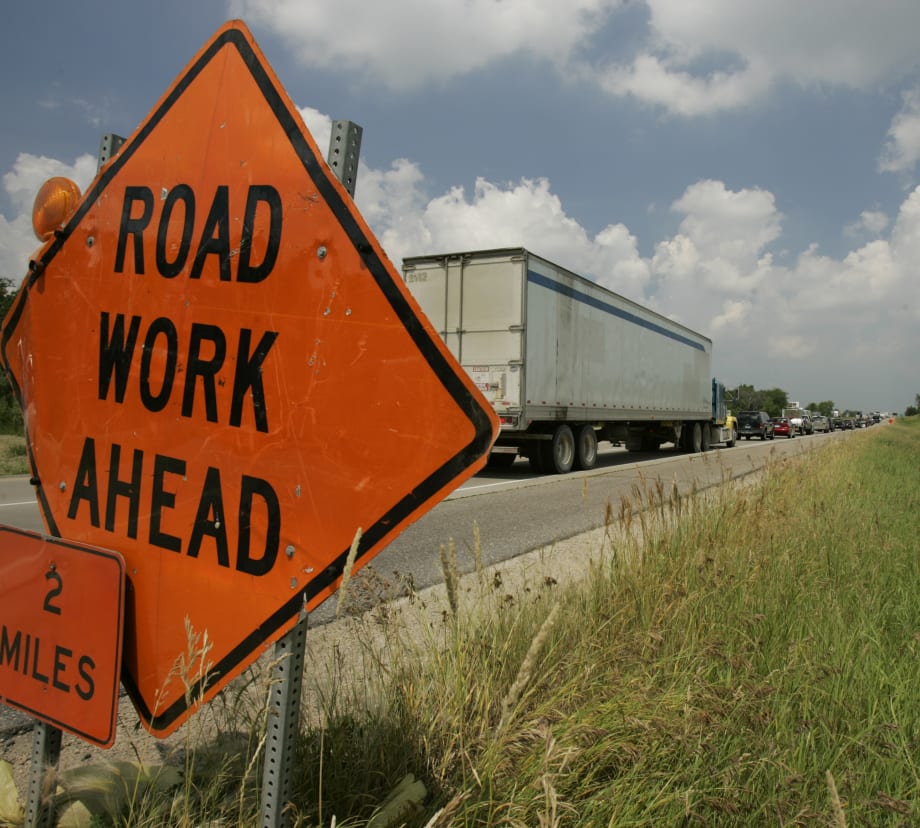

As Americans hit the road for the Fourth of July holiday, they’ll be driving on slightly smoother roads, crossing fewer deficient bridges and spending less time stuck in traffic jams according to right/libertarian leaning think tank the Reason Foundation and its new Annual Highway Report.
It found that nationwide there was small progress in every category except for pavement condition on rural arterial roads. These improvements were achieved at a time when per-mile expenditures dropped slightly. Despite receiving stimulus funding from the federal government in 2009, spending on state roads decreased slightly, by 0.6%, in 2009 compared to 2008.
“It’s hard to believe it when you hit a pothole or see a bridge in Washington collapse, but the nation’s roads have been getting better,” said David Hartgen, author of the study and emeritus transportation professor at the University of North Carolina at Charlotte. “There are still several states struggling and plenty of problem areas but progress continues to be made.”
Among the states plagued with problems are New Jersey and California. New Jersey spends $1.2 million per mile on its state-controlled roads. That’s nearly twice as much as the $679,000 per mile that the next biggest spending state, California, spends. North Carolina, home to the nation’s largest state highway system, spends $44,000 per mile on its roads. South Carolina spends just $31,000, the lowest per mile rate in the nation. (A complete of state rankings is below)
The study measures the condition and cost-effectiveness of state-owned roads in 11 categories, including pavement condition on urban and rural Interstates, urban traffic congestion, deficient bridges, unsafe narrow lanes, traffic fatalities, total spending per mile of state roads and administrative costs per mile. The study’s rankings are based on data that states reported to the federal government for 2009, the most recent year with full spending statistics available.
More than 16% of urban Interstate pavement in California and New Jersey is in poor condition. Only Hawaii ranks worse, with 27% of its urban Interstate pavement rated as poor.
Not only are California’s Interstates full of potholes, they are also jammed, with 80% of the state’s urban Interstates are congested. Minnesota has the next highest percentage of gridlocked Interstates, with 78% of urban Interstates deemed congested.
In terms of overall road conditions and cost-effectiveness, North Dakota has the country’s top ranked state-controlled road system, followed by Kansas, Wyoming, New Mexico and Montana.
Alaska’s state-controlled road system is the lowest quality and least cost-effective in the nation. Rhode Island ranked 49th, Hawaii slightly better at 48th and California coming in at 47th. New Jersey registered 46th while New York was 45th.
Vermont’s roads showed the most improvement in the nation, improving from 42nd in the previous report to 28th in the new overall rankings. New Hampshire at 27th and Washington at 24th both improved nine spots in the rankings.
Minnesota system plummeted 17 spots in the rankings, from 25th to 42nd and Delaware dropped nine spots to 20th.
Massachusetts had the lowest traffic fatality rate, while Montana had the highest.
Reason Foundation’s Annual Highway Report Overall Performance and Cost Effective Rankings
1. North Dakota
2. Kansas
3. Wyoming
4. New Mexico
5. Montana
6. Nebraska
7. South Carolina
8. Missouri
9. South Dakota
10. Mississippi
11. Texas
12. Georgia
13. Oregon
14. Kentucky
15. Virginia
16. Nevada
17. Idaho
18. New Hampshire
19. North Carolina
20. Delaware
21. Tennessee
22. Indiana
23. Arizona
24. Washington
25. Ohio
26. Utah
27. Alabama
28. Vermont
29. Maine
30. Michigan
31. Wisconsin
32. West Virginia
33. Iowa
34. Illinois
35. Louisiana
36. Arkansas
37. Florida
38. Oklahoma
39. Pennsylvania
40. Maryland
41. Colorado
42. Minnesota
43. Massachusetts
44. Connecticut
45. New York
46. New Jersey
47. California
48. Hawaii
49. Rhode Island
50. Alaska
More Drivers

Driver Trust Can Make or Break the Success of Fleet Safety Technology
New Teletrac Navman research suggests that onboarding, transparency about driver data, and positive feedback can play a significant role in how commercial drivers respond to safety and coaching technology.
Read More →
EEOC Sues KLLM Over Alleged Sex Discrimination in Driver Training
KLLM is facing a federal sex-discrimination lawsuit over policies the EEOC alleges put female truck driver trainees at a disadvantage.
Read More →
FMCSA Moves to Codify English Language Requirements for Commercial Drivers
By changing regulations on English-language proficiency requirements for commercial drivers, rather than relying on a guidance memo, the FMCSA said future administrations won't be able to walk back the Trump administration's stricter enforcement with just a memo.
Read More →
Drivers Put Western Star Trucks to the Test at Star Nation Experience
Watch to get an inside look at the Western Star trucks, technology, and community behind the Star Nation Experience 2026!
Read More →
Trump Administration Looks to Put More Veterans Behind the Wheel
The Freedom Haulers program pulls together existing and expanded programs at several federal agencies to recruit veterans to drive commercial heavy-duty trucks and cut the red tape for them to get a CDL, training, and employment.
Read More →
Putting Mack’s Command Steer to the Test
A test drive of Mack’s Command Steer active steering system evaluates how it can make truck driving easier and less tiring.
Read More →
Competition Heating Up for Truck Drivers
New report reveals rising driver hiring costs, the return of sign-on bonuses, growing AI advantages, and the operational factors shaping driver retention.
Read More →
How Fraley & Schilling Improved Logbook Compliance by Over 50%
Fraley & Schilling needed a way to close a compliance workflow gap in its ELD system without adding more work from driver training, reminders, and back-office follow-ups. It found the answer in a custom driver app.
Read More →
Volvo Goes Gaming
Volvo has roared into American Truck Simulator with two new flagship trucks.
Read More →
What the Best Fleets to Drive For Teach About Driver Retention
Survey fatigue, AI-powered routing, owner-operator expectations, and the decline of social media all emerged as themes from this year's Best Fleets to Drive For program.
Read More →