




Shell Shows Off New Lubricants Technology Center in China
Shell Lubricants opened up its newest technology center in Shanghai, China, last week to the first group of foreign journalists to tour the facility, which opened in March. The new facility will focus on Asia, the fastest-growing regional lubricants market in the world, but also will be part of a global R&D network that will impact North American lubes as well.

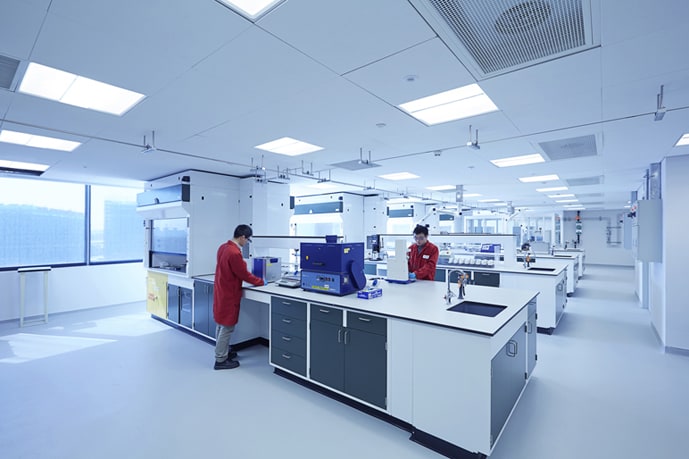
The second-floor lab in the new Shell Technology Center in Shanghai focuses on basic testing such as viscosity, cold cranking ability, foaming and pumpability. (Photo courtesy Shell)
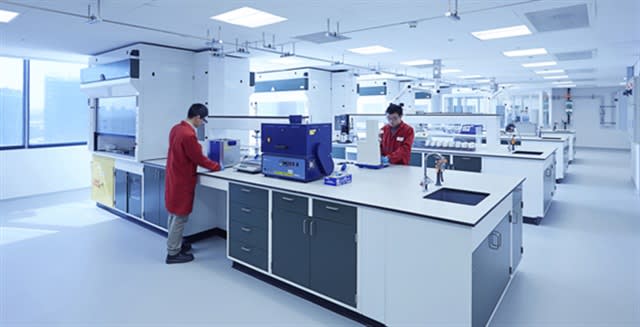
The second-floor lab in the new Shell Technology Center in Shanghai focuses on basic testing such as viscosity, cold cranking ability, foaming and pumpability. (Photo courtesy Shell)
Shell Lubricants opened up its newest technology center in Shanghai, China, last week to the first group of foreign journalists to tour the facility, which opened in March.
This is Shell’s third global center dedicated to research and development for lubricants and oils. The others are in Hamburg, Germany, and Houston here in the U.S.
Why China? Shell says Asia is the fastest-growing regional lubricants market in the world: it represented 43% of global volume in 2012. China is the fastest-growing and second-largest lubricants market in the world. Research shows it will overtake the U.S. as the world’s No. 1 market in the near future.
Research work is already under way at the new center, covering a wide range of product applications for the commercial vehicle industry including heavy-duty diesel engine oils, transmission fluids, as well as specialty oils and greases. The nine-story facility in a technology park has five floors dedicated to laboratories. It's located in one of China’s most high profile technology and innovation parks, near other well-known global companies such as Dow, GE, AstraZeneca and Borg Warner.
Although the primary reason for the new center is to get closer to the fast-growing Asian market, Shell officials told HDT it will have some relevance for lubricants in the North American market as well.
"We have researchers and scientists across the world," said Selda Gunsel, vice president global commercial technology. "They all work cooperatively, not in isolation, and that allows us to bring best practices from all parts of the world. They work closely with customers in the region to get market insights, and these are shared in this global network of technologists."
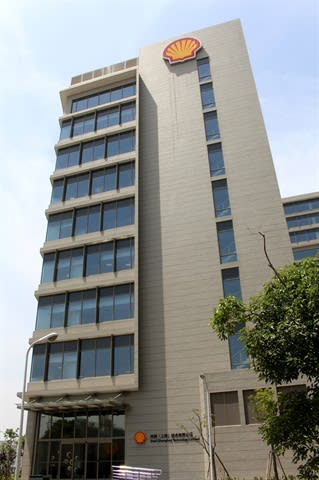
Because space in Shanghai is at a premium, this is the first of Shell's technology centers to be build vertically, with nine stories of labs, offices and customer training and demonstration spaces. (Photo courtesy Shell)
"We're operating a global network, so everything is integrated," explained Richard Tucker, GM technology, commercial fuels and lubricants. "We could have a lab in Timbuktu and it would still be integrated, but we like to have labs close to where trends are being set. Trends in China are going to impact the world globally." For instance, he notes, Caterpillar and Eaton are customers of China's largest transmission maker, FAST. Volvo and Chinese truck maker Dongfeng Motor are working together.
"The PC-11 products (the upcoming API oil classification) will be tested here as well," he said. "We'll do some field trials here with some different severity factors. And we will develop talent here as well from the Chinese population." There's also a world-leading university in tribology (the study of friction) in China that Shell is working with on basic research, as it does with MIT here in the U.S.
The investments in technology, R&D facilities and technical staff at the Shanhai facility will enable enhanced collaboration and joint development programs with original equipment manufacturers and improve technical services for customers and OEM partners. Players in this sector are looking for vehicles to be able to withstand high workloads and demanding work cycles, while maintaining efficiency.
The research work at the Shanghai facility focuses on lubricant product development and application for brands including Shell Rimula, Shell Rotella, Shell Tellus, Shell Gadus and Shell Spirax.
China was chosen as the location for the new Shell Technology Centre due to the central role the market plays in the company’s long-term growth strategy. Shell Technology Centre, Shanghai supports China and the wider Asia region covering countries such as India, Indonesia, South Korea, Thailand and Vietnam. The facility also works closely with the other two Shell R&D centers in Hamburg, Germany and Houston, USA, and is part of a wider 10-center global network of Shell R&D centers.
Aimin Huang, general manager, Shell (Shanghai) Technology Limited, said; “On top of product research and development, an important part of our work is providing hands-on technical services to customers; working closely with them to help deliver more fuel efficient products and services. The laboratory facilities at the center in Shanghai will enable the running of field trials, performance demonstrations and bench-testing.”
For more photos, click here for a photo gallery. Watch for more stories from China this week from Editor in Chief Deborah Lockridge, including a visit to a Chinese truckstop.
More Maintenance

Color Match Smarter: Tools That Restore & Perform
For fleet managers and collision repair professionals keeping heavy-duty trucks on the road, getting the color right the first time isn't just about appearance — it's about efficiency, turnaround time, and bottom-line results. Discover how today's digital color tools are transforming the repair process from guesswork to precision.
Read More →
Wrong Repair Prompts Recall of Freightliner, Western Star 4x2 Trucks
DTNA is recalling more than 2,400 trucks that received an incompatible software fix instead of the hardware repair required to address brake valve corrosion.
Read More →
Truck Drivers Need More Than Another Alert
Fleets have more visibility into truck health, safety events, and driver activity than ever. The next challenge is turning all that information into useful guidance for the person who has to decide what to do next.
Read More →

The Maintenance Checks Trucking Fleets Should Prioritize Before Fall Freight Picks Up
Making it through August isn’t the same as being ready for the next several months of operation. Find out what systems may have suffered from summer heat and need to be checked out before fall.
Read More →
What Three Fleets Are Doing Differently When Buying Truck Parts in 2026
With freight improving but costs still climbing, fleet maintenance executives explain how they're balancing price, quality, and supplier relationships.
Read More →
Paccar Recalls 2027 Trucks Built This Summer for Possible Electrical Problem
The nearly 6,000 Kenworth and Peterbilt trucks in the recall could potentially lose engine power, among other things.
Read More →
Will API PC-12 Oil Change Trucking Fleet Maintenance?
The new API PC-12 heavy-duty engine oil category reflects the changing demands of modern diesel engines. But fleets like Foodliner are looking to getting their own data before making decisions on adopting the new oils and questions such as extending oil drain intervals.
Read More →
Brake Safety Week to Focus on Drums and Rotors
Commercial vehicle inspectors are focusing on truck brakes during CVSA's Brake Safety Week, August 23-29.
Read More →Possible Battery-Cable Fires Prompt Recall of 15,000+ International MV and HV Trucks
On the recalled vehicles, manufacturing variations can cause the battery interconnect cable to contact the auxiliary stud and hold down the bracket.
Read More →
Rush, MCT Team Up to Grow Refrigeration Service Network
The joint venture will operate MCT's network of Carrier Transicold dealerships and mobile service locations, with the companies promising greater service capacity and uptime for refrigerated fleets.
Read More →