




Related: Roush to Offer Propane Autogas Ford Medium-Duty Models
Roush CleanTech Offers Propane Fuel System for Ford F-750
The system meets a demand for heavier chassis for autogas-fueled bobtail applications, cylinder delivery trucks, and larger tank setters and box trucks.
by Staff
April 6, 2016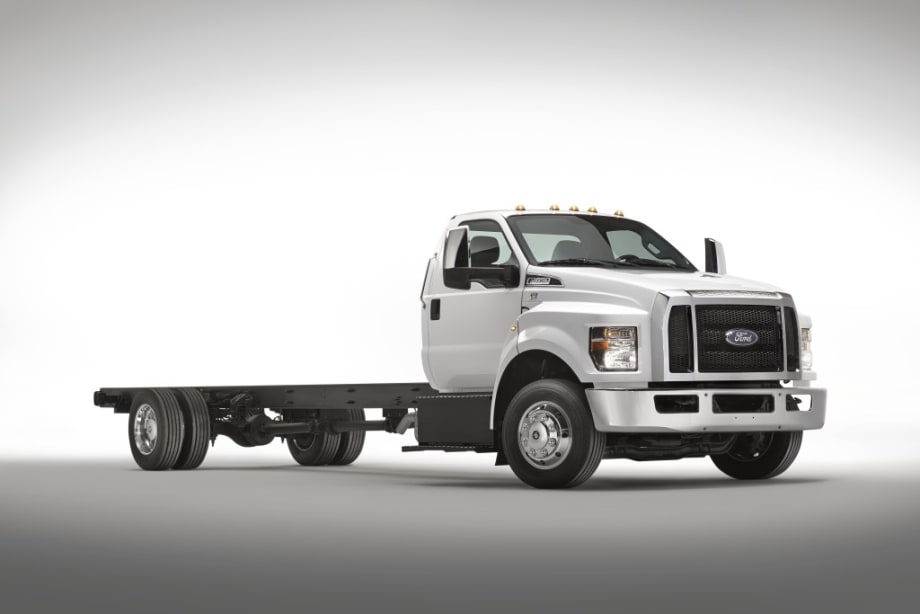
Photo courtesy of Roush CleanTech
2 min to read
Photo courtesy of Roush CleanTech
Roush CleanTech has developed a propane autogas fuel system for the Ford F-750 chassis and its 6.8L V-10 engine.
The model was created in response to the growing demand for an autogas-fueled medium-duty chassis for bobtail applications, cylinder delivery trucks, and larger tank setters and box trucks, said Todd Mouw, vice president of sales and marketing for Roush CleanTech.
“Now fleet managers can purchase an F-750 that not only costs less (than diesel) initially, but also saves money at the pump and uses a clean-operating, American-made fuel,” he said.
With the system, the Ford F-750, rated at up to 33,000 pounds, comes with a 50-usable-gallon fuel tank, located on the driver side for ease of fueling. An extended tank option is available for those in need of more mileage.
Victory Propane, a supplier in Michigan, is one of the first to purchase the new Ford F-750 with the system.
“Victory Propane already has 25 Ford F-650s equipped with the Roush CleanTech fuel system,” said Gregg Falberg, the firm’s president. “We will increase our autogas fleet with Roush’s first two Ford F-750s, and 13 more have been ordered.”
Historically, propane autogas costs up to 40% less than gasoline and 50% less than diesel, Mouw said. Each Ford F-750 equipped with this fuel system will emit about 120,000 fewer pounds of carbon dioxide over its lifetime compared to conventionally fueled counterparts. The engine meets Environmental Protection Agency and California Air Resources Board certification requirements.
As a Tier 1 supplier and Ford Qualified Vehicle Modifier manufacturer, Roush CleanTech outfits propane autogas vehicles that retain all Ford performance characteristics, such as horsepower, torque, and towing, while maintaining the OEM factory warranty.
For more information, click here.
More Fuel Smarts

How Volvo Updated Its D13 for EPA 2027 [Watch]
Volvo’s updated D13 promises lower emissions without sacrificing performance or fuel economy. Take a closer look at what changed inside the engine in this HDT Spotlight video.
Read More →
Diesel Price Spike Shortens Payback for Natural Gas Trucks, Report Says
Energy Vision estimates fleets could recover the higher purchase price of an RNG-fueled Class 8 tractor in 1.3 to 2.8 years under current fuel-price scenarios.
Read More →
Calstart Becomes Catalyst Mobility, Reflecting Broader Focus
Calstart is now Catalyst Mobility, reflecting the nonprofit’s growing national role in clean transportation, including zero-emission trucks, infrastructure and incentive programs.
Read More →

Record Diesel Prices Squeeze Trucking Fleets
Average U.S. diesel prices have climbed to nearly $6 a gallon, surpassing the 2022 record as tight refinery capacity and Middle East disruptions keep fuel costs elevated.
Read More →
Sponsored•September 9, 2026
How Fuel Delivery Shapes Engine Performance
Fuel delivery depends on more than what happens at the injector. For fleet, maintenance and technical professionals, looking at the full path from pump to injector can provide useful context for understanding engine performance.
Read More →
East Coast Port Launches $45M Electric Truck Push
The Port Authority of New York and New Jersey announced millions in incentives for zero-emission drayage trucks, yard tractors, and new charging hubs near the port.
Read More →
California Bill Could Shed Light on Electric Truck Prices
Why do battery-electric Class 8 trucks remain so expensive? A California bill headed to Gov. Gavin Newsom would give fleets and state agencies more visibility into what manufacturers charge.
Read More →
Detroit Opens Orders for EPA 2027 Engines
Detroit isn’t starting from scratch to meet EPA 2027 diesel emissions standards. Its Gen 6 DD13 and DD15 engines keep much of today’s platform while updating the fuel and aftertreatment systems.
Read More →
Zero-Emission Truck Corridor Planned for West Coast
California, Oregon, Washington, British Columbia and Baja California are coordinating plans for truck charging and hydrogen fueling from Canada to Mexico.
Read More →
A Closer Look at Kenworth’s Electric T880E Vocational Truck [Video]
Learn more about Kenworth's T880E battery-electric vocational truck at the Paccar Technical Center, including its range, applications, upfitting considerations, and PTO options, in this HDT Spotlight video.
Read More →