




Proposed Federal Rule Would Define Employee vs. Independent Contractor
The U.S. Department of Labor announced a proposed rule that aims to clarify who’s an employee and who’s an independent contractor under the Fair Labor Standards Act, which could be good news for some trucking companies using owner-operators.

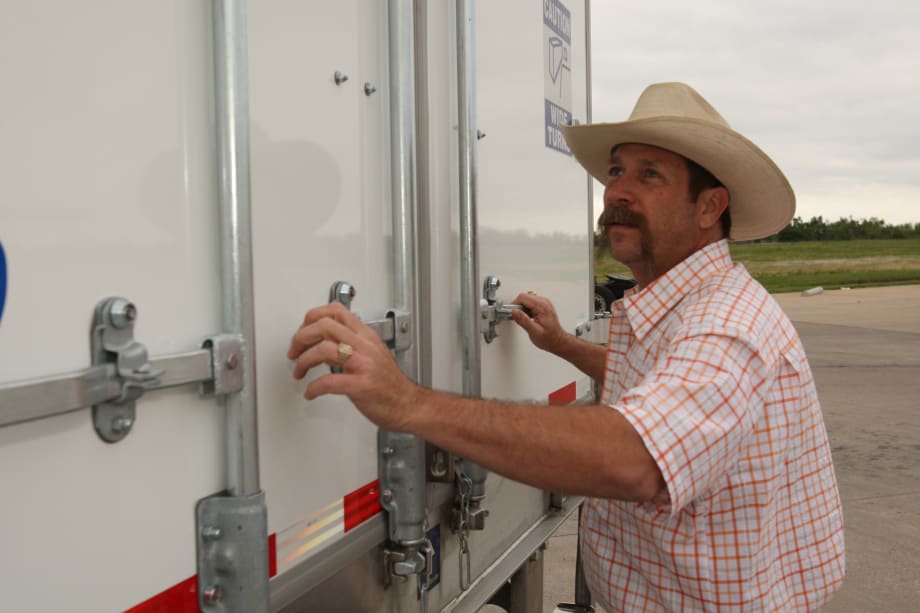
Driver or owner-operator? A proposed federal rule would help clarify the definition.
Photo: Con-way Truckload
The U.S. Department of Labor announced a proposed rule that aims to clarify who’s an employee and who’s an independent contractor under the Fair Labor Standards Act, which could be good news for some trucking companies using owner-operators.
The proposed rule adopts an “economic reality” test to determine a worker’s status as an FLSA employee or an independent contractor. The test considers whether a worker is in business for himself or herself (independent contractor) or is economically dependent on a putative employer for work (employee).
In its Notice of Proposed Rulemaking, the department points out, “the multifactor test [for determining independent contractor status under the FLSA], as currently applied, has proven to be unclear and unwieldy.”
“The department’s proposal aims to bring clarity and consistency to the determination of who’s an independent contractor under the Fair Labor Standards Act,” said Secretary of Labor Eugene Scalia in a press release. “Once finalized, it will make it easier to identify employees covered by the Act, while respecting the decision other workers make to pursue the freedom and entrepreneurialism associated with being an independent contractor.”
The department believes that streamlining and clarifying the test to identify independent contractors will reduce worker misclassification, reduce litigation, increase efficiency, and increase job satisfaction and flexibility.
“The proposal marks a more significant venture for the DOL than its previous efforts to define the parameters for determining independent contractor status generally under the FLSA,” said the transportation attorneys at Scopelitis, Garvin, Light, Hanson & Feary in an email alert. “The proposal synthesizes various courts’ approaches to implementing the Supreme Court’s economic realities test.”
Under the proposal, they explain, a court must evaluate whether a worker is economically dependent on a putative employer or is in business for him/herself. To do this, a court would examine two “core” factors:
the nature and degree of control the worker has over the work; and
the opportunity for profit or loss based on initiative and/or investment.
If both core factors indicate either independent contractor status or employee status, no further inquiry would be needed under the proposed rule.
The proposal identifies three other factors that may serve as additional guideposts in the analysis: the amount of skill required for the work; the degree of permanence of the working relationship between the worker and the potential employer; and whether the work is part of an integrated unit of production.
The attorneys at Scopelitis advised that “in the customary and usual fact patterns found in trucking, both core factors should most often point in the direction of independent contractor status.” The secondary factors, however, “could present challenges to maintaining independent contractor status based on some existing case law addressing driver work classification under various state laws.”
The proposal also advises that the actual practice is more relevant than what may be contractually or theoretically possible in determining whether a worker is an employee or an independent contractor.
The American Trucking Associations issued a statement praising the proposal.
“Secretary Scalia understands that many Americans choose the independent contractor model — including hundreds of thousands of owner-operators in the trucking industry — because it expands their opportunities to earn and empowers them to choose the hours and routes that suit their individual needs and lifestyle,” said ATA President and CEO Chris Spear. “This proposal is about giving working Americans the freedom to pick the occupation and flexibility they desire.”
However, the rule may not help California trucking companies in their fight against the AB5 ABC test, which is currently not being enforced against the trucking industry while a legal challenge works its way through the courts. Many believe if it stands, AB5 would largely preclude the use of owner-operators by trucking companies in the state.
“Because the FLSA does not preclude states and localities from establishing broader wage and hour protections than those that exist under the FLSA, workers in some states may be unaffected by this proposed rule,” a DOL document said of the relationship between a new federal standard and state laws like AB5.
Once the notice is published in the Federal Register, there will be a 30-day comment period.
More Drivers

Truck Drivers Need More Than Another Alert
Fleets have more visibility into truck health, safety events, and driver activity than ever. The next challenge is turning all that information into useful guidance for the person who has to decide what to do next.
Read More →
FMCSA Removes 110 Truck Driver Training Schools from Certified ELDT List
Federal regulators also are targeting more than 160 additional training providers and launching a nationwide audit of third-party CDL skills testers as part of a broader crackdown on trucking fraud.
Read More →
Hours of Service Pilot Programs: FMCSA Readies for 2027 Rollout
Two pilot programs could eventually reshape hours-of-service rules, giving truck drivers options to pause their 14-hour clock or use longer split sleeper rest periods.
Read More →
Medical Cards, English Proficiency Reshape Roadcheck Violations
Medical-card violations jumped to the top of the driver out-of-service list during CVSA’s 2026 International Roadcheck, while English-language proficiency violations appeared among the leading violations for the first time.
Read More →
Driver Trust Can Make or Break the Success of Fleet Safety Technology
New Teletrac Navman research suggests that onboarding, transparency about driver data, and positive feedback can play a significant role in how commercial drivers respond to safety and coaching technology.
Read More →
EEOC Sues KLLM Over Alleged Sex Discrimination in Driver Training
KLLM is facing a federal sex-discrimination lawsuit over policies the EEOC alleges put female truck driver trainees at a disadvantage.
Read More →
FMCSA Moves to Codify English Language Requirements for Commercial Drivers
By changing regulations on English-language proficiency requirements for commercial drivers, rather than relying on a guidance memo, the FMCSA said future administrations won't be able to walk back the Trump administration's stricter enforcement with just a memo.
Read More →
Drivers Put Western Star Trucks to the Test at Star Nation Experience
Watch to get an inside look at the Western Star trucks, technology, and community behind the Star Nation Experience 2026!
Read More →
Trump Administration Looks to Put More Veterans Behind the Wheel
The Freedom Haulers program pulls together existing and expanded programs at several federal agencies to recruit veterans to drive commercial heavy-duty trucks and cut the red tape for them to get a CDL, training, and employment.
Read More →
Putting Mack’s Command Steer to the Test
A test drive of Mack’s Command Steer active steering system evaluates how it can make truck driving easier and less tiring.
Read More →