




Port of Oakland Reopens After Trucker Protests, but Questions Remain About AB5
The Port of Oakland is back in business this week, after five days of protests against California’s AB5 law hampered and even forced the closure of port operations.
July 26, 2022

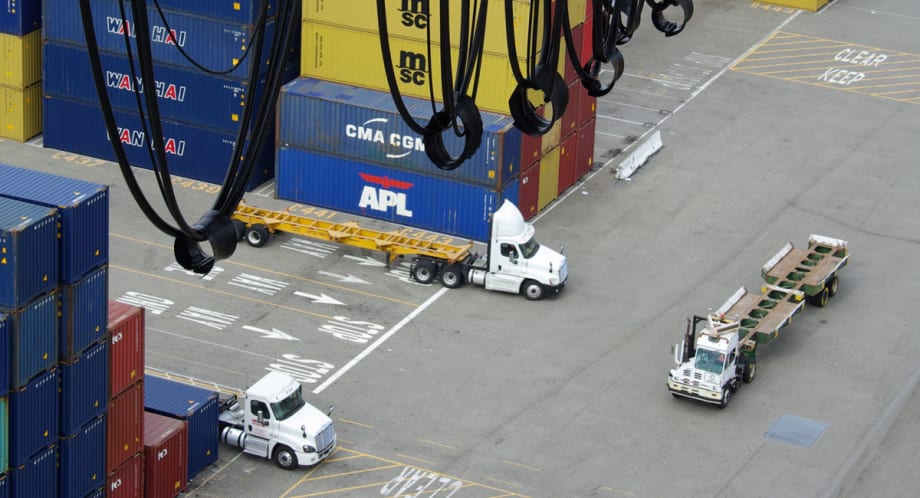
Port of Oakland officials say it will take weeks to clear the backlog of containers that stacked up during trucker protests of AB5.
Credit:
Port of Oakland File Photo
3 min to read
The Port of Oakland is back in business this week, after five days of protests against California’s AB5 law hampered and even forced the closure of port operations.
On Monday, July 25, truckers largely returned to work after authorities warned that continuing to block the gates could lead to arrest. Instead protesters were moved to “free speech zones” away from the terminal gates.
The independent truckers were trying to get the attention of lawmakers and the governor about the impact of Assembly Bill 5, which passed in 2019 but was not enforced against the trucking industry while a California Trucking Association appeal worked its way through the courts.
The law makes it nearly impossible for motor carriers to use the traditional independent contractor owner-operator driver model in California.
The Supreme Court at the end of June declined to hear the case, meaning the injunction that had been in place preventing state enforcement would be lifted. According to the California Trucking Association, the law would affect an estimated 70,000 truckers who own and drive their own trucks.
AB5 protests also were held at the Ports of Los Angeles and Long Beach the previous week, but without as much disruption at the ports.
The protests ended without any concessions from key lawmakers or Gov. Newsom, according to published reports. The Port of Oakland reportedly promised to act as a liaison between the independent trucking community and Sacramento and plans to establish “working group” of truckers and port officials to review concerns regarding implementation of AB 5.
Port of Oakland: 'The Truckers Have Been Heard'
In a news release, the Port of Oakland said it appreciates the independent truck drivers' use of the designated Free Speech Zones and thanked local law enforcement.
“The truckers have been heard, and we now urge them to voice their grievances with lawmakers, not the Port of Oakland,” said Port Executive Director Danny Wan in a statement. Port officials said City of Oakland, regional and state law enforcement are continuing to monitor and implement measures to keep traffic flowing.
Last week’s protests prevented the timely flow of international commerce, according to port officials, including medical supplies, agricultural products, auto and technology parts, livestock, and manufacturing parts.
Freight handlers told the Wall Street Journal that it could take weeks to work through the backlog of intermodal containers that stacked up during the blockade.
AB5 Uncertainties for Trucking
"It is clear from the shutdown at the port of Oakland this past week that there are still massive uncertainties surrounding AB5 compliance pathways for independent owner-operators," said aid Matt Schrap, CEO of the Harbor Trucking Association, in a July 22 statement. "It is imperative a workable resolution comes to the surface to keep the American dream alive for these independent businesses."
The Harbor Trucking Association is a not-for-profit trade association representing intermodal drayage carriers serving America’s west coast ports.
In neighboring Nevada, Paul Enos, CEO of the state trucking association, told Las Vegas’ Fox 5 that AB5 will lead to truck drivers quitting in an industry that’s 80,000 drivers short already. He said the law also will affect independent operators from other states, like Nevada, who drive into California.
The trucking industry is expected to again challenge the law in a California district court, but in the meantime, it’s unclear how AB5 will be enforced.
From the HDT Talks Trucking podcast 2020 archives: Does California's AB-5 law mean the end of the owner-operator?
More Drivers

Truck Drivers Need More Than Another Alert
Fleets have more visibility into truck health, safety events, and driver activity than ever. The next challenge is turning all that information into useful guidance for the person who has to decide what to do next.
Read More →
FMCSA Removes 110 Truck Driver Training Schools from Certified ELDT List
Federal regulators also are targeting more than 160 additional training providers and launching a nationwide audit of third-party CDL skills testers as part of a broader crackdown on trucking fraud.
Read More →
Hours of Service Pilot Programs: FMCSA Readies for 2027 Rollout
Two pilot programs could eventually reshape hours-of-service rules, giving truck drivers options to pause their 14-hour clock or use longer split sleeper rest periods.
Read More →
Medical Cards, English Proficiency Reshape Roadcheck Violations
Medical-card violations jumped to the top of the driver out-of-service list during CVSA’s 2026 International Roadcheck, while English-language proficiency violations appeared among the leading violations for the first time.
Read More →
Driver Trust Can Make or Break the Success of Fleet Safety Technology
New Teletrac Navman research suggests that onboarding, transparency about driver data, and positive feedback can play a significant role in how commercial drivers respond to safety and coaching technology.
Read More →
EEOC Sues KLLM Over Alleged Sex Discrimination in Driver Training
KLLM is facing a federal sex-discrimination lawsuit over policies the EEOC alleges put female truck driver trainees at a disadvantage.
Read More →
FMCSA Moves to Codify English Language Requirements for Commercial Drivers
By changing regulations on English-language proficiency requirements for commercial drivers, rather than relying on a guidance memo, the FMCSA said future administrations won't be able to walk back the Trump administration's stricter enforcement with just a memo.
Read More →
Drivers Put Western Star Trucks to the Test at Star Nation Experience
Watch to get an inside look at the Western Star trucks, technology, and community behind the Star Nation Experience 2026!
Read More →
Trump Administration Looks to Put More Veterans Behind the Wheel
The Freedom Haulers program pulls together existing and expanded programs at several federal agencies to recruit veterans to drive commercial heavy-duty trucks and cut the red tape for them to get a CDL, training, and employment.
Read More →
Putting Mack’s Command Steer to the Test
A test drive of Mack’s Command Steer active steering system evaluates how it can make truck driving easier and less tiring.
Read More →