





Related: Answers to 3 Key Questions on the 2 New Oil Categories
Petro-Canada Eyes 0W-20 Oils
Even with the low adoption rates for CK-4 and FA-4 oils, Petro-Canada Lubricant's is looking to the horizon in developing what could become the next oil standard, a 0W-20 grade.
July 29, 2019
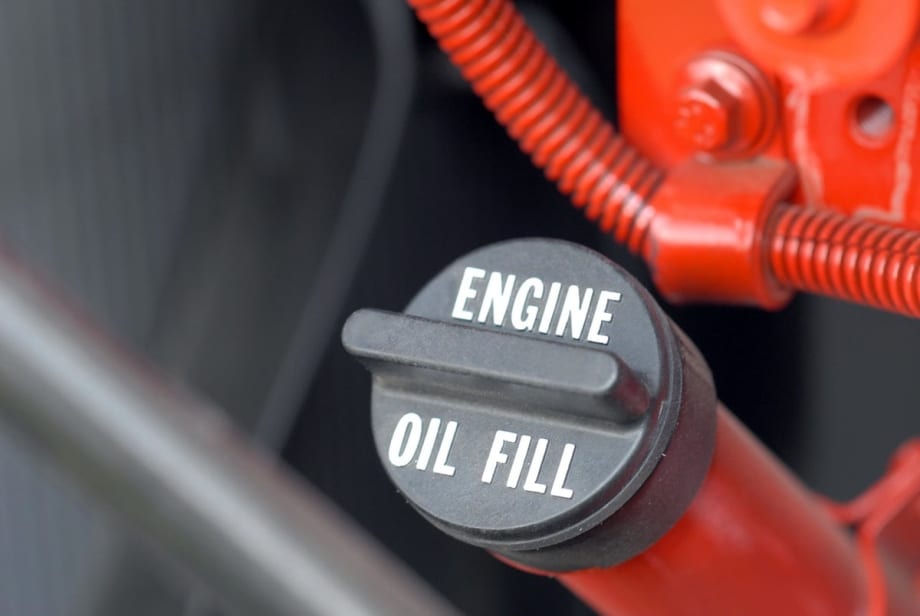
Even with the low adoption rates for CK-4 and FA-4 oils, Petro-Canada Lubricants is looking to develop what could become the next oil standard, a 0W-20 grade.
Photo: Jim Park
3 min to read
Just three years along with the current CK-4 FA-4 oils, and with market penetration still in single digits, engineers at Petro-Canada Lubricants already have super-low viscosity 0W-20 and 5W-20 engine oils in test trucks. It's all part of the push for greater fuel economy, according to Product Specialist John Pettingill.
"To realize even better fuel economy benefits, you'd need to lower the High Temperature High Shear [HTHS] limit to somewhere below 2.9 centipoise [cP – a measure of viscosity]," said Pettingill, during a media briefing in Toronto at a Honda Toronto Indy event.
"If we can demonstrate that we can make a 0W-20 oil that can protect as well as a 10W-30 or a 15W-40 and still provide the fuel economy benefits,” he continued, “that would be a real step forward in the future of engine oils."
Thinner, low-viscosity oils have better flow properties, particularly in cold temperatures, but generally are easier to pump through the engine. That induces less parasitic drag, which lightens the load on the engine and lowers fuel consumption.
While the CK-4 and FA-4 oils are thinnest ever used in heavy duty diesel engine, engineers are already asking how low can we go and what's the point in going lower?
"Twenty-grade oils are passenger-car territory," Pettingill said. "this is all very exciting because we’re talking heavy-duty here."
Asked about the need for thinner oils going forward, he said that while there's no specific proposed category on the table at this time, he saw a reference to "PC12" in an email just a few weeks ago.
"The previous category, CJ-4, lasted about 10 years, and we're now about three years into the current category," he said. "CK-4 and FA-4 started in December 2016 and they are hoping to get another 10 years from that one. It takes about 5 years to really get something going, so 5 years from 2016 would put us in 2021. That's when we'll start thinking about what the fleets' and OEMs' needs might be going forward."
Most of the category changes are the result of emissions restrictions. In addition to the main measurables, particulate matter and oxides of nitrogen, there's CO2 now as well. "We can only confront carbon dioxide through improvements in fuel economy and oil will have a role to play there," Pettingill observed.
If the category timeframe seems a little compressed, it's just perception. Adoption rates for the current standard are low, which leaves some with the impression that it's still a "new" standard. Some vehicle owners are still awaiting approval from some OEMs, while other fleets, reluctant to carry a mix of products in parts inventory, have decided to stick with CJ-4 oils for the time being.
And 40-grade oils are still a big part of the market. All oil marketers still have 15W-40 offerings because it's 60-70% of the market, depending on the region, Pettingill said.
"There's still a lot of volume in the 15W-40 space, but that is shifting to 10W-30, primarily the CK-4,” he said. “There's really no longer any need for CJ-4 now that we have CK-4 with much better performance as well as backward-compatibility. The CK-4 is clearly a better product."
There's much more to improving fuel economy than relying just on engine oil. Improvement can also come from lighter-viscosity fluids, but that will have to be accomplished without sacrificing engine reliability.
“That's why we have this oil in real-world trucks right now," said Petro-Canada Lubricants' category manager for heavy-duty engine and driveline oils, Barnaby Ngai. "We are trialing this product and we plan to provide updates on the progress as we accumulate more mileage in the test.
"Future engine designs will likely require lighter-viscosity fluids, but there are no such engines out there now to test with, so it's a bit of a chicken-and- egg thing," he added.
More Fuel Smarts

New California Law Could Shed Light on Electric Truck Prices
Why do battery-electric Class 8 trucks remain so expensive? A California bill signed by Gov. Gavin Newsom would give fleets and state agencies more visibility into what manufacturers charge.
Read More →
How Volvo Updated Its D13 for EPA 2027 [Watch]
Volvo’s updated D13 promises lower emissions without sacrificing performance or fuel economy. Take a closer look at what changed inside the engine in this HDT Spotlight video.
Read More →
Diesel Price Spike Shortens Payback for Natural Gas Trucks, Report Says
Energy Vision estimates fleets could recover the higher purchase price of an RNG-fueled Class 8 tractor in 1.3 to 2.8 years under current fuel-price scenarios.
Read More →

Calstart Becomes Catalyst Mobility, Reflecting Broader Focus
Calstart is now Catalyst Mobility, reflecting the nonprofit’s growing national role in clean transportation, including zero-emission trucks, infrastructure and incentive programs.
Read More →
Record Diesel Prices Squeeze Trucking Fleets
Average U.S. diesel prices have climbed to nearly $6 a gallon, surpassing the 2022 record as tight refinery capacity and Middle East disruptions keep fuel costs elevated.
Read More →
Sponsored•September 9, 2026
How Fuel Delivery Shapes Engine Performance
Fuel delivery depends on more than what happens at the injector. For fleet, maintenance and technical professionals, looking at the full path from pump to injector can provide useful context for understanding engine performance.
Read More →
East Coast Port Launches $45M Electric Truck Push
The Port Authority of New York and New Jersey announced millions in incentives for zero-emission drayage trucks, yard tractors, and new charging hubs near the port.
Read More →
Detroit Opens Orders for EPA 2027 Engines
Detroit isn’t starting from scratch to meet EPA 2027 diesel emissions standards. Its Gen 6 DD13 and DD15 engines keep much of today’s platform while updating the fuel and aftertreatment systems.
Read More →
Zero-Emission Truck Corridor Planned for West Coast
California, Oregon, Washington, British Columbia and Baja California are coordinating plans for truck charging and hydrogen fueling from Canada to Mexico.
Read More →
A Closer Look at Kenworth’s Electric T880E Vocational Truck [Video]
Learn more about Kenworth's T880E battery-electric vocational truck at the Paccar Technical Center, including its range, applications, upfitting considerations, and PTO options, in this HDT Spotlight video.
Read More →