




New Oil Category in the Works for Next Round of Engine Technology
To help meet the federal government's new fuel economy regulations for heavy trucks, engine makers are looking to improved engine oils, including lower-viscosity oils that can perform under more demanding conditions. Earlier this month, a team was formed by the American Petroleum Institute to develop a new API oil-service category, to replace the current CJ-4. And for the first time, there will be two subcategories to deal with the issue of backward compatibility
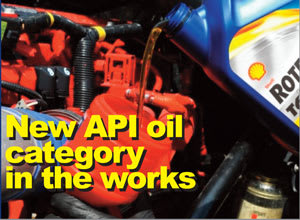
To help meet the federal government's new fuel economy regulations for heavy trucks, engine makers are looking to improved engine oils, including lower-viscosity oils that can perform under more demanding conditions.
Earlier this month, a team was formed by the American Petroleum Institute to develop a new API oil-service category, to replace the current CJ-4. And for the first time, there will be two subcategories to deal with the issue of backward compatibility.
Engine makers last summer asked the American Petroleum Institute to develop the new category, to be in place by 2016. After evaluating the request, the API formed a category development team. That team, made up of representatives from truck and engine makers, oil marketers and oil additive companies, will develop the standards for what's currently being called PC-11 (Proposed Category 11).
There are two major areas where engine makers want changes: heat and viscosity.
"As a group, engine makers said there is fairly good potential the engines may be running hotter in the 2014 to 2018 time frame," explains Dan Arcy, OEM Technical Manager with Shell, who's heading up the development committee. "So we want to make sure the oil's going to handle those higher temperatures."
The other major factor the new category will address for the more fuel-efficient engines of the future is with standards for lower viscosity oils. We may see engine manufacturers recommending 5W-30s or 10W-30s in their 2016 engines.
While most of today's heavy-duty on-road truck market uses SAE 15W-40 engine oils, more truck OEMs are looking to move towards lower viscosity products as factory fill in 2012 and beyond, to support overall better fuel economy now as well as to help meet future fuel economy regulations. Several large fleets are testing SAE 10W-30 and full synthetic SAE 5W-30 oils to evaluate the potential fuel savings.
How can lower viscosity oils help improve fuel economy? "By definition, viscosity is resistance to flow," says Mark Betner, heavy-duty lubricant manager with Citgo. He uses the analogy of a swimmer whose lane has been filled with something thicker, more viscous, than water. "He would have extreme difficulty in plowing through that and winning. Well, the engine has to plow through viscosity, too.
"You have to have proper flow at a given temp and provide proper film between moving points. But in maintaining heavier oil films, there tends to be more resistance to oil flow, and when engine is running 1600 rpms per minute, it's going to take more engine energy over time to operate."
Of course, it's hard to quantify that fuel economy improvement in real-world fleet operations, because there are so many other variables, from the driver to the weather. Truck owners also are traditionally skeptical of whether lower-viscosity oils can protect the engine properly. But Betner points out that car makers have been moving to lower viscosity oils for years. Car buyers don't buy low-viscosity oils because they're looking for fuel economy; they do it because that's what the car makers tell them to put in. And Betner believes we'll see the same thing happening with trucks.
In an unusual move, the new API category will have two subcategories - one for the new engines that focuses on low-viscosity oils for fuel economy, and one to be backward-compatible for older engines or for new engines where the manufacturer has decided not to go the low-viscosity route.
The group will especially be looking at standards for viscosity under high temperatures and high shear environments, which are more detailed than the SAE viscosity ratings we're familiar with, such as 15W-40.
Len Badal, commercial sector manager for Chevron Lubricants, explains: "What is really new versus previous API category development is around High Temp/High Shear offerings - one historical HT/HS and another one that provides fuel efficiency benefits with lower HT/HS. In most previous category development, the new products were almost always backward-compatible - meaning the new engine oil could be used in older model engines with no risk of performance issues. In PC-11 with the two different HT/HS requirements, the products that will have a lower HT/HS specification to achieve better potential fuel economy will NOT be backward compatible as of now. This means a customer will need to take great care and ensuring this product is utilized with only newer engines."
Of course, as Badal, says, maintaining engine durability/protection will be critical with both HT/HS limits being proposed, and engine testing is being developed under this new category with that key requirement.
There are a number of other things the new oil category is designed to address, as well:
* Changes to make sure oils work properly with increasingly popular biofuels;
* A need to switch to later-model engines for the tests used to verify category standard compliance; and
* Updates to the standard to better address the needs of existing EPA-2010 engines.
"When CJ-4 oils were first commercialized in 2006, the new EPA2007 engines were just getting into the market," points out Badal. In those engines, the OEMs retarded timing of fuel injection to help lower emissions. However, he says, "In a number of [EPA 2010] engine models … they have advanced the fuel injection timing, which tends to create more NOx that must be neutralized by the emissions system and also handled by the engine oil."
More Drivers

FMCSA Removes 110 Truck Driver Training Schools from Certified ELDT List
Federal regulators also are targeting more than 160 additional training providers and launching a nationwide audit of third-party CDL skills testers as part of a broader crackdown on trucking fraud.
Read More →
Hours of Service Pilot Programs: FMCSA Readies for 2027 Rollout
Two pilot programs could eventually reshape hours-of-service rules, giving truck drivers options to pause their 14-hour clock or use longer split sleeper rest periods.
Read More →
Medical Cards, English Proficiency Reshape Roadcheck Violations
Medical-card violations jumped to the top of the driver out-of-service list during CVSA’s 2026 International Roadcheck, while English-language proficiency violations appeared among the leading violations for the first time.
Read More →
Driver Trust Can Make or Break the Success of Fleet Safety Technology
New Teletrac Navman research suggests that onboarding, transparency about driver data, and positive feedback can play a significant role in how commercial drivers respond to safety and coaching technology.
Read More →
EEOC Sues KLLM Over Alleged Sex Discrimination in Driver Training
KLLM is facing a federal sex-discrimination lawsuit over policies the EEOC alleges put female truck driver trainees at a disadvantage.
Read More →
FMCSA Moves to Codify English Language Requirements for Commercial Drivers
By changing regulations on English-language proficiency requirements for commercial drivers, rather than relying on a guidance memo, the FMCSA said future administrations won't be able to walk back the Trump administration's stricter enforcement with just a memo.
Read More →
Drivers Put Western Star Trucks to the Test at Star Nation Experience
Watch to get an inside look at the Western Star trucks, technology, and community behind the Star Nation Experience 2026!
Read More →
Trump Administration Looks to Put More Veterans Behind the Wheel
The Freedom Haulers program pulls together existing and expanded programs at several federal agencies to recruit veterans to drive commercial heavy-duty trucks and cut the red tape for them to get a CDL, training, and employment.
Read More →
Putting Mack’s Command Steer to the Test
A test drive of Mack’s Command Steer active steering system evaluates how it can make truck driving easier and less tiring.
Read More →
Competition Heating Up for Truck Drivers
New report reveals rising driver hiring costs, the return of sign-on bonuses, growing AI advantages, and the operational factors shaping driver retention.
Read More →