




Natural-Gas Testing on Agenda for Major National Laboratory
The Energy Department national laboratory that developed the battery technology for the Chevrolet Volt and other hybrid-electric vehicles has set its sights on another potential player in the alternative-fuel market: natural gas.
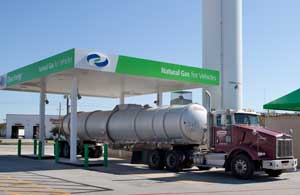
Expanding the number of natural gas vehicles on the roads could provide a number of benefits, including cheaper fuel prices, fewer emissions and domestic production, and some trucks and buses are already on board.
The Energy Department national laboratory that developed the battery technology for the Chevrolet Volt and other hybrid-electric vehicles has set its sights on another potential player in the alternative-fuel market: natural gas.
According to published reports, researchers and engineers at Chicago-based Argonne National Laboratory, which helped develop the lithium-ion battery technology used in some modern cars and trucks, wants to use its facilities for natural-gas vehicle testing.
"Our hope is that there will be a bunch of technologies that need testing," says Mike Duoba, an engineer at Argonne's Transportation Technology Research and Development Center. "Certainly that's the way it has been for electric vehicles and plug-in hybrids and hybrids at the vehicle level and the systems level. That was pretty much our thing: an all systems level, vehicle-level testing for DOE."
Argonne has served as the main testing site for DOE hybrid and advanced-vehicle researchers. The lab includes testing equipment such as machines to allow stationary engine testing and powertrain testing, as well as equipment to test a vehicle's electrical energy consumption and fuel consumption.
The lab has also tested AT&T's fleet of natural gas vehicles for Clean Cities, a DOE program supporting efforts to decrease petroleum use in cities.
Argonne says in the future, it would like to be known as the go-to place for natural-gas-vehicle testing.
"We have all that equipment, so we are looking forward to this stuff being made available, and we are hoping DOE will be in a position to say 'We need to validate these, we need to benchmark these,' and maybe even come up with some standard test metrics, standard test procedures too, which is something we are also involved in," Duoba says.
Expanding the number of natural gas vehicles on the roads could provide a number of benefits, including cheaper fuel prices, fewer emissions and domestic production, and some trucks and buses are already on board. However, there are a few obstacles when it comes to passenger cars. Natural gas takes up more space in a car's storage tank per mile than gasoline, meaning shorter range. Also, the fueling infrastructure is not yet in place. Home refueling is an option, although the necessary compressors are expensive.
Argonne researchers are starting to tackle some of those hurdles.
Research has begun on an improved "bi-fuel" engine that uses both gasoline and natural gas. Engines such as this already exist, but Argonne is designing from scratch instead of modifying a gasoline engine to run on natural gas as well. Doing this could lead to higher efficiencies.
Another way to achieve more more efficiency is with "direct injection," a technique used in gasoline cars - and studied at Argonne for hydrogen vehicles - that Argonne researchers are hoping to use with natural gas. In most fuel-injected vehicles, the injector mixes the fuel with air as it is moves into the combustion cylinder, but with the use of direct injection, the fuel is sprayed directly into the cylinder, which allows it to burn more efficiently.
More Drivers

Hours of Service Pilot Programs: FMCSA Readies for 2027 Rollout
Two pilot programs could eventually reshape hours-of-service rules, giving truck drivers options to pause their 14-hour clock or use longer split sleeper rest periods.
Read More →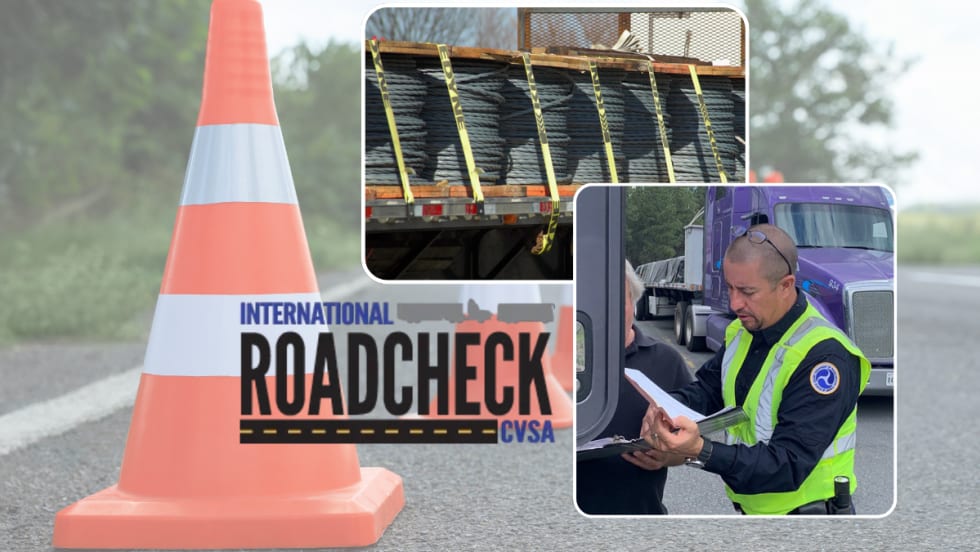
Medical Cards, English Proficiency Reshape Roadcheck Violations
Medical-card violations jumped to the top of the driver out-of-service list during CVSA’s 2026 International Roadcheck, while English-language proficiency violations appeared among the leading violations for the first time.
Read More →
Driver Trust Can Make or Break the Success of Fleet Safety Technology
New Teletrac Navman research suggests that onboarding, transparency about driver data, and positive feedback can play a significant role in how commercial drivers respond to safety and coaching technology.
Read More →
EEOC Sues KLLM Over Alleged Sex Discrimination in Driver Training
KLLM is facing a federal sex-discrimination lawsuit over policies the EEOC alleges put female truck driver trainees at a disadvantage.
Read More →
FMCSA Moves to Codify English Language Requirements for Commercial Drivers
By changing regulations on English-language proficiency requirements for commercial drivers, rather than relying on a guidance memo, the FMCSA said future administrations won't be able to walk back the Trump administration's stricter enforcement with just a memo.
Read More →
Drivers Put Western Star Trucks to the Test at Star Nation Experience
Watch to get an inside look at the Western Star trucks, technology, and community behind the Star Nation Experience 2026!
Read More →
Trump Administration Looks to Put More Veterans Behind the Wheel
The Freedom Haulers program pulls together existing and expanded programs at several federal agencies to recruit veterans to drive commercial heavy-duty trucks and cut the red tape for them to get a CDL, training, and employment.
Read More →
Putting Mack’s Command Steer to the Test
A test drive of Mack’s Command Steer active steering system evaluates how it can make truck driving easier and less tiring.
Read More →
Competition Heating Up for Truck Drivers
New report reveals rising driver hiring costs, the return of sign-on bonuses, growing AI advantages, and the operational factors shaping driver retention.
Read More →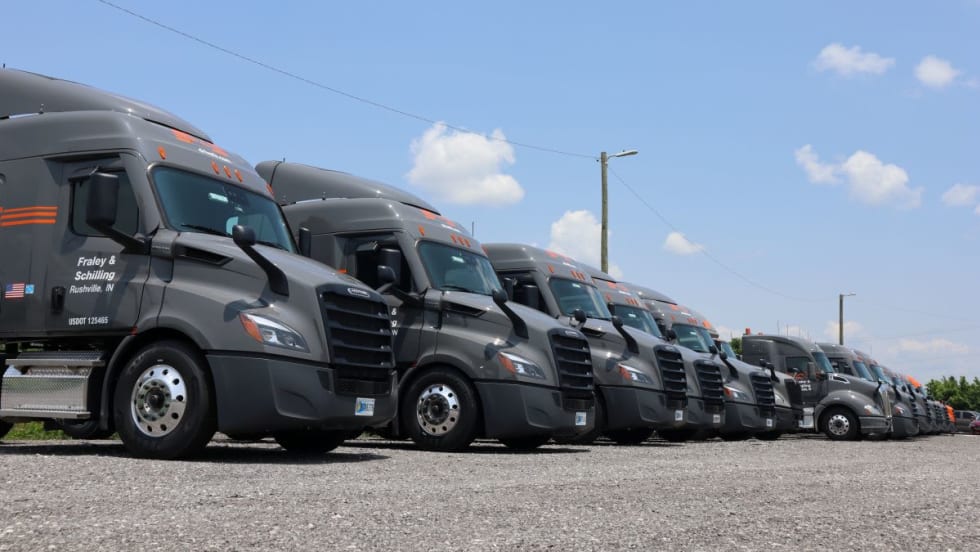
How Fraley & Schilling Improved Logbook Compliance by Over 50%
Fraley & Schilling needed a way to close a compliance workflow gap in its ELD system without adding more work from driver training, reminders, and back-office follow-ups. It found the answer in a custom driver app.
Read More →