




Michigan Considering Lifting Ambassador Bridge HazMat Ban
After decades of prohibiting trucks from legally transporting hazardous materials over the Ambassador Bridge that carries traffic between the U.S. and Canada, Michigan has proposed lifting the ban.

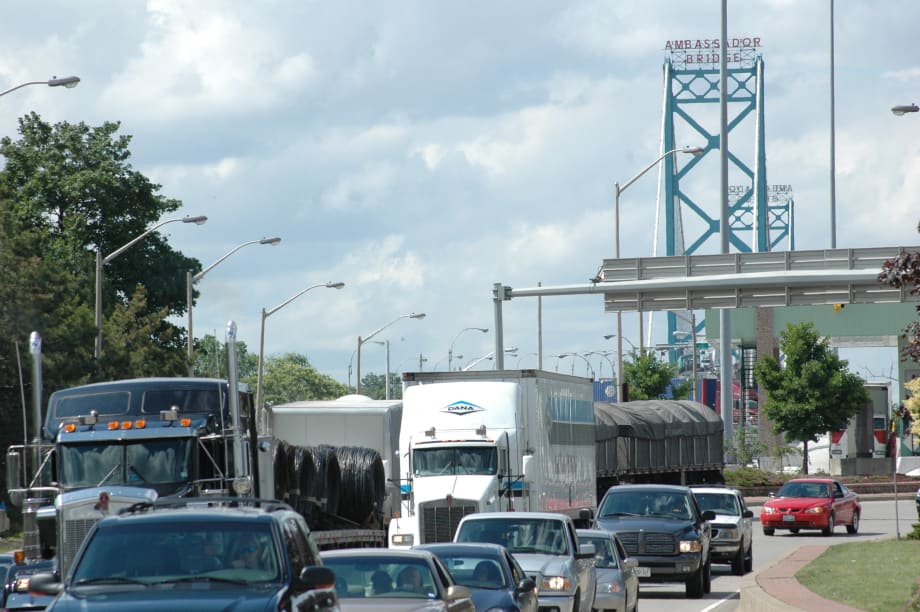
The Ambassador Bridge could open to trucks hauling some hazardous materials.
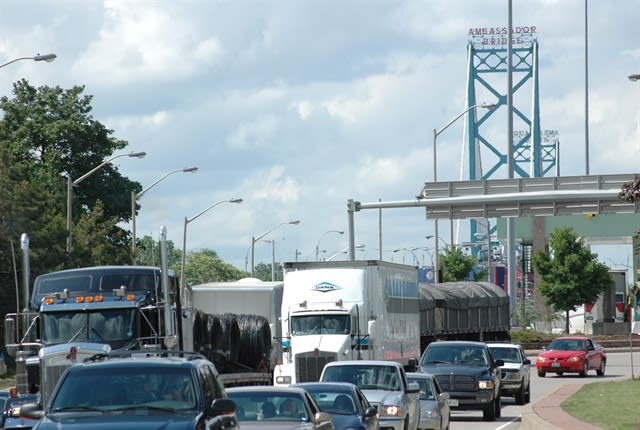
The Ambassador Bridge could open to trucks hauling some hazardous materials.
After decades of prohibiting trucks from legally transporting hazardous materials over the Ambassador Bridge that carries traffic between the U.S. and Canada, Michigan has proposed lifting the ban.
The state transportation department is accepting comments on the idea until May 27, though it could be many months or a year before the restriction is possibly repealed.
The Detroit News reports the ball got rolling in 2008 when the owner of the Ambassador Bridge, the Detroit International Bridge Co., requested the Michigan DOT review the ban. Last December the department released a study supporting the idea of allowing hazardous material cargo across the bridge, except for explosives and radioactive materials.
Currently trucks needing to haul hazmat between Michigan and Winsdor, Ontario, across the Detroit River, must use the Detroit-Windsor Truck Ferry service. Hazardous materials are allowed across the Blue Water Bridge between Port Huron and Sarnia, Canada, but are restricted to designated lanes.
A second crossing between Detroit and Windsor, being built with Canadian assistance and will compete for traffic with the Ambassador Bridge, reportedly will allow hazmat truck shipments.
The issue has raised concerns on both sides of the U.S.-Canadian border including from Windsor officials, who are concerned the Michigan DOT has not studied the issue thoroughly. There is opposition from the owner of the truck ferry service and some Michigan lawmakers.
A spokesman for the Michigan DOT says the issue is “not a done deal” and any change will be in consultation with the motor carrier division of the Michigan State Police.
More Drivers

From One Generation to the Next: How Mentorship Builds Safer Truck Drivers
After three decades in trucking, Harold Perry shares what he's learned about driver safety, mentorship, and helping the next generation build confidence behind the wheel.
Read More →
Truck Drivers Need More Than Another Alert
Fleets have more visibility into truck health, safety events, and driver activity than ever. The next challenge is turning all that information into useful guidance for the person who has to decide what to do next.
Read More →
FMCSA Removes 110 Truck Driver Training Schools from Certified ELDT List
Federal regulators also are targeting more than 160 additional training providers and launching a nationwide audit of third-party CDL skills testers as part of a broader crackdown on trucking fraud.
Read More →
Hours of Service Pilot Programs: FMCSA Readies for 2027 Rollout
Two pilot programs could eventually reshape hours-of-service rules, giving truck drivers options to pause their 14-hour clock or use longer split sleeper rest periods.
Read More →
Medical Cards, English Proficiency Reshape Roadcheck Violations
Medical-card violations jumped to the top of the driver out-of-service list during CVSA’s 2026 International Roadcheck, while English-language proficiency violations appeared among the leading violations for the first time.
Read More →
Driver Trust Can Make or Break the Success of Fleet Safety Technology
New Teletrac Navman research suggests that onboarding, transparency about driver data, and positive feedback can play a significant role in how commercial drivers respond to safety and coaching technology.
Read More →
EEOC Sues KLLM Over Alleged Sex Discrimination in Driver Training
KLLM is facing a federal sex-discrimination lawsuit over policies the EEOC alleges put female truck driver trainees at a disadvantage.
Read More →
FMCSA Moves to Codify English Language Requirements for Commercial Drivers
By changing regulations on English-language proficiency requirements for commercial drivers, rather than relying on a guidance memo, the FMCSA said future administrations won't be able to walk back the Trump administration's stricter enforcement with just a memo.
Read More →
Drivers Put Western Star Trucks to the Test at Star Nation Experience
Watch to get an inside look at the Western Star trucks, technology, and community behind the Star Nation Experience 2026!
Read More →
Trump Administration Looks to Put More Veterans Behind the Wheel
The Freedom Haulers program pulls together existing and expanded programs at several federal agencies to recruit veterans to drive commercial heavy-duty trucks and cut the red tape for them to get a CDL, training, and employment.
Read More →