




Measure Would Allow Heavier Trucks on Maine, Vermont Interstates
Maine and Vermont senators have won preliminary approval of a measure to permanently allow 100,000-pound trucks on state interstates. The measure, pushed by Sen. Patrick Leahy of Vermont and Sen. Susan Collins of Maine, was included in the annual transportation funding bill that the Senate Transportation Appropriations Subcommittee approved Tuesday
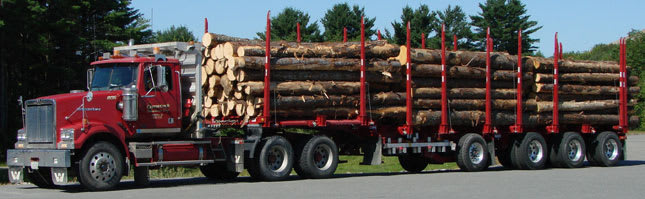
Maine and Vermont senators have won preliminary approval of a measure to permanently allow 100,000-pound trucks on state interstates.
The measure, pushed by Sen. Patrick Leahy of Vermont and Sen. Susan Collins of Maine, was included in the annual transportation funding bill that the Senate Transportation Appropriations Subcommittee approved Tuesday.
Collins is the ranking member of the subcommittee and Leahy is a senior member.
"My provision to permanently change federal law would advance all of those goals by allowing the heaviest trucks to travel on our federal interstates in Maine rather than being forced to use secondary roads and downtown streets," Collins said in a press release.
Approval is expected today in the full Senate Appropriations Committee, where Leahy is number two in seniority. The bill's fate in the full Senate is unclear.
To become law, a similar provision would have to be introduced into the House version of the budget bill, which so far has not happened. Maine Rep. Mike Michaud said he was working on the issue through a separate bill he has sponsored.
Last month, Maine Sen. Olympia Snowe introduced a bill that would allow states to bypass Congress and seek individual waivers of the interstate restrictions from the U.S. DOT.
A Maine Department of Transportation report last fall concluded allowing trucks on all interstates would "increase traffic safety, improve the environment, increase business competitiveness and reduce transportation infrastructure costs at no cost to the taxpayer." It also noted that trucks use less fuel on the Interstate than on secondary roads.
Last December, a one-year federal pilot program allowing the heavier trucks to use all Maine's interstates lapsed.
Parents Against Tired Truckers and the Truck Safety Coalition criticized the move, calling the subcommittee's actions "irresponsible and with complete disregard for the safety of families sharing the road with these overweight trucks."
According to the coalition, the initial weight exemption was passed as a pilot program in the Consolidated Appropriations Act of 2010, and it included a requirement for an evaluation of the pilot program and report to Congress.
The TSC says it was able to obtain limited information about the pilot project impacts by sending a Freedom of Information Act request to the Federal Highway Administration and a Freedom of Access Act request to the Maine Department of Transportation. According to the group, these requests for information revealed that "FHWA has concluded that the margin of bridge safety is reduced on Maine and Vermont Interstate Highways where the heavier vehicles operate. The use of heavier axle loadings on the Interstate highways in Maine and Vermont will reduce the pavement life, especially with an increase in the number of heavy trucks and the allowance for axle loadings that exceed current federal standards."
As to the contention that allowing the heavier trucks on interstate highways will help keep them off off more-dangerous secondary roads, where they are currently allowed, the safety advocates contend the trucks should not be on any highways.
To read more about this issue, see "Supporters of Higher Truck Weights Hope that Now is Their Time" from December 2010.
More Drivers

When Language Stops the Truck: The Return of ELP Out-of-Service Orders
English language proficiency rules for commercial drivers aren’t new, but renewed out-of-service enforcement has raised the stakes. Here’s what carriers need to know before a driver reaches a roadside inspection.
Read More →
Samsara Launches Custom AI Agent Builder
Agent Studio lets fleets create AI tools for hours-of-service monitoring, reporting and driver support, including agents that communicate by phone.
Read More →
Trucker Path Expands Reserved Parking Network
Trucker Path has added close to 6,000 more truck parking spaces to its Trucker Path Reserved Parking Network with the addition of Safe Truck Parking.
Read More →
EEOC Sues Texas Trucking Company Over Driver Age Limits
The agency says Trancasa USA rejected applicants over 65 and applied tougher driving-record standards to those over 60.
Read More →
Nussbaum, Roehl Announce Second Driver Pay Increase This Year
This year has seen a swath of major truck driver pay increases as freight capacity has tightened.
Read More →
From One Generation to the Next: How Mentorship Builds Safer Truck Drivers
After three decades in trucking, Harold Perry shares what he's learned about driver safety, mentorship, and helping the next generation build confidence behind the wheel.
Read More →
Truck Drivers Need More Than Another Alert
Fleets have more visibility into truck health, safety events, and driver activity than ever. The next challenge is turning all that information into useful guidance for the person who has to decide what to do next.
Read More →
FMCSA Removes 110 Truck Driver Training Schools from Certified ELDT List
Federal regulators also are targeting more than 160 additional training providers and launching a nationwide audit of third-party CDL skills testers as part of a broader crackdown on trucking fraud.
Read More →
Hours of Service Pilot Programs: FMCSA Readies for 2027 Rollout
Two pilot programs could eventually reshape hours-of-service rules, giving truck drivers options to pause their 14-hour clock or use longer split sleeper rest periods.
Read More →
Medical Cards, English Proficiency Reshape Roadcheck Violations
Medical-card violations jumped to the top of the driver out-of-service list during CVSA’s 2026 International Roadcheck, while English-language proficiency violations appeared among the leading violations for the first time.
Read More →