




Related: Truck Platooning System Offers Fuel Savings Potential
Lockheed Martin Invests In Truck Platooning Technology
Lockheed Martin has reached an investment agreement with Peloton Technology to accelerate the development and deployment of the company's truck-platooning technology.
by Staff
August 31, 2015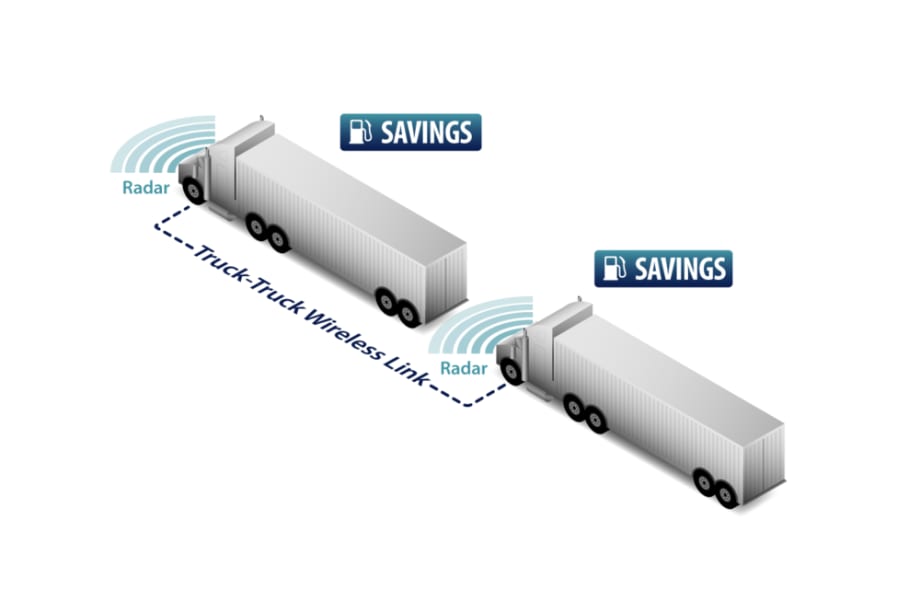
Image via Peloton
2 min to read
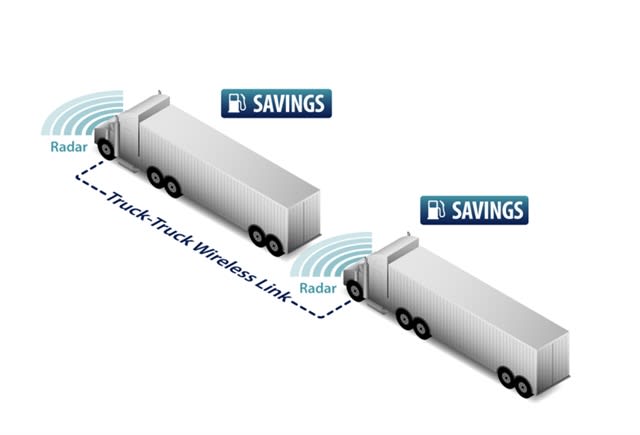
Image via Peloton
Lockheed Martin has reached an investment agreement with Peloton Technology to accelerate Peloton’s development and deployment of truck-platooning technology for the U.S. and international trucking industries.
Lockheed Martin is joining a $17-million invest round that was co-led by Denso International America and Intel capital. Lockheed Martin joins an investment group that includes Volvo Group Venture capital, UPS Strategic Enterprise Fund, and Castrol innoVentures.
In Europe, Volvo was involved in the testing of another platooning technology referred to as Safe Road Trains for the Environment or Project Sartre.
“Lockheed Martin is committed to partnering with Peloton and excited to be working with such a strong team of strategic investors,” said Adam Miller, new initiatives director for Lockheed Martin Missiles and Fire Control. “Our partnership is consistent with Lockheed Martin’s approach of researching and investing in disruptive and cutting-edge technologies.”
Peloton’s Truck Platooning system electronically couples pairs of trucks through a combination of vehicle-to-vehicle communications, radar-based active braking systems and vehicle-control algorithms. The pairing allows trucks to travel at closer distances to improve aerodynamics and reduce fuel use.
The Peloton Truck Platooning system’s direct communication link enables the rear truck to react automatically to acceleration or braking by the front truck nearly instantaneously, which allows tighter spacing for better fuel efficiency.
Peloton’s cloud-based network operations center monitors truck safety and approves of truck pairings only on suitable roads under appropriate weather, vehicle and traffic conditions.
To date, the Truck Platooning system has logged more than 15,000 platooning miles and has been tested in Nevada, Utah, Texas, Ohio, Florida, Alabama and Michigan, according to Peloton.
More Fuel Smarts

How Volvo Updated Its D13 for EPA 2027 [Watch]
Volvo’s updated D13 promises lower emissions without sacrificing performance or fuel economy. Take a closer look at what changed inside the engine in this HDT Spotlight video.
Read More →
Diesel Price Spike Shortens Payback for Natural Gas Trucks, Report Says
Energy Vision estimates fleets could recover the higher purchase price of an RNG-fueled Class 8 tractor in 1.3 to 2.8 years under current fuel-price scenarios.
Read More →
Calstart Becomes Catalyst Mobility, Reflecting Broader Focus
Calstart is now Catalyst Mobility, reflecting the nonprofit’s growing national role in clean transportation, including zero-emission trucks, infrastructure and incentive programs.
Read More →

Record Diesel Prices Squeeze Trucking Fleets
Average U.S. diesel prices have climbed to nearly $6 a gallon, surpassing the 2022 record as tight refinery capacity and Middle East disruptions keep fuel costs elevated.
Read More →
Sponsored•September 9, 2026
How Fuel Delivery Shapes Engine Performance
Fuel delivery depends on more than what happens at the injector. For fleet, maintenance and technical professionals, looking at the full path from pump to injector can provide useful context for understanding engine performance.
Read More →
East Coast Port Launches $45M Electric Truck Push
The Port Authority of New York and New Jersey announced millions in incentives for zero-emission drayage trucks, yard tractors, and new charging hubs near the port.
Read More →
California Bill Could Shed Light on Electric Truck Prices
Why do battery-electric Class 8 trucks remain so expensive? A California bill headed to Gov. Gavin Newsom would give fleets and state agencies more visibility into what manufacturers charge.
Read More →
Detroit Opens Orders for EPA 2027 Engines
Detroit isn’t starting from scratch to meet EPA 2027 diesel emissions standards. Its Gen 6 DD13 and DD15 engines keep much of today’s platform while updating the fuel and aftertreatment systems.
Read More →
Zero-Emission Truck Corridor Planned for West Coast
California, Oregon, Washington, British Columbia and Baja California are coordinating plans for truck charging and hydrogen fueling from Canada to Mexico.
Read More →
A Closer Look at Kenworth’s Electric T880E Vocational Truck [Video]
Learn more about Kenworth's T880E battery-electric vocational truck at the Paccar Technical Center, including its range, applications, upfitting considerations, and PTO options, in this HDT Spotlight video.
Read More →