




International Energy Agency Taps Emergency Oil Reserves, Crude Tumbles
Crude oil tumbled on futures markets Thursday after the International Energy Agency announced it would release 60 million barrels of reserve crude oil over the next 30 days, or 2 million barrels per day. The United States will be supplying half of that oil, with the rest coming from other nations among the agency's 28 member states
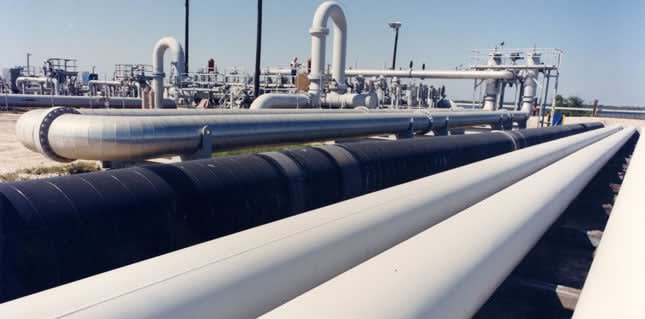
Crude oil pipes at the Strategic Petroleum Reserve's Bryan Mound site near Freeport, Texas.
Crude oil tumbled on futures markets Thursday after the International Energy Agency announced it would release 60 million barrels of reserve crude oil over the next 30 days, or 2 million barrels per day. The United States will be supplying half of that oil, with the rest coming from other nations among the agency's 28 member states.
Light sweet crude for August settled down $4.39, and Brent crude on the ICE futures exchanged dropped $6.95.
The United States started the petroleum reserve in 1975 after oil supplies were cut off during the 1973-74 oil embargo, to mitigate future temporary supply disruptions.
Surprise and Confusion
The Thursday morning announcement came as a complete surprise to oil markets, and left traders guessing as to why the decision was made.
"We are taking this action in response to the ongoing loss of crude oil due to supply disruptions in Libya and other countries and their impact on the global economic recovery," said Energy Secretary Steven Chu in a statement. However, many analysts questioned this motive.
"The logic of that is actually pretty weak," said Tom Knight, oil analyst with TAC Energy. "There doesn't appear to be a shortage anywhere. There is not a pressing physical need for oil to come out of the [Strategic Petroleum Reserve]."
Knight added that if it really was price, the IEA is about seven weeks too late. High prices, the result of seasonal price fluctuations exacerbated by unrest in the Middle East and other factors, peaked in May and have been steadily declining since.
Some analysts speculate the decision was politically motivated: High gas prices aren't good any time, but especially distasteful with a pending election. Knight said there were likely many factors, including drawing down the price of Brent crude, which was still slightly high, stimulating the world economy and perhaps scaring speculative dollars out of the market.
"I don't know how much staying power it will have [in lowering prices]," said Knight. "But it will introduce an element of doubt if governments can tap reserves without warning."
In this respect, the decision was somewhat unprecedented. The reserve was last tapped in 2005 in response to Hurricane Katrina, 21 million barrels, and before in 1991, 17 million barrels, as a reaction to the Gulf War's impact on oil supply. Now, if additional oil can be released without an apparent emergency, investors are exposed to additional risk.
But interestingly, Knight also noted that in these two cases, buyers of the oil were limited to specific refiners and players. This time the oil is open to everyone - investors included.
This is still guesswork. What Knight knows for sure is that oil was already headed down today for a variety of reasons including the debt crisis in Europe and a strengthening dollar. Price drops were also seen in other dollar-denominated commodities, including metals. Today's announcement only added steam to a downward trend already in progress.
Mixed Reaction
Reactions outside the trading and finance universe were mixed. The American Trucking Associations applauded the Obama administration for the 30 million barrels it is releasing from the U.S. SPA.
"ATA appreciates the step the Obama administration and IEA have taken to relieve high oil prices," ATA President and CEO Bill Graves said in a statement. "High fuel costs hurt trucking companies by increasing operational costs and by reducing freight volumes."
However, Graves also called for a more permanent solution to high oil prices. He noted the 30 million barrels are only enough to supply the nation for a few days.
On the other hand, the U.S. Chamber of Commerce lambasted the administration for what it called an "ill advised" move.
"Our reserve is intended to address true emergencies, not politically inconvenient high prices," Karen Harbert, CEO of the U.S. Chamber of Commerce Energy Institute, said in a statement.
The Chamber of Commerce, which is in favor of increased domestic oil production, said the decision was not creating a workable energy policy, and that the move was "not the signal the markets need."
More Drivers
Platform Science Adds Dispatch and Safety Tools
Four additions to PS Fleet help fleets monitor loads, manage driver coaching, share truck locations and adjust video system settings.
Read More →
When Language Stops the Truck: The Return of ELP Out-of-Service Orders
English language proficiency rules for commercial drivers aren’t new, but renewed out-of-service enforcement has raised the stakes. Here’s what carriers need to know before a driver reaches a roadside inspection.
Read More →
Samsara Launches Custom AI Agent Builder
Agent Studio lets fleets create AI tools for hours-of-service monitoring, reporting and driver support, including agents that communicate by phone.
Read More →
Trucker Path Expands Reserved Parking Network
Trucker Path has added close to 6,000 more truck parking spaces to its Trucker Path Reserved Parking Network with the addition of Safe Truck Parking.
Read More →
EEOC Sues Texas Trucking Company Over Driver Age Limits
The agency says Trancasa USA rejected applicants over 65 and applied tougher driving-record standards to those over 60.
Read More →
Nussbaum, Roehl Announce Second Driver Pay Increase This Year
This year has seen a swath of major truck driver pay increases as freight capacity has tightened.
Read More →
From One Generation to the Next: How Mentorship Builds Safer Truck Drivers
After three decades in trucking, Harold Perry shares what he's learned about driver safety, mentorship, and helping the next generation build confidence behind the wheel.
Read More →
Truck Drivers Need More Than Another Alert
Fleets have more visibility into truck health, safety events, and driver activity than ever. The next challenge is turning all that information into useful guidance for the person who has to decide what to do next.
Read More →
FMCSA Removes 110 Truck Driver Training Schools from Certified ELDT List
Federal regulators also are targeting more than 160 additional training providers and launching a nationwide audit of third-party CDL skills testers as part of a broader crackdown on trucking fraud.
Read More →
Hours of Service Pilot Programs: FMCSA Readies for 2027 Rollout
Two pilot programs could eventually reshape hours-of-service rules, giving truck drivers options to pause their 14-hour clock or use longer split sleeper rest periods.
Read More →