




House Panel Looks for Highway Trust Fund Fix
At a hearing on the Highway Trust Fund Tuesday it was clear that the key House transportation committee has some distance to go before it can achieve consensus on how the fund could be made whole, or even if it should be preserved.

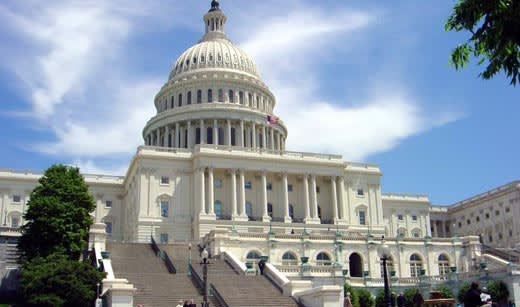
At a hearing on the Highway Trust Fund Tuesday it was clear that the key House transportation committee has some distance to go before it can achieve consensus on how the fund could be made whole, or even if it should be preserved.
The House Transportation and Infrastructure Committee invited Polly Trottenberg, under secretary for policy at the Department of Transportation, and Kim Cawley, chief of the natural and physical resources cost estimates unit at the Congressional Budget Office, to explain the status and outlook for the fund, which is used to pay for the nation’s road and bridge building and repair efforts.
Their message, in short, was that the fund, which is fed by federal taxes on highway users, has been a principal source of revenue for U.S. roads and bridges for 57 years.
It has been flirting with insolvency for the past seven years, preserved only by cash transfers from the General Fund, and is projected to go back into the red some time after October 2014 unless Congress does something.
The situation is well understood by senior members of the committee but newer members need some catching-up.
“Many of our members were not in Congress when previous funding shortfalls were addressed, and it is important that members understand the fiscal reality we face and the measures the U.S. DOT would need to take,” said Rep. Tom Petri, R-Wisc., chairman of the highway subcommittee.
Cawley told the committee that Congress has three choices to preserve the fund in fiscal year 2015.
“To avoid the projected shortfall, Congress could eliminate all highway and mass transit spending in 2015, or raise the tax on motor fuels by about 10 cents per gallon, or transfer about $15 billion from the General Fund to the Highway Trust Fund,” he said.
There are many unknowns about the situation but perhaps the most pressing one is what the states will do as the October 2014 deadline approaches without a clear indication that Congress has a solution.
Trottenberg said that in 2008, when the fund was close to default, DOT learned that it had to give states plenty of notice so they could plan their projects and prepare for cutbacks.
Reps. Bill Shuster, R-Pa., and Nick Rahall, D-W.Va., the chairman and ranking member of the committee respectively, noted there is a risk that states will accelerate their spending if they are not confident the money will be there.
Trottenberg said that did not happen in 2008 and DOT has not heard that states are doing it now, but that doesn’t mean they aren’t thinking about it.
Shuster asked about the impact of reduced spending on the states.
“It is quite clear that the effect would be dramatic,” Trottenberg said. States will start to postpone projects and the burden would fall more heavily on rural states than on urban ones.
The Obama administration’s idea for funding is to take a piece of the savings from the drawdown in the U.S. military commitment to Iraq and Afghanistan.
In effect, this would amount to a transfer from the General Fund, a one-time move that would postpone the politically difficult decision about raising fuel taxes.
Trottenberg said there is enough money there to take care of infrastructure and pay down the deficit.
Rahall pointed out that the “peace dividend” sounds good but still would require congressional appropriations, taking money from defense and giving it to transportation.
“We would still have that battle on the Hill and it’s still a Band-Aid approach,” he said.
Several less senior members of the committee indicated they are not convinced of the need to address the problem by raising fuel taxes.
Rep. Richard Hanna, R-N.Y., said that funding highways with user taxes is becoming archaic because more people live in cities and use mass transit.
He thinks that makes the case for using the General Fund, rather than the Highway Trust Fund, to pay for infrastructure.
“In some ways we’re already there,” Trottenberg replied.
Since 2008 Congress has taken $41 billion out of general revenues for the highway fund, and an additional transfer of $12.6 billion is scheduled for next year.
Rep. Tom Rice, R-S.C., is adamantly opposed to raising the tax.
“Taxes are anticompetitive,” he said, although he added that it would be easier to raise the fuel levy if the government took steps to lower the price of fuel. He suggested that allowing more oil drilling and clearance of the Keystone XL pipeline would bring fuel prices down.
Rep. Roger Williams, R-Texas, said the best way to raise revenues would be to eliminate federal fuel efficiency standards. People would use more fuel and pay more fuel taxes, he said.
More Drivers

Truck Drivers Need More Than Another Alert
Fleets have more visibility into truck health, safety events, and driver activity than ever. The next challenge is turning all that information into useful guidance for the person who has to decide what to do next.
Read More →
FMCSA Removes 110 Truck Driver Training Schools from Certified ELDT List
Federal regulators also are targeting more than 160 additional training providers and launching a nationwide audit of third-party CDL skills testers as part of a broader crackdown on trucking fraud.
Read More →
Hours of Service Pilot Programs: FMCSA Readies for 2027 Rollout
Two pilot programs could eventually reshape hours-of-service rules, giving truck drivers options to pause their 14-hour clock or use longer split sleeper rest periods.
Read More →
Medical Cards, English Proficiency Reshape Roadcheck Violations
Medical-card violations jumped to the top of the driver out-of-service list during CVSA’s 2026 International Roadcheck, while English-language proficiency violations appeared among the leading violations for the first time.
Read More →
Driver Trust Can Make or Break the Success of Fleet Safety Technology
New Teletrac Navman research suggests that onboarding, transparency about driver data, and positive feedback can play a significant role in how commercial drivers respond to safety and coaching technology.
Read More →
EEOC Sues KLLM Over Alleged Sex Discrimination in Driver Training
KLLM is facing a federal sex-discrimination lawsuit over policies the EEOC alleges put female truck driver trainees at a disadvantage.
Read More →
FMCSA Moves to Codify English Language Requirements for Commercial Drivers
By changing regulations on English-language proficiency requirements for commercial drivers, rather than relying on a guidance memo, the FMCSA said future administrations won't be able to walk back the Trump administration's stricter enforcement with just a memo.
Read More →
Drivers Put Western Star Trucks to the Test at Star Nation Experience
Watch to get an inside look at the Western Star trucks, technology, and community behind the Star Nation Experience 2026!
Read More →
Trump Administration Looks to Put More Veterans Behind the Wheel
The Freedom Haulers program pulls together existing and expanded programs at several federal agencies to recruit veterans to drive commercial heavy-duty trucks and cut the red tape for them to get a CDL, training, and employment.
Read More →
Putting Mack’s Command Steer to the Test
A test drive of Mack’s Command Steer active steering system evaluates how it can make truck driving easier and less tiring.
Read More →