




House Committee Hears Testimony on Autonomous Truck Tech
During a House subcommittee hearing on emerging transportation technology Thursday, representatives found themselves pondering the societal impact autonomous vehicles may have on American workers.

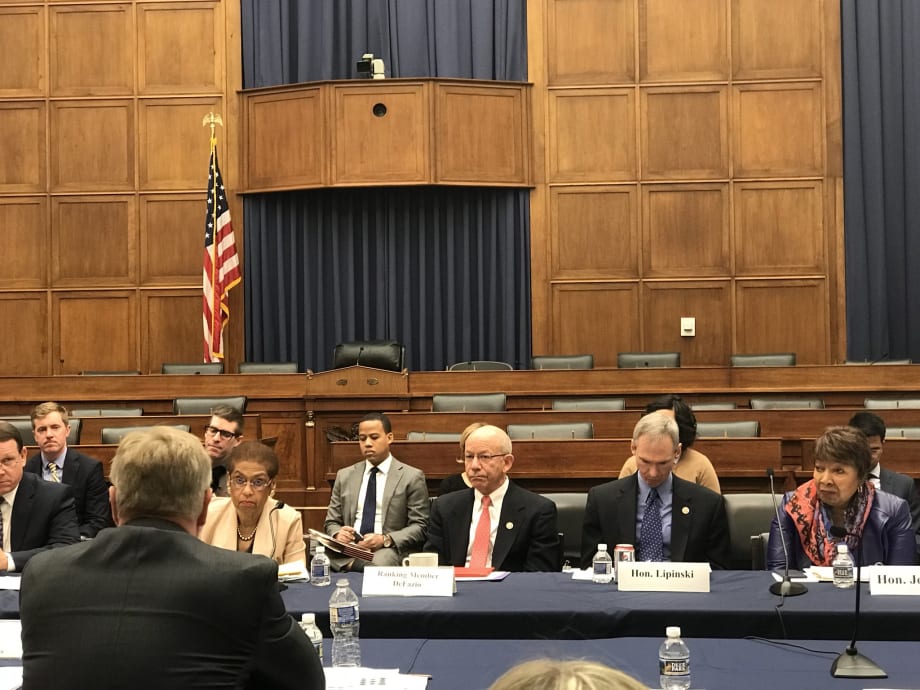
House members listen to Greer Woodruff, senior vice president of safety, security and driver personnel at J.B. Hunt. Photo via ATA Twitter feed.
House members listen to Greer Woodruff, senior vice president of safety, security and driver personnel at J.B. Hunt. Photo via ATA Twitter feed.
Autonomous automotive technology has the potential to attract new talent to trucking, but it will eventually reduce the number of truck drivers needed and require retraining programs for displayed drivers. That was the takeaway from a subcommittee hearing on Emerging Highways and Transit in the U.S. House of Representatives on Dec. 7.
Industry experts spoke to lawmakers to outline the advantages several emerging automotive technologies will have for the trucking industry, including advanced safety systems, vehicle-to-vehicle communication systems, platooning, and autonomous driving technology.
Greer Woodruff, senior vice president of safety, security and driver personnel at J.B. Hunt, told the committee that it is vital to include commercial vehicles in any new legislation concerning emerging technologies, and specifically autonomous vehicle technology, in order to make sure eventual state and federal laws do not conflict or impede the safety and efficiency of interstate commerce as new technology enters into common use.
Woodruff made a point to emphasize the adoption of safety technology by J.B. Hunt and the industry at large in reducing driving accidents and fatalities. Woodruff noted that trucking spends over $9 billion annually on advanced vehicle safety systems that have dramatically reduced accidents nationwide, and that these technology investments help ensure that drivers and passengers of all vehicles make it safely to their destination.
Susan Alt, Volvo Trucks North America senior vice president of public affairs, told lawmakers that “trucking is a tough job,” a reality that makes it difficult to attract ample numbers of drivers to move the nation’s goods. But, Alt noted, younger generations are attracted to, and enjoy working with, new technologies, meaning autonomous vehicle technology has the potential to “lure more drivers into trucking.”
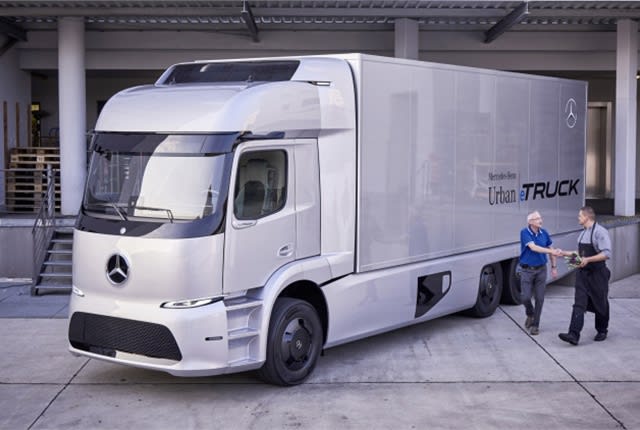
Speakers told a House subcommittee on emerging transporation technology that autonomous trucks may one day drive long distances, with human drivers taking over for regional and last mile deliveries. Photo: Mercedes-Benz
Larry Willis, president of the AFL-CIO’s Transportation Trades Department, countered that trucking’s ongoing driver shortage is mainly due to low wages and benefits. Willis also expressed serious concerns about the loss of truck and bus driving jobs due to autonomous vehicle technology in the coming years, noting that, “Our economy is not prepared for the job dislocation and downward pressure on wages that will result from the adoption of autonomous vehicle systems.”
Building on his remarks, Willis urged lawmakers to move proactively to develop wage and labor policies that will protect human workers as autonomous technology is deployed on commercial vehicles.
Willis warned representatives that “millions of jobs” were threatened by autonomous vehicle technology in particular and stressed that they should “think strategically” about the training programs that a new economy created by autonomous vehicles would require.
Lawmakers expressed concern that new vehicle technologies and subsequent driver displacement would require national job training programs to help unemployed drivers find new jobs.
J.B. Hunt's Woodruff said he felt job disruption on the scale presented by Willis was “decades away,” even though he noted that in the future, it was likely autonomous trucks would haul freight long distances, with human drivers in strategically locations taking over for regional and last-mile operations.
More Drivers

Truck Drivers Need More Than Another Alert
Fleets have more visibility into truck health, safety events, and driver activity than ever. The next challenge is turning all that information into useful guidance for the person who has to decide what to do next.
Read More →
FMCSA Removes 110 Truck Driver Training Schools from Certified ELDT List
Federal regulators also are targeting more than 160 additional training providers and launching a nationwide audit of third-party CDL skills testers as part of a broader crackdown on trucking fraud.
Read More →
Hours of Service Pilot Programs: FMCSA Readies for 2027 Rollout
Two pilot programs could eventually reshape hours-of-service rules, giving truck drivers options to pause their 14-hour clock or use longer split sleeper rest periods.
Read More →
Medical Cards, English Proficiency Reshape Roadcheck Violations
Medical-card violations jumped to the top of the driver out-of-service list during CVSA’s 2026 International Roadcheck, while English-language proficiency violations appeared among the leading violations for the first time.
Read More →
Driver Trust Can Make or Break the Success of Fleet Safety Technology
New Teletrac Navman research suggests that onboarding, transparency about driver data, and positive feedback can play a significant role in how commercial drivers respond to safety and coaching technology.
Read More →
EEOC Sues KLLM Over Alleged Sex Discrimination in Driver Training
KLLM is facing a federal sex-discrimination lawsuit over policies the EEOC alleges put female truck driver trainees at a disadvantage.
Read More →
FMCSA Moves to Codify English Language Requirements for Commercial Drivers
By changing regulations on English-language proficiency requirements for commercial drivers, rather than relying on a guidance memo, the FMCSA said future administrations won't be able to walk back the Trump administration's stricter enforcement with just a memo.
Read More →
Drivers Put Western Star Trucks to the Test at Star Nation Experience
Watch to get an inside look at the Western Star trucks, technology, and community behind the Star Nation Experience 2026!
Read More →
Trump Administration Looks to Put More Veterans Behind the Wheel
The Freedom Haulers program pulls together existing and expanded programs at several federal agencies to recruit veterans to drive commercial heavy-duty trucks and cut the red tape for them to get a CDL, training, and employment.
Read More →
Putting Mack’s Command Steer to the Test
A test drive of Mack’s Command Steer active steering system evaluates how it can make truck driving easier and less tiring.
Read More →