




Ground Broken for I-95 & Pennsylvania Turnpike Interchange
In the not too distant future, traffic will finally be able to travel between Interstate 95 and the Pennsylvania Turnpike without having to use other roadways. Ground has been broken on a project in the southeastern part of the state kicking off the start of the $500 million Stage 1 of the project.



In the not too distant future traffic will finally be able to travel between Interstate 95 and the Pennsylvania Turnpike without having to use other roadways.
Ground has been broken on a project in the southeastern part of the state kicking off the start of the $500 million Stage 1 of the project.
The mainline toll facility is part of a $59 million contract that includes reconstruction and widening of a portion of Interstate 276 in Bensalem and the construction of an All-Electronic Tolling location for customers entering Pennsylvania via the Delaware River Bridge. The Stage 1 project corridor is located between the Bensalem Interchange, exit 351, and the Delaware River Bridge on the Turnpike, and from the Neshaminy Creek to the Turnpike along I-95.
When Stage 1 construction is completed sometime in 2018 (the anticipated timeframe based on the Pennsylvania Turnpike Commission’s current capital plan), the new I-95 movements will be opened to traffic.
Simultaneously, sections of the existing Pennsylvania and New Jersey Turnpikes will be redesignated as I-95, thus making the East Coast’s primary interstate highway continuous from Florida to Maine. Two additional Stage 1 interstate widening and improvement contracts along the Turnpike, set to begin in 2014, and I-95, set to begin in 2015, are needed to achieve this I-95 completion and redesignation.
Since 2010, construction projects completed in Stage 1 have included the replacement of two overhead bridges and a wetlands mitigation site. Several other projects are now in construction, including bridges carrying Ford Road over I-95 and Richlieu Road over I-276.
The Pennsylvania Turnpike Commission began to study a high-speed interchange between the Turnpike and I-95 in 1992 in response to federal and state legislation. It then made a commitment to move forward with Stage 1 construction, funded by toll revenues and the remaining federal interstate completion dollars dedicated to this project.
Design activities for some of the Stage-2 work are still under way while funding sources for construction of the remaining interchange movements and Turnpike widening/reconstruction continue to be identified and sought. The cost for the project in its entirety is estimated to be $1.4 billion.
Just over 30 years ago the federal government mandated the Turnpike and I-95 be connected, but it took about two decades to secure the funding. When this section of I-95 was completed in 1969, it was illegal to connect an Interstate to a toll road.
More Drivers

Driver Trust Can Make or Break the Success of Fleet Safety Technology
New Teletrac Navman research suggests that onboarding, transparency about driver data, and positive feedback can play a significant role in how commercial drivers respond to safety and coaching technology.
Read More →
EEOC Sues KLLM Over Alleged Sex Discrimination in Driver Training
KLLM is facing a federal sex-discrimination lawsuit over policies the EEOC alleges put female truck driver trainees at a disadvantage.
Read More →
FMCSA Moves to Codify English Language Requirements for Commercial Drivers
By changing regulations on English-language proficiency requirements for commercial drivers, rather than relying on a guidance memo, the FMCSA said future administrations won't be able to walk back the Trump administration's stricter enforcement with just a memo.
Read More →
Drivers Put Western Star Trucks to the Test at Star Nation Experience
Watch to get an inside look at the Western Star trucks, technology, and community behind the Star Nation Experience 2026!
Read More →
Trump Administration Looks to Put More Veterans Behind the Wheel
The Freedom Haulers program pulls together existing and expanded programs at several federal agencies to recruit veterans to drive commercial heavy-duty trucks and cut the red tape for them to get a CDL, training, and employment.
Read More →
Putting Mack’s Command Steer to the Test
A test drive of Mack’s Command Steer active steering system evaluates how it can make truck driving easier and less tiring.
Read More →
Competition Heating Up for Truck Drivers
New report reveals rising driver hiring costs, the return of sign-on bonuses, growing AI advantages, and the operational factors shaping driver retention.
Read More →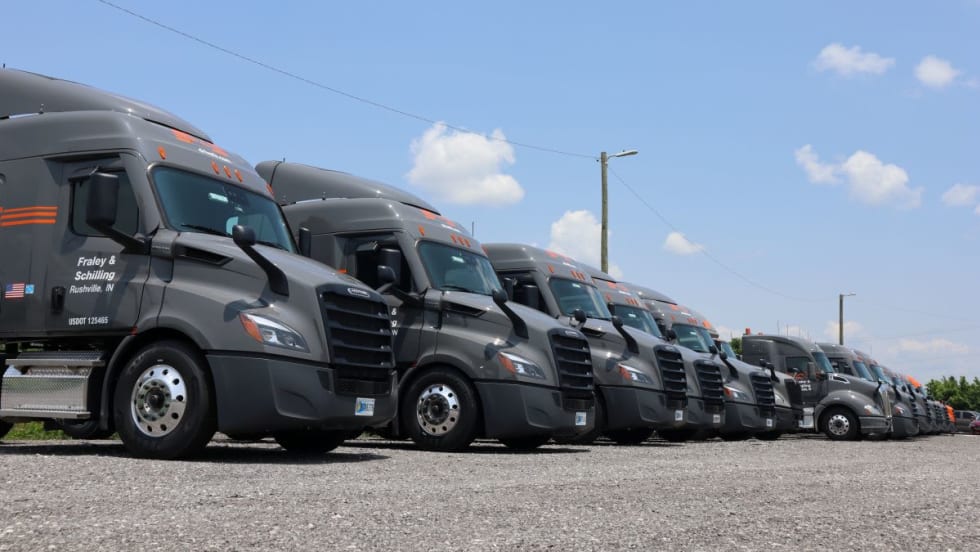
How Fraley & Schilling Improved Logbook Compliance by Over 50%
Fraley & Schilling needed a way to close a compliance workflow gap in its ELD system without adding more work from driver training, reminders, and back-office follow-ups. It found the answer in a custom driver app.
Read More →
Volvo Goes Gaming
Volvo has roared into American Truck Simulator with two new flagship trucks.
Read More →
What the Best Fleets to Drive For Teach About Driver Retention
Survey fatigue, AI-powered routing, owner-operator expectations, and the decline of social media all emerged as themes from this year's Best Fleets to Drive For program.
Read More →