





What Penske is Learning About Electric Truck Fleet Operations
Geotab: Fleet Electrification is Operationally and Economically Viable
Using global data from over 2 million commercial BEVs, a new Goetab report says that a wide range of trucking applications are ready for electric vehicles now.
April 24, 2024

Geptab found that 58% of heavy-duty trucks have a daily average distance of less than 200 miles, indicating the opportunity for electrification exists today.
Photo: Reyes Distributing
4 min to read
Geotab has released its report "Taking Charge: On the road to the EV Future." The report focuses on fleet electrification. Geotab said it offers insights into the power of electric vehicles (EVs) in commercial fleets.
The report features aggregated data sourced from over 2 million vehicles globally. Using that data, the study looks at the potential for electrification to make fleet operations more efficient, improve cost management and meet established sustainability goals.
In the subset of light-duty fleet vehicles, Geotab said EVs could prevent the use of 2.2 billion gallons of fuel while avoiding approximately 19 million metric tons of CO2 emissions over the next seven years.
Operationally and Economically Viable
"By leveraging real-world data insights, we can demonstrate the operational and economic viability of EVs across a wide range of fleet applications," noted Eric Mallia, vice president, sustainability solutions, Geotab. "The opportunities for fleets to electrify will continue to grow with better data insights spotlighting challenges and solutions to accelerating adoption, ultimately improving outcomes for business and the planet."
The report explores the feasibility of transitioning from internal combustion engine (ICE) vehicles to EVs in light-duty fleets. Researchers analyzed global daily vehicle usage patterns and aggregating data from Europe and North America.
The report also looks at electrification opportunities for medium- and heavy-duty vehicle usage in US and Canada, offering high-level insights into zero-emission commercial transportation opportunities, Geotab said.
Three Key Studies
The report consists of three key studies on light-duty EV suitability assessment; medium/heavy duty electrification potential; and charging behavior analysis from aggregate data.
Among the key findings:
75% of analyzed light-duty ICE vehicles could be replaced with range-capable battery electric vehicles today.
41% of analyzed light-duty ICE vehicles were considered cost-effective and range capable, potentially saving around $16,000 per vehicle over 7 years, on average.
Transitioning just the cost-effective light-duty ICE vehicles to EVs could prevent the use of 2.2 billion gallons of fuel and avoid around 19 million metric tons of CO2 emissions over the next seven years.
81% of medium-duty ICE vehicles have a daily average distance of less than 150 miles, and 58% of heavy-duty trucks have a daily average distance of less than 200 miles. Each is within the range of electric trucks on the market, indicating the opportunity for electrification today.
Charging behavior analysis reveals missed opportunities for fully utilizing EVs, with 45% of European and 65% of North American charge sessions occurring before the battery drops to half.
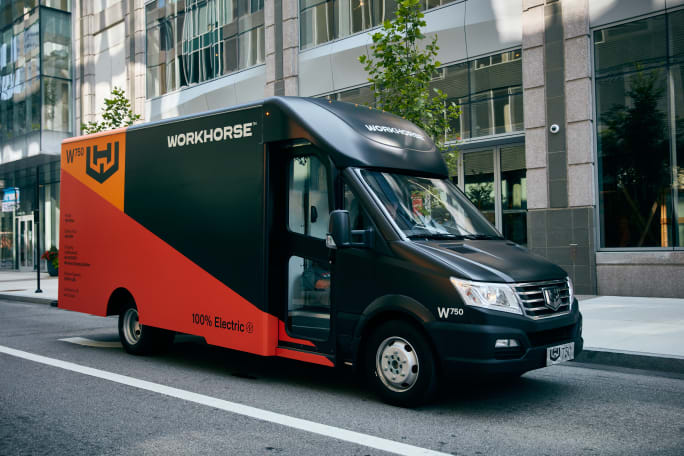
Geotab found that just the electrification of light-duty EVs could prevent the use of 2.2 billion gallons of fuel while avoiding approximately 19 million metric tons of CO2 emissions over the next seven years.
Photo: Workhorse
"These analyses have shown that many fleet applications and fleet duty cycles could be fulfilled by an EV, reinforcing our belief that EVs are key to unlocking sustainable fleet operations today," notes Charlotte Argue, senior manager, sustainable mobility, Geotab. "We have uncovered a roadmap for fleet electrification that aligns with sustainability objectives and presents a compelling case for a zero-emission transition."
Heavy-Duty EV Opportunities
The report notes that both light- and medium-duty EVs are good candidates for electrification. Both vehicle types typically drive short daily distances and have predictable routes with long dwell times.
But the Geotabs report is also bullish on the opportunities for heavy-duty trucks to transition to battery-electric models as well.
Perhaps surprisingly, the report said, many heavy-duty trucks also stick to local operations, although they generally tend to have longer driving distances than their medium-duty counterparts.
Over the course of the year, Geotab found that 58% of heavy-duty trucks drove less than 200 miles per day on average, and 53% never exceeded 400 miles, even on their longest driving day.
Focusing in on the local vocations, 78% of door-to-door, 27% of hub & spoke, and 52% of local never exceeded 200 miles in a day over the course of the year. Interestingly, the electrification potential in door-to-door vocations is higher for heavy-duty than for medium-duty vehicle classes.
Over the last few years, the report noted an increased focus on vehicle innovation for Class 8 electric trucks. As an example, the report cited Tesla Semis. These trucks have a stated range of up to 500 miles on a full load. In the Geotab analysis, regional trucks drove a median distance of roughly 250 miles and long-distance trucks drove 430 miles. While these vehicles do show a fair amount of variance in driving distances, there are still opportunities in heavy-duty vehicle classes to electrify, the report concluded.
Moreover, the report noted, out of the larger internal combustion engine vehicles driving local routes (including last-mile and hub-and-spoke type operations), 58% of medium-duty and 46% of heavy-duty trucks never exceeded 200 miles daily.
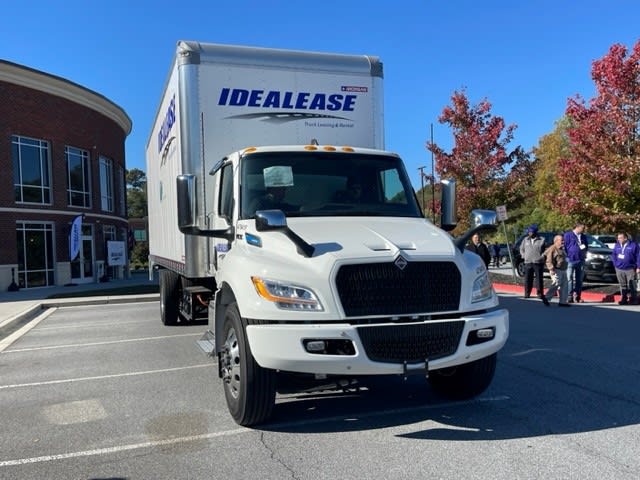
A new Geotab report has found that both light- and medium-duty EVs typically drive short daily distances and have predictable routes with long dwell times.
Photo: Jack Roberts
And most of those trucks are also stationed long enough to have meaningful charging opportunities: at least 12 hours for medium-duty vehicles and at least 10 hours for heavy-duty vehicles.
“When we turn the spotlight on early adopter fleets, we see they are using EVs in a variety of situations,” Argue said. “The most confident of these are operating in more mature markets, but there is still plenty of opportunity to optimize their operations. And that opportunity is in the data. Organizations can use it to identify where they can increase utilization, deploy the right vehicle for the right job and right-size charging infrastructure for the fleet application.”
Download the full report here.
More Fuel Smarts

How Volvo Updated Its D13 for EPA 2027 [Watch]
Volvo’s updated D13 promises lower emissions without sacrificing performance or fuel economy. Take a closer look at what changed inside the engine in this HDT Spotlight video.
Read More →
Diesel Price Spike Shortens Payback for Natural Gas Trucks, Report Says
Energy Vision estimates fleets could recover the higher purchase price of an RNG-fueled Class 8 tractor in 1.3 to 2.8 years under current fuel-price scenarios.
Read More →
Calstart Becomes Catalyst Mobility, Reflecting Broader Focus
Calstart is now Catalyst Mobility, reflecting the nonprofit’s growing national role in clean transportation, including zero-emission trucks, infrastructure and incentive programs.
Read More →

Record Diesel Prices Squeeze Trucking Fleets
Average U.S. diesel prices have climbed to nearly $6 a gallon, surpassing the 2022 record as tight refinery capacity and Middle East disruptions keep fuel costs elevated.
Read More →
Sponsored•September 9, 2026
How Fuel Delivery Shapes Engine Performance
Fuel delivery depends on more than what happens at the injector. For fleet, maintenance and technical professionals, looking at the full path from pump to injector can provide useful context for understanding engine performance.
Read More →
East Coast Port Launches $45M Electric Truck Push
The Port Authority of New York and New Jersey announced millions in incentives for zero-emission drayage trucks, yard tractors, and new charging hubs near the port.
Read More →
California Bill Could Shed Light on Electric Truck Prices
Why do battery-electric Class 8 trucks remain so expensive? A California bill headed to Gov. Gavin Newsom would give fleets and state agencies more visibility into what manufacturers charge.
Read More →
Detroit Opens Orders for EPA 2027 Engines
Detroit isn’t starting from scratch to meet EPA 2027 diesel emissions standards. Its Gen 6 DD13 and DD15 engines keep much of today’s platform while updating the fuel and aftertreatment systems.
Read More →
Zero-Emission Truck Corridor Planned for West Coast
California, Oregon, Washington, British Columbia and Baja California are coordinating plans for truck charging and hydrogen fueling from Canada to Mexico.
Read More →
A Closer Look at Kenworth’s Electric T880E Vocational Truck [Video]
Learn more about Kenworth's T880E battery-electric vocational truck at the Paccar Technical Center, including its range, applications, upfitting considerations, and PTO options, in this HDT Spotlight video.
Read More →