




Fuel Tax Hike Proposal Draws Broad Support
Rep. Earl Blumenauer’s bid to raise federal fuel taxes to pay for more investment in roads and bridges drew strong support from a wide range of interests, including American Trucking Associations.

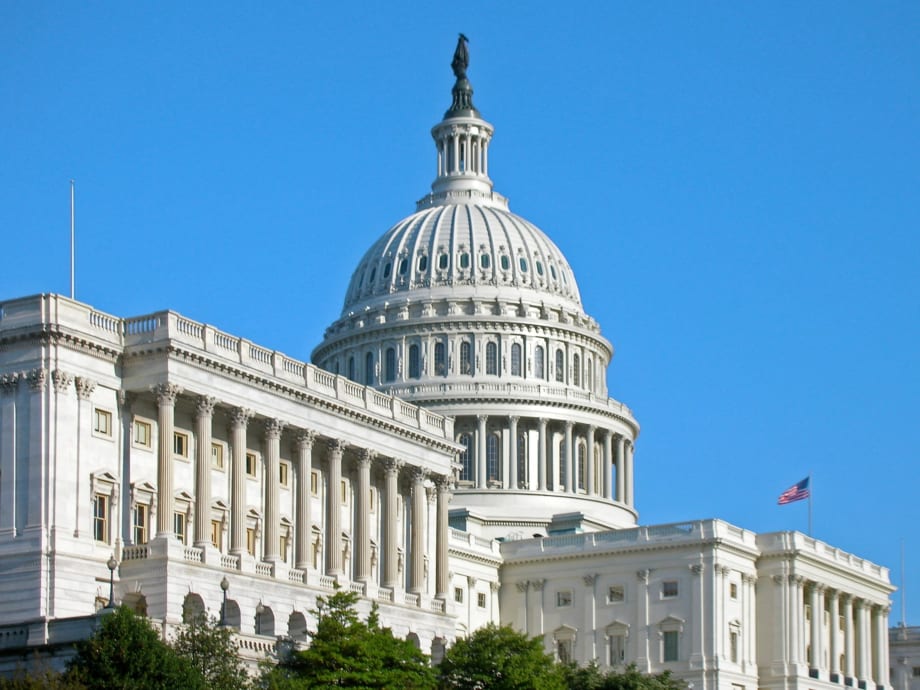

Rep. Earl Blumenauer’s bid to raise federal fuel taxes to pay for more investment in roads and bridges drew strong support from a wide range of interests, including American Trucking Associations.
The trucking trade group “is very pleased” to support Blumenauer’s bill, said ATA President and CEO Bill Graves in a statement.
“Underinvestment in highways is an enormous burden on the trucking industry, raising the cost of moving freight and undermining the reliability of a logistics system that is critical to our nation’s competitiveness,” Graves said.
“The additional investment in highway projects made possible by this new revenue will significantly improve the safety, reliability and efficiency of the trucking industry, to the benefit of all Americans.”
Blumenauer, a Democrat from Oregon, is a former member of the House Transportation and Infrastructure Committee and now serves on the Ways and Means Committee, which will have jurisdiction over his bill.
The Congressman on Wednesday unveiled his proposal to increase gasoline and diesel taxes by 15 cents over three years, starting in 2014.
The tax would be applied gradually: 8 cents a gallon in 2014, 4 cents more in 2015 and 3 more cents in 2016.
That would boost the current gas tax from 18.4 cents to 33.4 cents, and the diesel levy from 24.4 cents to 39.4 cents.
The bill would index the taxes to the cost of living.
It also would repeal the taxes altogether by 2025 in anticipation of replacing them with a vehicle-mile tax. Blumenauer is pursuing more study of the VMT because income from fuel taxes will decline as vehicles become more efficient.
This approach to the highway funding shortfall draws from a number of well-regarded studies, including the National Surface Transportation Policy and Revenue Study Commission and the Simpson-Bowles budget reform proposal. Both recommend significant fuel tax increases and indexing as the quickest, most efficient way to address the funding shortfall in the near term.
Blumenauer noted that the fuel tax has not been increased since 1993.
“Today, with inflation and increased fuel efficiency for vehicles, the average motorist is paying about half as much per mile as they did in 1993,” he said.
“It’s time for Congress to act. There’s a broad and persuasive coalition that stands ready to support Congress, including the U.S. Chamber of Commerce, National AFL-CIO, the construction and trucking industry, cyclists, professional groups, numerous associations of small and medium businesses, local governments, and transit agencies. We just need to give them something to support.”
Joining the chorus of support was the Coalition for America’s Gateways and Trade Corridors, which represents state transportation departments, Metropolitan Planning Organizations, ports and freight corridors.
“Not precluding other potentially viable revenue sources, we see the proposed increase in the federal gasoline and diesel fuel taxes as a crucial step in the right direction and believe the consequences of inaction in addressing the transportation funding crisis are serious,” said Executive Director Leslie Blakey.
United Parcel Service Global Public Affairs President Laura Lane said the proposal will provide a much-needed boost to surface infrastructure.
“Increasing the federal motor fuels tax is a long-overdue proposal to provide the dedicated funding needed to maintain our highways, intermodal connections and other related infrastructure projects,” Lane said.
Also on board are the Association of Equipment Manufacturers, the Amalgamated Transit Union, the American Council of Engineering Companies, the American Society of Civil Engineers, the Laborers’ International Union of North America and the Associated General Contractors of America.
Despite this broad support and general acceptance of the need for infrastructure investment, Blumenauer’s bill faces an uphill battle in a Congress that is deeply divided over taxes and spending.
For instance, a bipartisan House panel recently underscored the need for robust, sustainable funding for highways but Rep. Bill Shuster, R-Pa., the chairman of the House Transportation and Infrastructure Committee is urging caution when talking about money.
Last week he told the American Highway Users Alliance that money is simply too sensitive a subject. The best approach is to explain the need for highway improvements before raising the issue of funding, he said.
More Drivers

Truck Drivers Need More Than Another Alert
Fleets have more visibility into truck health, safety events, and driver activity than ever. The next challenge is turning all that information into useful guidance for the person who has to decide what to do next.
Read More →
FMCSA Removes 110 Truck Driver Training Schools from Certified ELDT List
Federal regulators also are targeting more than 160 additional training providers and launching a nationwide audit of third-party CDL skills testers as part of a broader crackdown on trucking fraud.
Read More →
Hours of Service Pilot Programs: FMCSA Readies for 2027 Rollout
Two pilot programs could eventually reshape hours-of-service rules, giving truck drivers options to pause their 14-hour clock or use longer split sleeper rest periods.
Read More →
Medical Cards, English Proficiency Reshape Roadcheck Violations
Medical-card violations jumped to the top of the driver out-of-service list during CVSA’s 2026 International Roadcheck, while English-language proficiency violations appeared among the leading violations for the first time.
Read More →
Driver Trust Can Make or Break the Success of Fleet Safety Technology
New Teletrac Navman research suggests that onboarding, transparency about driver data, and positive feedback can play a significant role in how commercial drivers respond to safety and coaching technology.
Read More →
EEOC Sues KLLM Over Alleged Sex Discrimination in Driver Training
KLLM is facing a federal sex-discrimination lawsuit over policies the EEOC alleges put female truck driver trainees at a disadvantage.
Read More →
FMCSA Moves to Codify English Language Requirements for Commercial Drivers
By changing regulations on English-language proficiency requirements for commercial drivers, rather than relying on a guidance memo, the FMCSA said future administrations won't be able to walk back the Trump administration's stricter enforcement with just a memo.
Read More →
Drivers Put Western Star Trucks to the Test at Star Nation Experience
Watch to get an inside look at the Western Star trucks, technology, and community behind the Star Nation Experience 2026!
Read More →
Trump Administration Looks to Put More Veterans Behind the Wheel
The Freedom Haulers program pulls together existing and expanded programs at several federal agencies to recruit veterans to drive commercial heavy-duty trucks and cut the red tape for them to get a CDL, training, and employment.
Read More →
Putting Mack’s Command Steer to the Test
A test drive of Mack’s Command Steer active steering system evaluates how it can make truck driving easier and less tiring.
Read More →