




Study: Fuel Consumption of New Trucks Can Be Reduced by More
Fuel consumption of new heavy-duty vehicles could be reduced by more than a third by 2025, according to the American Council for an Energy-Efficient Economy, if the next phase of greenhouse gas/fuel economy standards pushes improvements in areas such as trailer aerodynamics and waste-heat energy recovery.
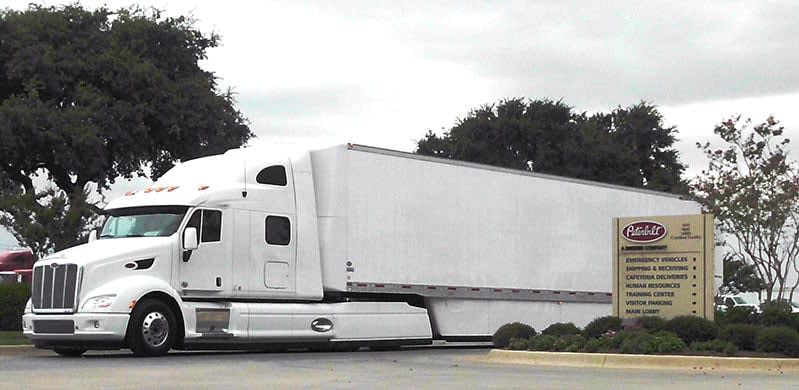
Truck, engine and trailer makers already are investigating some of these fuel-saving technologies through the SuperTruck program.
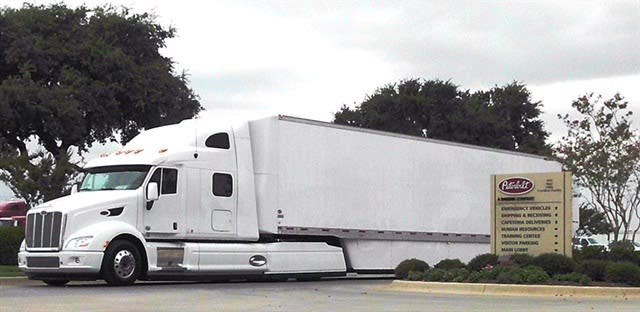
Truck, engine and trailer makers already are investigating some of these fuel-saving technologies through the SuperTruck program.
Fuel consumption of new heavy-duty vehicles could be reduced by more than a third by 2025, according to the American Council for an Energy-Efficient Economy, if the next phase of greenhouse gas/fuel economy standards pushes improvements in areas such as trailer aerodynamics and waste-heat energy recovery.
Heavy-duty vehicles consume 2.9 million barrels per day of petroleum fuels in the United States today, ACEEE notes. In 2011, the National Highway Traffic Safety Administration and the Environmental Protection Agency adopted standards to reduce the fuel consumption and greenhouse gas emissions of heavy-duty vehicles in model years 2014–2018. These "phase 1" standards will reduce new heavy-duty vehicle fuel consumption by 15%, on average, producing savings of half a million barrels of oil per day by 2035.
The agencies are now working on the next phase of the standards, which will apply to vehicles in later model years. A proposed rule is not expected until late 2014, but ACEEE outlines its take on the opportunities in a new fact sheet, "Further Fuel Efficiency Gains for Heavy-Duty Vehicles."
The first phase, going into effect with the 2014 model year, took a component-by-component approach rather than a full-vehicle approach, and as a result missed major fuel efficiency opportunities, ACEEE contends. For instance, they did not capture potential gains from advanced transmissions and hybrid technologies, and excluded trailers. The standards for “vocational vehicles” (for example, delivery trucks, refuse trucks, and buses) reflected improvements in engines and tires only.
For the next phase, ACEEE says the agencies should treat vehicles as systems, rather than as collections of components, in setting the standards. That will help spur the development of better transmissions, driveline efficiency, powertrain integration, and hybridization. Aerodynamic trailers should be integrated with tractors. The standards should draw into the market advanced technologies such as the engine ’bottoming cycle,’ which has been demonstrated in the Department of Energy’s SuperTruck program, and hybrids should be integral to the vocational vehicle technology package.
For instance, the paper notes, heavy-duty tractor-trailers could see a 21% to 34% improvement. Engine downsizing and reusing waste heat energy through a “bottoming cycle” will provide large fuel savings \. A bottoming cycle converts heat energy captured from the exhaust gas recirculation (EGR) loop and the exhaust stream into mechanical energy, which is then either fed back to the shaft for mechanical power or converted to electricity and used for electrical loads. Major savings are available from further improvements to aerodynamics and tires, especially on trailers and through the integration of tractor and trailer.
The ACEEE analysis, which draws from a 2010 National Academy of Sciences report and the agencies’ work on the phase 1 rule, shows that for new heavy-duty vehicles as a whole, strong Phase 2 standards could reduce fuel consumption to 26% below phase 1 levels, which results in a 37% overall reduction from pre-phase 1 levels.
More Fuel Smarts

Record Diesel Prices Squeeze Trucking Fleets
Average U.S. diesel prices have climbed to nearly $6 a gallon, surpassing the 2022 record as tight refinery capacity and Middle East disruptions keep fuel costs elevated.
Read More →
How Fuel Delivery Shapes Engine Performance
Fuel delivery depends on more than what happens at the injector. For fleet, maintenance and technical professionals, looking at the full path from pump to injector can provide useful context for understanding engine performance.
Read More →
East Coast Port Launches $45M Electric Truck Push
The Port Authority of New York and New Jersey announced millions in incentives for zero-emission drayage trucks, yard tractors, and new charging hubs near the port.
Read More →

California Bill Could Shed Light on Electric Truck Prices
Why do battery-electric Class 8 trucks remain so expensive? A California bill headed to Gov. Gavin Newsom would give fleets and state agencies more visibility into what manufacturers charge.
Read More →
Detroit Opens Orders for EPA 2027 Engines
Detroit isn’t starting from scratch to meet EPA 2027 diesel emissions standards. Its Gen 6 DD13 and DD15 engines keep much of today’s platform while updating the fuel and aftertreatment systems.
Read More →
Zero-Emission Truck Corridor Planned for West Coast
California, Oregon, Washington, British Columbia and Baja California are coordinating plans for truck charging and hydrogen fueling from Canada to Mexico.
Read More →
A Closer Look at Kenworth’s Electric T880E Vocational Truck [Video]
Learn more about Kenworth's T880E battery-electric vocational truck at the Paccar Technical Center, including its range, applications, upfitting considerations, and PTO options, in this HDT Spotlight video.
Read More →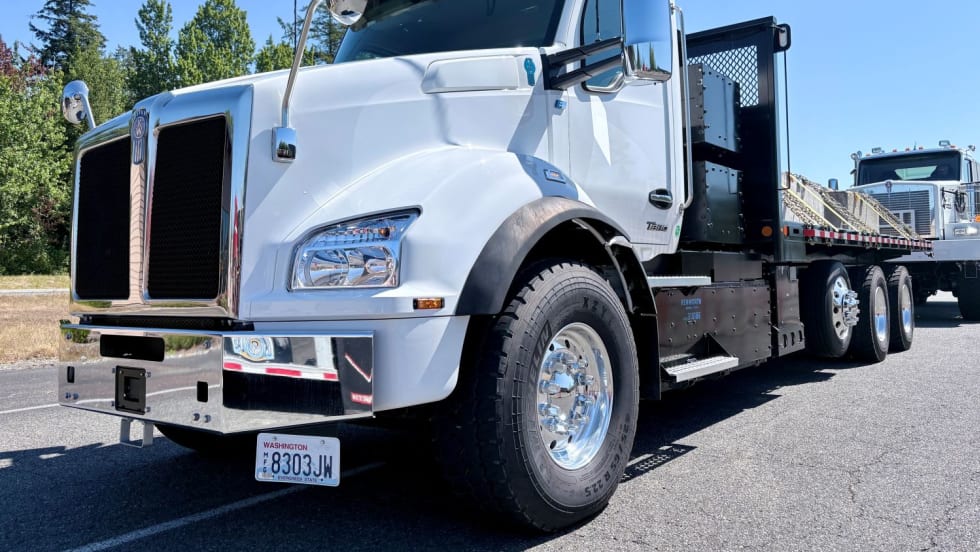
Kenworth T880E Brings EV Power to Vocational Trucks
A closer look at the Kenworth T880E’s range, charging, powertrain and upfit options — and where fleets are showing the most interest.
Read More →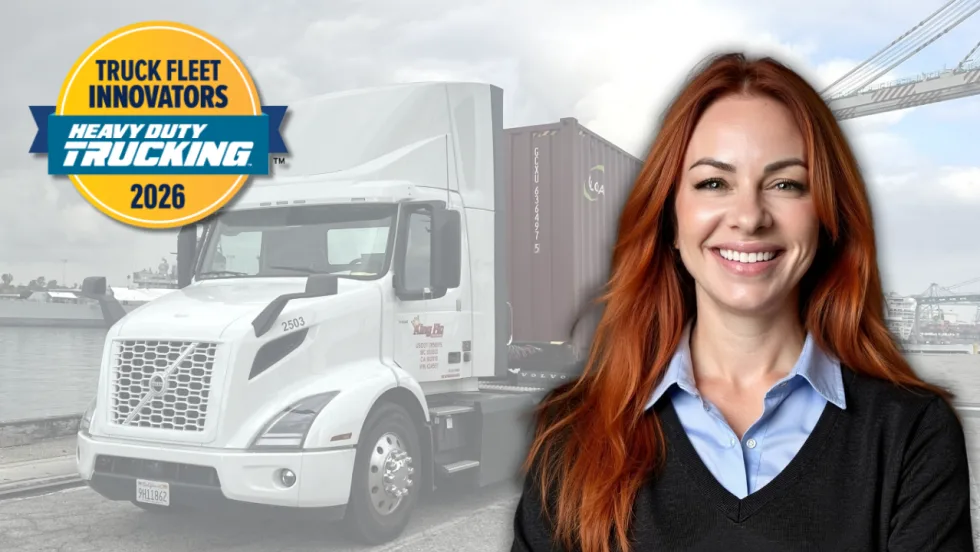
Jennie Abarca Is Proving Electric Trucks Can Do the Job
HDT Truck Fleet Innovator Jennie Abarca is building confidence in fleet electrification one load at a time while openly sharing the challenges she encounters along the way as a small-fleet owner.
Read More →
Cummins Adjusts 2027 Engine Rollout After EPA Proposal
The engine maker will gradually introduce its new Model Year 2027 diesel engines while continuing to offer current models during the transition, citing the EPA's proposed emissions rule changes.
Read More →