





Trucking and Women: Difficult Discussions a Must for Moving Forward
FMCSA to Study Sexual Harassment and Assault
The Federal Motor Carrier Safety Administration is planning a study to help it understand and prevent sexual assault and harassment in the commercial motor vehicle industry.
February 8, 2024
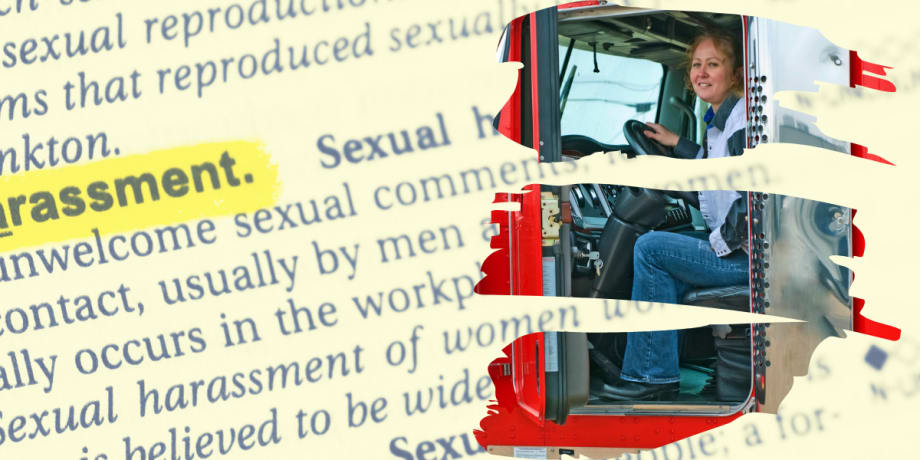
FMCSA says it needs deeper data to help it figure out how to prevent sexual harassment and assault against women in trucking, especially drivers.
HDT Graphic
4 min to read
The Federal Motor Carrier Safety Administration is planning a study of sexual assault and sexual harassment in the commercial motor vehicle industry, especially among drivers. FMCSA said it wants to learn more about how to support women currently in these jobs and those seeking to enter the industry.
The agency published a notice on Feb. 8 asking for information on how best to design and conduct a study to identify, categorize, and assess context and trends of sexual assault and harassment in the industry.
For example, FMCSA is looking for information on how to treat categories of gender, sexual orientation, and ethnicity in the study, as well as best practices in designing questions that use the latest standards for SASH research and address the breadth and lifecycles of careers in the CMV industry.
This study builds on recommendations from FMCSA’s Women of Trucking Advisory Board. FMCSA will use the results of this study to:
Understand potential regulatory or policy measures needed to improve driver safety and mitigate sexual harassment and assault.
Work with industry partners on outreach and other efforts to improve driver safety through prevention.
Support the participation of women in the CMV industry.
WOTAB and Sexual Harassment and Assault
Sexual harassment and assault were one of the first things addressed by WOTAB. During the inaugural meeting of the group in November 2022, members shared personal stories of their experiences with harassment and assault, including rape.
During that meeting, FMCSA released the results of its Crime Prevention for Truckers Survey, conducted by Battelle under contract to FMCSA.
More than 600 truckers responded to the survey, which evaluated harassment of women and minority men truckers, with incidents among non-minority men serving as a control group.
The study found that harassment and crime against drivers are prevalent. Drivers reported a range of harassment types, such as being called offensive names or threatened with weapons. FMCSA pointed out that harassment is not limited by gender and race; it extends to religion, lifestyle, and sexual orientation.
However, that study concluded that women truck drivers are particularly vulnerable to crimes that are sexual in nature and are more likely to experience harassment from another truck driver or from trainers.
The largest difference between men and women responding to the survey was that they “got touched inappropriately,” the most severe of the options the survey outlined. Of those, 33% of women, compared to only 8% of minority males and 14% of non-minority males.
The study found that many harassment incidents go unreported, with most respondents saying they did not think reporting harassment would make a difference. Many feared retaliation.
When the study was released, the agency got comments from industry groups and organizations focused on researching and stopping violence against women and sexual harassment and assault. There was concern that the FMCSA study was not comprehensive and that more questions needed to be asked.
What FMCSA Wants to Know Before it Starts its Research
In its request for input on the design of this study, FMCSA is asking the following questions.
1. What is the optimal study design? FMCSA is considering a survey and interview approach, as well as potential peer reviews of findings at key milestones throughout the study. What type of study design will best characterize the nature and scope of sexual assault and sexual harassment within the CMV industry that can be used to develop appropriate countermeasures?
2. What are best practices or methods for capturing gender identity information?
3. What are best practices to consider when asking demographic questions about sexual orientation and ethnicity?
4. Are there other categories of participant demographics that would improve the study, such as education, age, income, length of time in position (or in the industry), segment of the CMV industry, geographic region of operation, etc?
5. Who should be included in the study?
6. How can the research incorporate stakeholder input and feedback throughout the study (surveys, individual interviews, focus groups, or other formats)?
7. What research is available for designing and administering questions about sexual assault and sexual harassment? For instance, style of questions, sequencing, repetition, phrasing, etc.
8. What are the best methods to capture these issues and trends throughout the evolution of one’s career?
9. What categories of questions should FMCSA include that will ensure a comprehensive approach to the issue?
10. What are good practices for informing stakeholders and the public at key milestones during a long study? How can FMCSA best disseminate information to keep stakeholders informed without compromising the integrity of the study?
Comments are due by March 11: https://www.regulations.gov/docket/FMCSA-2024-0061/document
More Drivers

Truck Drivers Need More Than Another Alert
Fleets have more visibility into truck health, safety events, and driver activity than ever. The next challenge is turning all that information into useful guidance for the person who has to decide what to do next.
Read More →
FMCSA Removes 110 Truck Driver Training Schools from Certified ELDT List
Federal regulators also are targeting more than 160 additional training providers and launching a nationwide audit of third-party CDL skills testers as part of a broader crackdown on trucking fraud.
Read More →
Hours of Service Pilot Programs: FMCSA Readies for 2027 Rollout
Two pilot programs could eventually reshape hours-of-service rules, giving truck drivers options to pause their 14-hour clock or use longer split sleeper rest periods.
Read More →
Medical Cards, English Proficiency Reshape Roadcheck Violations
Medical-card violations jumped to the top of the driver out-of-service list during CVSA’s 2026 International Roadcheck, while English-language proficiency violations appeared among the leading violations for the first time.
Read More →
Driver Trust Can Make or Break the Success of Fleet Safety Technology
New Teletrac Navman research suggests that onboarding, transparency about driver data, and positive feedback can play a significant role in how commercial drivers respond to safety and coaching technology.
Read More →
EEOC Sues KLLM Over Alleged Sex Discrimination in Driver Training
KLLM is facing a federal sex-discrimination lawsuit over policies the EEOC alleges put female truck driver trainees at a disadvantage.
Read More →
FMCSA Moves to Codify English Language Requirements for Commercial Drivers
By changing regulations on English-language proficiency requirements for commercial drivers, rather than relying on a guidance memo, the FMCSA said future administrations won't be able to walk back the Trump administration's stricter enforcement with just a memo.
Read More →
Drivers Put Western Star Trucks to the Test at Star Nation Experience
Watch to get an inside look at the Western Star trucks, technology, and community behind the Star Nation Experience 2026!
Read More →
Trump Administration Looks to Put More Veterans Behind the Wheel
The Freedom Haulers program pulls together existing and expanded programs at several federal agencies to recruit veterans to drive commercial heavy-duty trucks and cut the red tape for them to get a CDL, training, and employment.
Read More →
Putting Mack’s Command Steer to the Test
A test drive of Mack’s Command Steer active steering system evaluates how it can make truck driving easier and less tiring.
Read More →