




FMCSA Eases CDL Process for States
In response to petitions from states and the industry, the Federal Motor Carrier Safety Administration is changing provisions of its commercial driver’s license rule.

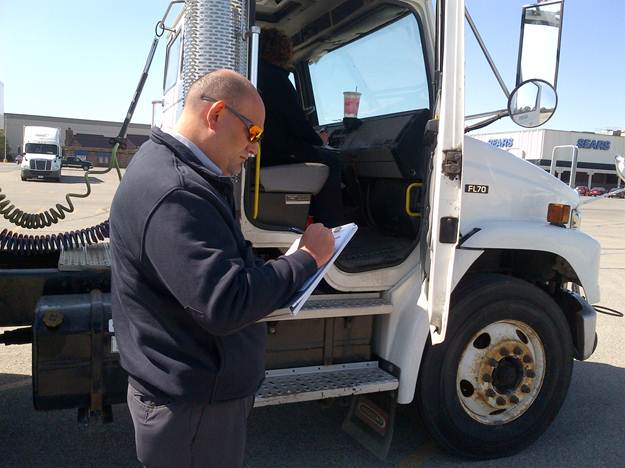
The agency agreed that it is too burdensome to require states to conduct background checks on all test examiners. Now the checks are required only when the examiner is hired.
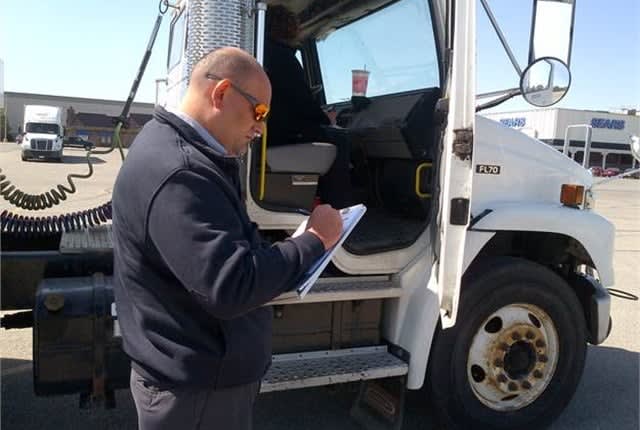
The agency agreed that it is too burdensome to require states to conduct background checks on all test examiners. Now the checks are required only when the examiner is hired.
In response to petitions from states and the industry, the Federal Motor Carrier Safety Administration is changing provisions of its commercial driver’s license rule.
The rule, which has been in effect since 2011, sets standards for CDL testing and established the Commercial Learner’s Permit.
The agency is making a half-dozen changes, mainly affecting procedures for handling the CDL process.
Among the changes:
The agency eased its requirement that two license agency employees verify an applicant’s documents. It acknowledged that this is burdensome and said the intent is to make sure that more than one employee participate substantively in the licensing process, rather than to require two employees to separately review each document.
The current rule says training schools may not skills-test the applicants they have trained unless there is no place else to do the testing within 50 miles. The agency acknowledged that this is too restrictive and said it is all right for the school to do the testing, as long as the trainer is not the one who does it.
The agency eliminated the requirement that third-party CDL testers that are governmental entities maintain bonds to cover re-testing of drivers if fraud is uncovered.
The current rule says states may not use a digital color image or a black and white laser engraved photo of the driver on the learner’s permit. The agency agreed that this is too restrictive and said the states may use these techniques if they choose.
The agency agreed that it is too burdensome to require states to conduct background checks on all test examiners. Now the checks are required only when the examiner is hired.
The new rule takes effect April 24. For more details see yesterday’s Federal Register.
More Drivers

Truck Drivers Need More Than Another Alert
Fleets have more visibility into truck health, safety events, and driver activity than ever. The next challenge is turning all that information into useful guidance for the person who has to decide what to do next.
Read More →
FMCSA Removes 110 Truck Driver Training Schools from Certified ELDT List
Federal regulators also are targeting more than 160 additional training providers and launching a nationwide audit of third-party CDL skills testers as part of a broader crackdown on trucking fraud.
Read More →
Hours of Service Pilot Programs: FMCSA Readies for 2027 Rollout
Two pilot programs could eventually reshape hours-of-service rules, giving truck drivers options to pause their 14-hour clock or use longer split sleeper rest periods.
Read More →
Medical Cards, English Proficiency Reshape Roadcheck Violations
Medical-card violations jumped to the top of the driver out-of-service list during CVSA’s 2026 International Roadcheck, while English-language proficiency violations appeared among the leading violations for the first time.
Read More →
Driver Trust Can Make or Break the Success of Fleet Safety Technology
New Teletrac Navman research suggests that onboarding, transparency about driver data, and positive feedback can play a significant role in how commercial drivers respond to safety and coaching technology.
Read More →
EEOC Sues KLLM Over Alleged Sex Discrimination in Driver Training
KLLM is facing a federal sex-discrimination lawsuit over policies the EEOC alleges put female truck driver trainees at a disadvantage.
Read More →
FMCSA Moves to Codify English Language Requirements for Commercial Drivers
By changing regulations on English-language proficiency requirements for commercial drivers, rather than relying on a guidance memo, the FMCSA said future administrations won't be able to walk back the Trump administration's stricter enforcement with just a memo.
Read More →
Drivers Put Western Star Trucks to the Test at Star Nation Experience
Watch to get an inside look at the Western Star trucks, technology, and community behind the Star Nation Experience 2026!
Read More →
Trump Administration Looks to Put More Veterans Behind the Wheel
The Freedom Haulers program pulls together existing and expanded programs at several federal agencies to recruit veterans to drive commercial heavy-duty trucks and cut the red tape for them to get a CDL, training, and employment.
Read More →
Putting Mack’s Command Steer to the Test
A test drive of Mack’s Command Steer active steering system evaluates how it can make truck driving easier and less tiring.
Read More →