





Employee Misclassification: Don’t Use a Cannon to Swat a Mosquito [Commentary]
Final DOL Independent Contractor Rule Addresses Trucking
A final rule clarifying the definition of independent contractor published Jan. 7 by the Department of Labor covers several issues specific to trucking – but there are questions as to whether it will actually take effect under the incoming Biden administration.
January 7, 2021
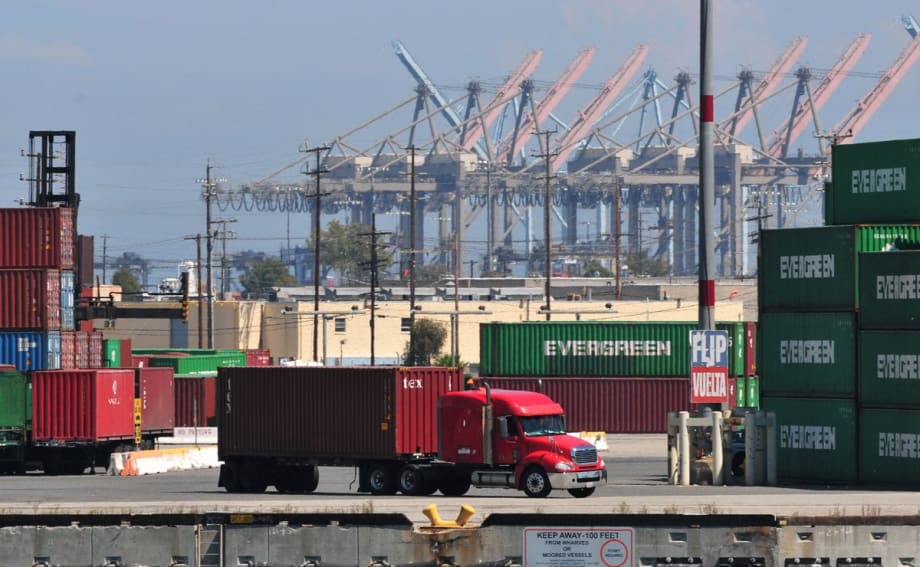
Intermodal port drivers have been a key target in the battle over the definition of independent contractor.
Photo: Jim Park
4 min to read
The Department of Labor issued a final rule defining independent contractor versus employee under the Fair Labor Standards Act, but its future is uncertain under the incoming Biden administration.
Proposed in September, the rule adopts an “economic reality” test to determine a worker’s status as an FLSA employee or an independent contractor. The test considers whether a worker is in business for himself or herself (independent contractor) or is economically dependent on a putative employer for work (employee). The DOL said that the current multifactor test for determining independent contractor status under the FLSA, “as currently applied, has proven to be unclear and unwieldy.”
In the rule, the Department of Labor suggested that the proposed rule received overwhelming support from the more than 1,800 commenters, with individual independent contractors supporting the text of the rule by a 20-1 margin, according to an alert from the transportation attorneys at Scopelitis, Garvin, Light, Hanson & Feary.
However, it’s likely to be delayed or revoked by the incoming Biden administration. The rule was specifically given as an example by the Biden-Harris transition team when it announced plans to issue a memo to take effect after noon on Jan. 20 to halt or delay “midnight regulations,” actions taken by the Trump administration that will have not yet taken effect by inauguration day.
If the rule does move forward, it will become effective in early March.
Scopelitis explained that the final rule is an economic realities test with a two-tier analysis.
First-Tier/Core Factors:
Nature and degree of control over work.
Opportunity for profit or loss based on initiative and/or investment.
Where the Core Factors point in the same direction, there is a substantial likelihood that the employment classification indicated by the Core Factors will be determinative.
Three second-tier factors (the Guideposts) may provide additional guidance, especially where the Core Factors do not point to the same classification, Scopelitis explains:
Amount of skill required.
Degree of permanence of the relationship.
Whether the work is part of an integrated unit of production.
The rule makes clear that the actual practice of the parties is more relevant than what may be theoretically or contractually possible, Scopelitis said, and also provides six fact-specific examples applying the factors, including a specific example regarding trucking.
The American Trucking Associations notes that the final rule states that contractual provisions ensuring compliance with legal responsibilities, like safety, should not be considered evidence of control.
In addition, the final rule clarified several issues identified by ATA in its comments on the proposal:
The DOL acknowledged in the preamble that long-term relationships between parties do not necessarily imply control. This is important to truckikng because many ICs choose to provide driving services and a truck to a single motor carrier and take every opportunity offered by that carrier because that is convenient and profitable for them.
The final rule preamble also discusses the intent to carve out compliance with safety and non-safety mandates (e.g., the Department of Transportation’s Truth-In-Leasing regulations) and various quality assurance requirements from analysis of the worker’s control or ability to earn a profit or suffer a loss.
The department also clarified its view that piece rates (e.g., pay by load or mile) does not conclusively define IC status.
The Teamsters issued a statement strongly opposing the new rule and asking the incoming Biden administration to not allow the rule to take effect. The rule would make it easier for companies to classify their workers as independent contractors and therefore, not be covered by federal minimum wage and overtime laws, it said.
“As it stands, companies across the country have sought loopholes and workarounds to misclassify workers as independent contractors, which denies them proper wages and job protections as well as access to unemployment benefits,” said the release. “Teamsters have been aggressively pushing back on this issue for years at the ports, and especially during the pandemic where misclassified truck drivers are denied proper protective gear and workplace safety measures in addition to fair wages and benefits. There is already a growing anti-worker issue that will be exacerbated if these regulations are enforced.”
"Joe Biden is a friend of workers as he has said on the campaign trail and proven with his public service," Teamsters General President Jim Hoffa said. "I have no doubt that he will postpone the implementation of this despicable rule so hardworking Americans can earn a fair wage and support their families."
ATA also notes that the final rule does not preempt statewage and hour laws, though many states follow federal guidance and rules in construing employment classification and may adopt provisions in the final rule for purposes of applying state law (even if the rule never goes into effect federally). The final rule also does not directly impact workers compensation, unemployment taxes, state or federal payroll taxes, or other employment laws such as Title VII. (More analysis from ATA here.)
More Drivers

Truck Drivers Need More Than Another Alert
Fleets have more visibility into truck health, safety events, and driver activity than ever. The next challenge is turning all that information into useful guidance for the person who has to decide what to do next.
Read More →
FMCSA Removes 110 Truck Driver Training Schools from Certified ELDT List
Federal regulators also are targeting more than 160 additional training providers and launching a nationwide audit of third-party CDL skills testers as part of a broader crackdown on trucking fraud.
Read More →
Hours of Service Pilot Programs: FMCSA Readies for 2027 Rollout
Two pilot programs could eventually reshape hours-of-service rules, giving truck drivers options to pause their 14-hour clock or use longer split sleeper rest periods.
Read More →
Medical Cards, English Proficiency Reshape Roadcheck Violations
Medical-card violations jumped to the top of the driver out-of-service list during CVSA’s 2026 International Roadcheck, while English-language proficiency violations appeared among the leading violations for the first time.
Read More →
Driver Trust Can Make or Break the Success of Fleet Safety Technology
New Teletrac Navman research suggests that onboarding, transparency about driver data, and positive feedback can play a significant role in how commercial drivers respond to safety and coaching technology.
Read More →
EEOC Sues KLLM Over Alleged Sex Discrimination in Driver Training
KLLM is facing a federal sex-discrimination lawsuit over policies the EEOC alleges put female truck driver trainees at a disadvantage.
Read More →
FMCSA Moves to Codify English Language Requirements for Commercial Drivers
By changing regulations on English-language proficiency requirements for commercial drivers, rather than relying on a guidance memo, the FMCSA said future administrations won't be able to walk back the Trump administration's stricter enforcement with just a memo.
Read More →
Drivers Put Western Star Trucks to the Test at Star Nation Experience
Watch to get an inside look at the Western Star trucks, technology, and community behind the Star Nation Experience 2026!
Read More →
Trump Administration Looks to Put More Veterans Behind the Wheel
The Freedom Haulers program pulls together existing and expanded programs at several federal agencies to recruit veterans to drive commercial heavy-duty trucks and cut the red tape for them to get a CDL, training, and employment.
Read More →
Putting Mack’s Command Steer to the Test
A test drive of Mack’s Command Steer active steering system evaluates how it can make truck driving easier and less tiring.
Read More →