




Elon Musk: Tesla Semi Ready for Production – But There’s a Snag
Elon Musk says the Tesla Semi Class 8 electric tractor is ready to go into production later this year – but getting the needed batteries is a problem.

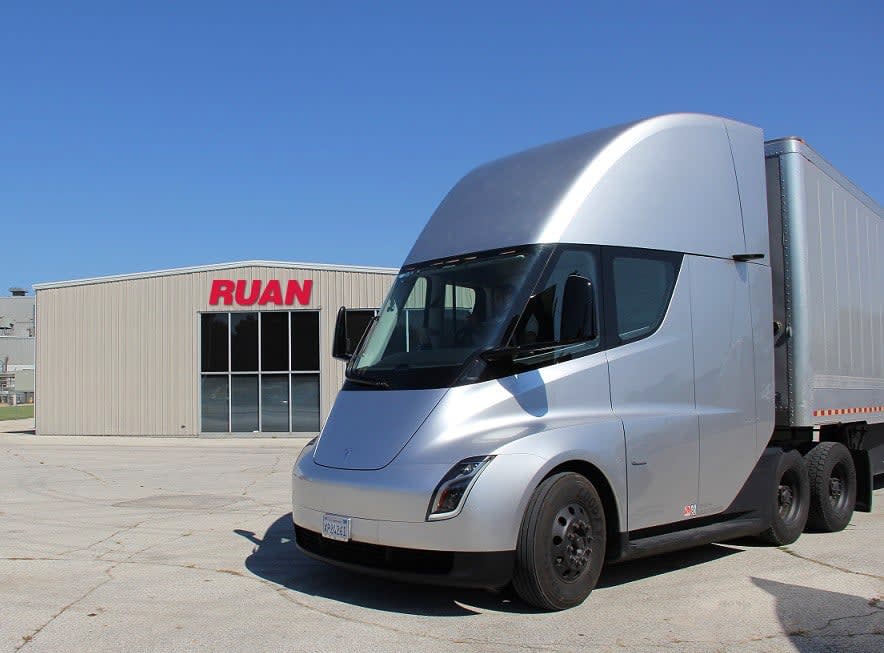
Tesla CEO Elon Musk said the company's Semi truck will enter production later this year, once battery production issues are resolved.
Photo: Ruan
Tesla CEO Elon Musk said the company’s Semi, a Class 8 battery-electric tractor, has finished its pre-production engineering work and is ready to go to market later this year. However, the company’s limited ability to get battery cells is holding it back, he said speaking to investors on the company’s 2020 fourth-quarter earnings call Jan. 27. The company reported its first-ever full-year profit.
The call was reported by TechCrunch, CNBC and other news outlets.
“The main reason we have not accelerated new products – like for example Tesla Semi – is that we simply don’t have enough cells for it,” Musk said on the call. “If we were to make the Semi right now, and we could easily go into production with the Semi right now, but we would not have enough cells for it.”
Musk expects this problem to be temporary, saying that Tesla expects to have sufficient cell volume to meet its needs once it goes into production at its pilot battery factory in Fremont, California, with its 4680 battery pack. The battery cells, which Tesla designed and unveiled to shareholders at a battery day presentation last September, are large, tabless lithium-ion cells with a design that allows for greater energy density and vehicle range.
“A Semi would use typically five times the number of cells that a car would use, but it would not sell for five times what a car would sell for, so it kinda would not make sense for us to do the Semi right now,” Musk added. “But it will absolutely make sense for us to do it as soon as we can address the cell production constraint.”
It's not the first setback for the Semi. Initially, when the electric truck was dramatically introduced to the industry in 2017, Musk announced production for the Semi would begin in 2019. Then it was 2020. Last year, Musk revealed during a first-quarter earnings call that the Semi would be delayed into 2021.
Tesla Electric Van?
The battery constraint points to the same conclusion for the possibility of Tesla developing a van, Musk noted, adding that the lifting of the constraint would open Tesla to possibly pursue the development of that category of vehicle.
Musk also said that Tesla has big plans for “exponentially” ramping up cell production, with a goal of having production capacity infrastructure in place for a total of 200 gigawatt hours per year by 2022. Musk said Tesla would strive to produce around 40% of that by capacity next year, and noted that future process improvements would likely add additional gigawatt hours of cell capacity in a gradual series of improvements as production processes streamlined.
Musk’s comments regarding a Tesla van are timely, as electric vans and other light-duty trucks are expected to be in high demand in the U.S due to President Biden’s Buy America plan, through which he aims to replace the federal government’s fleet of internal combustion engine vehicles with cleaner, quieter electrics. According to the most recently available data from the General Services Agency, the federal fleet includes more than 400,000 trucks, a category that encompasses light duty pickups and vans.
Tesla competitors, including Ford, GM, Daimler, Rivian and others are developing, and in some cases already selling, battery-electric vans, and new players are appearing on the market regularly.
“I think Tesla’s definitely going to make an electric van at some point,” Musk said. “The thing to bear in mind is that there is fundamentally a constraint on battery cell output. If you’re not involved in manufacturing, it’s really hard to appreciate just how hard it is to scale production. It’s the hardest thing in the world!”
More Fuel Smarts
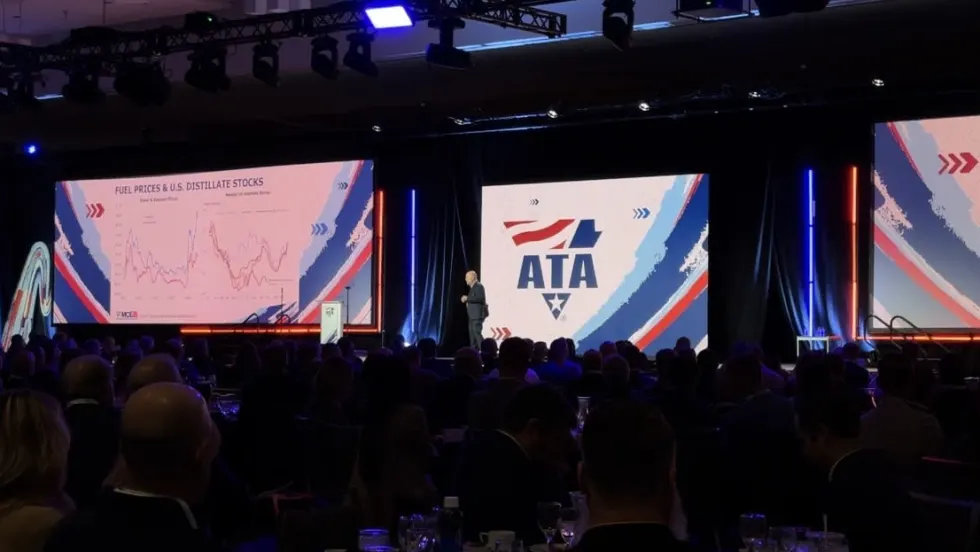
Trucking’s Diesel Squeeze Isn’t Letting Up
With diesel topping $6 a gallon nationally, ATA's Bob Costello explains why fleets should prepare for continued pressure at the pump.
Read More →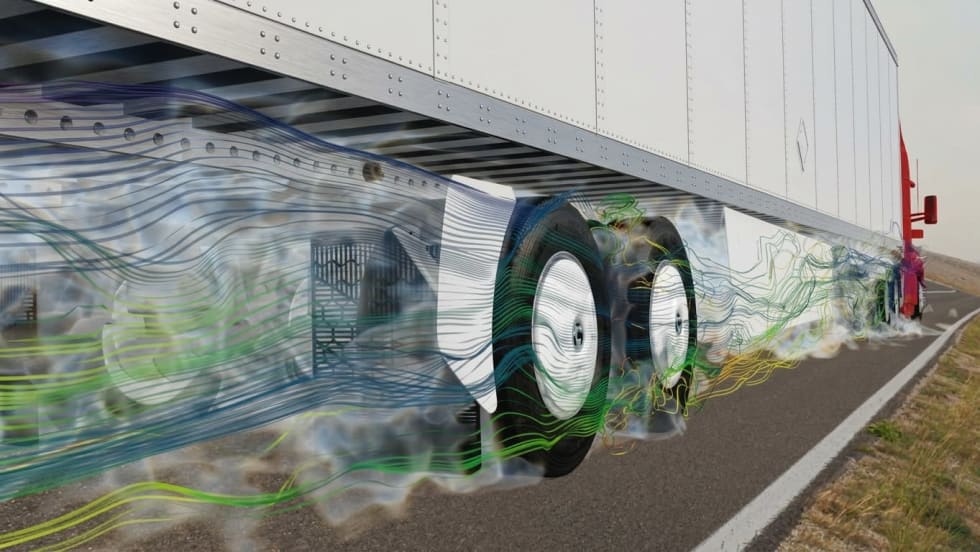
FlowBelow Redesigns Trailer AeroSlider to Cut Fuel Use
The lighter trailer aerodynamic system installs in less than 45 minutes, according to the company, with potential payback in under a year depending on fuel prices and trailer mileage.
Read More →
Why Diesel Price Relief Efforts May Fall Short
Diesel prices have eased from September’s record high, but doubts about additional Russian supply and limits on dyed-diesel tax relief mean trucking fleets still face expensive fuel. And prices could go higher.
Read More →
Why Small Fuel Savings Matter in Trucking
Can better fuel economy help pay for driver raises? In this podcast, GP Transco explains how small efficiency gains create room to reinvest in its people.
Read More →
How GP Transco Cuts Trucking Fuel Costs, a Tenth of a Gallon at a Time
What’s another tenth of a mile per gallon worth? GP Transco shares how equipment upgrades and driver coaching turn small gains into meaningful fuel savings.
Read More →
Electric Yard Tractors Move Beyond Pilots
Operating-cost savings have overtaken sustainability goals as the leading reason surveyed fleets are adopting battery-electric terminal tractors, according to new NACFE research.
Read More →
Geotab Links Fleet Card to Vehicle Data
The new card combines fuel discounts with telematics-based purchase controls. Geotab’s analysis also points to potential savings from choosing lower-priced fuel stops.
Read More →
Fleet Economics Shape Electric Truck Outlook
ACT Research expects costs, charging infrastructure, and technology improvements to drive zero-emission commercial vehicle adoption as federal regulations and incentives retreat.
Read More →
Wex Adds Cardless Fuel Payments for Over-the-Road Customers
A new fuel card feature for Wex customers offers convenience and security.
Read More →
New California Law Could Shed Light on Electric Truck Prices
Why do battery-electric Class 8 trucks remain so expensive? A California bill signed by Gov. Gavin Newsom would give fleets and state agencies more visibility into what manufacturers charge.
Read More →