




Cyclist Tragedy Sparks Side Guard Debate in Canada
Olivia Chow thinks all trucks need side guards on their trailers and she is introducing a bill in Canada's Parliament to try to make it a reality
Olivia Chow thinks all trucks need side guards on their trailers and she is introducing a bill in Canada's Parliament to try to make it a reality.
Chow, of Canada's New Democratic Party, is a member of the Canadian House of Commons, and it's not the first time she has attempted to have this law passed.
This time though, as the widow of the late NDP Leader Jack Layton and as the NDP's Transport Critic, Chow is exploiting the tragic death of a Toronto mother who was in an accident with a truck on one of the city's busiest main streets last week.
No charges have been laid in the accident. Police are still investigating.
The Canadian Trucking Alliance says it's far from clear whether such a law would save lives or lead to less serious injury of bicyclists. And, says the alliance's president, David Bradley, CTA's opposition to the bill has nothing to do with cost or competitive issues, as Chow suggested in recent media reports.
Bradley points to a March 2010 study conducted by the National Research Council for Transport Canada which concluded "it is not clear if side guards will reduce deaths and serious injury of if the guards will simply alter the mode of death and serious injury" and "cyclist advocates who have stated that the biggest problem is a lack of awareness of how to safely share the road with other vehicles and bike lanes which would separate cyclists from other traffic."
"This is a complex issue," says Bradley. "While we fully understand the emotions that would be cause for some people to support mandatory side guards, we feel the solution lies elsewhere - in increasing awareness and education and planning for bike lanes."
He also said there needs to be a distinction made between trucks operating in inner-city areas and tractor-trailer units that operate on highways. "Very seldom, if ever, will the vast majority of tractor-trailers operate downtown; they are unlikely to ever encounter cyclists," he says. "Does it make sense that tractor-trailers be required to install side-guards?"
Bradley also notes that an increasing number of tractor-trailer units are being equipped with side fairings which reduce aerodynamic drag, thereby improving fuel economy and reducing GHG emissions. The National Research Council study found that the kind of side guards contemplated in Chow's bill "would be detrimental to the drag coefficient of highway vehicles travelling at higher speeds."
According to figures from Transport Canada, there are about 221,000 registered commercial highway tractor-trailer units in Canada. Given that most trucking companies have at least a 2:1 tractor-trailer ratio, that would mean that at least 442,000 trailers would need to have side guards installed on them.
Bradley says he is disappointed that Chow is using the introduction of her bill to cast aspersions on the trucking industry. In at least one media report she suggests that cost is the issue, and is quoted in the Toronto Star as saying the federal transport minister "is only hearing the voices of the trucking industry."
But, says Bradley, "CTA has a clear track record in advocating for the mandatory installation of technologies and devices that are proven to improve highway safety, such as speed limiters on all trucks, electronic on-board recorders to monitor compliance with truck driver hours of service rules and roll-stability systems. And, for the record, CTA has never been invited to discuss side-guards with the current minister or any other minister in at least the previous 25 years. Nor has Ms. Chow ever discussed the issue with us."
CTA has worked with cycling advocates to improve road safety and awareness of sharing the road with trucks.
More Safety & Compliance
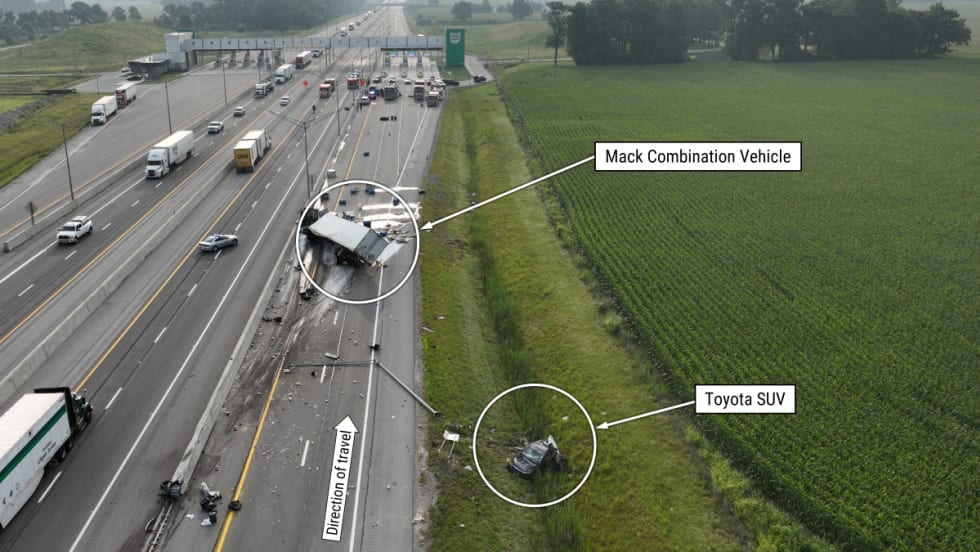
Fatal Crash Exposes Toll Plaza Risks
An NTSB investigation found that last-minute lane changes and large speed differences at an Ohio toll plaza created a hazard the truck driver couldn't avoid in time.
Read More →
When Language Stops the Truck: The Return of ELP Out-of-Service Orders
English language proficiency rules for commercial drivers aren’t new, but renewed out-of-service enforcement has raised the stakes. Here’s what carriers need to know before a driver reaches a roadside inspection.
Read More →
A Camera Isn't a Safety Program. Here's What Brokers Are Screening for Now
Footage alone may not be enough to pass broker vetting processes. Here's what counts as a defensible safety program now.
Read More →
Marijuana and Trucking’s Drug-Testing Dilemma
Marijuana is getting stronger, laws are changing, and drug tests still can’t reliably establish impairment. What does that mean for truck drivers and the fleets that employ them?
Read More →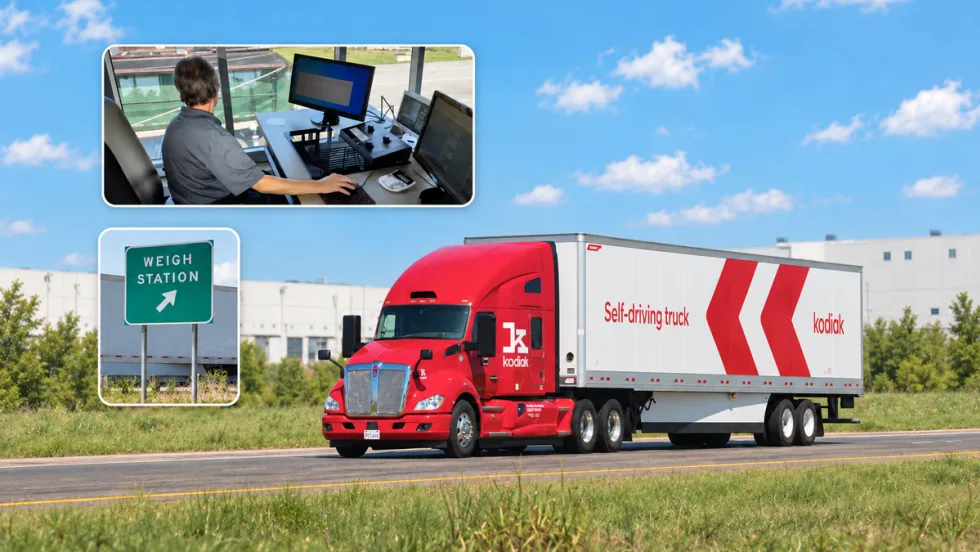
PrePass, Kodiak Connect Driverless Trucks to Roadside Enforcement
The system will allow enforcement agencies to verify Enhanced Inspection information and decide whether Kodiak’s autonomous trucks can bypass roadside screening sites.
Read More →
From One Generation to the Next: How Mentorship Builds Safer Truck Drivers
After three decades in trucking, Harold Perry shares what he's learned about driver safety, mentorship, and helping the next generation build confidence behind the wheel.
Read More →
FMCSA Pauses Biennial-Update Enforcement Amid Motus Transition
Carriers whose updates were due on or after June 1 have more time, while FMCSA works to stabilize its new registration system and warns of phishing sites impersonating its new carrier registration system, Motus.
Read More →
ZF Expands Commercial Vehicle Push in North America
ZF is expanding its North American commercial-vehicle presence with new transmission applications, electrification, trailer technology and autonomous-driving systems.
Read More →
Truck Drivers Need More Than Another Alert
Fleets have more visibility into truck health, safety events, and driver activity than ever. The next challenge is turning all that information into useful guidance for the person who has to decide what to do next.
Read More →
Tesla Wants a Self-Driving Semi. Are Cameras Enough?
Could Tesla’s camera-only autonomous driving technology work on an 80,000-pound Semi? In this commentary, HDT's Deborah Lockridge takes a look at Tesla, Cybercab, and how autonomous trucks see the road.
Read More →