




“Of course the energy sector remains under pressure, but we are able to continue to offer a cleaner fuel and maintain our economic advantage albeit at a slightly smaller spread"
Clean Energy Fuels Sales Jump
Despite lower diesel prices potentially making natural gas less attractive as a fuel, Clean Energy Fuels Corp. sold more of its alternative to trucking’s main fuel last year while reporting mixed financial numbers.
by Staff
March 2, 2015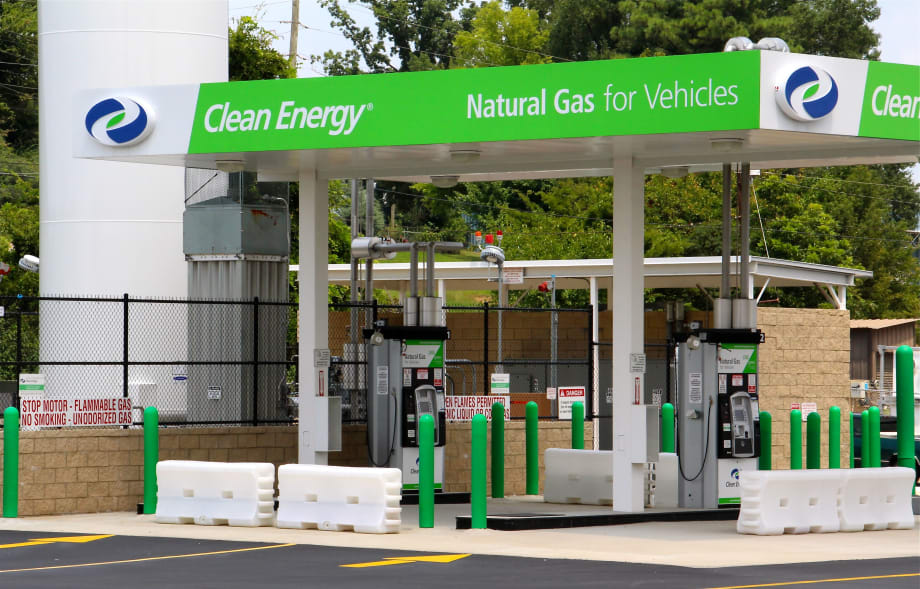
Photo: Evan Lockridge
3 min to read
Photo: Evan Lockridge
Despite lower diesel prices potentially making natural gas less attractive as a fuel, Clean Energy Fuels Corp. sold more of its alternative to trucking’s main fuel last year while reporting mixed financial numbers.
In releasing its earnings last week, the company reported gallons delivered for the fourth quarter of 2014 increased 30% to 72.4 million, up from 55.5 million gallons delivered in the same period a year ago. For all of 2014, gallons delivered totaled 265.1 million, up from 214.4 million gallons delivered during 2013.
Clean Energy Fuels defines "gallons delivered" as its gallons of compressed natural gas, liquefied natural gas and renewable natural gas.
Revenue for the fourth quarter of 2014 was $132.1 million, compared to $85 million for the fourth quarter of 2013. The increase was primarily attributed by the company to higher volumes and station sales and the addition of NG Advantage LLC, a majority owned subsidiary acquired in October that is engaged in the business of transporting compressed natural gas in high-capacity trailers to large industrial and institutional energy users, such as hospitals, food processors, manufacturers and paper mills, that do not have direct access to natural gas pipelines.
Revenue for 2014 totaled $428.9 million, compared to $352.5 million of revenue in 2013. The increase was primarily attributable to increased volumes, station sales, compressor sales and the addition of NG Advantage, according to the company.
Net income during the fourth quarter was $608,000, 1 cent per diluted share, compared to a net loss of $32.3 million, or a loss of 34 cents per diluted share a year earlier.
For all of 2014, Clean Energy losses widened to $90.9 million, or a loss of 96 cents per share, compared to a loss $66.9 million, or loss of 96 cents per share in 2013. However, adjusted earnings before interest, taxes, depreciation and amortization for the fourth quarter of 2014 totaled $37.2 million compared to an adjusted EBITDA loss of $1.8 million in the fourth quarter of 2013. Adjusted EBITDA for 2014 totaled $23.7 million, compared to $33.6 million in 2013.
"I'm very pleased with our continued volume growth, strong station construction sales and continued leveraging of our existing infrastructure," said Andrew J. Littlefair, president and CEO. The enactment of the alternative fuel excise tax credit at the end of 2014 was a nice bump to our results for Q4 and 2014 which will also be a positive cash inflow in 2015.
“Of course the energy sector remains under pressure, but we are able to continue to offer a cleaner fuel and maintain our economic advantage albeit at a slightly smaller spread."
He said in the heavy-duty trucking market, the company sees more fleets ordering more trucks, and it expects engine orders to continue to grow.
“We continue to sign fueling deals and open stations for new customers, and are seeing existing natural gas truck fleets increase their orders. For the year, we signed deals with 66 trucking fleet operators that are either new or expanding their natural gas operation,” Littlefair said. “The trucks ordered by these operators are expected to use approximately 14 million gallons annually. We delivered 42% more gallons this year in trucking, and had our highest volume quarter to date in that sector."
He said Clean Energy Fuels continues to make progress on the incremental cost of the truck. “We are still in the early stages, and we're working with all the OEMs, dealers, and equipment suppliers in the natural gas fueling space to bring down these costs.”
More Fuel Smarts

How Volvo Updated Its D13 for EPA 2027 [Watch]
Volvo’s updated D13 promises lower emissions without sacrificing performance or fuel economy. Take a closer look at what changed inside the engine in this HDT Spotlight video.
Read More →
Diesel Price Spike Shortens Payback for Natural Gas Trucks, Report Says
Energy Vision estimates fleets could recover the higher purchase price of an RNG-fueled Class 8 tractor in 1.3 to 2.8 years under current fuel-price scenarios.
Read More →
Calstart Becomes Catalyst Mobility, Reflecting Broader Focus
Calstart is now Catalyst Mobility, reflecting the nonprofit’s growing national role in clean transportation, including zero-emission trucks, infrastructure and incentive programs.
Read More →

Record Diesel Prices Squeeze Trucking Fleets
Average U.S. diesel prices have climbed to nearly $6 a gallon, surpassing the 2022 record as tight refinery capacity and Middle East disruptions keep fuel costs elevated.
Read More →
Sponsored•September 9, 2026
How Fuel Delivery Shapes Engine Performance
Fuel delivery depends on more than what happens at the injector. For fleet, maintenance and technical professionals, looking at the full path from pump to injector can provide useful context for understanding engine performance.
Read More →
East Coast Port Launches $45M Electric Truck Push
The Port Authority of New York and New Jersey announced millions in incentives for zero-emission drayage trucks, yard tractors, and new charging hubs near the port.
Read More →
California Bill Could Shed Light on Electric Truck Prices
Why do battery-electric Class 8 trucks remain so expensive? A California bill headed to Gov. Gavin Newsom would give fleets and state agencies more visibility into what manufacturers charge.
Read More →
Detroit Opens Orders for EPA 2027 Engines
Detroit isn’t starting from scratch to meet EPA 2027 diesel emissions standards. Its Gen 6 DD13 and DD15 engines keep much of today’s platform while updating the fuel and aftertreatment systems.
Read More →
Zero-Emission Truck Corridor Planned for West Coast
California, Oregon, Washington, British Columbia and Baja California are coordinating plans for truck charging and hydrogen fueling from Canada to Mexico.
Read More →
A Closer Look at Kenworth’s Electric T880E Vocational Truck [Video]
Learn more about Kenworth's T880E battery-electric vocational truck at the Paccar Technical Center, including its range, applications, upfitting considerations, and PTO options, in this HDT Spotlight video.
Read More →