




"California-Only" Diesel Will Come at High Cost for State, Study Says
Significant job losses will be directly attributable to California Air Resources Board's fuel policies, says a new study by the California Trucking Association. Goods movement and agriculture sectors will be especially hard hit if the policies are allowed to go into effect as currently designed
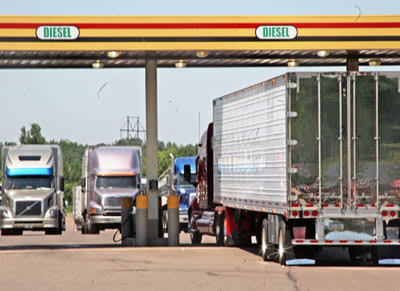
A new study found that by 2020, CARB's Low Carbon Fuel Standard, in combination with the AB 32 Cap-and-Trade Program, could increase the price of diesel fuel by $2.22 per gallon.
Significant job losses will be directly attributable to California Air Resources Board's fuel policies, says a new study by the California Trucking Association. Goods movement and agriculture sectors will be especially hard hit if the policies are allowed to go into effect as currently designed.
The report, titled "The Impact of the Low Carbon Fuel Standard and Cap-and-Trade Programs on California Retail Diesel Prices" demonstrates the effect that CARB's regulatory actions will have on the state's retail diesel future leading to a $6.69 per gallon price tag.
The study, prepared by Stonebridge Associates, Inc., finds that by 2020, CARB's Low Carbon Fuel Standard, in combination with the AB 32 Cap-and-Trade Program, could increase the price of diesel fuel by $2.22 per gallon. That would represent more than a 50% increase in the price of diesel fuel and $6.69 per gallon at the retail pump. The average price difference between California and neighboring states would be $2.33 per gallon when accounting for taxes.
According to the study, between the year 2015 and 2020, these higher "California-only" diesel fuel costs will cause a loss of nearly 617,000 jobs in the containerized import sector, $68.5 billion in lost state domestic product, $21.7 billion in lost income and $5.3 billion in lost state and local taxes
California's transportation and logistics industry is responsible for almost 14% of the state's economy. However the study states that a "California-only" diesel price caused by CARB's program design will put California's transportation sector at a significant competitive disadvantage.
"CTA is supportive of the production and use of alternative fuels, but the cost gap between CARB's Low Carbon Fuel Standard and the diesel fuel that the other forty-nine states will continue to use is unacceptable," says Scott Blevins, president of Mountain Valley Express and 2012 CTA President. "This is a serious setback for any business dependent on diesel fuel for its operations.
"State regulators need to step down from their 'ivory tower' and understand the impact of these unfair policies on California truckers," Blevins says. "CARB's blind pursuit of policies that will drive many California-based trucking companies out of state or out of business should be of great concern to all Californians."
The report goes on to say that these diesel fuel price increases of this magnitude will cast an even wider net affecting food, fuel, clothing and other essential services transported by trucks.
"It simply makes no sense that here in California where we wake up every day to double-digit unemployment, businesses struggling to keep their doors open or wheels turning that CARB would intentionally impose policies that makes fuel more expensive," says Michael Campbell, executive vice president and CEO of CTA. "Higher fuel prices create an incentive for companies to fuel up outside of our state costing us jobs that provide for our families and critical tax dollars that fund our roads and transit programs."
The full report titled can be downloaded here.
More Drivers

When Language Stops the Truck: The Return of ELP Out-of-Service Orders
English language proficiency rules for commercial drivers aren’t new, but renewed out-of-service enforcement has raised the stakes. Here’s what carriers need to know before a driver reaches a roadside inspection.
Read More →
Samsara Launches Custom AI Agent Builder
Agent Studio lets fleets create AI tools for hours-of-service monitoring, reporting and driver support, including agents that communicate by phone.
Read More →
Trucker Path Expands Reserved Parking Network
Trucker Path has added close to 6,000 more truck parking spaces to its Trucker Path Reserved Parking Network with the addition of Safe Truck Parking.
Read More →
EEOC Sues Texas Trucking Company Over Driver Age Limits
The agency says Trancasa USA rejected applicants over 65 and applied tougher driving-record standards to those over 60.
Read More →
Nussbaum, Roehl Announce Second Driver Pay Increase This Year
This year has seen a swath of major truck driver pay increases as freight capacity has tightened.
Read More →
From One Generation to the Next: How Mentorship Builds Safer Truck Drivers
After three decades in trucking, Harold Perry shares what he's learned about driver safety, mentorship, and helping the next generation build confidence behind the wheel.
Read More →
Truck Drivers Need More Than Another Alert
Fleets have more visibility into truck health, safety events, and driver activity than ever. The next challenge is turning all that information into useful guidance for the person who has to decide what to do next.
Read More →
FMCSA Removes 110 Truck Driver Training Schools from Certified ELDT List
Federal regulators also are targeting more than 160 additional training providers and launching a nationwide audit of third-party CDL skills testers as part of a broader crackdown on trucking fraud.
Read More →
Hours of Service Pilot Programs: FMCSA Readies for 2027 Rollout
Two pilot programs could eventually reshape hours-of-service rules, giving truck drivers options to pause their 14-hour clock or use longer split sleeper rest periods.
Read More →
Medical Cards, English Proficiency Reshape Roadcheck Violations
Medical-card violations jumped to the top of the driver out-of-service list during CVSA’s 2026 International Roadcheck, while English-language proficiency violations appeared among the leading violations for the first time.
Read More →