





"You can't get into somebody's heads before you get into their heart."
Building a Safety Culture from the Driver Up
Every company has a culture, whether intentional or not. For three carriers represented at a panel discussion at the Truckload Carriers Association annual meeting in Kissimmee, Fla., this week, intentionally building a culture of safety pays big dividends.
March 11, 2015
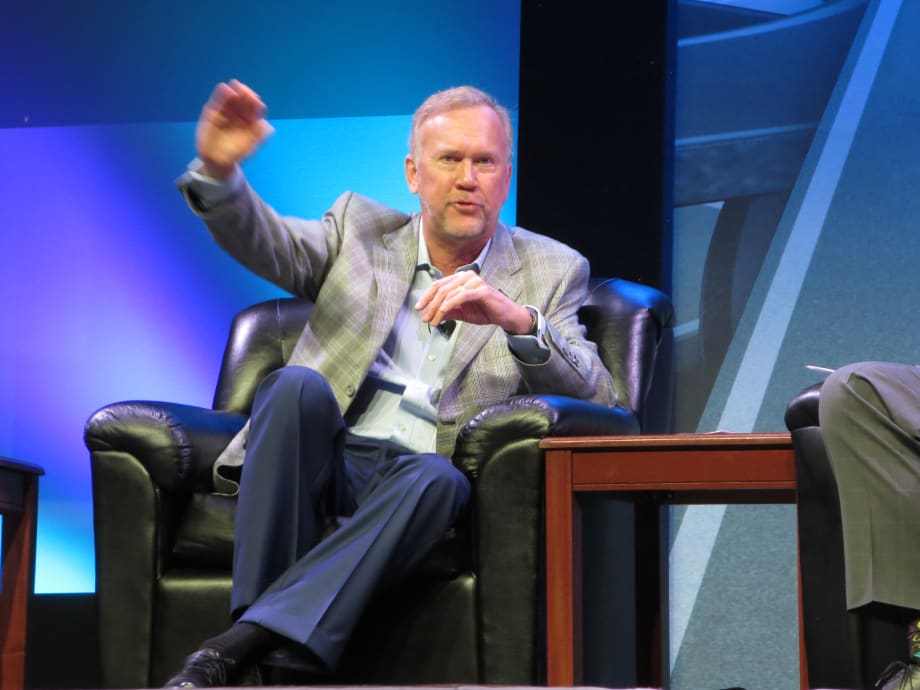
Bob Peterson, presidnet and COO, Melton Truck Lines. Photo by Deborah Lockridge.
5 min to read
Bob Peterson, presidnet and COO, Melton Truck Lines.Photo by Deborah Lockridge.
Every company has a culture, whether intentional or not. For three carriers represented at a panel discussion at the Truckload Carriers Association annual meeting in Kissimmee, Fla., this week, intentionally building a culture of safety pays big dividends.
"Any metrics that are important for your business, you should see that dashboard improve as you grow a safety culture," said Brian Fielkow, president of Jetco Delivery, Houston, Texas. "We got a call from a big customer last year that wasn’t satisfied with the performance of its current carrier. We started a relationship that's grown quite a bit. More and more customers 'get it,' whether they want you to do the right thing or if they're trying to mitigate their own risk. Either way, customers are hiring carriers with a good safety culture."
A safety culture also can help improve driver turnover and help attract the safest drivers. Fielkow pointed out that whether drivers feel respected is one of the important factors in turnover.
"If you put in a safety culture, that's the ultimate way of showing respect, and most drivers do get that," Fielkow said.
"That's what de-commoditizes you, that's what allows you to compete not just on price. Does it happen on day one? No, it evolves. Building a safety culture doesn't take a lot of money, it takes time and effort, but the return on that is tremendous."
Rob Penner, executive vice president and chief operating officer for Canadian carrier Bison Transport, said once you develop a safety culture, it will help recruit safe drivers.
"You know you have a culture when you start to attract like-minded people," Penner said. "Few drivers come to our door and are surprised that we are focused on safety and high performance. They know what our standards are and want to learn how to fit in."
Oklahoma-based Melton Truck Lines is a qualified self insured carrier, so it has a huge exposure on every load. When asked about how you prove the return on investment of having a safety culture, President and CEO Bob Peterson said, "We just don't have a choice. Everybody knows you can't send a truck out unsafe, you can't run a tire that needs to be replaced. I can't give you an ROI on that focus.
"To me it's not only the right thing to do, it's also good business," Peterson said. "Our operating results are good, so something right's happening."
Leader driven but employee owned
Much has been written about the need for a company's culture to be supported by its leadership. But the TCA panelists emphasized that employees at all level of the company must be involved in developing that culture.
"Culture is about your people," explained Penner. "In trucking you're in the service industry. The value of our business is not in iron or bricks and mortar. It' s not about putting a rulebook in front of people and making them focus on performing to a standard. You have to have them 'bought in' to your business."
"It has to be leader driven but employee owned," said Fielkow. At Jetco, having a safety culture that's "employee owned" meant doing things like having the operational handbook (not items involving legal issues) written by employees, not handed down from on high.
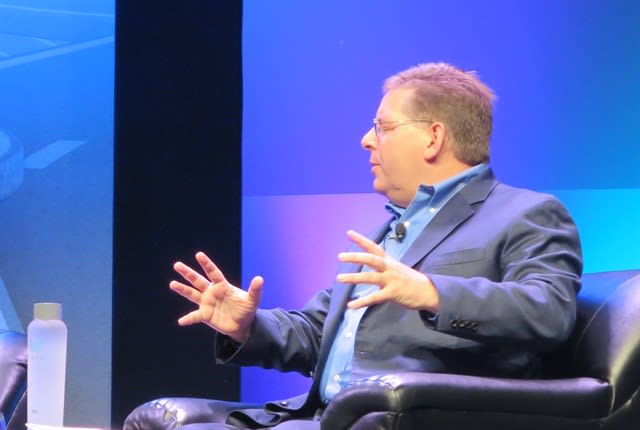
Brian Fielkow, president, Jetco Delivery.Photo by Deborah Lockridge
"We abandoned our handbook and let our employees write it – who knows best practices better than them? It's called The Jetco Way."
Penner pointed out that a safe fleet requires everyone's commitment, not just drivers. It takes people who spec trucks for safety. It takes maintenance people making sure the trucks are safe and compliant. And it requires buy-in from the dispatchers or fleet managers who are working with the drivers each day.
"You have to put your money where your mouth is," he said. "You can't just throw down a rulebook and expect people to follow it. You have to show you care about them and you're invested in them.
"It is [driven by] the leaders – but the true leaders of your business are the people leading your drivers every day. If those people don't get it, nobody gets it. You cannot put pressure on that driver, if he's not fit to go, whether it's personal health or weather, it's our job to pick up the pieces, repower, reschedule, whatever we have to do, we carry the ball."
Building a culture
There's no single blueprint to building a safety culture, said the panelists, but they agreed that it's a process that takes time.
"You have to survey your workforce and understand who you have in the business, why they come to work for you, why they leave your business, then set up a specific and committed path," Penner said. "Culture's not something you can change overnight."
"This is an area where there are some good ideas and tools but you have to modify them to your own business," Fielkow said. "We built an internal brand, a visual affirmation of our values. It's the first thing you see when you get in your truck, when you turn on your computer. We print it on T-shirts." The slogan and design were developed and voted on by the employees.
"Let your front lines own it," he emphasized. "Don't force it on them by the marketing people. You can't get into somebody's heads before you get into their heart."
Bison did a branding exercise as well, Penner explained, coming up with the slogan, "You're safe with me." It's in the company's facilities, it's on every piece of company branded clothing, it's in every truck, it's on buttons worn by employees.
"Everyone understands how we're connected and that if any of those people fail, we let down our reason for being safe, which is our driver," Penner said. "We need every one of them to make it home safely every trip."
"Building an internal brand has been critical for creating that unity that only we have," Fielkow said. "Our secret ingredient. Everybody, no matter the size of the company, can develop that internal brand."
More Drivers

From One Generation to the Next: How Mentorship Builds Safer Truck Drivers
After three decades in trucking, Harold Perry shares what he's learned about driver safety, mentorship, and helping the next generation build confidence behind the wheel.
Read More →
Truck Drivers Need More Than Another Alert
Fleets have more visibility into truck health, safety events, and driver activity than ever. The next challenge is turning all that information into useful guidance for the person who has to decide what to do next.
Read More →
FMCSA Removes 110 Truck Driver Training Schools from Certified ELDT List
Federal regulators also are targeting more than 160 additional training providers and launching a nationwide audit of third-party CDL skills testers as part of a broader crackdown on trucking fraud.
Read More →
Hours of Service Pilot Programs: FMCSA Readies for 2027 Rollout
Two pilot programs could eventually reshape hours-of-service rules, giving truck drivers options to pause their 14-hour clock or use longer split sleeper rest periods.
Read More →
Medical Cards, English Proficiency Reshape Roadcheck Violations
Medical-card violations jumped to the top of the driver out-of-service list during CVSA’s 2026 International Roadcheck, while English-language proficiency violations appeared among the leading violations for the first time.
Read More →
Driver Trust Can Make or Break the Success of Fleet Safety Technology
New Teletrac Navman research suggests that onboarding, transparency about driver data, and positive feedback can play a significant role in how commercial drivers respond to safety and coaching technology.
Read More →
EEOC Sues KLLM Over Alleged Sex Discrimination in Driver Training
KLLM is facing a federal sex-discrimination lawsuit over policies the EEOC alleges put female truck driver trainees at a disadvantage.
Read More →
FMCSA Moves to Codify English Language Requirements for Commercial Drivers
By changing regulations on English-language proficiency requirements for commercial drivers, rather than relying on a guidance memo, the FMCSA said future administrations won't be able to walk back the Trump administration's stricter enforcement with just a memo.
Read More →
Drivers Put Western Star Trucks to the Test at Star Nation Experience
Watch to get an inside look at the Western Star trucks, technology, and community behind the Star Nation Experience 2026!
Read More →
Trump Administration Looks to Put More Veterans Behind the Wheel
The Freedom Haulers program pulls together existing and expanded programs at several federal agencies to recruit veterans to drive commercial heavy-duty trucks and cut the red tape for them to get a CDL, training, and employment.
Read More →