




Bill Would Set up VMT Pilot Project
U.S. Rep. Earl Blumenauer (D-Ore.) introduced legislation in the House of Representatives that would fund a Vehicle Miles Traveled pilot program to examine a new source of funding that would help make up for the Highway Trust Fund deficit
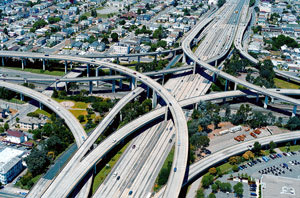
U.S. Rep. Earl Blumenauer (D-Ore.) introduced legislation in the House of Representatives that would fund a Vehicle Miles Traveled pilot program to examine a new source of funding that would help make up for the Highway Trust Fund deficit.
The legislation calls on the Secretary of the Treasury to undertake a series of studies to demonstrate the viability of a VMT revenue source in every state, and it reflects a pilot program undertaken in Oregon.
"We must invest now in our nation's roads, bridges, and public transit to prevent enormous costs in the future," said Blumenauer. "With the Highway Trust Fund facing a 21% reduction revenue by 2040, based on current driving patterns and projected increases in fuel economy, we need innovative solutions to close this gap."
Over the past four years, Congress has transferred more than $48 billion from the General Fund into the Highway Trust Fund, Blumenauer notes. Estimates suggest that, when the current transportation authorization expires, the Trust Fund will require almost $15 billion a year in addition to current fuel tax receipts simply to maintain 2009 funding levels.
"Oregon and other states have successfully tested a Vehicle Miles Traveled fee, and it is time to test this model systematically, across the country," Blumenauer says. "While evaluating mileage-based revenue sources, this legislation will ensure the system protects privacy and is simple to administer. It will also convene working groups to address the most complex aspects of this transition, including road use, demand management, climate change, and technology needs."
In Oregon, the Department of Transportation is testing three privately manufactured devices. Two use GPS technology, including a smartphone app, while a third simply counts miles.
Two blue ribbon commissions have suggested that transitioning to a VMT system, rather than a fuel tax, will provide the most stability to the Highway Trust Fund, and will most accurately reflect the user-fee concept it is based upon.
The National Surface Transportation Policy and Revenue Study Commission noted that a VMT charge is the "the most promising alternative revenue measure" to the existing gas tax, while the National Surface Transportation Infrastructure Financing Commission reported that "a charge for each mile driven . . . has emerged as the consensus choice for the future."
The National Surface Transportation Infrastructure Financing Commission, which was chartered by Congress to prepare an objective, in-depth analysis of highway funding in preparation for this law, urged Congress to begin to address the issue in last summer's highway bill.
Both commissions found that this system was efficient at raising revenue, closely linked system demand to revenues, and could win broad public support, Blumenauer says.
In March 2011, the Congressional Budget Office released a report saying such a program is a "practical option" for raising new funds. Shortly afterward, the DOT proposed a study of the concept, but President Obama has resisted switching to a VMT fee.
Related Stories:
9/12/2012 Highway Funding: The Journey Ahead
2/16/2010 New Report Calls For Infrastructure Funding Through VMT
2/27/2009 Congressional Commission Recommends Mileage-Based User Fee
More Drivers

Truck Drivers Need More Than Another Alert
Fleets have more visibility into truck health, safety events, and driver activity than ever. The next challenge is turning all that information into useful guidance for the person who has to decide what to do next.
Read More →
FMCSA Removes 110 Truck Driver Training Schools from Certified ELDT List
Federal regulators also are targeting more than 160 additional training providers and launching a nationwide audit of third-party CDL skills testers as part of a broader crackdown on trucking fraud.
Read More →
Hours of Service Pilot Programs: FMCSA Readies for 2027 Rollout
Two pilot programs could eventually reshape hours-of-service rules, giving truck drivers options to pause their 14-hour clock or use longer split sleeper rest periods.
Read More →
Medical Cards, English Proficiency Reshape Roadcheck Violations
Medical-card violations jumped to the top of the driver out-of-service list during CVSA’s 2026 International Roadcheck, while English-language proficiency violations appeared among the leading violations for the first time.
Read More →
Driver Trust Can Make or Break the Success of Fleet Safety Technology
New Teletrac Navman research suggests that onboarding, transparency about driver data, and positive feedback can play a significant role in how commercial drivers respond to safety and coaching technology.
Read More →
EEOC Sues KLLM Over Alleged Sex Discrimination in Driver Training
KLLM is facing a federal sex-discrimination lawsuit over policies the EEOC alleges put female truck driver trainees at a disadvantage.
Read More →
FMCSA Moves to Codify English Language Requirements for Commercial Drivers
By changing regulations on English-language proficiency requirements for commercial drivers, rather than relying on a guidance memo, the FMCSA said future administrations won't be able to walk back the Trump administration's stricter enforcement with just a memo.
Read More →
Drivers Put Western Star Trucks to the Test at Star Nation Experience
Watch to get an inside look at the Western Star trucks, technology, and community behind the Star Nation Experience 2026!
Read More →
Trump Administration Looks to Put More Veterans Behind the Wheel
The Freedom Haulers program pulls together existing and expanded programs at several federal agencies to recruit veterans to drive commercial heavy-duty trucks and cut the red tape for them to get a CDL, training, and employment.
Read More →
Putting Mack’s Command Steer to the Test
A test drive of Mack’s Command Steer active steering system evaluates how it can make truck driving easier and less tiring.
Read More →