




ATA Chairman Tells Congress Trucking Needs a Highway Bill
The trucking industry needs Congress to quickly pass a new surface transportation bill with a focus on highways. That was the message of American Trucking Associations chairman Barbara Windsor Tuesday in testimony before the House Transportation and Infrastructure Committee's Subcommittee on Highways and Transit
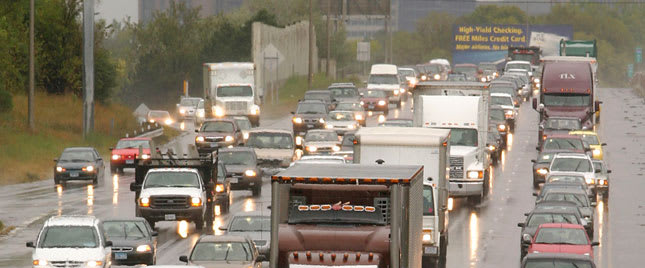
The trucking industry needs Congress to quickly pass a new surface transportation bill with a focus on highways. That was the message of American Trucking Associations chairman Barbara Windsor Tuesday in testimony before the House Transportation and Infrastructure Committee's Subcommittee on Highways and Transit.
"A safe, efficient system of highways is essential to our country's economic well-being, security, and overall quality of life," said Windsor, who is president and CEO of Hahn Transportation Inc. "Every day, freight flows through our ports, across our borders, and on our rail, highway, air and waterway systems as part of a global multimodal transportation logistics system. Highways are the key to this system."
Windsor said that trucks move 70 percent of the nation's freight. However, she said "our current highway system no longer meets our needs."
"Mr. Chairman, incremental solutions will not allow us to meet the nation's current and future transportation requirements," Windsor said. "While we know that Congress is not receptive to a fuel tax increase, we would like the record to reflect that the trucking industry is willing to accept a fuel tax increase to help fund infrastructure."
However, Windsor said that in addition to a possible fuel increase, the next authorization should fund non-highway items like transit from the General Fund, rather than with fuel tax receipts, and should maintain the prohibition on tolls on currently untolled interstates.
"Tolls are a very inefficient means of revenue collection, and they cause diversion of traffic to alternative routes which are usually less safe and were not built to handle the additional traffic," she said.
Whatever funds the next authorization does generate should be used to address "critical bottlenecks on heavily traveled freight corridors," Windsor said.
Beyond funding issues, Windsor also urged Congress to allow for more efficient use of our highways "through the use of more productive trucks," which can improve safety, lower shipping costs, save fuel and reduce greenhouse gas emissions and protect the public's investment in highways.
"Congress must reform its laws to give states greater flexibility to change their size and weight regulations, with oversight by the U.S. Department of Transportation," she said.
Truckstop group NATSO, meanwhile, testified against the commercialization of rest areas.
NATSO President and CEO Lisa Mullings urged the subcommittee to strongly oppose any effort to amend or repeal the federal law prohibiting commercial development on the Interstate right-of-way, testifying that such efforts represented government intrusion into the private sector and would jeopardize businesses and jobs nationwide.
Mullings said weakening current law would devastate more than 97,000 businesses that operate at the exits along the nation's interstate system while threatening 2.2 million jobs and slashing funding for county governments.
"It is deceptively easy to mistake this issue as a pro-business initiative, a move to privatize rest area services," Mullings testified. "But this is not privatization. True privatization is transferring a service or function from the government to a private sector business to achieve comparable or superior results. The government is not in the business of selling food and fuel; the private sector is already meeting that need. This is a move to expand government, at a cost to businesses, county governments and consumers."
Congress outlawed commercial activities at interstate rest areas to foster competition and the growth of local communities near the Interstate Highway System. NATSO points out that in the few states that operate commercial rest areas, there are 50 percent fewer businesses at interstate exits, according to a University of Maryland study.
NATSO's position is that commercial rest areas drain local businesses of customers, jobs and local tax revenues by putting established businesses in direct competition with the state. Commercialized rest areas give the state an advantageous location on the interstate right-of-way, siphoning away customers who normally patronize exit-based businesses.
More Drivers
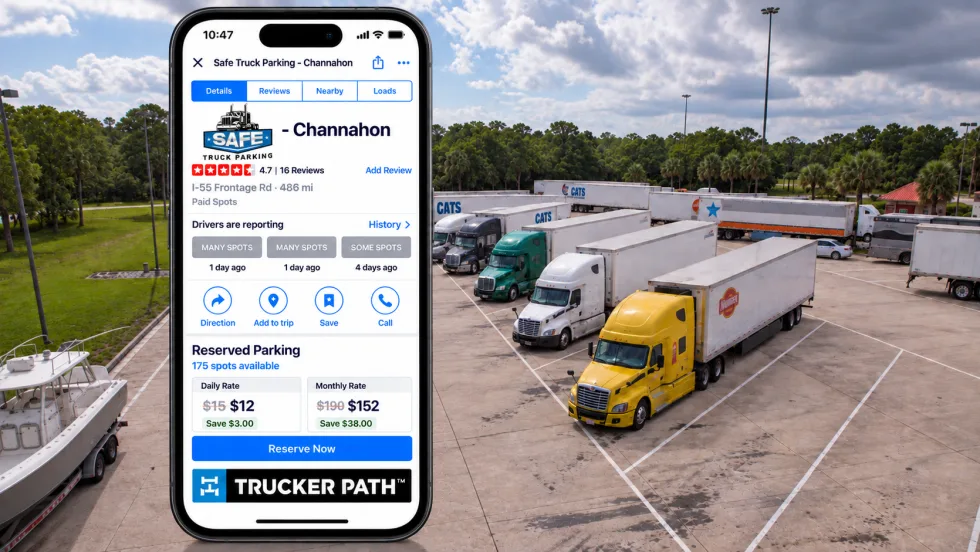
Trucker Path Expands Reserved Parking Network
Trucker Path has added close to 6,000 more truck parking spaces to its Trucker Path Reserved Parking Network with the addition of Safe Truck Parking.
Read More →
EEOC Sues Texas Trucking Company Over Driver Age Limits
The agency says Trancasa USA rejected applicants over 65 and applied tougher driving-record standards to those over 60.
Read More →
Nussbaum, Roehl Announce Second Driver Pay Increase This Year
This year has seen a swath of major truck driver pay increases as freight capacity has tightened.
Read More →
From One Generation to the Next: How Mentorship Builds Safer Truck Drivers
After three decades in trucking, Harold Perry shares what he's learned about driver safety, mentorship, and helping the next generation build confidence behind the wheel.
Read More →
Truck Drivers Need More Than Another Alert
Fleets have more visibility into truck health, safety events, and driver activity than ever. The next challenge is turning all that information into useful guidance for the person who has to decide what to do next.
Read More →
FMCSA Removes 110 Truck Driver Training Schools from Certified ELDT List
Federal regulators also are targeting more than 160 additional training providers and launching a nationwide audit of third-party CDL skills testers as part of a broader crackdown on trucking fraud.
Read More →
Hours of Service Pilot Programs: FMCSA Readies for 2027 Rollout
Two pilot programs could eventually reshape hours-of-service rules, giving truck drivers options to pause their 14-hour clock or use longer split sleeper rest periods.
Read More →
Medical Cards, English Proficiency Reshape Roadcheck Violations
Medical-card violations jumped to the top of the driver out-of-service list during CVSA’s 2026 International Roadcheck, while English-language proficiency violations appeared among the leading violations for the first time.
Read More →
Driver Trust Can Make or Break the Success of Fleet Safety Technology
New Teletrac Navman research suggests that onboarding, transparency about driver data, and positive feedback can play a significant role in how commercial drivers respond to safety and coaching technology.
Read More →
EEOC Sues KLLM Over Alleged Sex Discrimination in Driver Training
KLLM is facing a federal sex-discrimination lawsuit over policies the EEOC alleges put female truck driver trainees at a disadvantage.
Read More →