




2015 Diesel Pickups Show Power, Comfort at Ford Drive Event
Ford feels it has bragging rights and showed why at a ride-and-drive event for trade-press reporters this week in West Virginia. A first-person report from Senior Editor Tom Berg.


GCW of this truck and trailer was 39,000 pounds, but the V-8 diesel pulled it well.
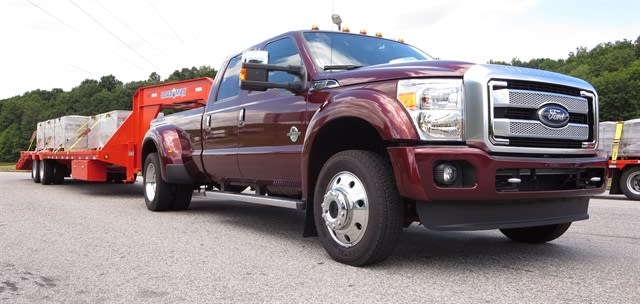
GCW of this truck and trailer was 39,000 pounds, but the V-8 diesel pulled it well.
Ford feels it has bragging rights and showed why at a ride-and-drive event for trade-press reporters this week in West Virginia. The bragging is over numbers – 440 horsepower and 860 pounds-feet – the rating of the second-generation Power Stroke 6.7-liter V-8 diesel that will propel many 2015-model SuperDuty pickups.
That power and torque are now tops in the Class 2 through 4 segment, and so are the resulting towing capacities, said Doug Scott, Ford’s truck marketing manager. The highest rating is 31,200 pounds for a diesel-powered F-450 pickup with dual rear wheels, a 4.30 axle ratio and bed-mounted fifth wheel hitch pulling a gooseneck trailer.
Gross combination weight rating for such a vehicle is 40,000 pounds, and “that’s half an 18-wheeler,” he said. 2014 is the 38th consecutive year of truck-sales leadership for Ford, he said.
At the press event, reporters drove F-250, F-350 and F-450 pickups, most hitched to sizeable two-axle camper, box and flatbed trailers weighing about 9,000, 12,000 and 29,000 pounds, in that order.
The heaviest combinations were reserved for a handful of writers who held commercial driver’s licenses, including me. We came away impressed with the Fords’ pulling ability, along with their comfort and quietness.
The towing exercises with the two heavier trailers were on a stretch of Interstate 64 that included a 5-mile, 7% grade that most heavy semis struggled with. In several cases the Fords were matched against Chevrolet and Ram pickups in comparable weight classes, and bested them, as one would expect in this type of event. But all performed well.
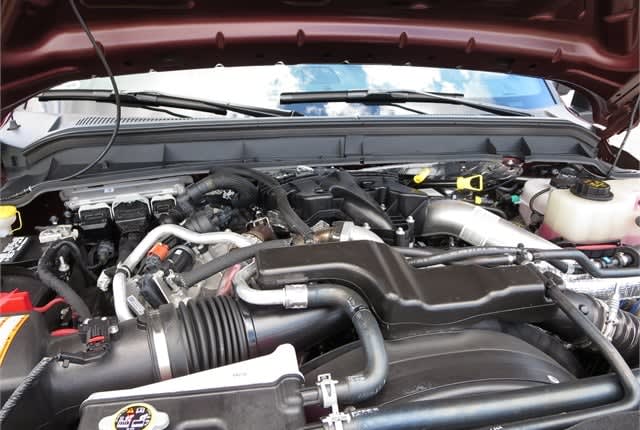
Power Stroke hides under pipes, wires and shrouding.
On the 5-mile downgrade with the camper trailers, the Power Strokes’ engine brake helped keep the vehicles at safe speeds, usually within or close to the posted 45-mph limit for trucks.
When prompted by stabs at the brake pedals, their Ford 6-speed TorqShift transmissions automatically downshifted to as low as 3rd gear to boost retarding power. This sent engines spinning from 3,500 to the no-load maximum of 3,900 rpm to control road speed with very little use of service brakes.
Chevrolets with Duramax V-8 and Ram pickups with Cummins I-6 diesels, respectively, behaved similarly in downshifting and retarding, though they seemed to have slightly less hold-back power. And the Cummins revved more slowly, with a maximum speed several hundred rpm less, as one expects from an inline six-cylinder design.
The Fords rode smoothly during these runs, but the Chevy and Dodge pickups subjected us to back slap that was uncomfortable and puzzling. Like the Fords, the other trucks’ fifth wheel hitches were directly over the rear axles, so did suspensions differ enough to cause this misbehavior? We didn’t know.
The heavy pulling saw GCWs from 36,000 to as high as 39,000 pounds, with much of that on each pickup’s axles. Heavy loading and stiff suspensions meant more use of the service brakes on the downgrade and a choppy ride in all cases.
Neither General Motors nor Ram has a 4500 pickup, but Ford chose to pit a pair of F-450 pickups against a Ram 3500 HD pickup because it has a similar trailer-tow rating (30,000 pounds). Each pulled a LoadMax steel flatbed gooseneck trailer loaded with nine 2,200-pound pallets of concrete block.
Long story short: The more powerful Fords (by 55 horsepower and 40 pound-feet) outpulled and passed the Ram on the upgrade by several miles per hour.
The Ford diesels were always the quietest, with the GM Duramax diesels a close second. The Cummins Turbo Diesels emitted a low growl that some might consider loud but that my driving partner and I found pleasing.
In all cases the diesels were smokeless and odor-free, thanks to their builders’ monumental engineering efforts to meet federal emissions standards.
Before we started out in the morning, Ford Truck spokesman Mike Levine asked us reporters to observe the comfort of SuperDuty pickups, and sure enough, they were superior. Ford seats were a little wider and more supportive, with plush leather coverings.
Especially nice was the King Ranch trim, which for 2015 gets a finer grade of leather and a deeper shade of brown compared to the thick baseball glove-like hide used previously.
Depending on trim level, seats front and rear can be heated and cooled, as in luxury cars. I thought of the utter plainness of the late-1940s F-series Ford pickups and remarked to an engineer riding in the back seat, “This sure ain’t no F-1!” He laughed.
Comfort and capability abound in these newest F-series pickups, but yes, there’ll be more basic work trucks with XL trim, and I think I might feel more at home in those.
More Products
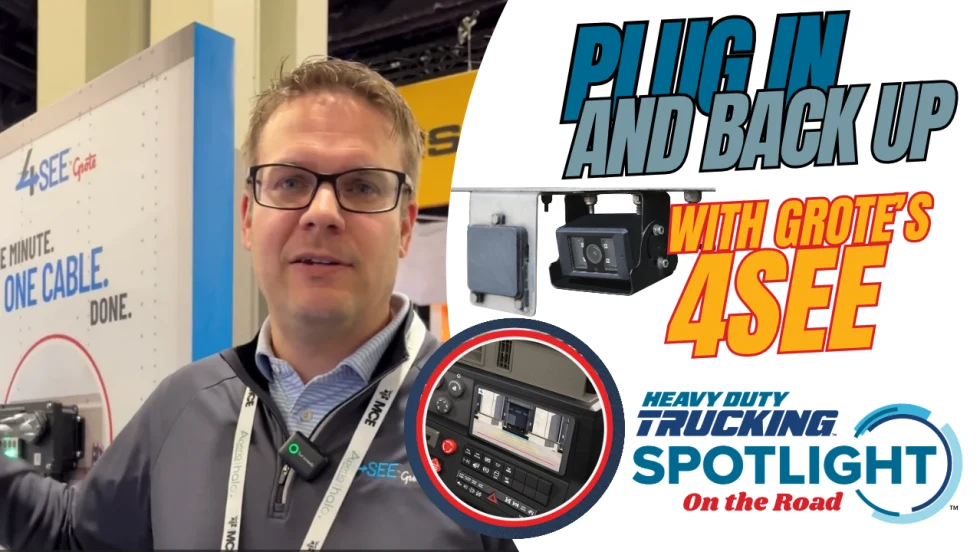
More Trailer Data Through the Same Seven-Way [Video]
Can trucking’s standard seven-way connector handle more cameras and trailer data? Grote’s Adam Slade shows HDT how the company is using new technology with its 4See trailer system, not only to add a new backup camera but also to expand other capabilities — without adding another connection.
Read More →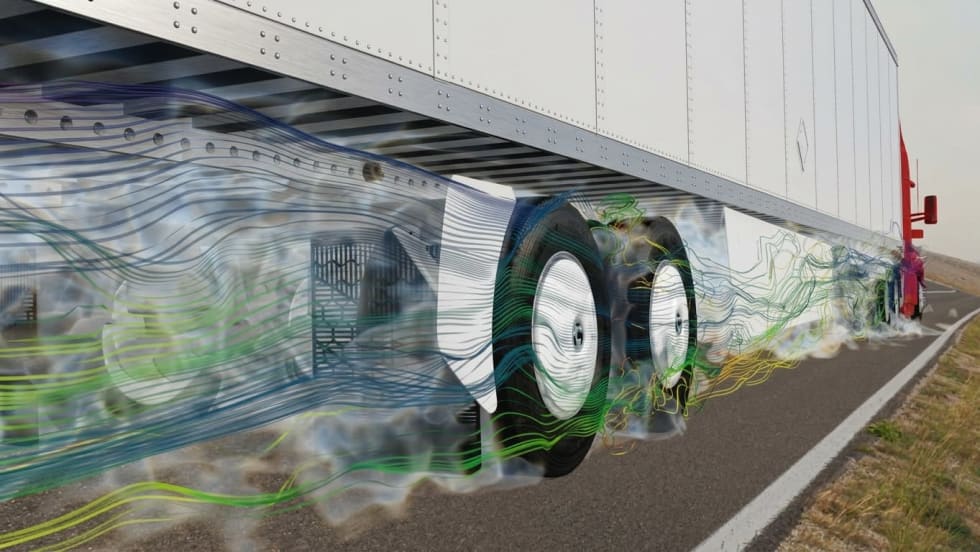
FlowBelow Redesigns Trailer AeroSlider to Cut Fuel Use
The lighter trailer aerodynamic system installs in less than 45 minutes, according to the company, with potential payback in under a year depending on fuel prices and trailer mileage.
Read More →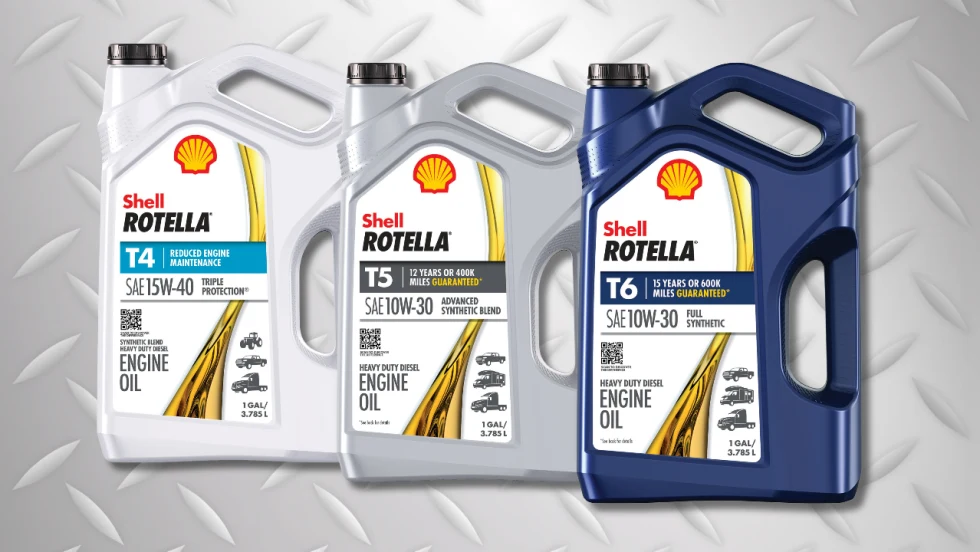
Shell Prepares Rotella Oils for 2027
New CL-4 and FB-4 formulations will begin arriving in early 2027, with improved protection against oil breakdown, wear and deposits, according to Shell.
Read More →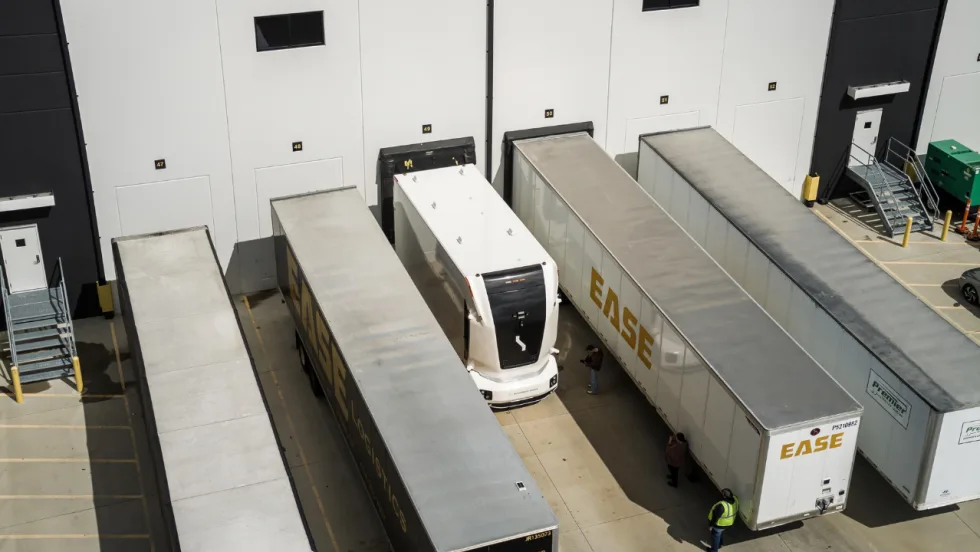
Einride Driverless Electric Trucks Begin Daily Freight Operations in Ohio
Two cabless electric trucks are hauling freight between EASE Logistics facilities in Marysville, Ohio, as part of a multi-state truck automation project.
Read More →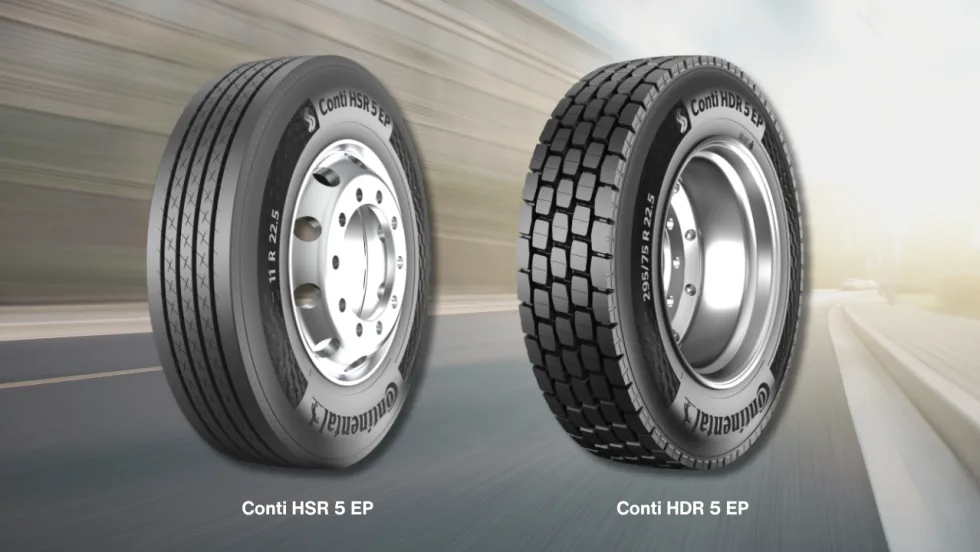
Continental Introduces New Regional Truck Tires
Continental says its new Generation 5 steer and drive tires for regional operations offer longer tread life, with estimated mileage gains of 22% and 19%, respectively.
Read More →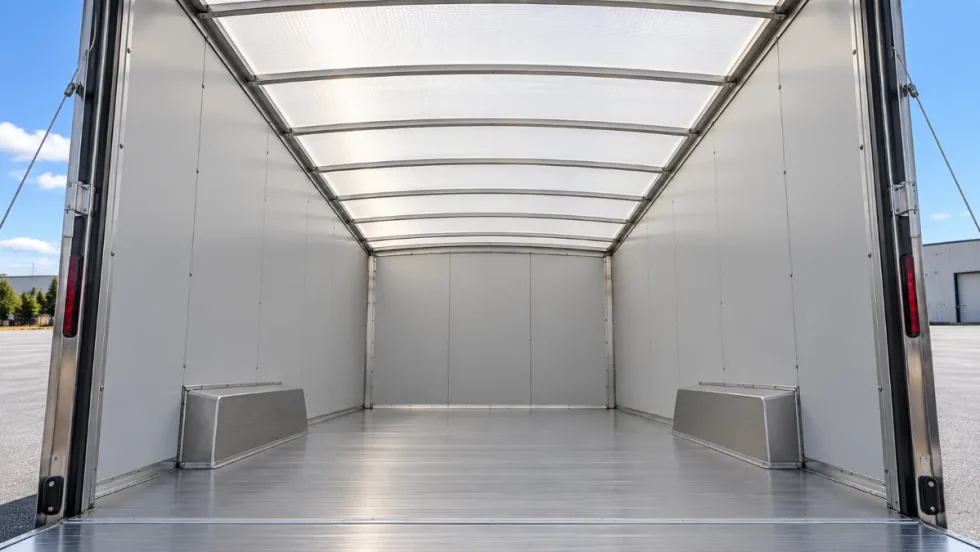
Tekmodo Introduces CargoBright Brand for Translucent Trailer Roofs
CargoBright is designed to diffuse daylight across the cargo area while performing as a working vehicle roof.
Read More →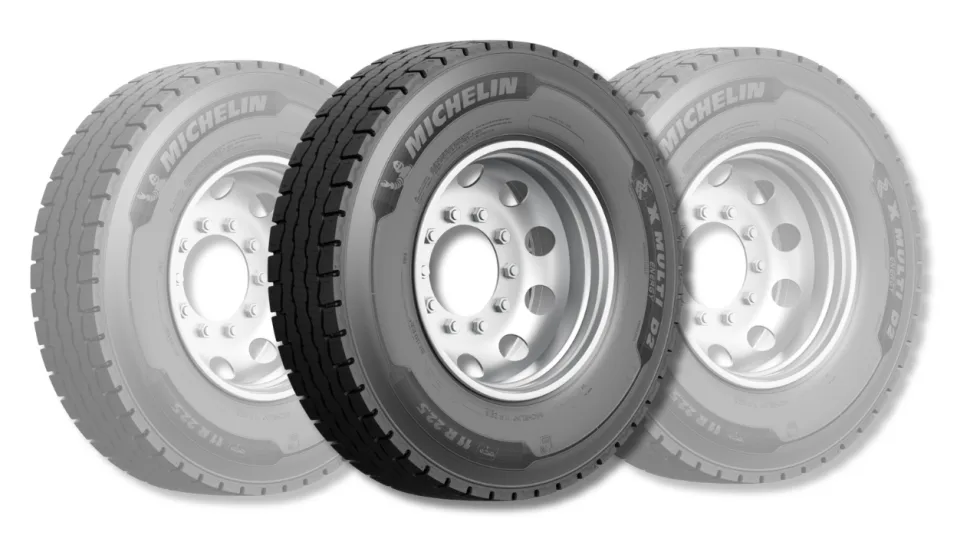
Michelin Tire Improves Efficiency and Durability for Regional Fleets
The Michelin X Multi Energy D2 is a regional haul drive tire engineered to help fleets improve fuel efficiency, durability and traction in demanding stop-and-go operations.
Read More →
What Geotab's New AI Connector Means for Fleets
Fleets can now ask their usual AI assistants questions about maintenance, safety, fuel use, and vehicle performance, using their live Geotab data, and take action on the answers without leaving their preferred AI tool.
Read More →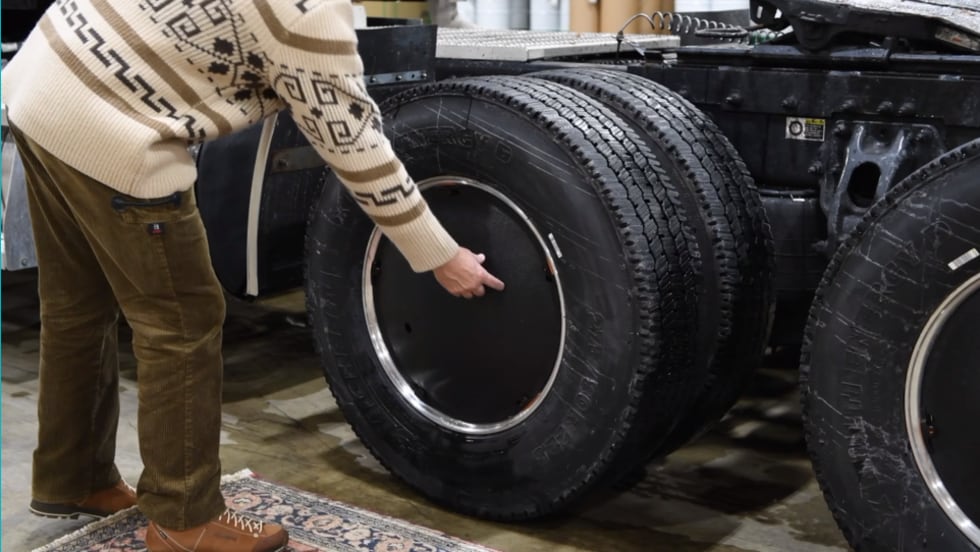
Deflecktor: Hubbub Aerodynamic Wheel Cover Cost-Effective Even for Trailers
Aerodynamic wheel covers can deliver small but meaningful fuel-economy gains for fleets, and Deflecktor says its latest design aims to make the technology easier and more affordable to deploy.
Read More →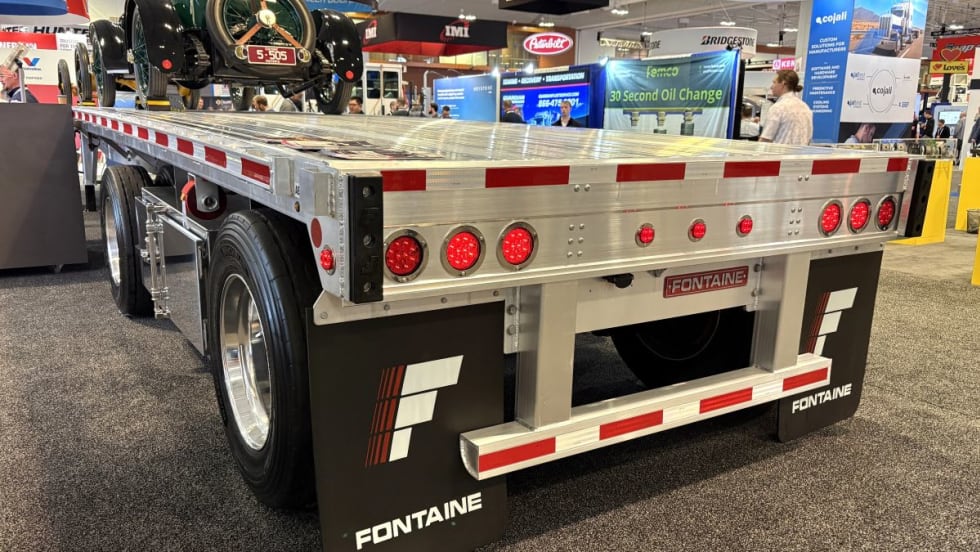
Fontaine Expands Flatbed Lineup with New Fleet-Focused Models, Eyes 2027 Launch
Fontaine is broadening its flatbed lineup with new models aimed at fleets, including a lightweight aluminum trailer expected in 2027 that emphasizes durability, repairability, and lower cost.
Read More →