




Why Safe Coupling Procedures Matter
It could've been driver error, mechanical failure or both, and we won't know for a while. But it sure matters.


For a better chance at properly hitching the fifth wheel onto the kingpin, hook up and charge the air hoses, then set the trailer’s brakes before backing onto it. Photo courtesy of Con-way

For a better chance at properly hitching the fifth wheel onto the kingpin, hook up and charge the air hoses, then set the trailer’s brakes before backing onto it.Photo courtesy of Con-way
Drop the nose of a semitrailer in a yard after failing to hook up properly and it might be funny. Drop one on a busy highway, and it can be tragic.
A tragedy is what happened early Tuesday morning in South Florida, where a trailer separated from a tractor and slid to a halt on U.S. 27 in Palm Beach County, where several other vehicles ran into it. Four people in a car – a mother and three children – were killed.
Local news media are on the story. TOne report says the trailer is owned by Okeelanta Corp., which raises and harvests sugarcane and processes it nearby, according to a quick Internet search.
The photo with that story shows the trailer, with open frame-type sides, looks like it hauls freshly cut cane from fields to a mill. Damage to its rear end appears to be collision-caused.
It will take some investigation before authorities know why the separation occurred. To my knowledge, three things could’ve caused it:
The driver didn’t firmly couple the tractor’s fifth wheel to the trailer’s kingpin;
one of those mechanical devices failed;
a combination of all of those.
When I learned to drive semis, I was taught the proper way to hook up: Back the tractor’s fifth wheel against the trailer’s nose; get out and check that the nose is high enough to meet the fifth wheel; connect the air lines so trailer brakes can be applied; then back the fifth wheel under the trailer’s nose until it hits the kingpin with a comforting bang. Then, before cranking up the landing gear, move under the trailer and peer closely at the fifth wheel’s jaws, making sure they’ve fully grasped the trailer’s kingpin.
If not, unlock the jaws, get back in the tractor and try coupling once more. Again, look at the jaws. Then, with landing gear up and trailer brakes still applied, gently ease the tractor forward to see if the trailer tugs against the tractor. If so, and with the pre-trip inspection done, move out.
If you’re a driver, you know that routine. It’s part of safety, and it keeps you from getting laughed at by the other guys (and yelled at by your boss) if the trailer’s nose slides off the fifth wheel and drops onto the ground.
Most trailers now have at least one set of spring brakes, which automatically apply when trailer air runs down. Some drivers think that’s enough to hold the trailer in place while they back onto it. It might or might not be. Usually that’s OK, especially if that quick check of the fifth-wheel jaws shows they’ve snapped shut around the kingpin. Maybe the driver in today’s incident did that, but not the follow-up check.
Or maybe he did everything right and something went wrong mechanically. Fifth wheels and kingpins (and the upper coupler assembly to which the king pin’s attached) are extremely strong and not likely to fail, but it has happened. Water-borne road salt can corrode and damage the fifth wheel’s mechanism and upper coupler assembly. It can’t always be seen in an inspection. However, pavement isn’t salted in balmy South Florida.
It’ll be a while before we hear exactly what went wrong there, and it no longer matters to those poor people who died in the wreck. But their family and friends certainly care, and we do, too.
More Blog Posts
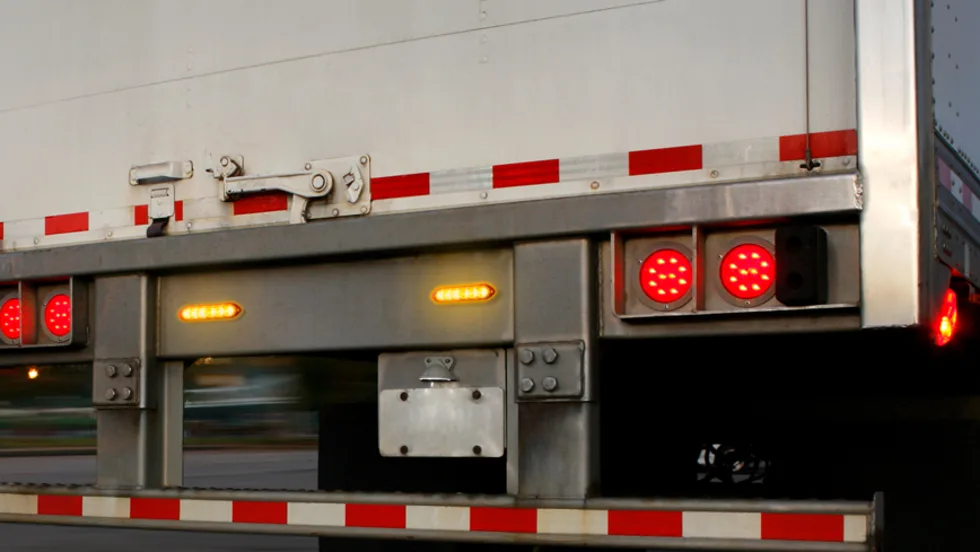
Pulsing Back-of-Trailer Lamps Aim to Prevent Crashes
Can the addition of a pulsing brake lamp on the back of a trailer prevent rear-end collisions? FMCSA seems to think so, if its exemptions are any indication.
Read More →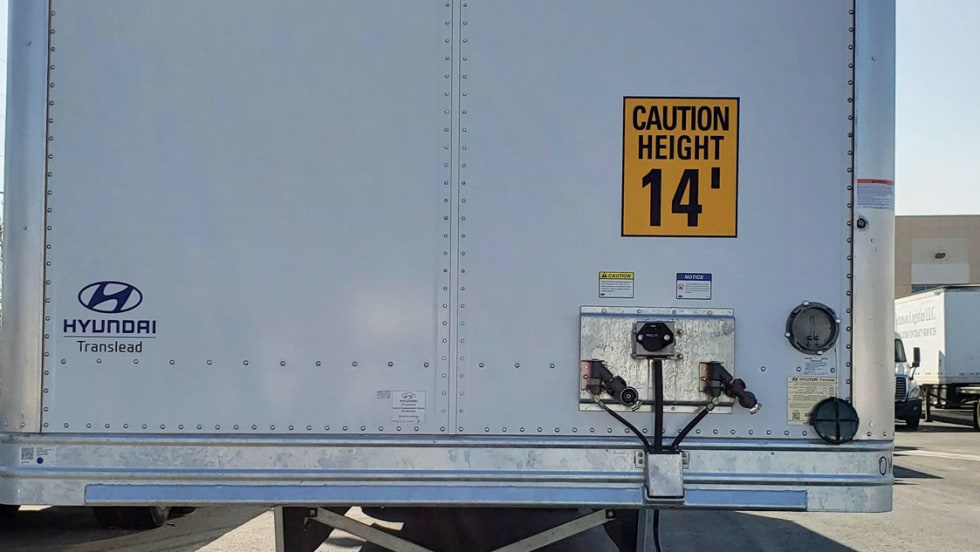
Designing a 14-Foot Trailer
Trailers are 13 feet, 6 inches high, right? Not for Hub Group, which developed a special 14-foot-high trailer spec for a dedicated customer based in California. Learn more in the Trailer Talk blog.
Read More →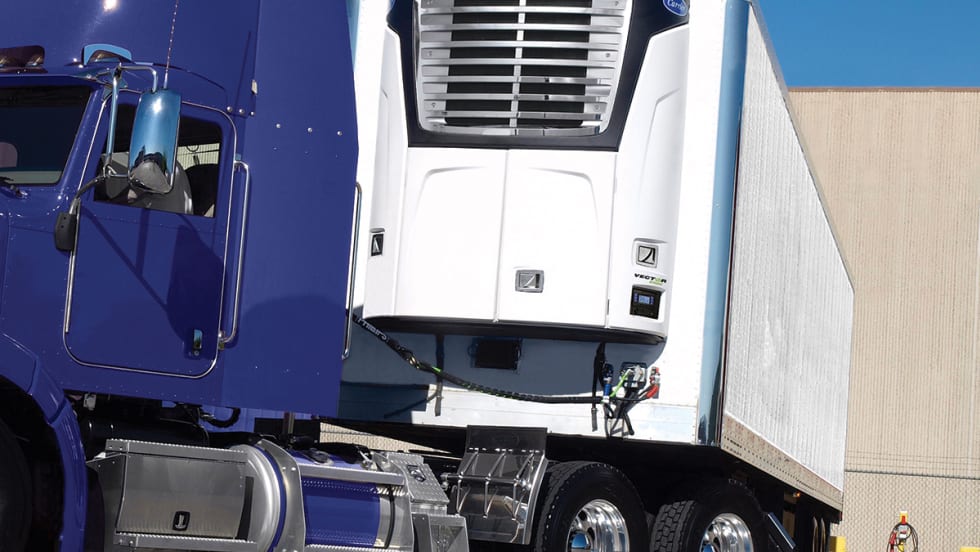
CARB Comes for Reefer Trailers
A new round of emissions control regulations decreed by the California Air Resource Board will begin affecting refrigerated trailer and TRU design and operations next year.
Read More →
5 Ways Data Analysis Maximizes the Value of Trailer Telematics
Are you getting the most out of your trailer telematics investment?
Read More →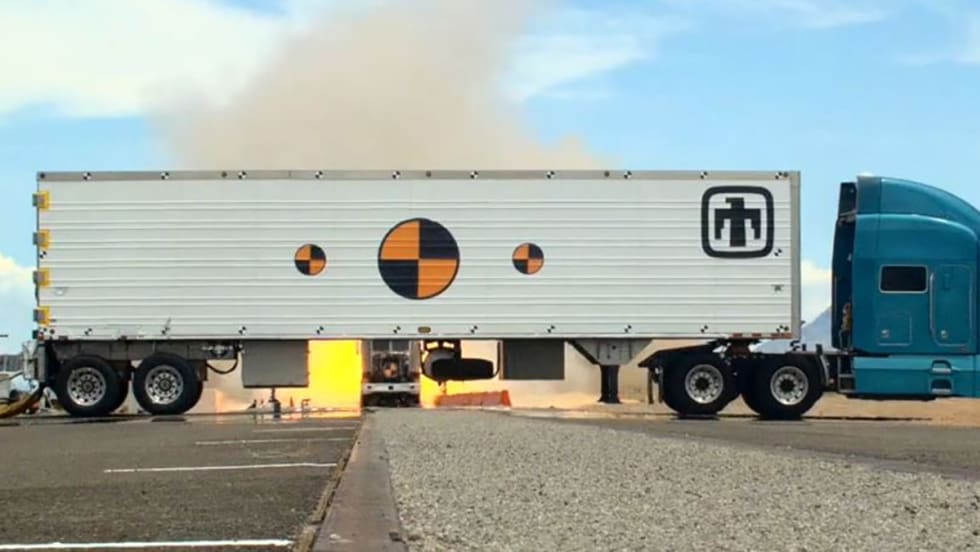
Can You Guess What's in That Trailer?
You don’t always know what’s in the trailers that pass you on the road. But some of those trailers are carrying something a little more dangerous that frozen food or new bedding…like, maybe, a nuclear weapon. But this isn’t an ordinary trailer; this is a trailer specifically made to not only carry this type of payload, but protect it at all costs.
Read More →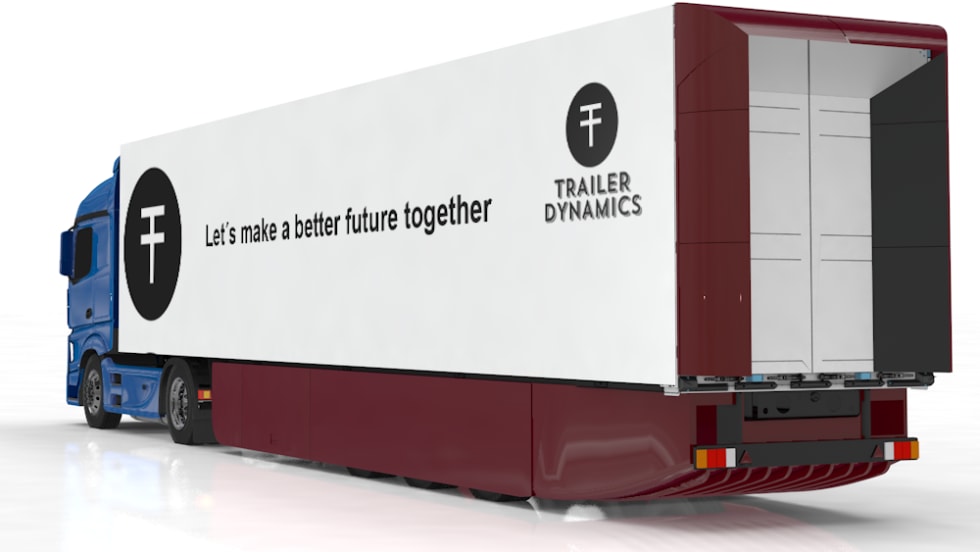
How Trailers Are Harnessing 'Free' Energy
Can trailers play a more active role in sustainable transport beyond aerodynamic add-ons or low-rolling-resistance tires? Some companies think so.
Read More →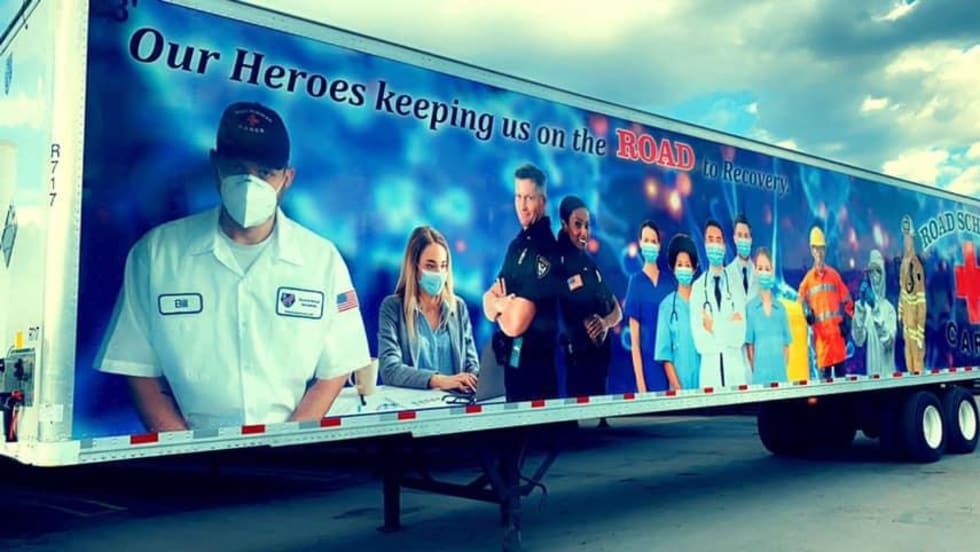
Wrapping a Trailer for COVID’s Everyday Heroes
“We don’t only deliver freight. We deliver awareness.” That’s what Jim Barrett, president and CEO of Road Scholar Transport, likes to say about the Dunmore, Pennsylvania-based carrier’s “awareness fleet.” Its latest trailer wrap honors the everyday heroes of the pandemic.
Read More →
How a Tanker Fleet is Using Unorthodox Trailer Lighting to Fight Rear-End Collisions
Groendyke Transport watched the number of rear-end collisions with its trailers rise steadily until it tried an unorthodox and then unapproved method of alerting following drivers that its trucks were applying brakes and slowing down.
Read More →
The Role Trailers are Playing in COVID-19 Funerals
In places such as New York City and Detroit, overwhelmed hospitals and mortuaries are using refrigerated trailers to store the bodies of people killed by COVID-19.
Read More →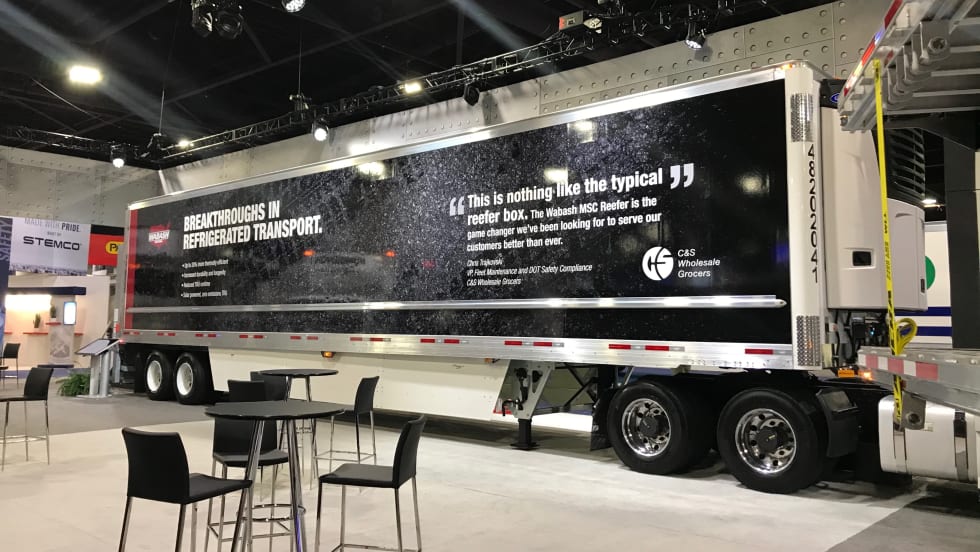
Reefer Trailer Aims to Help Reach Zero Emissions
Wabash National is partnering with C&S Wholesale Grocers to test a new type of zero-emissions refrigerated trailer.
Read More →