




What Could Reshape the Industry in the Next Decade?
What's going to change the industry next? Government regulation? Near-shoring? E-commerce
What's going to change the industry next? Government regulation? Near-shoring? E-commerce?
Looking over the next five to 10 years, transportation analysts at investment advisory firm Stifel Nicolaus predicted what major issues could potentially reshape the industry as part of its third annual "Shaking the Sand Out of our Sneakers" post-Labor-Day conference call for investors earlier this week.
Managing directors and transportation analysis John Larkin and David Ross listed the following potential game-changers:
- 2012 presidential election
- Energy prices
- Labor availability and qualification
- Government regulation (safety, security, the environment, fuel efficiency, economics)
- Emergence of a middle class in Asia, Eastern Europe and Mexico
- Restructuring of the U.S. Postal Service
- Stability of organized labor and decline of unions
- Shifting trade lanes, near-shorting and re-shoring
- 3-player global express market
- B2C/B2B e-commerce
- Terrorism
- Supply chain redesign
- Outsourcing of transportation and logistics functions
- Systems allowing widespread continuous optimization
They discussed several in more detail:
Regulations: "We are seeing a laundry list of alphabet soup regulations," Larkin said. "The net effect of all of these is to either reduce the number of drivers approved to operate Class 8 trucks or to reduce the productivity of those safe drivers. Over the next five years or so, as all these regulations are implement,ed, you have the potential to lose 10%, some say as much as 15% of the capacity of the industry."
Shifting trade lanes: Some manufacturers are moving product production back from Asia and into Mexico, where the logistics supply chain is a lot shorter, inventory in transit is much lower, and you're operating on the same time zone.
"We see some of that happening," Larkin says. "To the extent that smart robots can be put to work here in the U.S., you may see some of the manufacturing coming back to the states. All that has a big impact on modal share and the types of transportation required."
If manufacturing plants are located in Mexico or the U.S., there's a lot more truck freight as far as moving around raw materials, components for final assembly, and finished goods - not just the final moves from the ports as happens with overseas manufacturing.
E-commerce: Business-to-consumer and business-to-business e-commerce "are really beginning to gain scale, and that last-mile delivery is going to be a key component in the extend to which UPS and FedEx are gong to trade market share," Larkin said.
Outsourcing transportation logistics: "We see that as a very strong trend," Larkin says, because third-party and fourth-party logistics companies can typically buy transportation much cheaper, and they can bring more sophisticated systems to the party than an individual shpper, especially for small to medium-size shippers. "We see that growing at two to three times the overall economic growth."
Continuous optimization: "We no longer just redesign the supply chain in July and run it that way for three years," Larkin said. "Some of these third- and fourth-parties are able to continuously optimize." They can look at factors such as the modal mix and fine-tine on the fly to reflect changes in the markets, "and provide a truly optimized supply chain at the lowest possible cost."
More Blog Posts
The Diesel Price Crisis Has No Easy Fix
Washington is trying everything from oil-reserve releases to longer driving hours for fuel haulers. None addresses all the forces keeping diesel prices high.
Read More →
Beyond the Central Transport Settlement: Lessons on Hiring and Risk
The $5.5 million discrimination settlement raises broader questions about hiring practices, safety performance, and the hidden risks that can lurk in a fleet's recruiting process.
Read More →
Are Diesel Shortages Something to Worry About Again?
There’s a certain déjà vu when tensions flare in the Middle East and diesel price spikes can give you panic attacks. What parallels are there between the current situation and the 1970s energy crisis?
Read More →
NOx Isn’t Laughing Gas. Let’s Clear That Up.
A recent EPA reference mixed up NOx and nitrous oxide. It’s an easy mistake. Just not one you expect to see in emissions policy. Let’s look at the difference.
Read More →
TMC 2025 Takeaway 2: Buy... or Subscribe?
TaaS. Does that mean trucks as a service, trailers as a service, or tires as a service? HDT's Deborah Lockridge has another takeaway from the Technology & Maintenance Council meeting in her blog.
Read More →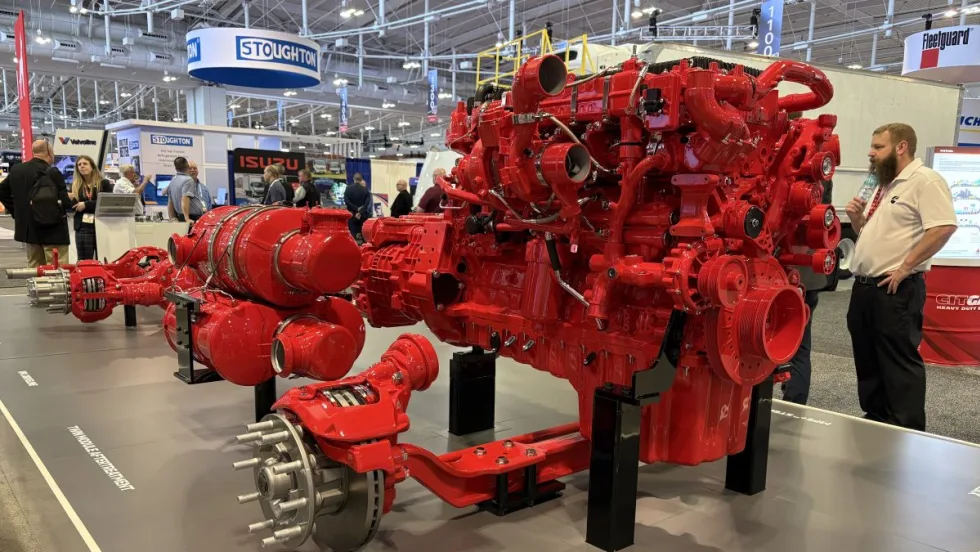
TMC 2025 Takeaway: The Journey Toward Vertical Integration
HDT's Deborah Lockridge on how the trucking industry has moved toward "vertical integration" over the past 25 years.
Read More →
Trucks Are For Girls!
HDT Editor and Associate Publisher Deborah Lockridge is a longtime Girl Scout leader and loves to connect her passion for inspiring girls with her love of the trucking industry.
Read More →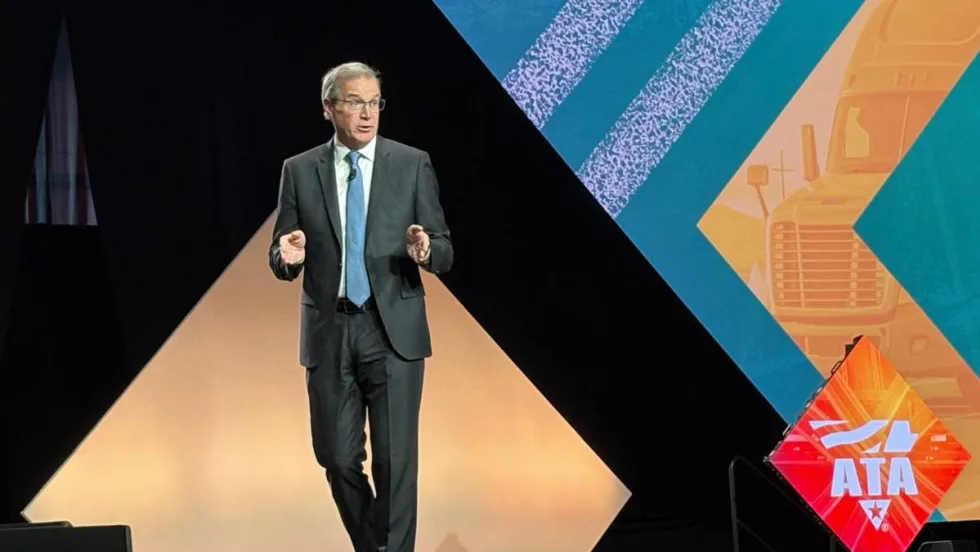
Trucking Advocacy: Impact Beyond the 2024 Elections
No matter who wins the election, trucking continues to work to educate the people who pass the laws and make the rules that affect the industry. HDT's Deborah Lockridge shares insights from two major trucking associations in her All That's Trucking blog.
Read More →
Recharge Your Brain for Better Business
Skimping on vacation may be the worst thing you can do for your business, your career, and your mental health. In her All That's Trucking blog, Deborah Lockridge writes about the importance of giving your brain what it needs to be innovative.
Read More →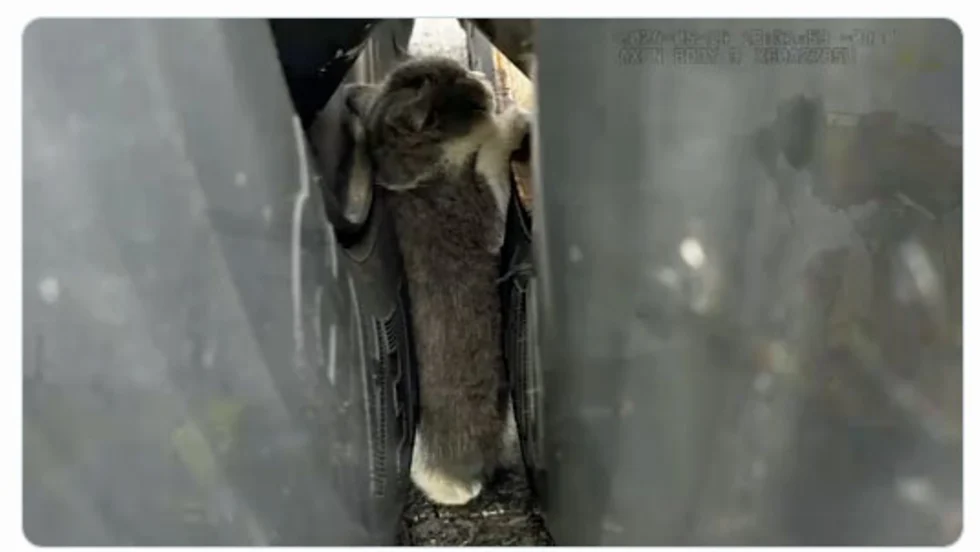
Trucker Pre-Trip Leads to Mission 'Im-paw-sible'
See what happened when a truck driver found an unexpected stowaway during his pre-trip inspection.
Read More →