




Well Thought-Out Details on U-Haul’s Trailers
Senior Contributing Editor Tom Berg finds that U-Haul trailers are heavy but strong, and are also easy to use.

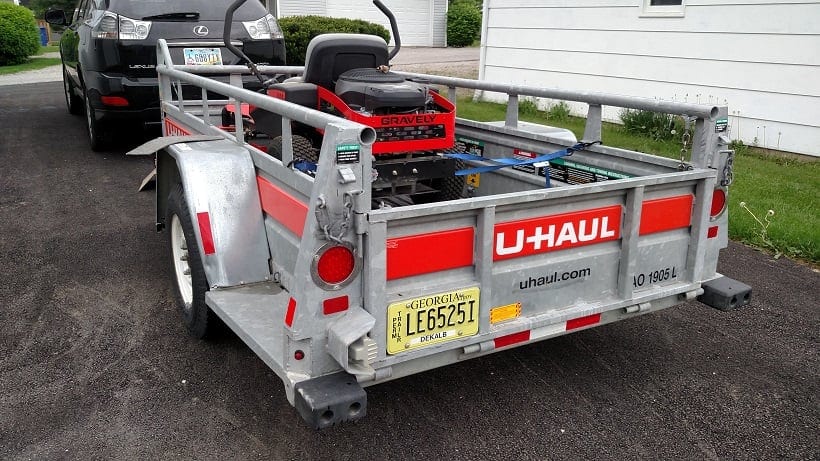
U-Haul 5x7 utility trailer has a low floor for easy loading. It’s compact but very stout, with heavy-gauge steel as its main material, and most of it is galvanized.
Photos: Tom Berg
A couple of months ago I rented several U-Haul trailers to transport some riding mowers, and came away impressed with U-Haul’s equipment and its service. I dealt with people at three franchises and all were friendly and helpful.
U-Haul, by the way, was founded in 1947 by a guy in California who needed to rent a trailer for a one-way personal move but couldn’t find one, so he started the business, according to its website. So the company has been in business for 61 years, and in that time its engineers have gotten details nailed down, and they benefit the company and its customers.
Two of the trailers were tandem-axle 6- by 12-foot enclosed types, and one was a 5- by 7-foot open utility. Here I’ll concentrate on the smaller one because its material and accessories were more visible. U-Haul has been using galvanized steel for many years, which is why you’ll seldom see any rust, except where a trailer has been seriously banged and the zinc has been knocked off. Leaf springs are about the only steel parts on the trailer that weren’t zinc-coated.
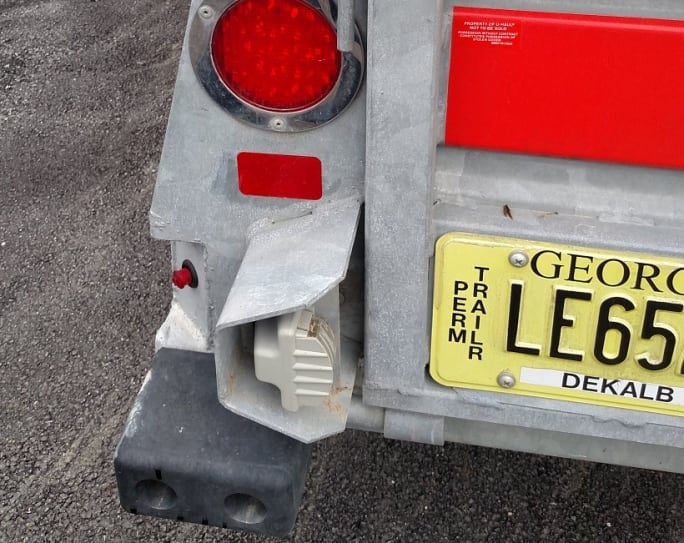
Each corner has a beefy rubber bumper, and the stalk-type license plate light is protected by a steel guard. This trailer has a Georgia plate, but you never know where a U-Haul rental will be registered.
The steel is heavy gauge that doesn’t dent easily, so the trailers are strong. Of course they’re not light in weight, and even this 5x7 one couldn’t be easily moved by hand. But I could wiggle the tongue to get the coupler dropped onto my car’s hitch ball. With the larger trailers, reps came out of their offices to help me hook them up.
In one case, neither the rep nor I checked to make sure the coupler on a 6x12 was secure. And when I drove a mower aboard, the coupler popped off the ball and the front of the trailer rose up, then back down as I moved the mower to the front. That was a thrill! Not just two but three safety chains kept the trailer from going far. With help from a neighbor and a boost from my shiny new aluminum floor jack, I got the tongue off the pavement and the heavy trailer recoupled.
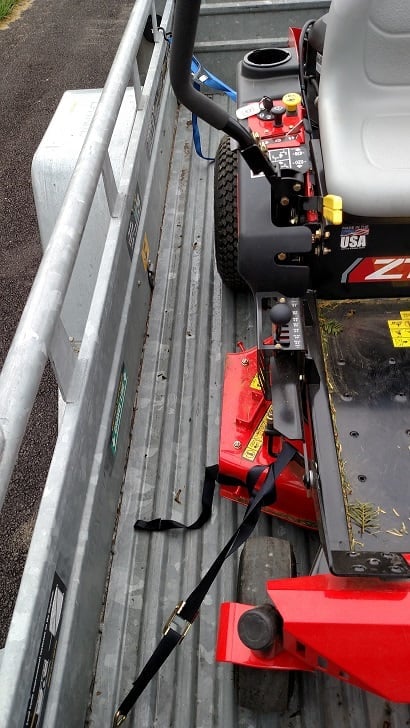
Six tie-down eyes, three on each side, are bolted to the floor’s edges. Side rails also serve as anchor points. U-Haul was founded in 1947, so engineers have had plenty of time and experience to get the details right.
Some of the details on the 5x7 are interesting. There are tie-down eyes on each side of the floor, and side rails can also anchor a strap’s hook. Each outside corner has a rubber bumper, and a U-shaped strap wraps around three sides of the stalk-type license plate light. That keeps the trailer legal and minimizes the chance of being stopped by a police officer.
A Georgia plate was screwed onto this trailer, but given the vehicles’ nomadic nature, you never know which state or Canadian province your next U-Haul trailer will be registered in.
Tail and marker lights are LEDs and there are plastic reflectors and reflective tape in numerous locations. U-Haul’s signature orange color looked like vinyl material stuck to the otherwise gray, unpainted galvanized steel surfaces. A 5x7 has a single axle which doesn’t ride as smoothly as the tandem axles on the 6x12, so a mower moved around a bit as I went over bumps at highway speeds while those I carried in the 6x12 stayed put. Both trailers were easy to pull with my mid-size SUV.
For about 10 years my step son and I owned a 6x10 utility trailer – we just had to have one – and I think we used it a total of three times. We sold it at a sizeable loss. Relying on rentals for my trailer needs makes a lot more financial sense – rentals ranged from about $18 to $32, including insurance. however, nearby franchises didn’t have a smaller trailer available and that’s why I twice rented a 6x12 to haul a mower. So renting is not nearly as convenient as owning, but I don’t have 900 bucks sitting idle in my back yard any more.
Related: Taylor Swift’s Show Arrives Aboard 82 Semis
More Blog Posts

Pulsing Back-of-Trailer Lamps Aim to Prevent Crashes
Can the addition of a pulsing brake lamp on the back of a trailer prevent rear-end collisions? FMCSA seems to think so, if its exemptions are any indication.
Read More →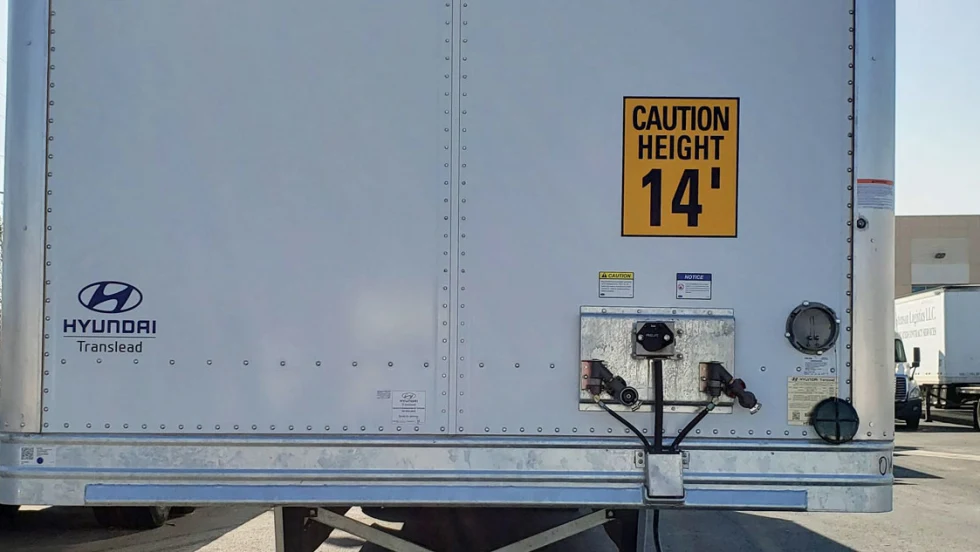
Designing a 14-Foot Trailer
Trailers are 13 feet, 6 inches high, right? Not for Hub Group, which developed a special 14-foot-high trailer spec for a dedicated customer based in California. Learn more in the Trailer Talk blog.
Read More →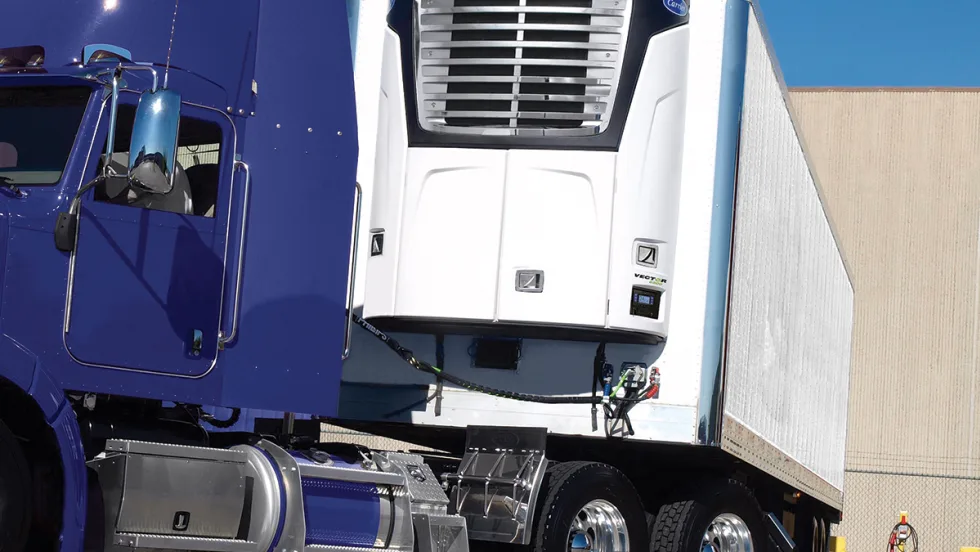
CARB Comes for Reefer Trailers
A new round of emissions control regulations decreed by the California Air Resource Board will begin affecting refrigerated trailer and TRU design and operations next year.
Read More →
5 Ways Data Analysis Maximizes the Value of Trailer Telematics
Are you getting the most out of your trailer telematics investment?
Read More →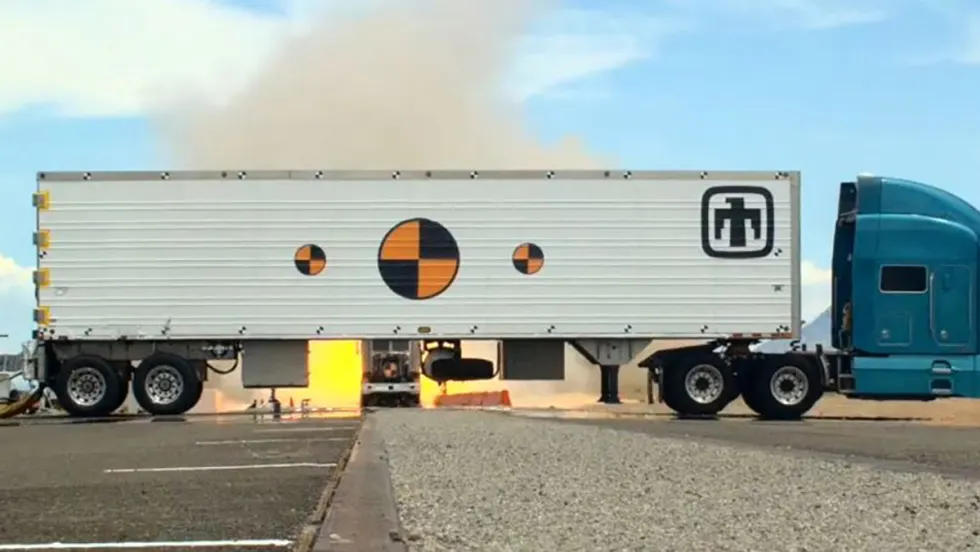
Can You Guess What's in That Trailer?
You don’t always know what’s in the trailers that pass you on the road. But some of those trailers are carrying something a little more dangerous that frozen food or new bedding…like, maybe, a nuclear weapon. But this isn’t an ordinary trailer; this is a trailer specifically made to not only carry this type of payload, but protect it at all costs.
Read More →
How Trailers Are Harnessing 'Free' Energy
Can trailers play a more active role in sustainable transport beyond aerodynamic add-ons or low-rolling-resistance tires? Some companies think so.
Read More →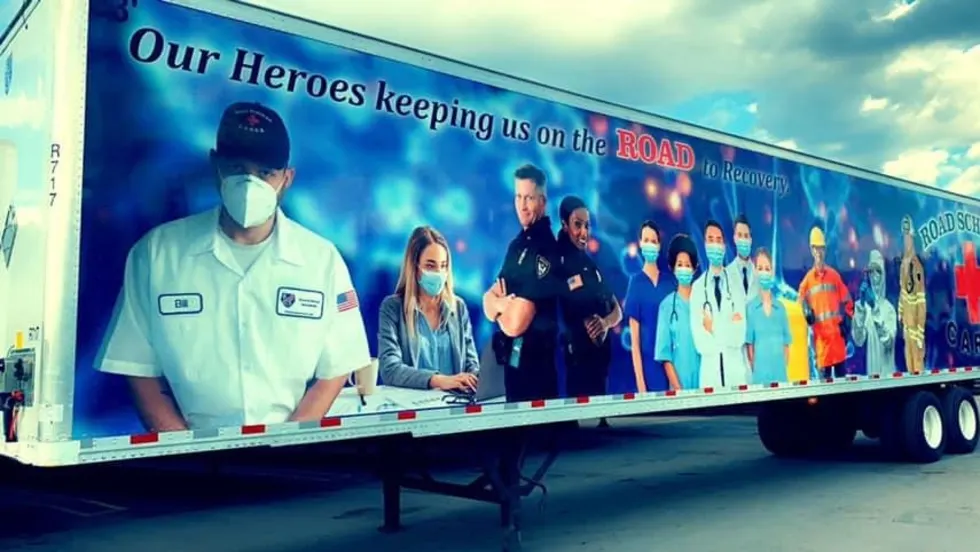
Wrapping a Trailer for COVID’s Everyday Heroes
“We don’t only deliver freight. We deliver awareness.” That’s what Jim Barrett, president and CEO of Road Scholar Transport, likes to say about the Dunmore, Pennsylvania-based carrier’s “awareness fleet.” Its latest trailer wrap honors the everyday heroes of the pandemic.
Read More →
How a Tanker Fleet is Using Unorthodox Trailer Lighting to Fight Rear-End Collisions
Groendyke Transport watched the number of rear-end collisions with its trailers rise steadily until it tried an unorthodox and then unapproved method of alerting following drivers that its trucks were applying brakes and slowing down.
Read More →
The Role Trailers are Playing in COVID-19 Funerals
In places such as New York City and Detroit, overwhelmed hospitals and mortuaries are using refrigerated trailers to store the bodies of people killed by COVID-19.
Read More →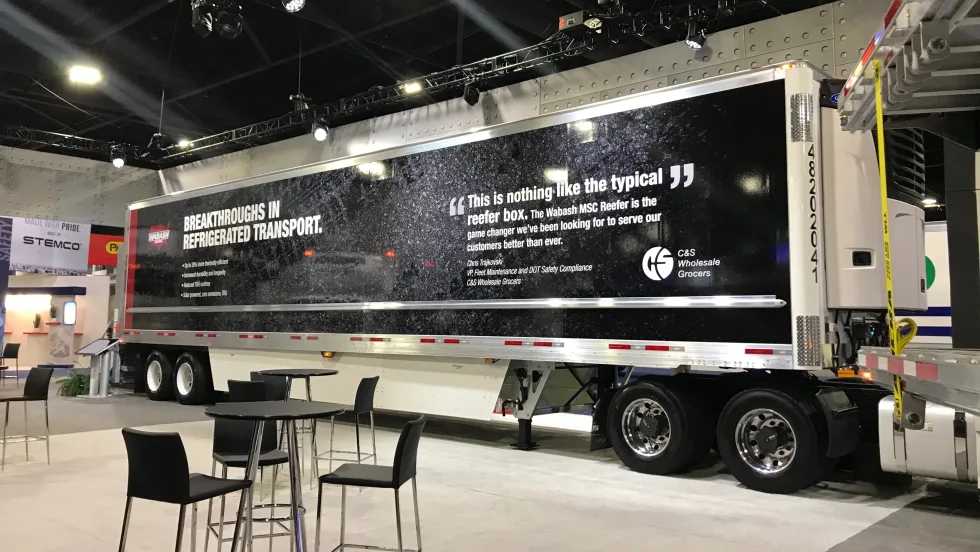
Reefer Trailer Aims to Help Reach Zero Emissions
Wabash National is partnering with C&S Wholesale Grocers to test a new type of zero-emissions refrigerated trailer.
Read More →