




Using Archimedes’ Lever Principle to Help Propel a Tractor-Trailer
Archimedes, the scholar and mathematician of antiquity, was quoted as saying, “Give me a place to stand and a large enough lever, and I will move the earth.” That’s debatable, but some pretty big and heavy things can be nudged into motion with a lever – and trailers are among them, says an inventor in Ohio. Tom Berg has the story in his Trailer Talk blog.

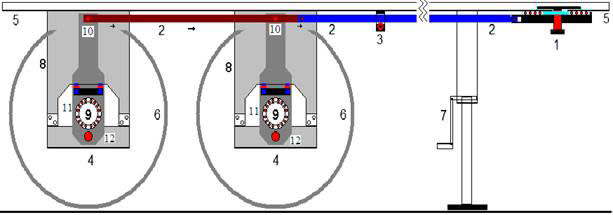
1. Floating kingpin 2. Linkage arm 3. Carrier bearing assembly 4. Front and rear levers 5. Trailer chassis
6. Tire-wheel assembly 7. Landing gear 8. Suspension 9. Axle 10. Input pivot (top of lever) 11. Fulcrum pivot at axle
12. Output pivot at bracket mount
Archimedes, the scholar and mathematician of antiquity, was quoted as saying, “Give me a place to stand and a large enough lever, and I will move the earth.” That’s debatable, but some pretty big and heavy things can be nudged into motion with a lever – and trailers are among them, says an inventor in Ohio.
Herman Mitchell, a former U.S. Air Force electronics technician, has learned engineering principles and methods of calculating the physical forces involved in vehicle dynamics. He has devised what he calls the Easy Go Trailer, which multiplies a tractor’s pulling power with levers placed at the trailer’s axles.
With a current trailer, the tractor’s fifth wheel pulls against the kingpin, which tugs along the rest of a trailer. The pulling force is nowhere near the maximum legal combination weight of 80,000 pounds or the trailer’s weight of 62,500 pounds, which stays on the rig’s suspensions, axles and wheels. So the pulling force needs only to overcome rolling resistance of bearings and tires, and aerodynamic drag as the rig speeds up. Typically the pulling force on a flat highway will be about 500 pounds for the trailer and 140 pounds for the tractor, Mitchell has calculated.
If that pulling force is multiplied by levers, power needed to move the trailer is eased, and fuel economy could increase by 80%, he says. Here’s how it works:
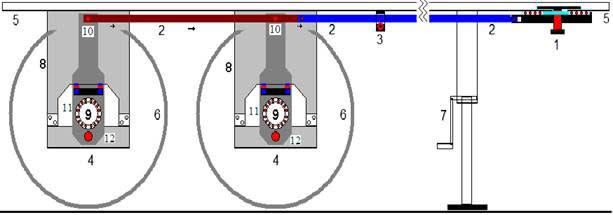
1. Floating kingpin 2. Linkage arm 3. Carrier bearing assembly 4. Front and rear levers 5. Trailer chassis
6. Tire-wheel assembly 7. Landing gear 8. Suspension 9. Axle 10. Input pivot (top of lever) 11. Fulcrum pivot at axle
12. Output pivot at bracket mount
Tops of the levers – two on each axle – are linked by a long rod to the trailer’s kingpin, which slides or “floats” slightly. As the kingpin is pulled by the fifth wheel, the rod tugs against the lever tops and the axles, to which the levers are attached. The axles form a fulcrum for the levers, whose bottom ends pivot in brackets beneath each axle; the levers now push against the axles.
The long ends of the levers above the axles are about five times the length of the short ends at the axles and pivots, so the mechanical advantage is 5 to 1. Therefore, the 500 pounds of required pulling force at the axles is reduced to 100 pounds, and an input force of 110 pounds will cause the tractor and trailer to move away from a stop and accelerate.
A driver would notice how much lighter the trailer feels, and he could ease up on the foot feed. Or the engine’s output could be reduced electronically or by downsizing. Either way, considerable fuel would be saved.
The vertical space beneath a trailer’s superstructure limits the possible lever length and therefore the mechanical advantage’s ratio, Mitchell says, so it comes out to be 5 to 1. There’s even less space beneath low-slung trailers, like drop decks and lowboys, but he has other devices in mind that, with shorter levers, would provide the desired multiplication of force.
The floating kingpin shouldn’t be a problem during braking, but if it is, he figures a locking mechanism could stop movement during those events. A regular steel-spring or air-bag suspension would be secured normally to the axles, and would provide their normal vertical articulation and cushioning. Levers would move with the axles, and the apparatus connecting the levers to the kingpin-linking rod would swivel to allow movement.
So, that’s the Easy Go Trailer concept, in plain English. Mitchell describes his patented design in engineering terms, which he’d be happy to share with trailer manufacturers and others who see its validity and potential. He once built a model using bicycle parts to demonstrate it, but no longer has it. I've suggested that he make another one to show that it physically works.
While his levers might not move the Earth, they might help reduce fuel burn enough to save it from excess greenhouse gases. Contact Herman Mitchell at Power Products LLC, 937-235-0448 or powerproducts5@aol.com.
More Blog Posts
Pulsing Back-of-Trailer Lamps Aim to Prevent Crashes
Can the addition of a pulsing brake lamp on the back of a trailer prevent rear-end collisions? FMCSA seems to think so, if its exemptions are any indication.
Read More →
Designing a 14-Foot Trailer
Trailers are 13 feet, 6 inches high, right? Not for Hub Group, which developed a special 14-foot-high trailer spec for a dedicated customer based in California. Learn more in the Trailer Talk blog.
Read More →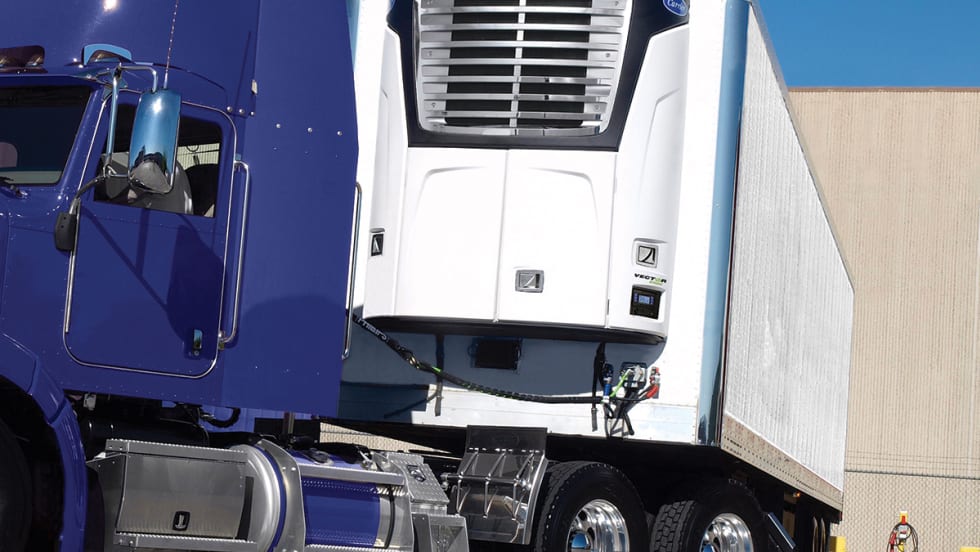
CARB Comes for Reefer Trailers
A new round of emissions control regulations decreed by the California Air Resource Board will begin affecting refrigerated trailer and TRU design and operations next year.
Read More →
5 Ways Data Analysis Maximizes the Value of Trailer Telematics
Are you getting the most out of your trailer telematics investment?
Read More →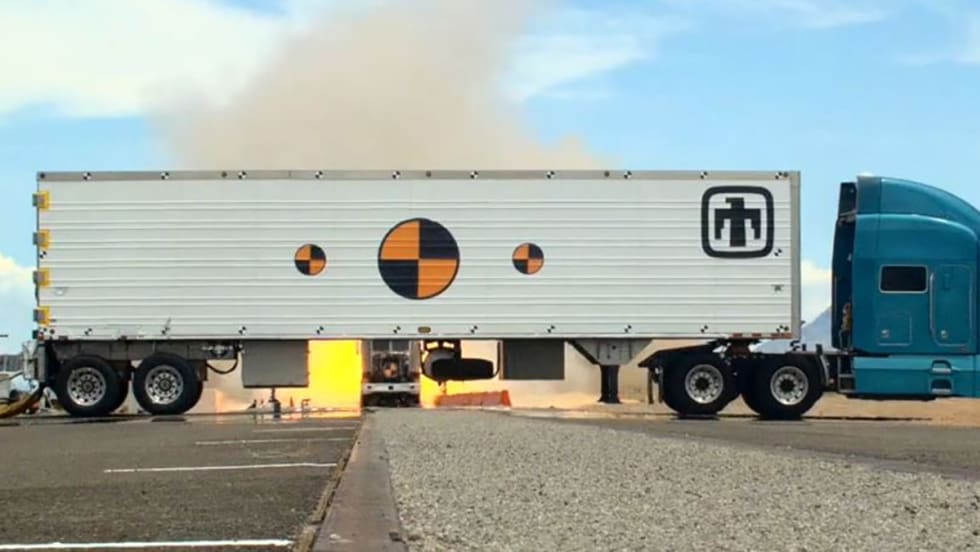
Can You Guess What's in That Trailer?
You don’t always know what’s in the trailers that pass you on the road. But some of those trailers are carrying something a little more dangerous that frozen food or new bedding…like, maybe, a nuclear weapon. But this isn’t an ordinary trailer; this is a trailer specifically made to not only carry this type of payload, but protect it at all costs.
Read More →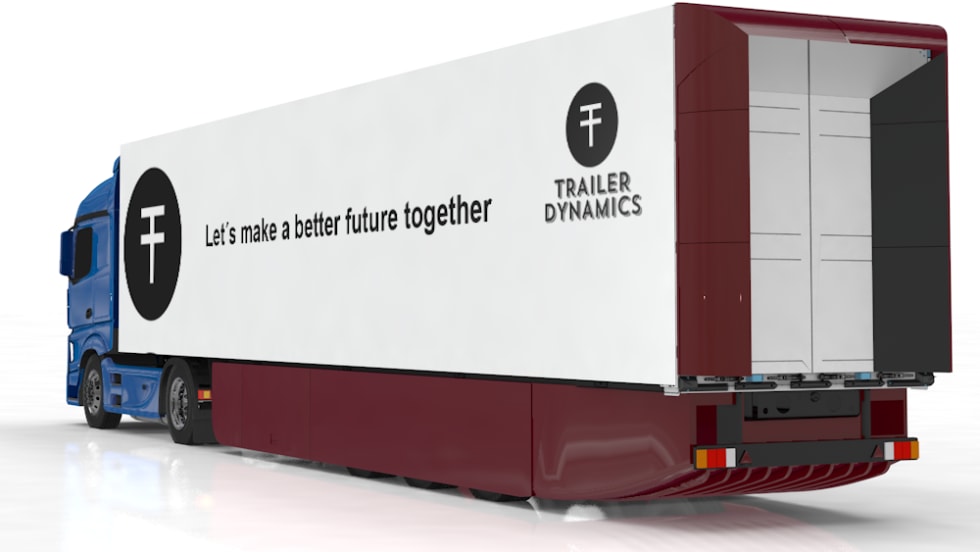
How Trailers Are Harnessing 'Free' Energy
Can trailers play a more active role in sustainable transport beyond aerodynamic add-ons or low-rolling-resistance tires? Some companies think so.
Read More →
Wrapping a Trailer for COVID’s Everyday Heroes
“We don’t only deliver freight. We deliver awareness.” That’s what Jim Barrett, president and CEO of Road Scholar Transport, likes to say about the Dunmore, Pennsylvania-based carrier’s “awareness fleet.” Its latest trailer wrap honors the everyday heroes of the pandemic.
Read More →
How a Tanker Fleet is Using Unorthodox Trailer Lighting to Fight Rear-End Collisions
Groendyke Transport watched the number of rear-end collisions with its trailers rise steadily until it tried an unorthodox and then unapproved method of alerting following drivers that its trucks were applying brakes and slowing down.
Read More →
The Role Trailers are Playing in COVID-19 Funerals
In places such as New York City and Detroit, overwhelmed hospitals and mortuaries are using refrigerated trailers to store the bodies of people killed by COVID-19.
Read More →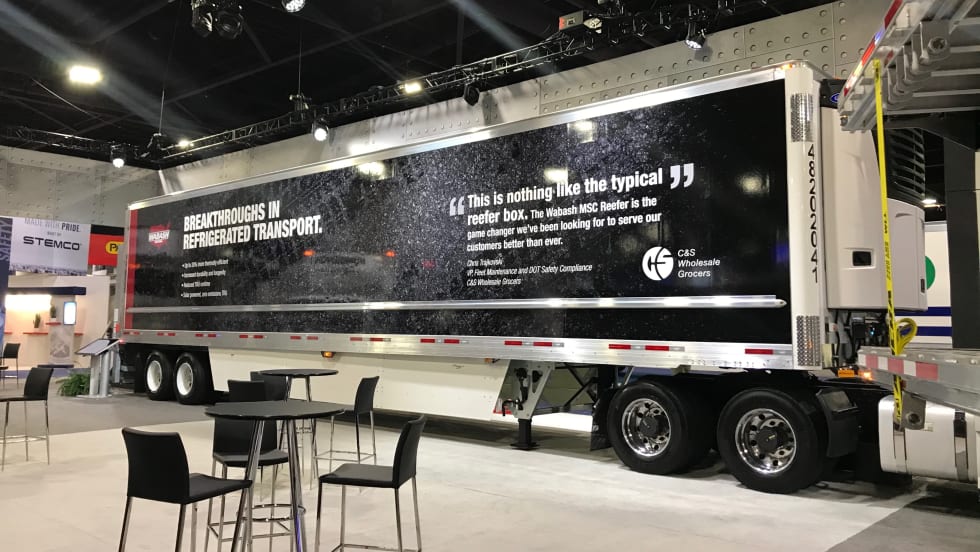
Reefer Trailer Aims to Help Reach Zero Emissions
Wabash National is partnering with C&S Wholesale Grocers to test a new type of zero-emissions refrigerated trailer.
Read More →