




United Technologies Execs Tackle Food Waste Problem
“If food waste were a country, it would be the third largest emitter of greenhouse gases behind China and the United States." Tom Berg's Trailer Talk blog looks at a new book on food waste whose authors are with the parent company of Carrier Transicold

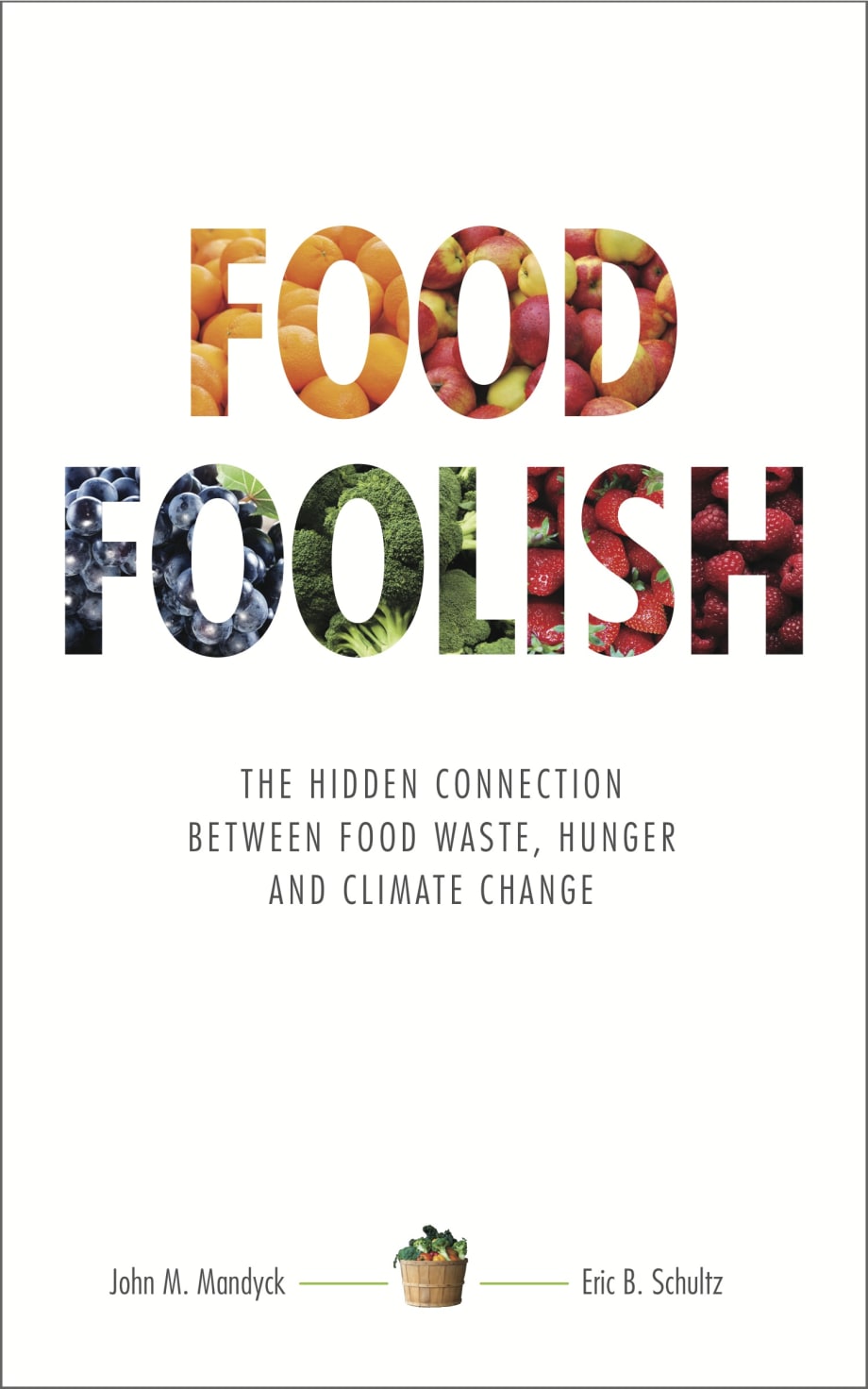
Proceeds from book sales will be donated to food charities, UTC says. Art via United Technologies
“You clean your plates,” my mom used to tell us seven Berg kids at the supper table. “That food is expensive and it’s not going to waste! People are starving in China. You sit there until you eat it all!”
Some years later, when I endured Army boot camp training, a sign above the serving counter in the mess hall proclaimed, “Take what you want but eat what you take.” One day, two captains stood at the exit, where the garbage can was. They stopped any guys who intended to scrape uneaten chow from mess trays and ordered them back to the tables to finish eating it. The captains must’ve talked with my mom.
She and they would cry if they saw what how much good food is thrown away today, yet there are still starving people in the world – not so much in China, but elsewhere in Asia, Africa, in the Americas, and yes, right here in the United States.
And I’m not the only one to notice it. It’s the subject of a book written by two executives from United Technologies, which owns, among other properties, Carrier Transicold, the reefer-unit maker. Furthermore, they tie waste to climate change. Ashley Barrie of UTC sent out a press release promoting the book.
Proceeds from book sales will be donated to food charities, UTC says.Art via United Technologies
“If food waste were a country, it would be the third largest emitter of greenhouse gases behind China and the United States. Yet, the connection between food waste and climate change is often missing,” she began. “Carrier, a unit of UTC, has a unique perspective on the global food system, witnessing the stunning amount of food wasted globally.
In an effort to elevate global awareness of this issue, John Mandyck, chief sustainability officer, and Eric Schultz, former chairman and CEO of Sensitech, a United Technologies company specializing in cold chain monitoring and visibility, co-authored a 182-page paperback book called "Food Foolish: The Hidden Connection Between Food Waste, Hunger and Climate Change."
According to the announcement, one-third or more of the food we produce each year is never eaten. Meanwhile, more than 800 million people – a population equivalent to the United States and European Union combined – are chronically hungry.
“Food waste also has a devastating environmental impact. The embodied carbon dioxide emissions in food waste alone represent 3.3 billion metric tons. That’s the energy used to produce food that’s never eaten, including fuel for tractors used for planting and harvest, electricity for water pumps in the field and the power for processing and packaging facilities.”
It would also include the energy consumed in transporting the food and, with perishables, keeping it at the correct temperature – Carrier Transicold’s business. And to paraphrase the old ATA slogan, if you ate it (or threw it out), a truck brought it (and took it away).
“In addition to greenhouse gas emissions, the water used to grow the food we throw away is greater than the water used by any single nation on the planet,” Barrie states.
“The way we systematically waste food,” states Mandyck, one of the authors, in the press release, “is one of humankind’s unintended but most foolish practices.”
Schultz, the co-author, adds, “The very foods we need to address global nutrition and meet consumer demand are the most water-intensive and require the greatest protection along the supply chain. Their loss and waste not only intensifies hunger, but destroys our freshwater resources.”
If that one-third of all food that’s thrown away were saved, it could feed all of the world’s people, now and into 2050, when there’ll be 10 billion humans on the planet, they contend. Of course, that food would have to get to them, but if wasteful habits were changed and food were transported more efficiently and carefully, it could be diverted in their direction in the first place.
Trucks and all other transport modes would continue to do their jobs, and the world would be a better place. That’d please my mom, and those Army captains.
To order a copy of Food Foolish, visit www.amazon.com or www.FoodFoolishBook.com. UTC says proceeds from the book will be donated to food charities.
More Blog Posts
Pulsing Back-of-Trailer Lamps Aim to Prevent Crashes
Can the addition of a pulsing brake lamp on the back of a trailer prevent rear-end collisions? FMCSA seems to think so, if its exemptions are any indication.
Read More →
Designing a 14-Foot Trailer
Trailers are 13 feet, 6 inches high, right? Not for Hub Group, which developed a special 14-foot-high trailer spec for a dedicated customer based in California. Learn more in the Trailer Talk blog.
Read More →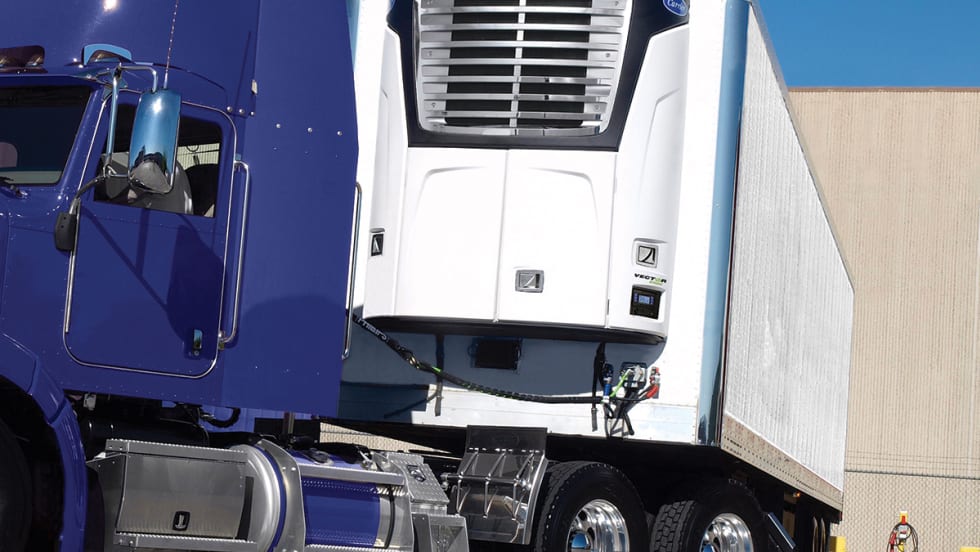
CARB Comes for Reefer Trailers
A new round of emissions control regulations decreed by the California Air Resource Board will begin affecting refrigerated trailer and TRU design and operations next year.
Read More →
5 Ways Data Analysis Maximizes the Value of Trailer Telematics
Are you getting the most out of your trailer telematics investment?
Read More →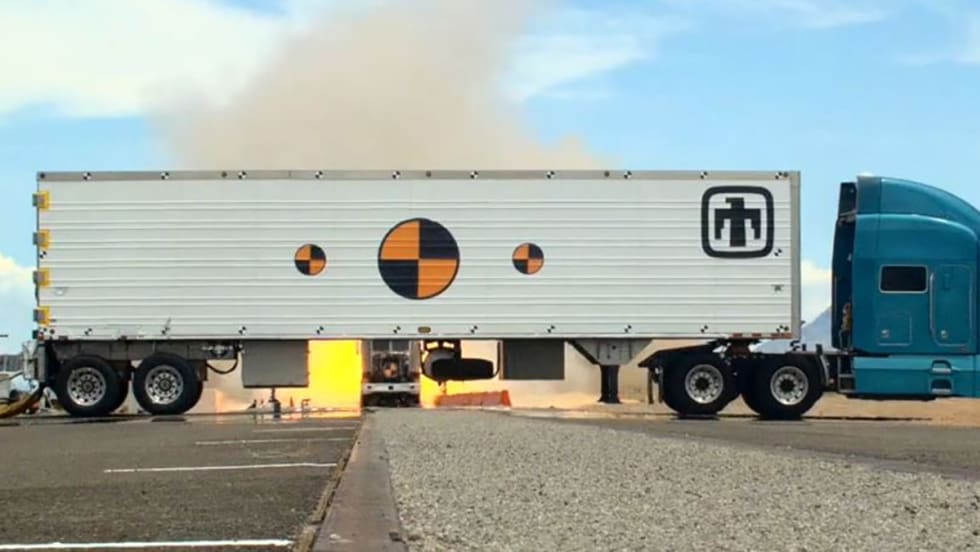
Can You Guess What's in That Trailer?
You don’t always know what’s in the trailers that pass you on the road. But some of those trailers are carrying something a little more dangerous that frozen food or new bedding…like, maybe, a nuclear weapon. But this isn’t an ordinary trailer; this is a trailer specifically made to not only carry this type of payload, but protect it at all costs.
Read More →
How Trailers Are Harnessing 'Free' Energy
Can trailers play a more active role in sustainable transport beyond aerodynamic add-ons or low-rolling-resistance tires? Some companies think so.
Read More →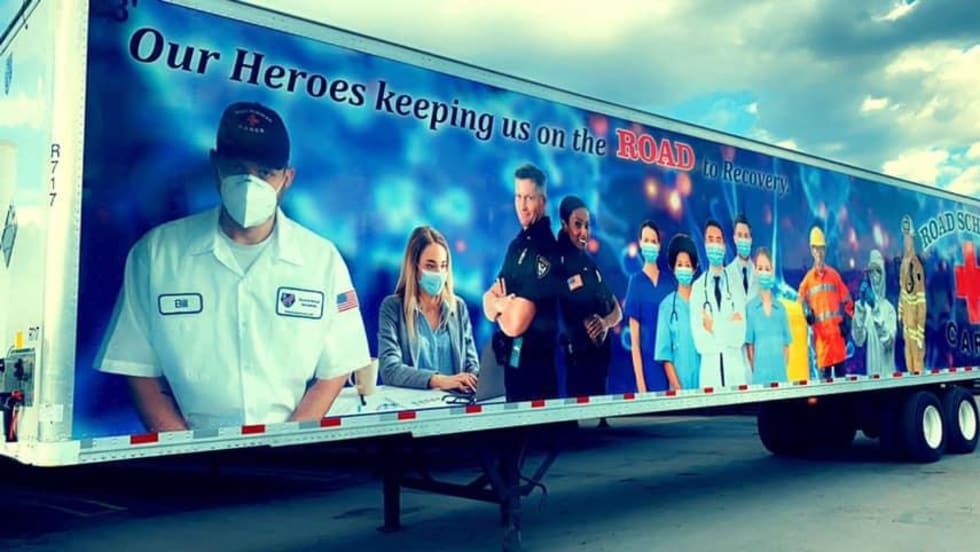
Wrapping a Trailer for COVID’s Everyday Heroes
“We don’t only deliver freight. We deliver awareness.” That’s what Jim Barrett, president and CEO of Road Scholar Transport, likes to say about the Dunmore, Pennsylvania-based carrier’s “awareness fleet.” Its latest trailer wrap honors the everyday heroes of the pandemic.
Read More →
How a Tanker Fleet is Using Unorthodox Trailer Lighting to Fight Rear-End Collisions
Groendyke Transport watched the number of rear-end collisions with its trailers rise steadily until it tried an unorthodox and then unapproved method of alerting following drivers that its trucks were applying brakes and slowing down.
Read More →
The Role Trailers are Playing in COVID-19 Funerals
In places such as New York City and Detroit, overwhelmed hospitals and mortuaries are using refrigerated trailers to store the bodies of people killed by COVID-19.
Read More →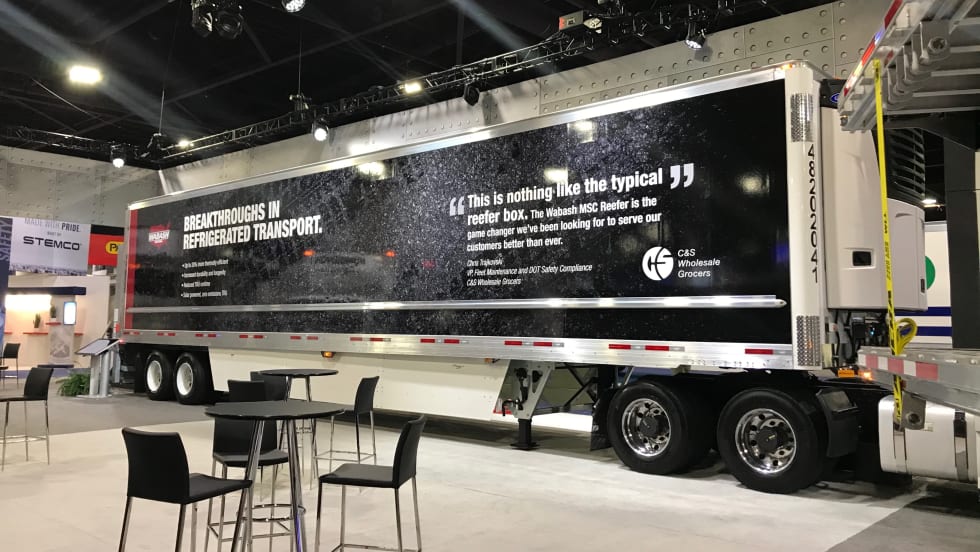
Reefer Trailer Aims to Help Reach Zero Emissions
Wabash National is partnering with C&S Wholesale Grocers to test a new type of zero-emissions refrigerated trailer.
Read More →