





Related: Bill Slams Brakes on Twin 33s
Twin 33s Issue Revived in Constitution-Related Bill
Double 33-foot trailers were pulled from last December's spending bill by senators who objected on safety grounds, but as Tom Berg explores in his Trailer Talk blog, they may not be dead yet.
January 29, 2016
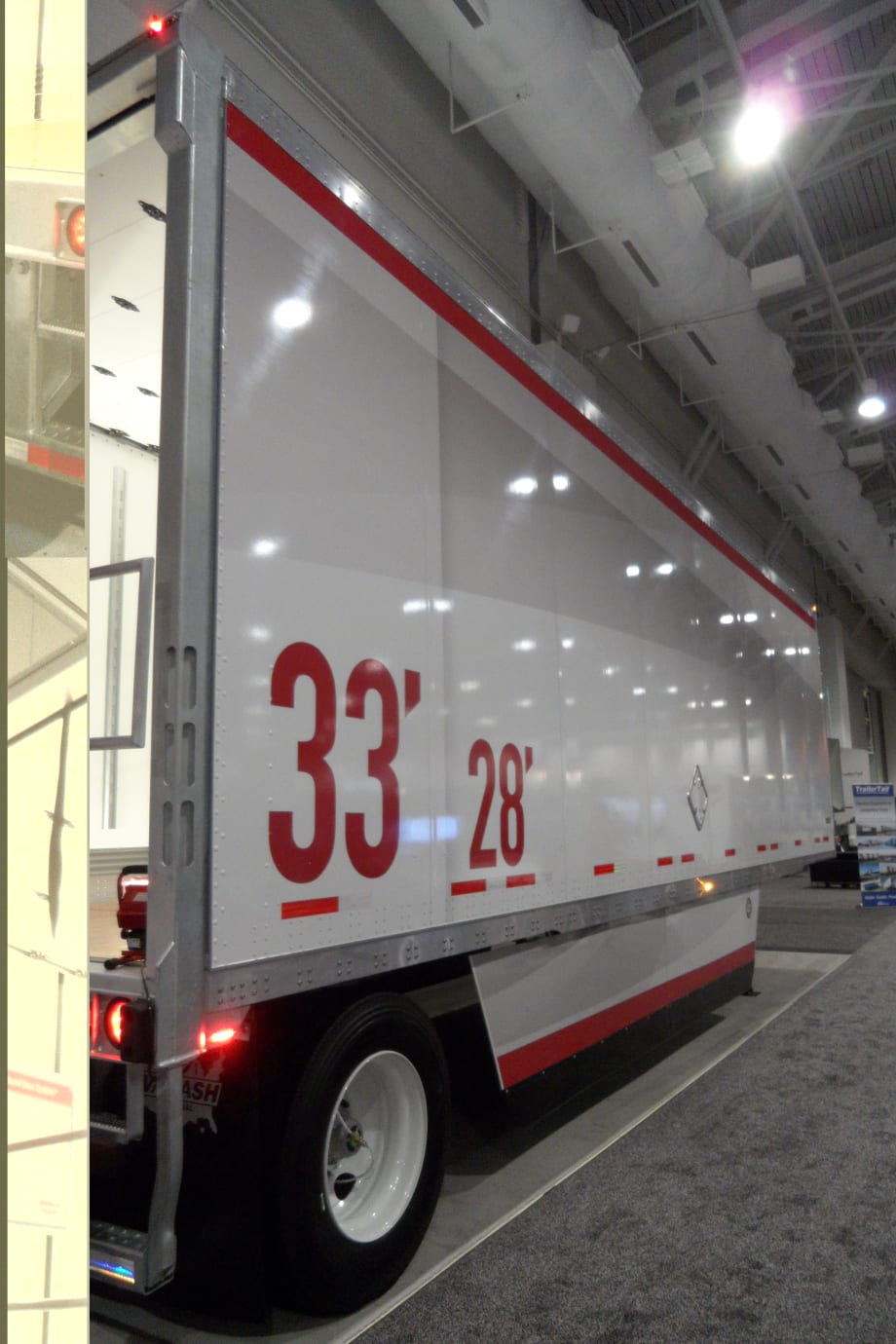
Last year Wabash National displayed a 33-foot pup trailer marked to show its extra capacity over current 28s. Photo: Tom Berg
2 min to read

Last year Wabash National displayed a 33-foot pup trailer marked to show its extra capacity over current 28s. Photo: Tom Berg
Twin 33-foot trailers may not be dead after all, as a conservative congressman from Colorado is trying to get them legalized as part of a larger bill.
Republican Rep. Ken Buck, a member of the House Judiciary Committee, has introduced a bill that would “take back congressional authority,” supposedly usurped by President Obama’s executive orders. He said the president’s actions violate Article I of the United States Constitution, which defines congressional and executive powers.
Congress could have taken back its rightful powers last December, when it passed the Omnibus Spending Bill, Buck said, but most amendments were stripped out before passage. Among them was a provision that would’ve authorized states to allow 33-foot trailers in addition to the twin 28s that run now.
Killing of that amendment was the work of several senators who opposed the longer pup trailers on safety grounds. Truckload carriers and other groups also opposed twin 33s, but less-than-truckload and package carriers who operate doubles were in favor, as were some shippers and business interests, for productivity reasons.
Buck included the twin-33 issue in his new bill. It would strike a passage stipulating “28 feet” from existing U.S. law that limits certain trailer lengths and substitute “33 feet.” Other matters the congressman addressed include immigration, the Environmental Protection Agency’s water program, and mining regulations.
There’s a good chance that Buck’s bill will go nowhere in the House of Representatives or the Senate, or that its provisions, including the one on twin 33-foot trailers, will be killed. We’ll see.
Subscribe to Our Newsletter
More Blog Posts

Pulsing Back-of-Trailer Lamps Aim to Prevent Crashes
Can the addition of a pulsing brake lamp on the back of a trailer prevent rear-end collisions? FMCSA seems to think so, if its exemptions are any indication.
Read More →
Designing a 14-Foot Trailer
Trailers are 13 feet, 6 inches high, right? Not for Hub Group, which developed a special 14-foot-high trailer spec for a dedicated customer based in California. Learn more in the Trailer Talk blog.
Read More →
CARB Comes for Reefer Trailers
A new round of emissions control regulations decreed by the California Air Resource Board will begin affecting refrigerated trailer and TRU design and operations next year.
Read More →
5 Ways Data Analysis Maximizes the Value of Trailer Telematics
Are you getting the most out of your trailer telematics investment?
Read More →
Can You Guess What's in That Trailer?
You don’t always know what’s in the trailers that pass you on the road. But some of those trailers are carrying something a little more dangerous that frozen food or new bedding…like, maybe, a nuclear weapon. But this isn’t an ordinary trailer; this is a trailer specifically made to not only carry this type of payload, but protect it at all costs.
Read More →
How Trailers Are Harnessing 'Free' Energy
Can trailers play a more active role in sustainable transport beyond aerodynamic add-ons or low-rolling-resistance tires? Some companies think so.
Read More →
Wrapping a Trailer for COVID’s Everyday Heroes
“We don’t only deliver freight. We deliver awareness.” That’s what Jim Barrett, president and CEO of Road Scholar Transport, likes to say about the Dunmore, Pennsylvania-based carrier’s “awareness fleet.” Its latest trailer wrap honors the everyday heroes of the pandemic.
Read More →
How a Tanker Fleet is Using Unorthodox Trailer Lighting to Fight Rear-End Collisions
Groendyke Transport watched the number of rear-end collisions with its trailers rise steadily until it tried an unorthodox and then unapproved method of alerting following drivers that its trucks were applying brakes and slowing down.
Read More →
The Role Trailers are Playing in COVID-19 Funerals
In places such as New York City and Detroit, overwhelmed hospitals and mortuaries are using refrigerated trailers to store the bodies of people killed by COVID-19.
Read More →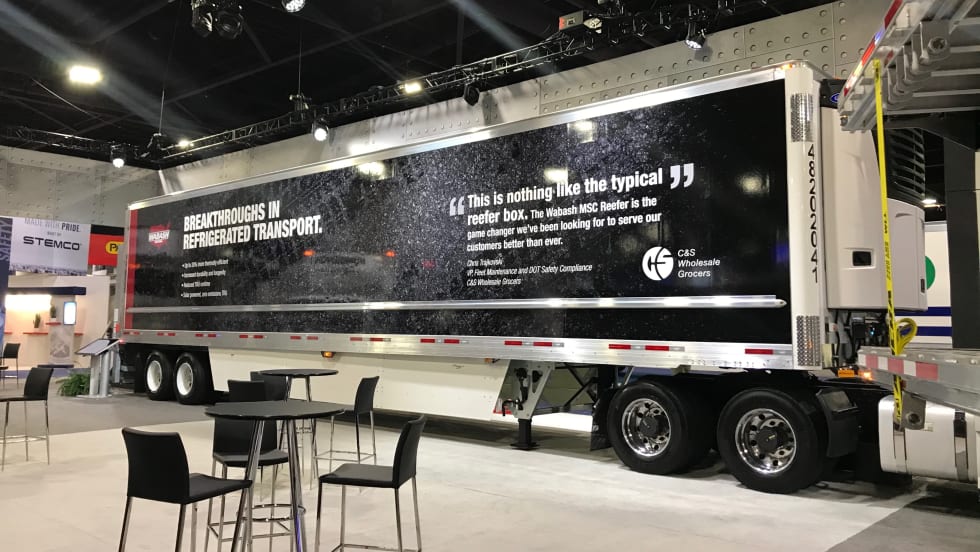
Reefer Trailer Aims to Help Reach Zero Emissions
Wabash National is partnering with C&S Wholesale Grocers to test a new type of zero-emissions refrigerated trailer.
Read More →