




Truck Driver 'Didn't Know' He Was Dragging a Car
Checking the mirrors should be a normal part of driving, but maybe 'Mike' had other things to look at than the car caught up in his trailer. Tom Berg has more in the Trailer Talk blog.

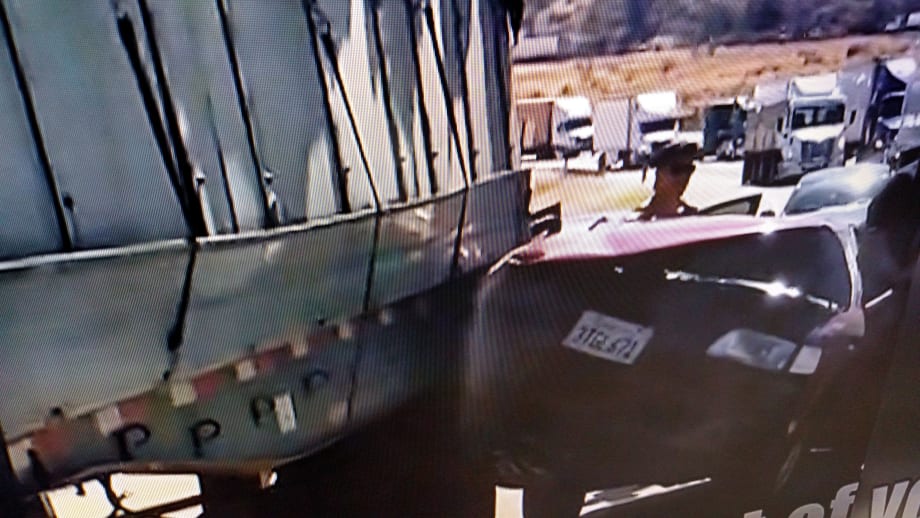
It appears the car has been pulled up under the trailer's corner by its spinning tires. Like many truck-car accidents, the car's driver seems to be at fault. But still....
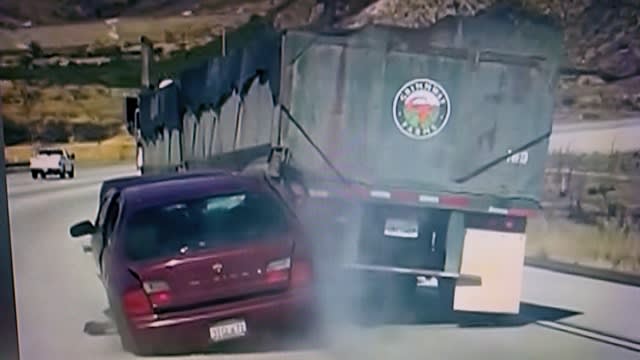
To paraphrase an often-seen slogan on the rear of trailers, "If you can see my mirror, I should be able to see you." Images: Inside Edition
Picture yourself driving on a freeway, highway, city street, or any kind of roadway. You’re watching the traffic ahead, sure. You also scan right and left, checking the side-view mirrors as your mind follows your eyes. No matter what kind of vehicle you’re driving, that’s the drill. See anything that you should react to?
The driver of this double-bottom rig, northbound on Interstate 15 in San Bernardino County, California, apparently saw nothing in the mirror just a couple feet from his face. He didn’t see a car that had gotten entangled on the second trailer's rear end and was being dragged along the pavement. The car’s rear tires were flat and were being ground down by friction from the unforgiving concrete.
The motorist, who had gotten himself into quite a pickle, was waving frantically.
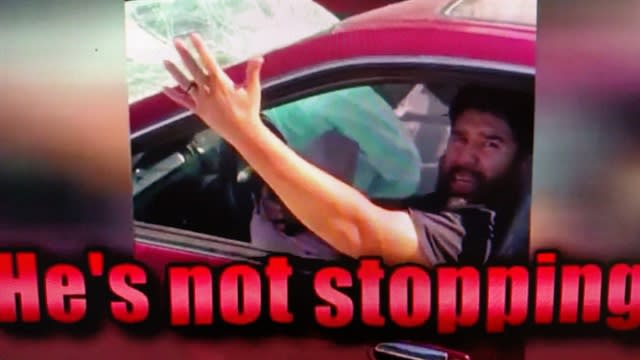
The errant motorist has really gotten himself into a pickle because, no, "He's not stopping."
Another motorist came upon the scene and, incredulous, began shooting video with his cell phone (Inside Edition, a news-entertainment TV show, played it one day last week). He said the truck continued on for four miles!
Later, we'll see that the front of the car seems to have been pulled under the trailer’s corner by the spinning left-rear tires, which had become an impromptu tow hook.
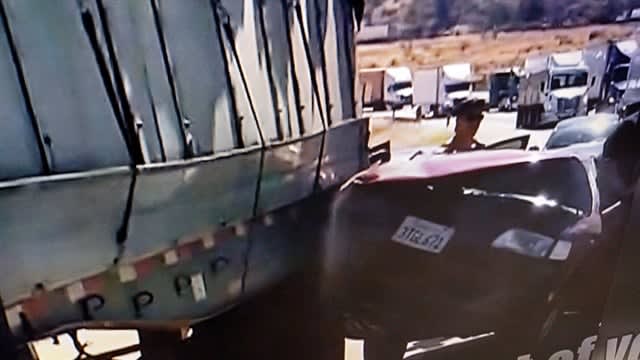
It appears the car has been pulled up under the trailer's corner by its spinning tires. Like many truck-car accidents, the car's driver seems to be at fault. But still....
Wouldn’t the truck driver feel the extra drag from behind, and hear the engine working harder to maintain speed? Sure, he was on an upgrade, heading for Cajon Pass, but still.
We can also see that the rig is composed of a couple of outside-frame flatbeds with sides, and is probably hauling freshly picked tomatoes or some other produce under its tarps, a familiar sight in California. The rig is clean and seems to be well-maintained, so you’d think its driver is also sharp. Yet he doesn’t stop.
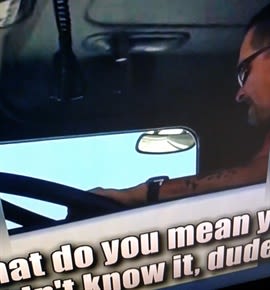
Asked about the car jammed into his rear trailer, the trucker lamely explains, "I didn't know it."
This has been going on a while, and the car is not hidden behind the trailer, but is hanging off its left corner, in plain sight. The truck driver doesn’t see it? Good lord!
The camera guy pulls ahead and finally gets the trucker to pull over. He is surprised when told that he’s been dragging a car and lamely explains, “I didn’t know it.” Duh!
Might some remedial training by the driver's boss be in order here? Might “Mike,” the name on the door and presumably that of the driver, be encouraged to engage his brain when he's engaged top gear? We can hope so.
More Blog Posts
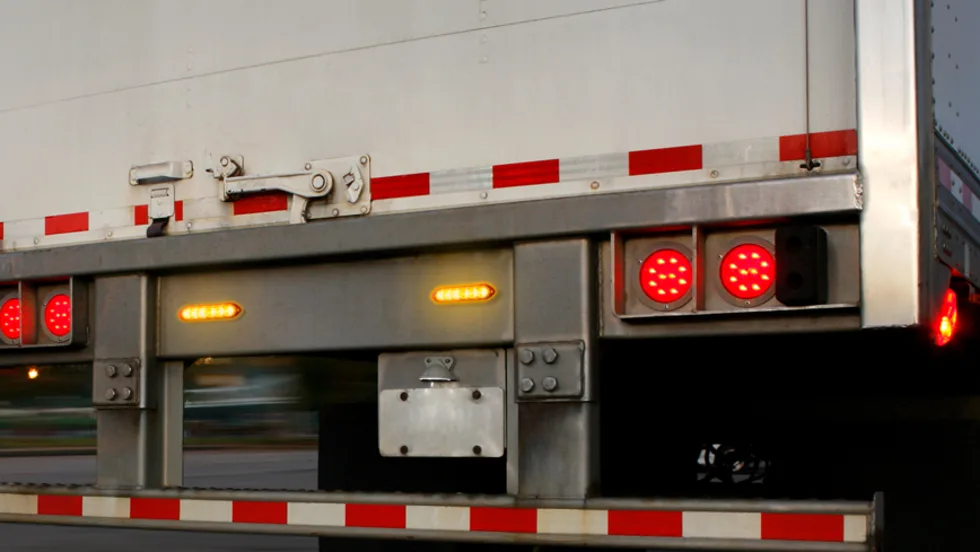
Pulsing Back-of-Trailer Lamps Aim to Prevent Crashes
Can the addition of a pulsing brake lamp on the back of a trailer prevent rear-end collisions? FMCSA seems to think so, if its exemptions are any indication.
Read More →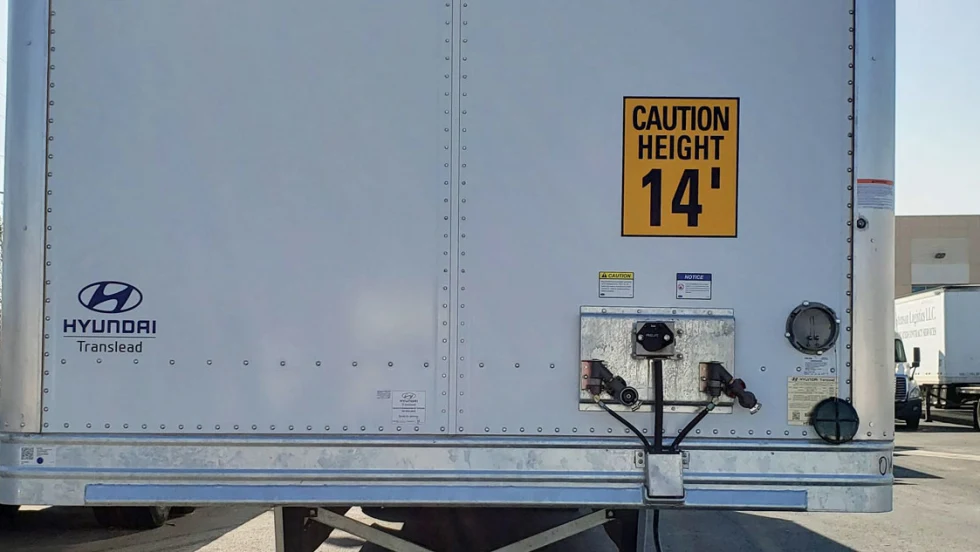
Designing a 14-Foot Trailer
Trailers are 13 feet, 6 inches high, right? Not for Hub Group, which developed a special 14-foot-high trailer spec for a dedicated customer based in California. Learn more in the Trailer Talk blog.
Read More →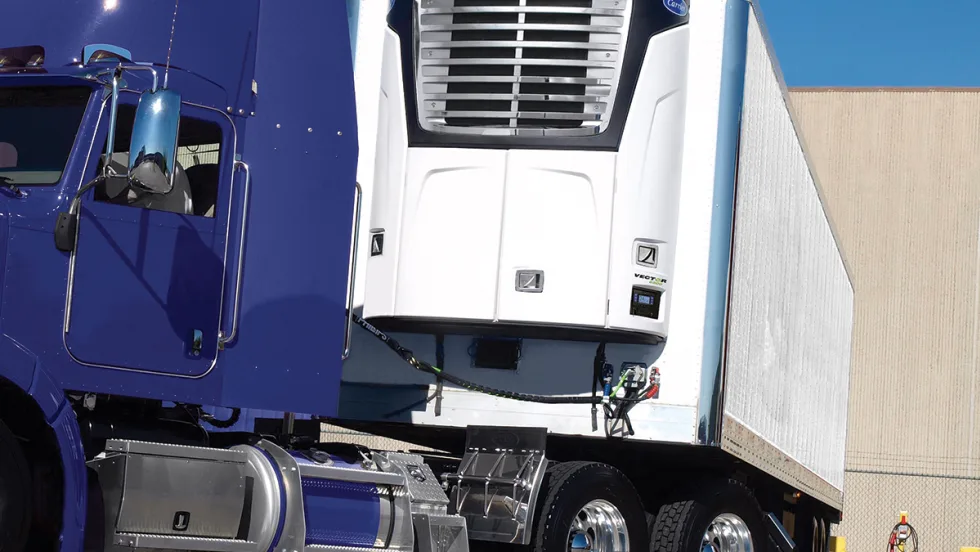
CARB Comes for Reefer Trailers
A new round of emissions control regulations decreed by the California Air Resource Board will begin affecting refrigerated trailer and TRU design and operations next year.
Read More →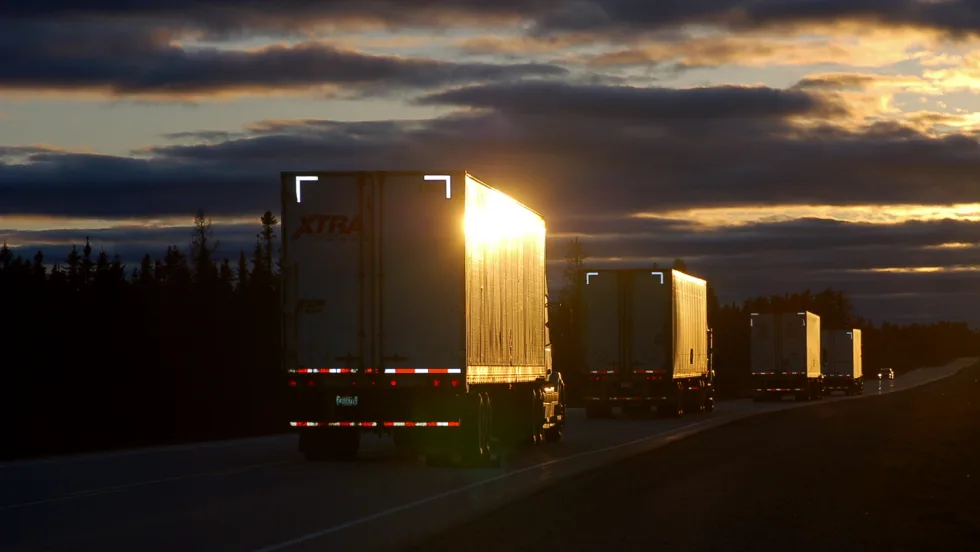
5 Ways Data Analysis Maximizes the Value of Trailer Telematics
Are you getting the most out of your trailer telematics investment?
Read More →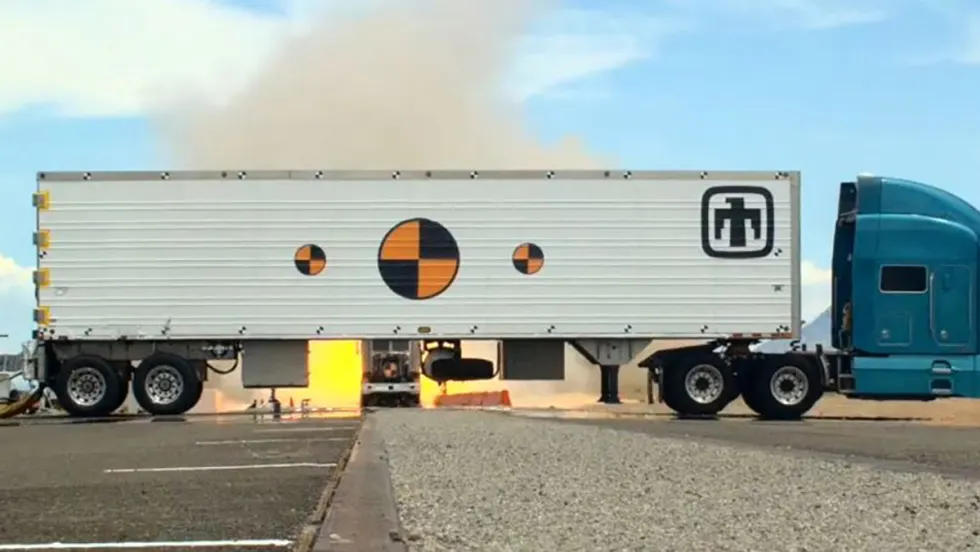
Can You Guess What's in That Trailer?
You don’t always know what’s in the trailers that pass you on the road. But some of those trailers are carrying something a little more dangerous that frozen food or new bedding…like, maybe, a nuclear weapon. But this isn’t an ordinary trailer; this is a trailer specifically made to not only carry this type of payload, but protect it at all costs.
Read More →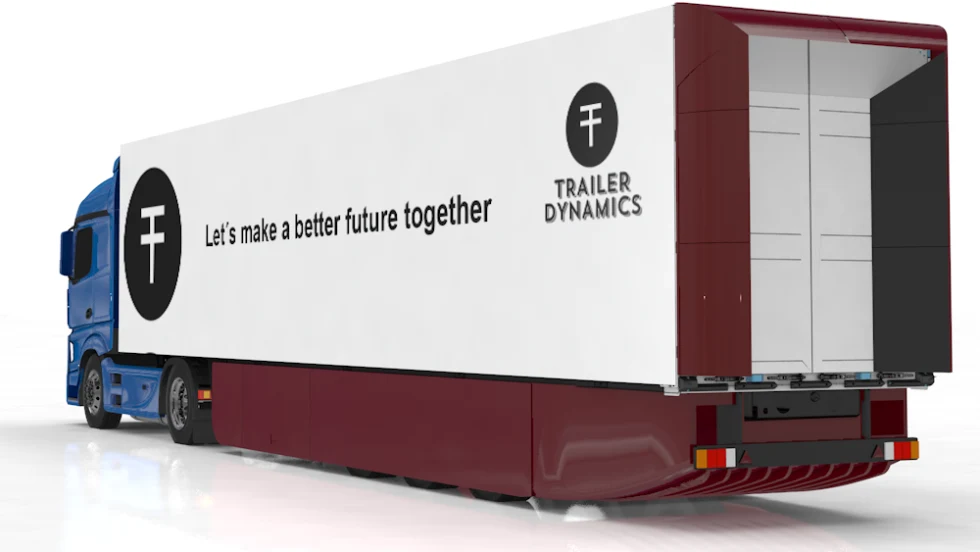
How Trailers Are Harnessing 'Free' Energy
Can trailers play a more active role in sustainable transport beyond aerodynamic add-ons or low-rolling-resistance tires? Some companies think so.
Read More →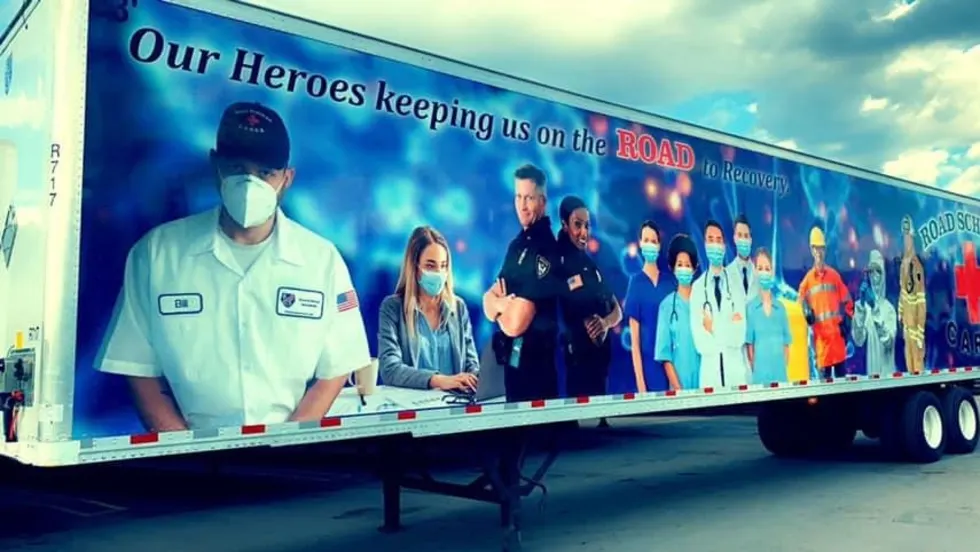
Wrapping a Trailer for COVID’s Everyday Heroes
“We don’t only deliver freight. We deliver awareness.” That’s what Jim Barrett, president and CEO of Road Scholar Transport, likes to say about the Dunmore, Pennsylvania-based carrier’s “awareness fleet.” Its latest trailer wrap honors the everyday heroes of the pandemic.
Read More →
How a Tanker Fleet is Using Unorthodox Trailer Lighting to Fight Rear-End Collisions
Groendyke Transport watched the number of rear-end collisions with its trailers rise steadily until it tried an unorthodox and then unapproved method of alerting following drivers that its trucks were applying brakes and slowing down.
Read More →
The Role Trailers are Playing in COVID-19 Funerals
In places such as New York City and Detroit, overwhelmed hospitals and mortuaries are using refrigerated trailers to store the bodies of people killed by COVID-19.
Read More →
Reefer Trailer Aims to Help Reach Zero Emissions
Wabash National is partnering with C&S Wholesale Grocers to test a new type of zero-emissions refrigerated trailer.
Read More →