




Trailer Aero Devices Help Save 1 mpg, Manager Says
“All you have to do is ride a motorcycle behind the trailers to notice the difference” between aero and bare trailers, says John Drake, a Harley-Davidson enthusiast. Learn more in the Trailer Talk blog.

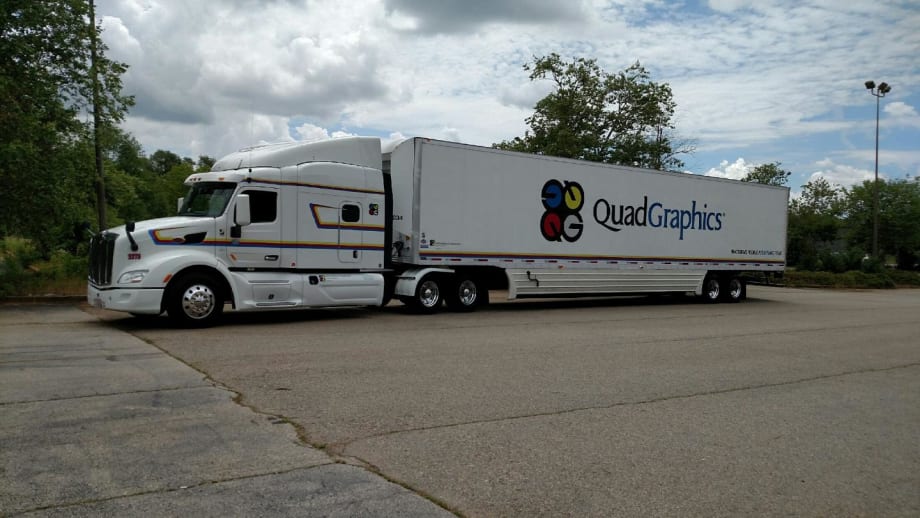
Latest tractrors are streamlined Peterbilt 579s. They average 7.7 mpg while pulling Great Dane and Utility vans with full aerodynamic equipment.
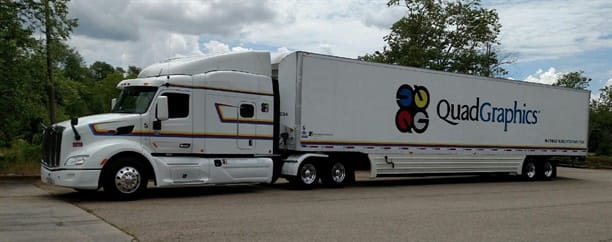
Latest tractrors are streamlined Peterbilt 579s. They average 7.7 mpg while pulling Great Dane and Utility vans with full aerodynamic equipment.
Aero trailers are a big part of fuel-saving strategy at Duplainville Transport, the trucking arm of Quad Graphics, a major printer based in Wisconsin.
Most of the 160 Great Dane and Utility 53-foot vans are outfitted with gap reducers, side skirts and rear vortex generators. A tractor pulling one of them saves about 1 mpg compared to a bare one, says, John Drake, the fleet manager.
The fleet uses Laydon ribbed-aluminum side skirts because “image is very important to us. We’re the second-largest printer in the country and we want nice-looking equipment. We picked those because a, they look nice and b, they work. The Utility dealer here (Badger Utility) is a Laydon distributor, so that works out well for us.”
Also, “I’m a believer in Air Tabs,” the triangular vortex generators. “We’ve looked at other devices, and it’s $400 to equip a trailer with them (Air Tabs) compared to thousands of dollars for the tail things, and the results are the same... It reduces the vortex, so you don’t get that suction behind the trailer as you go down the road.
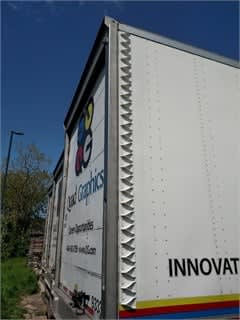
Air Tab vortex generators smooth the air as it leaves a trailer's rear end, reducing fuel-eating drag.
One of his past times lends proof to his testimonies.
“All you have to do is ride a motorcycle behind the trailers to notice the difference,” says Drake, a Harley-Davidson enthusiast. “With the bare trailer you can feel the air turbulence and you’re going this way and that way. With an aerodynamic trailer, you pull up behind it and it’s pretty smooth, and you can back off a little.”
The latest tractors are streamlined Peterbilt 579s with long sleepers, auxiliary power units, automated transmissions and other modern equipment. They are driver pleasers, which fits into corporate philosophy.
Quad Graphics and Duplainville treats employees well, with good pay and “very good benefits,” says Drake, who’s been there 28 years, and employee satisfaction leads to top performance, including fuel economy. That they’re satisfied is indicated by the turnover rate – less than 10% among drivers and owner-operators.
Editor's note: This is a preview from HDT's June 2016 special fuel economy issue, "10 MPG and Beyond." Read more about what fleets are doing to improve fuel economy today and the outlook for even more fuel efficiency in the future.
More Blog Posts

Pulsing Back-of-Trailer Lamps Aim to Prevent Crashes
Can the addition of a pulsing brake lamp on the back of a trailer prevent rear-end collisions? FMCSA seems to think so, if its exemptions are any indication.
Read More →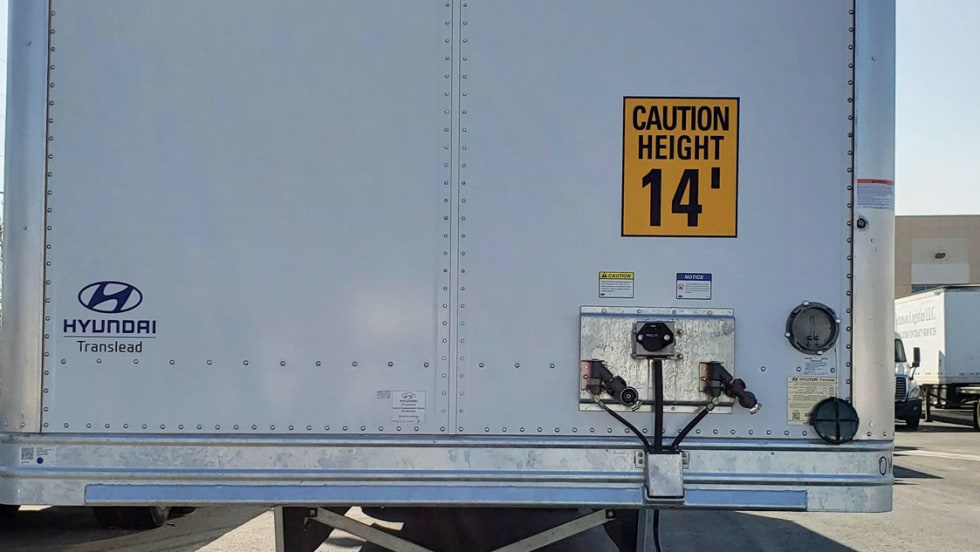
Designing a 14-Foot Trailer
Trailers are 13 feet, 6 inches high, right? Not for Hub Group, which developed a special 14-foot-high trailer spec for a dedicated customer based in California. Learn more in the Trailer Talk blog.
Read More →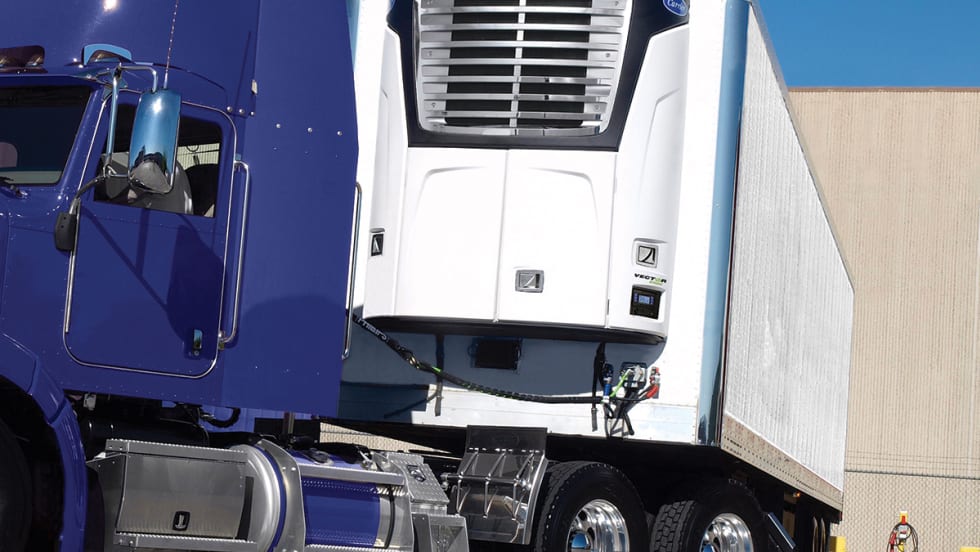
CARB Comes for Reefer Trailers
A new round of emissions control regulations decreed by the California Air Resource Board will begin affecting refrigerated trailer and TRU design and operations next year.
Read More →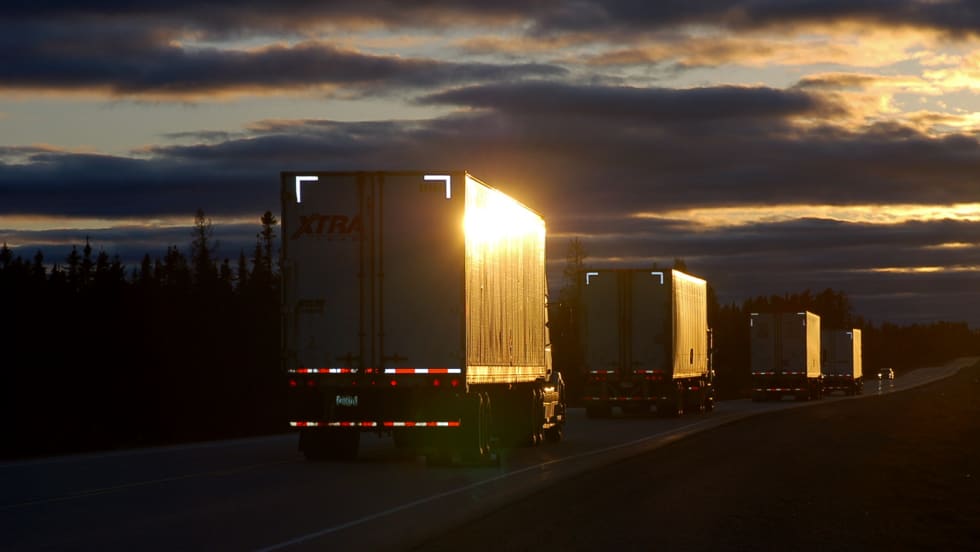
5 Ways Data Analysis Maximizes the Value of Trailer Telematics
Are you getting the most out of your trailer telematics investment?
Read More →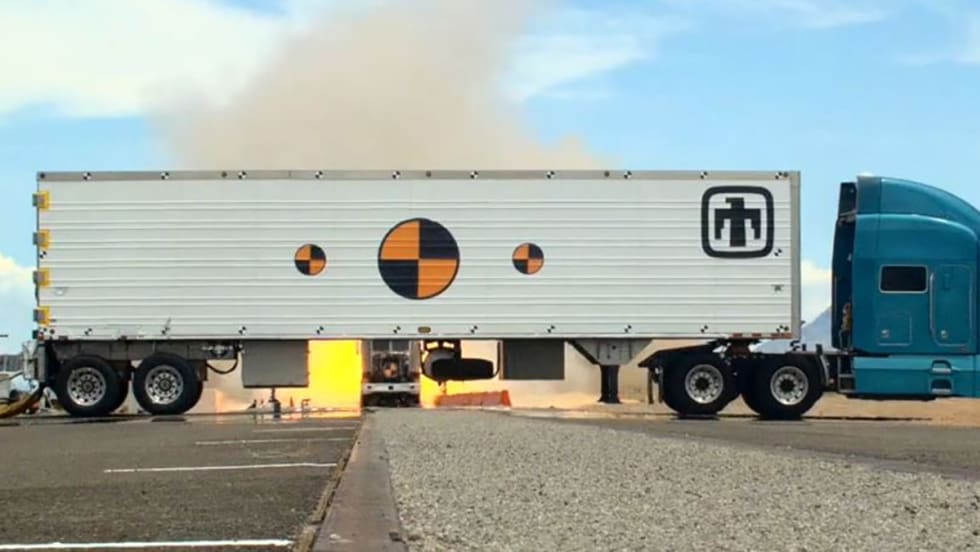
Can You Guess What's in That Trailer?
You don’t always know what’s in the trailers that pass you on the road. But some of those trailers are carrying something a little more dangerous that frozen food or new bedding…like, maybe, a nuclear weapon. But this isn’t an ordinary trailer; this is a trailer specifically made to not only carry this type of payload, but protect it at all costs.
Read More →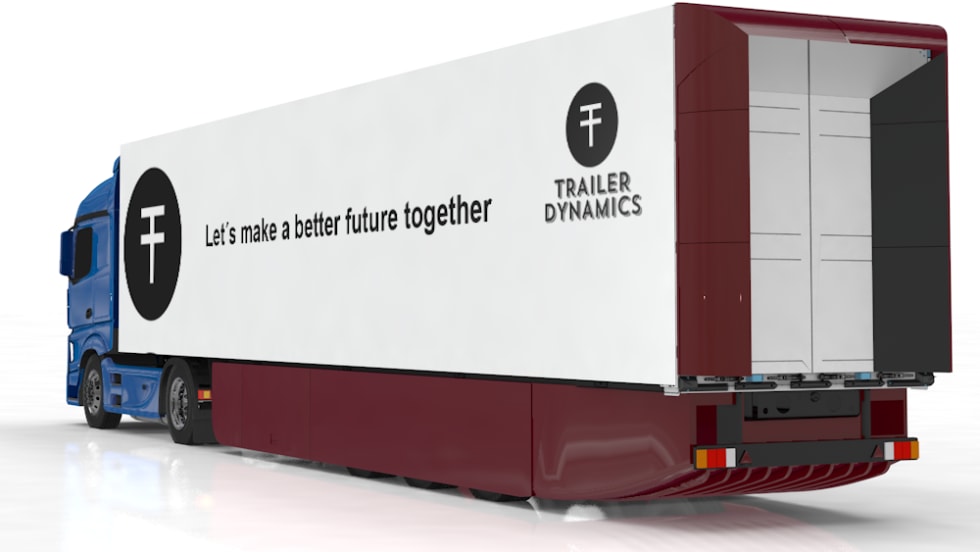
How Trailers Are Harnessing 'Free' Energy
Can trailers play a more active role in sustainable transport beyond aerodynamic add-ons or low-rolling-resistance tires? Some companies think so.
Read More →
Wrapping a Trailer for COVID’s Everyday Heroes
“We don’t only deliver freight. We deliver awareness.” That’s what Jim Barrett, president and CEO of Road Scholar Transport, likes to say about the Dunmore, Pennsylvania-based carrier’s “awareness fleet.” Its latest trailer wrap honors the everyday heroes of the pandemic.
Read More →
How a Tanker Fleet is Using Unorthodox Trailer Lighting to Fight Rear-End Collisions
Groendyke Transport watched the number of rear-end collisions with its trailers rise steadily until it tried an unorthodox and then unapproved method of alerting following drivers that its trucks were applying brakes and slowing down.
Read More →
The Role Trailers are Playing in COVID-19 Funerals
In places such as New York City and Detroit, overwhelmed hospitals and mortuaries are using refrigerated trailers to store the bodies of people killed by COVID-19.
Read More →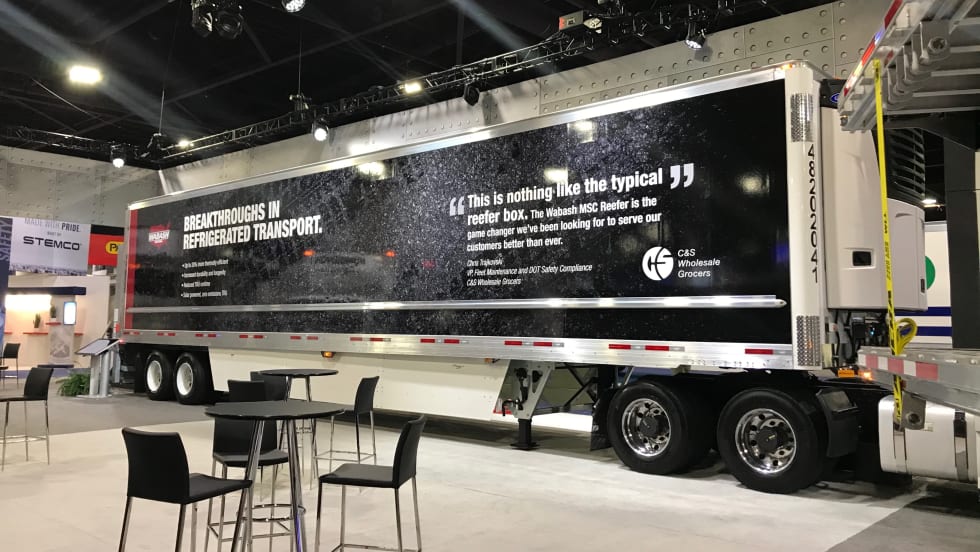
Reefer Trailer Aims to Help Reach Zero Emissions
Wabash National is partnering with C&S Wholesale Grocers to test a new type of zero-emissions refrigerated trailer.
Read More →