




The Twin 33s Idea Returns. Will It Fly This Time?
A pair of longer pups would haul more than two 28-footers, so LTL carriers and shippers are in favor. But truckload carriers still want no part of them.

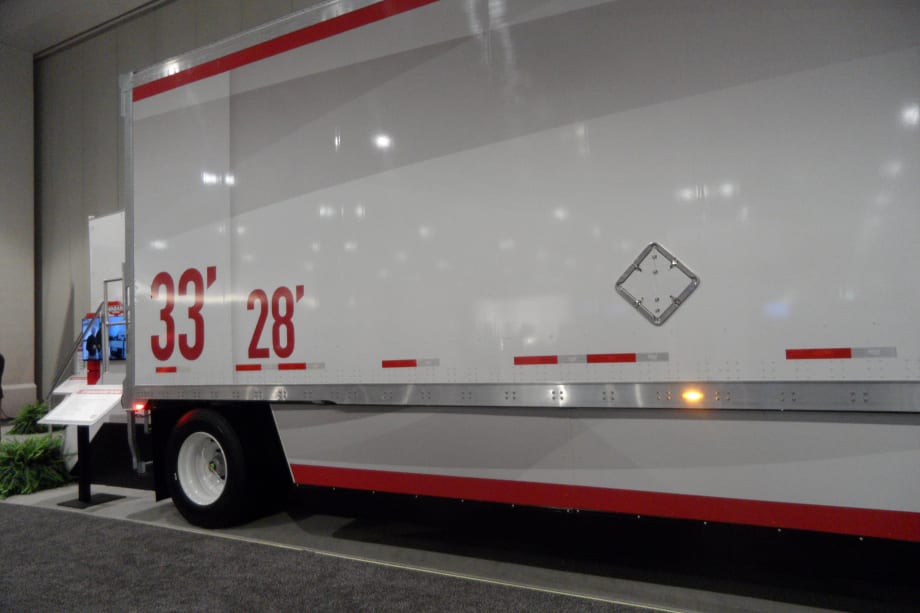
A pair of 33-foot pups would have 10 feet more floor space for cargo than a set of 28s, as the labels on this concept trailer show. And two 33s would have 13 more feet than a single 53-foot van. Will truckload shippers demand their use? Photo: Tom Berg
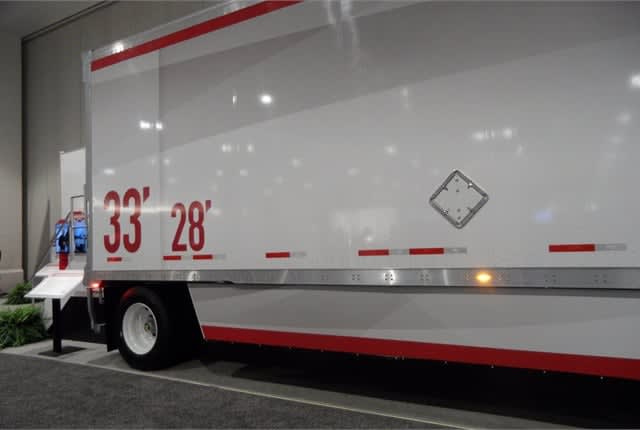
A pair of 33-foot pups would have 10 feet more floor space for cargo than a set of 28s, as the labels on this concept trailer show. And two 33s would have 13 more feet than a single 53-foot van. Will truckload shippers demand their use? Photo: Tom Berg
Do you think the push for twin 33-foot trailers is dead? It was two years ago, when the idea was squelched by members of Congress on safety grounds. But it’s been revived by some of the same interests that backed it then, primarily less-than-truckload carriers and shippers who argue that twin 33s would boost productivity over the current double 28-foot pups.
Revival might be riding on enthusiasm over President Trump’s pro-business beliefs and his promise to improve America’s infrastructure. On Feb. 1, Fred Smith, chairman of FedEx, testified in favor of twin 33s before a House committee, arguing that the same amount of LTL freight can be carried by fewer trucks. Gross weight would be the same and so would stopping distances; and limited experience with double 33s shows that they’re more stable and therefore safer.
FedEx has joined a new group, Americans for Modern Transportation, that’s promoting the idea. It’s composed of other LTL carriers, including UPS, plus shippers and retail companies, like Amazon. A predecessor organization, the Coalition for Efficient and Responsible Transportation, seems to have gone dormant since the twin-33s idea was shot down.
We know of no new legislation that would legalize the longer rigs, but the Truckload Carriers Association wants to kill the idea before it finds more strength. TCA’s president, John Lyboldt, last week wrote a letter to heads of Congressional committees arguing that allowing twin 33s would be a mistake. He said that truckload shippers will want to send their goods in two 33s instead of a single 53-foot van. They’ll see it simply as 13 more feet of cargo space.
But it’s not that simple, Lyboldt said in his letter. Truckload carriers would have to switch their fleets to 33-foot vans and alter operations. This would be tremendously expensive, similar to conversions in the 1980s and ‘90s from 45-foot vans to 48s and then to 53s. Most carriers then got nothing in return for their investments, because shippers expanded their idea of a “truckload” to what fit into the longer and longer trailers and paid little if any more in freight rates.
And, whereas single 53s are backed into loading docks, a pair of 33s would have to be broken down and then backed individually into docks, Lyboldt noted. Drivers would have to be trained for this. Beyond that, we can add converter dollies and changing from tandem-rear-axle sleeper-cab tractors to single-axle types with sleepers, which don't have much resale value.
As for operations, LTL carriers manage doubles and triples with multi-door terminals and dedicated lot space for separating and assembling the rigs.But much truckload freight travels directly from suppliers to consignees, bypassing terminals, so shippers and receivers would have to accommodate the additional maneuvering and equipment parking. How many of them would spend the money for that? Much more likely, motor carriers would be expected to set up special lots for this purpose.
Now, it is possible to build converter dollies that would lock a set of double trailers into a single unit that could then be reversed into docks. A small company in Washington State designed such a dolly back in the ‘80s. It was a modified C-dolly with double drawbars, says Gary Gaussoin of Silver Eagle Manufacturing. Its wheels caster-steered to minimize tire scrub during maneuvering. Trailer noses needed doors and ramps to pass cargo through from the lead trailer to the rear one and onto the dock, and vice-versa for loading.
But imagine backing a 66-foot trailer into some of the tight quarters that a 53 now just barely fits. The concept didn’t catch on then, and neither might the idea of twin 33s for truckload freight now. But for LTL freight, it seems to have an overwhelming number of positives. Let's see what happens.
More Blog Posts

Pulsing Back-of-Trailer Lamps Aim to Prevent Crashes
Can the addition of a pulsing brake lamp on the back of a trailer prevent rear-end collisions? FMCSA seems to think so, if its exemptions are any indication.
Read More →
Designing a 14-Foot Trailer
Trailers are 13 feet, 6 inches high, right? Not for Hub Group, which developed a special 14-foot-high trailer spec for a dedicated customer based in California. Learn more in the Trailer Talk blog.
Read More →
CARB Comes for Reefer Trailers
A new round of emissions control regulations decreed by the California Air Resource Board will begin affecting refrigerated trailer and TRU design and operations next year.
Read More →
5 Ways Data Analysis Maximizes the Value of Trailer Telematics
Are you getting the most out of your trailer telematics investment?
Read More →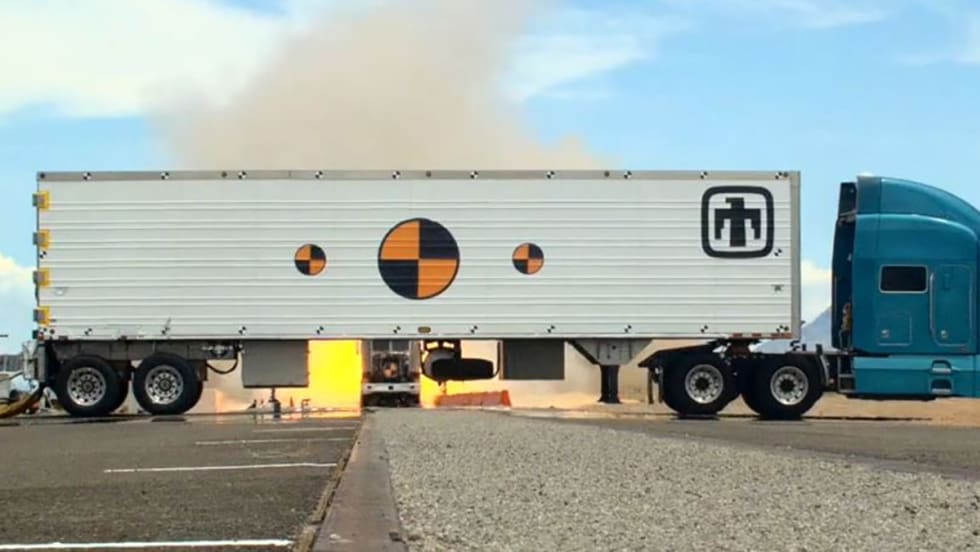
Can You Guess What's in That Trailer?
You don’t always know what’s in the trailers that pass you on the road. But some of those trailers are carrying something a little more dangerous that frozen food or new bedding…like, maybe, a nuclear weapon. But this isn’t an ordinary trailer; this is a trailer specifically made to not only carry this type of payload, but protect it at all costs.
Read More →
How Trailers Are Harnessing 'Free' Energy
Can trailers play a more active role in sustainable transport beyond aerodynamic add-ons or low-rolling-resistance tires? Some companies think so.
Read More →
Wrapping a Trailer for COVID’s Everyday Heroes
“We don’t only deliver freight. We deliver awareness.” That’s what Jim Barrett, president and CEO of Road Scholar Transport, likes to say about the Dunmore, Pennsylvania-based carrier’s “awareness fleet.” Its latest trailer wrap honors the everyday heroes of the pandemic.
Read More →
How a Tanker Fleet is Using Unorthodox Trailer Lighting to Fight Rear-End Collisions
Groendyke Transport watched the number of rear-end collisions with its trailers rise steadily until it tried an unorthodox and then unapproved method of alerting following drivers that its trucks were applying brakes and slowing down.
Read More →
The Role Trailers are Playing in COVID-19 Funerals
In places such as New York City and Detroit, overwhelmed hospitals and mortuaries are using refrigerated trailers to store the bodies of people killed by COVID-19.
Read More →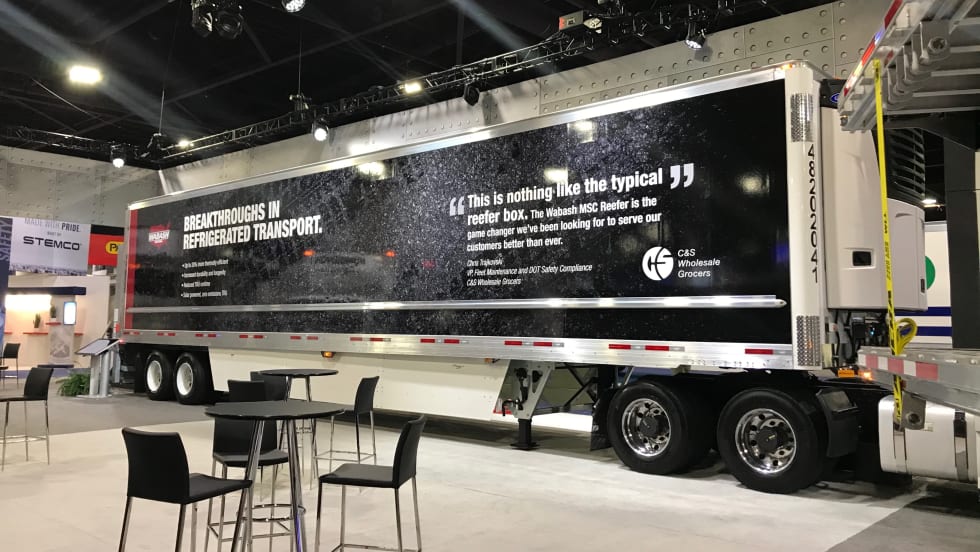
Reefer Trailer Aims to Help Reach Zero Emissions
Wabash National is partnering with C&S Wholesale Grocers to test a new type of zero-emissions refrigerated trailer.
Read More →