




Testimonials aren't new, but they're still convincing
ATDynamics in South San Francisco, Calif., is among the most active makers of trailer aerodynamic improvers, both in designing and selling its products and in promoting them via the media. Its website, www.atdynamics.com, now includes testimonials from happy customers, including a Canadian featured below.
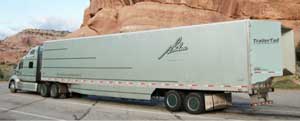
Guy Lacasse, who runs a handsomely painted and intelligently equipped rig out of Quebec, says he gained 8.2% in fuel economy after installing ATD's Transtex trailer skirts and more than 7% from a TrailerTail.
ATDynamics in South San Francisco, Calif., is among the most active makers of trailer aerodynamic improvers, both in designing and selling its products and in promoting them via the media. Its website, www.atdynamics.com, now includes testimonials from happy customers, including a Canadian featured below.
Guy Lacasse, who runs a handsomely painted and intelligently equipped rig out of Quebec, says he gained 8.2% in fuel economy after installing ATD's Transtex trailer skirts and more than 7% from a TrailerTail.
But he first took some more basic steps: "I travel at 57 mph, as speed is the easiest way to save fuel," he says. He also uses an auxiliary power unit and a sleeper heater to cut engine idling during overnighting and rest breaks.
Testimonials aren't new, but they still are a convincing way to sell stuff. Here's the complete interview provided by ATDynamics:
Q: Could you tell us a little about how your career in trucking started?
A: I began my career as a truck driver in 1980, and the first truck I bought for myself was a used Kenworth in December 1985. In 1986 I traded the used Kenworth for a new one to increase the reliability, safety and fuel economy of my operation. In 1992, I sold my truck and became a service manager at a Peterbilt truck shop in Quebec City for almost a year and a half. I then worked in the sales department at the truck shop for two and a half years. In my last year as a truck salesman the "call from the road" started to become stronger day after day, so I sold a truck to myself and got back on the road in December 1995.
Q: Describe the fuel efficiency equipment that you have tested and installed on your tractor-trailer and the results you have seen.
A: This is my third tractor and trailer since I began driving again in 1995 and I always strive to improve my bottom line. I travel at 57 MPH as speed is the easiest way to save fuel and I have installed a variety of equipment to reduce my idle time. I use an APU for the coolest and the hottest nights and a Webasto Air Top 2000 on other nights when I need only a little heat as it uses only about a half cup of fuel per hour.
I installed Transtex trailer skirts in 2009, which improved my mileage by 8.2%. I chose the Transtex skirts because they have the best aerodynamic design, going all the way down the side of the trailer with the offset of 8 to 12 inches in the last 6 feet to make an empty space of air pressure underneath the trailer. That year I averaged 8.79 Canadian mpg (7.32 U.S. mpg).
Then, in June of 2011, I installed a TrailerTail at the factory in South San Francisco. I was welcomed by nice people and enjoyed the experience. These new technologies allowed me to average 8.62 Canadian mpg (7.18 U.S. mpg) for the month of January 2012 - in the middle of the Canadian winter! The fuel efficiency improvement from TrailerTail was over 7%.
I figure I will close my next business year around 9.2 or 9.3 Canadian MPG (7.66 or 7.74 U.S. mpg) average. I made an 8,000-mile round trip last September at 10.03 Canadian MPG (8.35 U.S. MPG). Just out of curiosity, I calculated the savings on the trip if I had only made 7.5 Canadian MPG, and my fuel cost would have been $1283 higher. Amazing!!!
I travel around 80,000 miles per year, and these new technologies have enabled me to make my business more efficient, take two months of holidays and enjoy a very good life.
More Blog Posts
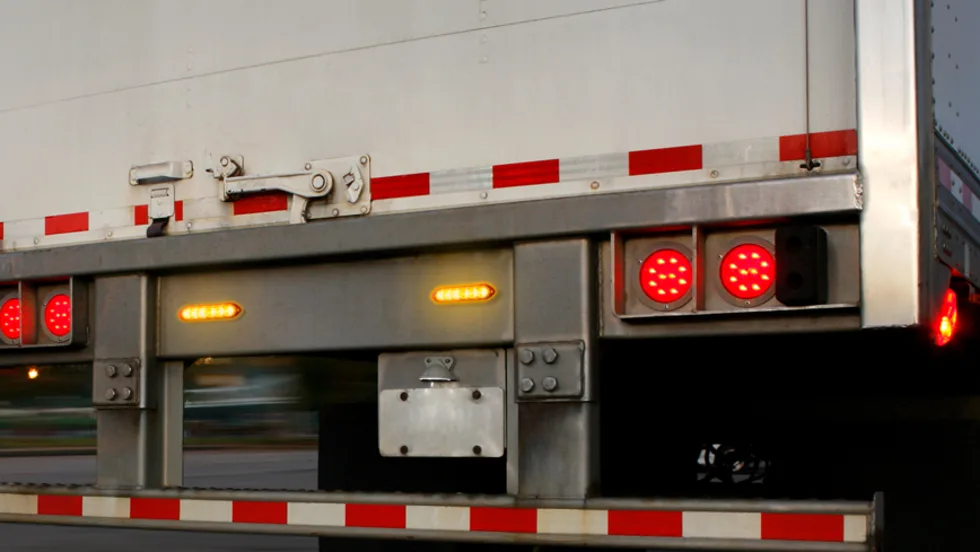
Pulsing Back-of-Trailer Lamps Aim to Prevent Crashes
Can the addition of a pulsing brake lamp on the back of a trailer prevent rear-end collisions? FMCSA seems to think so, if its exemptions are any indication.
Read More →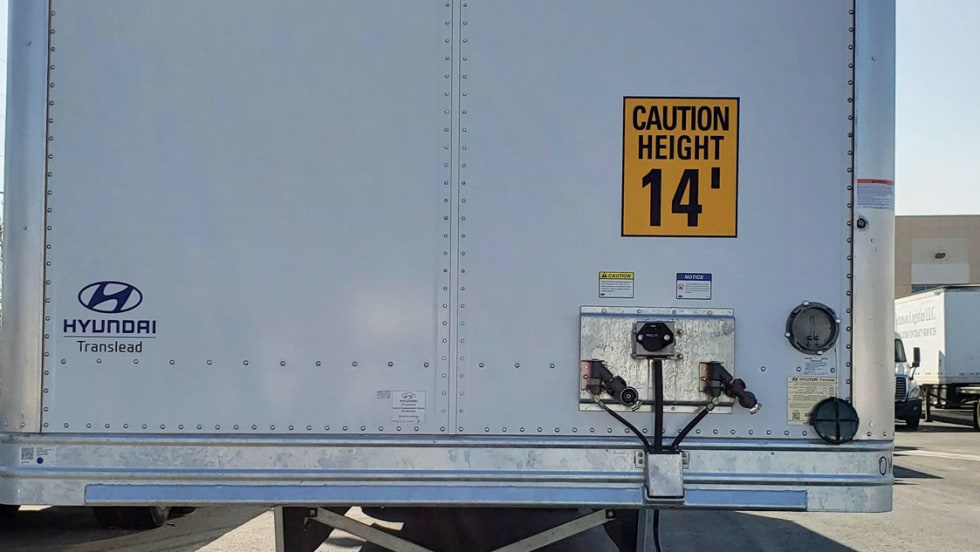
Designing a 14-Foot Trailer
Trailers are 13 feet, 6 inches high, right? Not for Hub Group, which developed a special 14-foot-high trailer spec for a dedicated customer based in California. Learn more in the Trailer Talk blog.
Read More →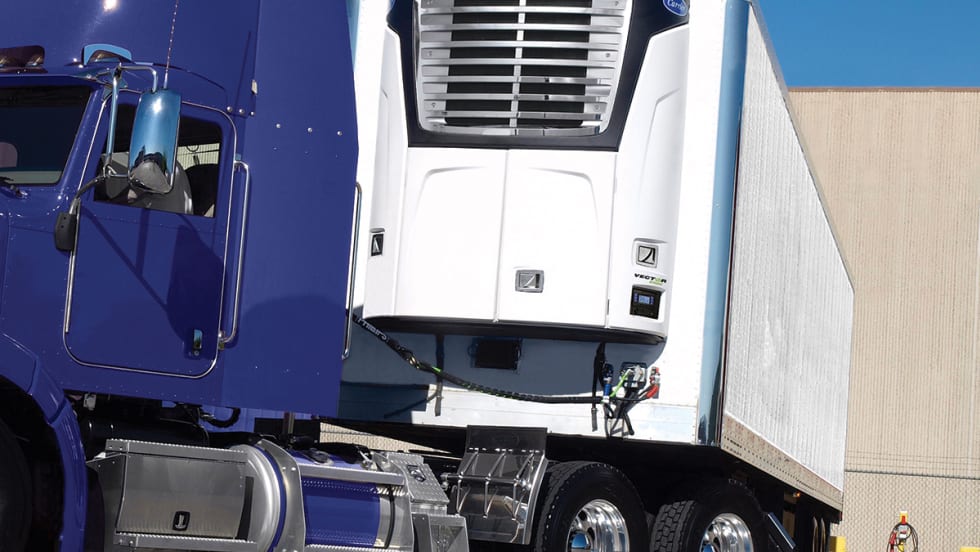
CARB Comes for Reefer Trailers
A new round of emissions control regulations decreed by the California Air Resource Board will begin affecting refrigerated trailer and TRU design and operations next year.
Read More →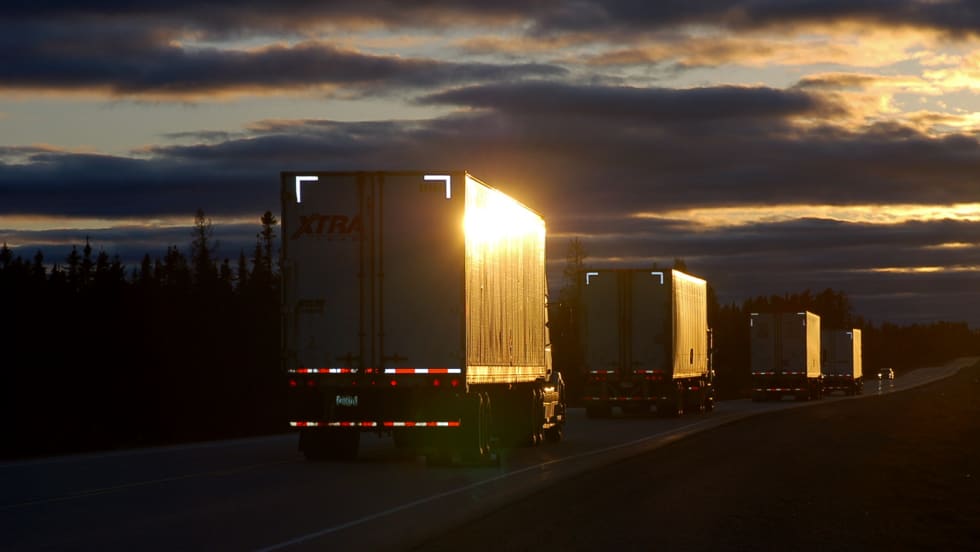
5 Ways Data Analysis Maximizes the Value of Trailer Telematics
Are you getting the most out of your trailer telematics investment?
Read More →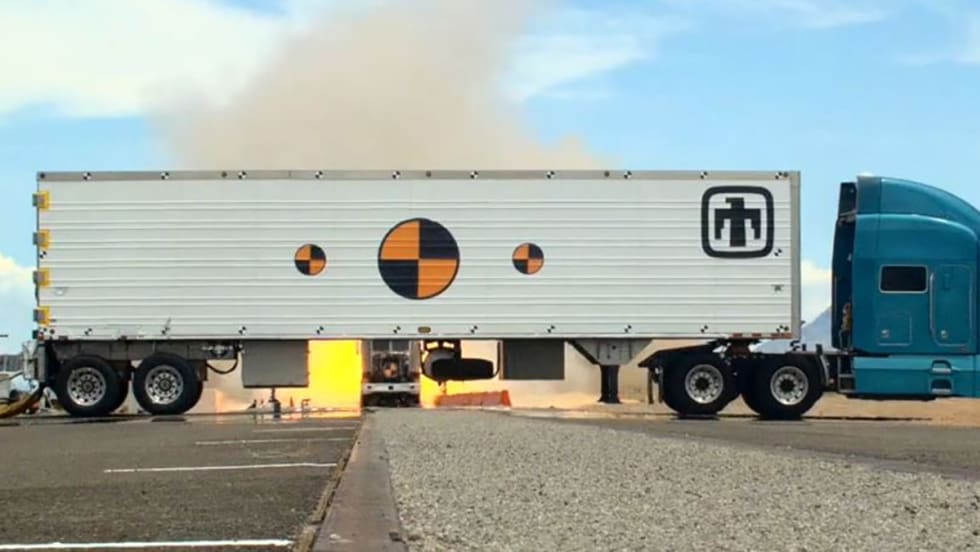
Can You Guess What's in That Trailer?
You don’t always know what’s in the trailers that pass you on the road. But some of those trailers are carrying something a little more dangerous that frozen food or new bedding…like, maybe, a nuclear weapon. But this isn’t an ordinary trailer; this is a trailer specifically made to not only carry this type of payload, but protect it at all costs.
Read More →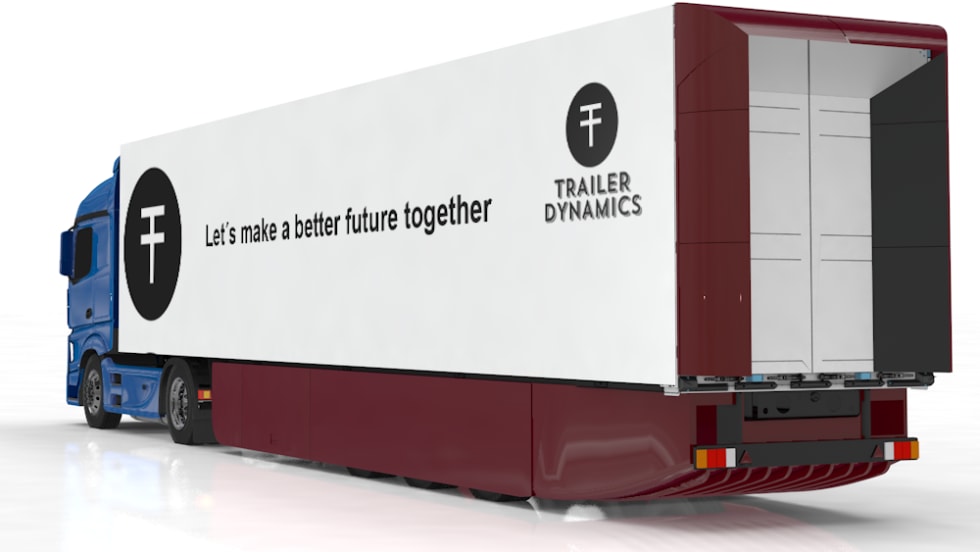
How Trailers Are Harnessing 'Free' Energy
Can trailers play a more active role in sustainable transport beyond aerodynamic add-ons or low-rolling-resistance tires? Some companies think so.
Read More →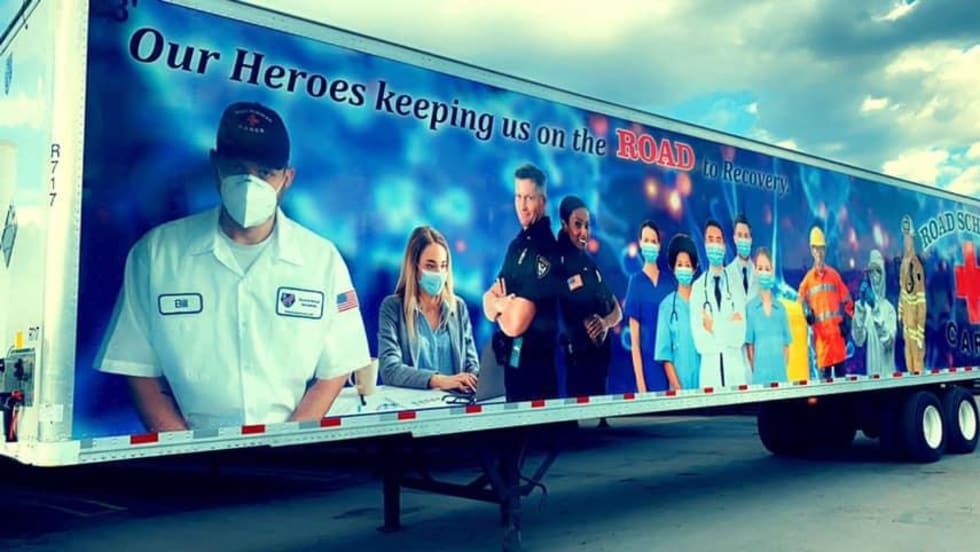
Wrapping a Trailer for COVID’s Everyday Heroes
“We don’t only deliver freight. We deliver awareness.” That’s what Jim Barrett, president and CEO of Road Scholar Transport, likes to say about the Dunmore, Pennsylvania-based carrier’s “awareness fleet.” Its latest trailer wrap honors the everyday heroes of the pandemic.
Read More →
How a Tanker Fleet is Using Unorthodox Trailer Lighting to Fight Rear-End Collisions
Groendyke Transport watched the number of rear-end collisions with its trailers rise steadily until it tried an unorthodox and then unapproved method of alerting following drivers that its trucks were applying brakes and slowing down.
Read More →
The Role Trailers are Playing in COVID-19 Funerals
In places such as New York City and Detroit, overwhelmed hospitals and mortuaries are using refrigerated trailers to store the bodies of people killed by COVID-19.
Read More →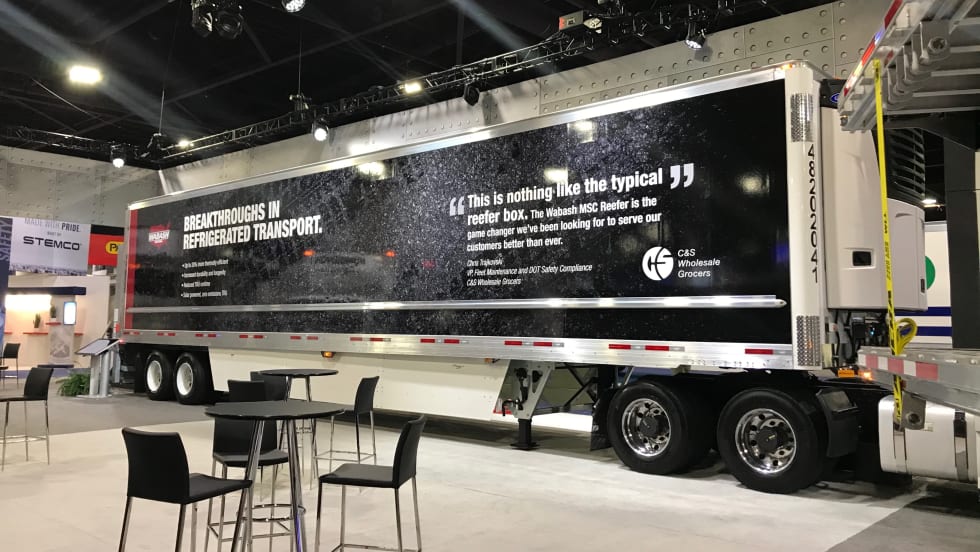
Reefer Trailer Aims to Help Reach Zero Emissions
Wabash National is partnering with C&S Wholesale Grocers to test a new type of zero-emissions refrigerated trailer.
Read More →