





Related: Heavy-Haul Trailers Get Lighter
Talbert Celebrates Removable Gooseneck’s 70th Anniversary
The mechanical gooseneck revolutionized equipment loading by eliminating the need to drive machinery up and over the trailer tires, says Talbert. Tom Berg has more in the Trailer Talk blog.
November 14, 2017
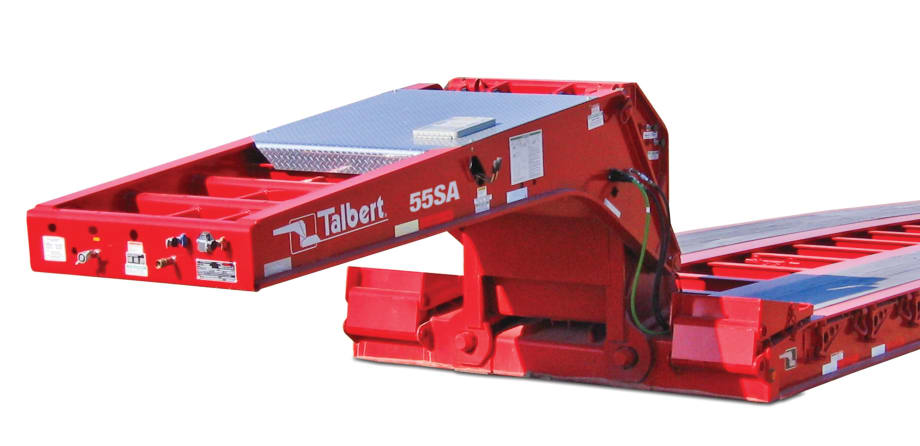
Present-day gooseneck low-bed trailer is one of many heavy-haul products made by today’s Talbert Manufacturing, now in Rensselaer, Indiana.
3 min to read
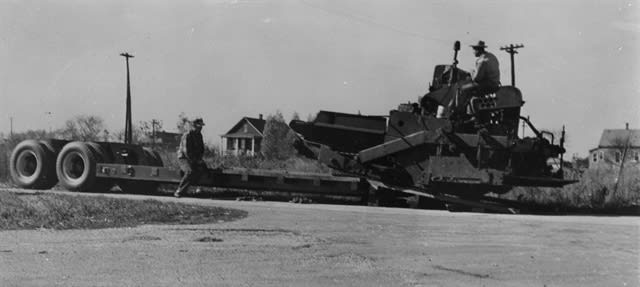
In the late 1940s or early ‘50s, a paver moves over the front of a Talbert low-bed trailer instead of over its rear wheels, which keeps the machine low and stable. This makes for greater safety, and seven decades later, still does. Photos: Talbert Manufacturing
Everything began somehow, and so it was with the semi-trailer. August Fruehauf, a German immigrant and blacksmith in Detroit in the early 20th century, is credited with originating the truck-drawn trailer. He observed that horses that pulled wagons were healthier than those that carried cargo, and reasoned the same would be true of then-new motor trucks.
Not as well known in the trucking industry is Austin Talbert, an engineer who founded a company with his name in 1938 in Lyons, Illinois. It served the Chicago market with crane and construction equipment rentals and heavy haul transport services, according to Talbert Manufacturing, as his firm is called today.
His innovation was the mechanical, detachable gooseneck trailer, which Talbert designed in 1946 and patented a year later. The U.S. Patent number is 2,489,112. The company is now celebrating the 70th anniversary of that patent, which led to other advances.
The mechanical gooseneck revolutionized equipment loading by eliminating the need to drive equipment up and over the trailer tires, says a press release issued by the company. The design not only enhanced operators’ safety, but also saved contractors time and trouble.
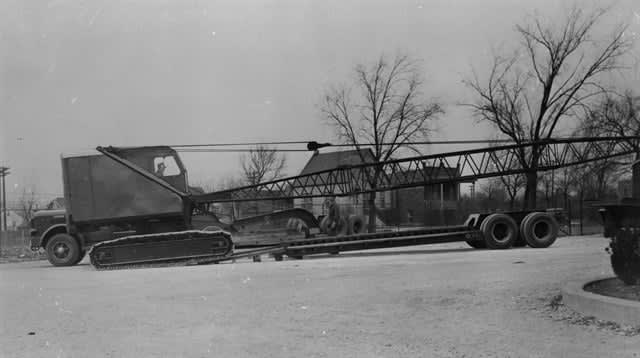
A tracked crane crawls aboard a Talbert low-bed trailer whose mechanical gooseneck nose can be seen just beyond. A second lowboy trailer sits beyond that. The long-nose tractor appears to be a Hendrickson, built by another company that, like Talbert, was based in Lyons, Illinois, west of Chicago.
Fifteen years later, Austin Talbert designed and patented the industry’s first hydraulic removable gooseneck, the release says. The hydraulic gooseneck offered the same safety benefits, but could be removed in as little as two minutes, much faster than the mechanical version.
“The mechanical gooseneck is still a popular choice for owners who do little equipment loading and offloading and need to minimize weight,” said Troy Geisler, Talbert Manufacturing's vice president of marketing and sales. “But when it comes to multiple offloads, as often as two or more times per day, the time savings of a hydraulic gooseneck really adds up.”
In addition, the hydraulic gooseneck has virtually eliminated injuries and fatalities associated with railroad track hang-ups due to the trailers’ closeness to the ground. Drivers can adjust the ride height to a variety of positions, enabling them to roll across tracks and other obstacles, as well as pass under barriers such as bridges.
Talbert patented several other heavy-haul trailer designs that improved safety and efficiency, including the first removable rear suspension that allowed for safe rear loading, and the hydraulically steered and suspended trailer for navigating tight turns with long, over-dimensional loads, the company says.
In 2018, Talbert Manufacturing will mark its 80th year in business. Now in Rensselaer, Indiana, it offers heavy-haul trailers and specialized transportation equipment for commercial, industrial, military and government customers. More information is at www.talbertmfg.com.
Present-day gooseneck low-bed trailer is one of many heavy-haul products made by today’s Talbert Manufacturing, now in Rensselaer, Indiana.
P.S. – Lyons, Illinois, original home for Talbert’s company, was also home base for a firm founded by Magnus Hendrickson, a Swedish immigrant and engineer who designed the first tandem-axle suspension in the mid-1920s. Later, the company he founded also built distinctive long-nose tractors once commonly seen in northern Illinois and southern Wisconsin. The firm is now widely diversified but still in trucking.
Subscribe to Our Newsletter
More Blog Posts

Pulsing Back-of-Trailer Lamps Aim to Prevent Crashes
Can the addition of a pulsing brake lamp on the back of a trailer prevent rear-end collisions? FMCSA seems to think so, if its exemptions are any indication.
Read More →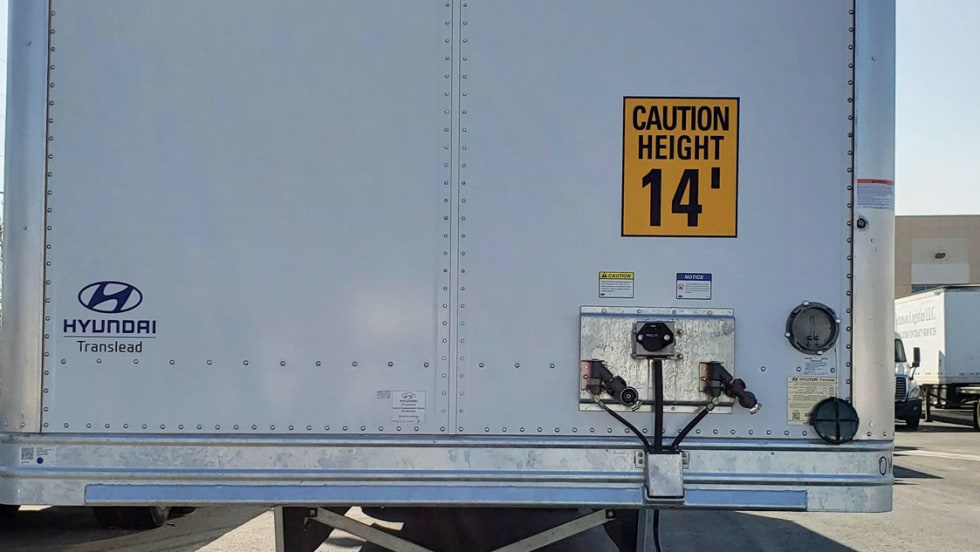
Designing a 14-Foot Trailer
Trailers are 13 feet, 6 inches high, right? Not for Hub Group, which developed a special 14-foot-high trailer spec for a dedicated customer based in California. Learn more in the Trailer Talk blog.
Read More →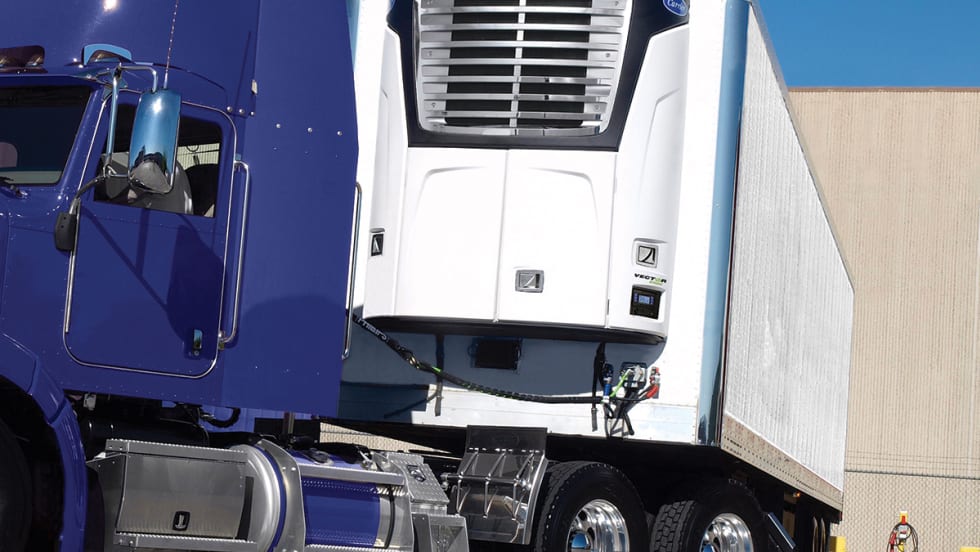
CARB Comes for Reefer Trailers
A new round of emissions control regulations decreed by the California Air Resource Board will begin affecting refrigerated trailer and TRU design and operations next year.
Read More →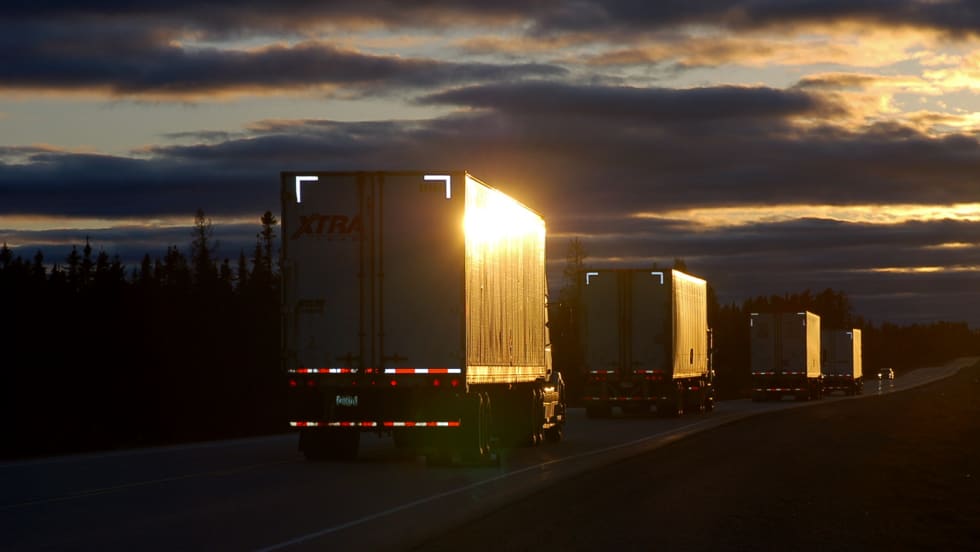
5 Ways Data Analysis Maximizes the Value of Trailer Telematics
Are you getting the most out of your trailer telematics investment?
Read More →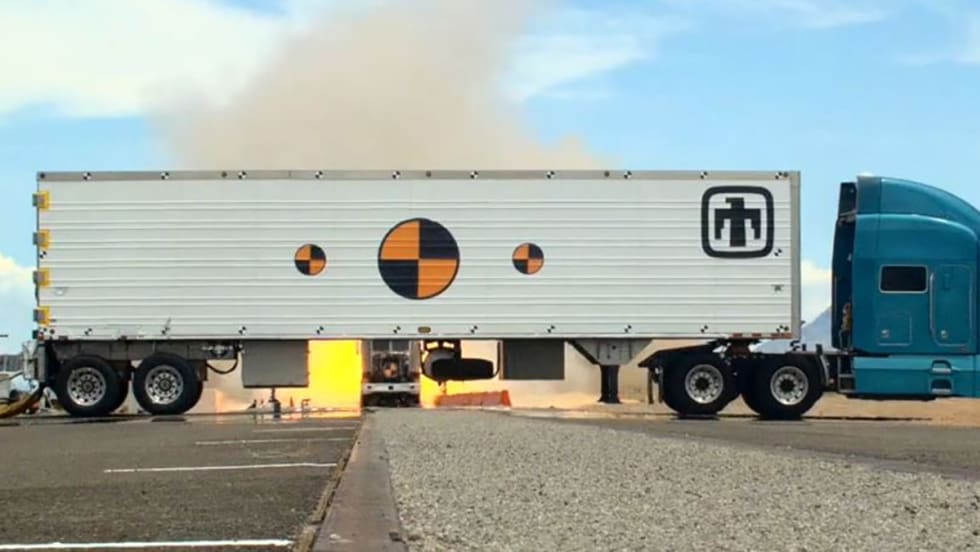
Can You Guess What's in That Trailer?
You don’t always know what’s in the trailers that pass you on the road. But some of those trailers are carrying something a little more dangerous that frozen food or new bedding…like, maybe, a nuclear weapon. But this isn’t an ordinary trailer; this is a trailer specifically made to not only carry this type of payload, but protect it at all costs.
Read More →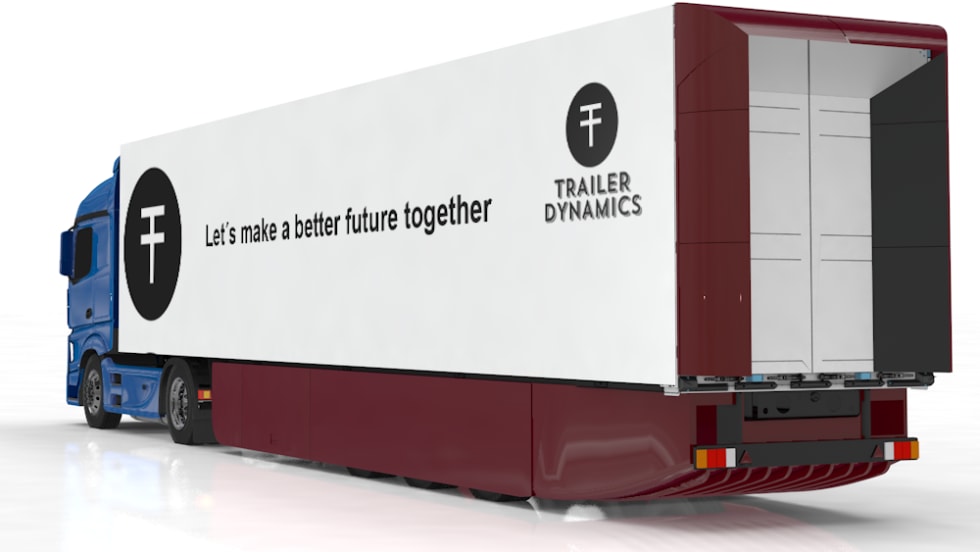
How Trailers Are Harnessing 'Free' Energy
Can trailers play a more active role in sustainable transport beyond aerodynamic add-ons or low-rolling-resistance tires? Some companies think so.
Read More →
Wrapping a Trailer for COVID’s Everyday Heroes
“We don’t only deliver freight. We deliver awareness.” That’s what Jim Barrett, president and CEO of Road Scholar Transport, likes to say about the Dunmore, Pennsylvania-based carrier’s “awareness fleet.” Its latest trailer wrap honors the everyday heroes of the pandemic.
Read More →
How a Tanker Fleet is Using Unorthodox Trailer Lighting to Fight Rear-End Collisions
Groendyke Transport watched the number of rear-end collisions with its trailers rise steadily until it tried an unorthodox and then unapproved method of alerting following drivers that its trucks were applying brakes and slowing down.
Read More →
The Role Trailers are Playing in COVID-19 Funerals
In places such as New York City and Detroit, overwhelmed hospitals and mortuaries are using refrigerated trailers to store the bodies of people killed by COVID-19.
Read More →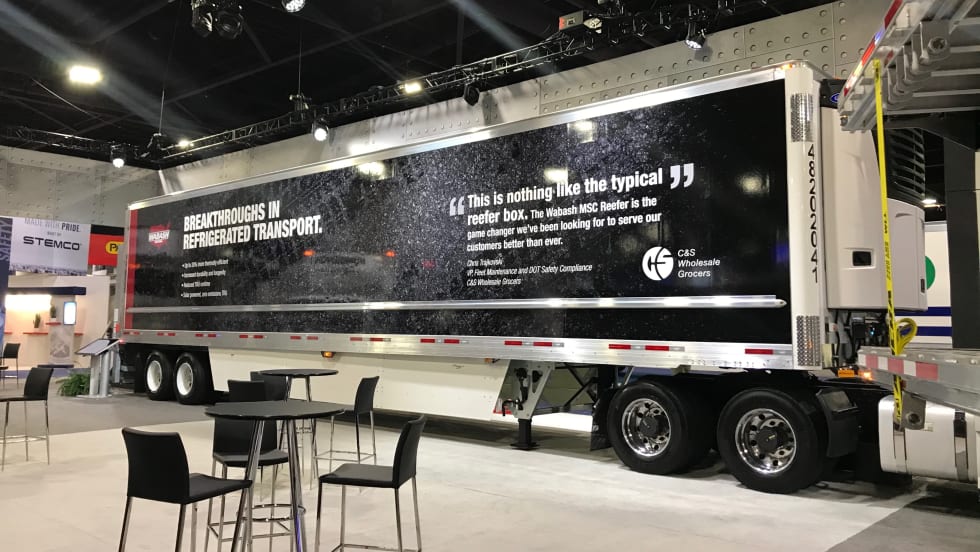
Reefer Trailer Aims to Help Reach Zero Emissions
Wabash National is partnering with C&S Wholesale Grocers to test a new type of zero-emissions refrigerated trailer.
Read More →