




SuperDuty Pickups Ably Tow, and Back, Heavy Trailers
The heftiest trailer was a Gladiator Load Max gooseneck, loaded with concrete blocks and decorative limestone, and weighing almost 30,000 pounds.

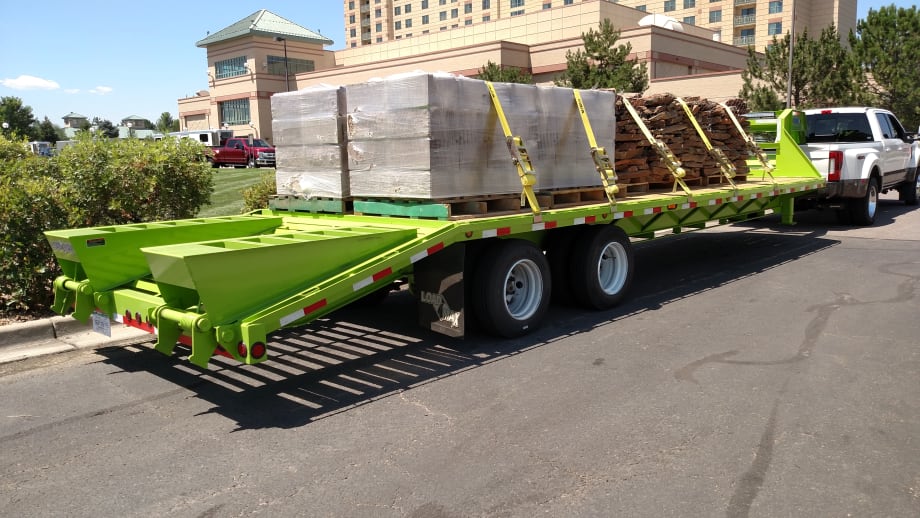
This Load Max gooseneck trailer, laden with block and stone, weighed 29,960 pounds, a Ford engineer said. The F-450 easily handled it. Photos: Tom Berg
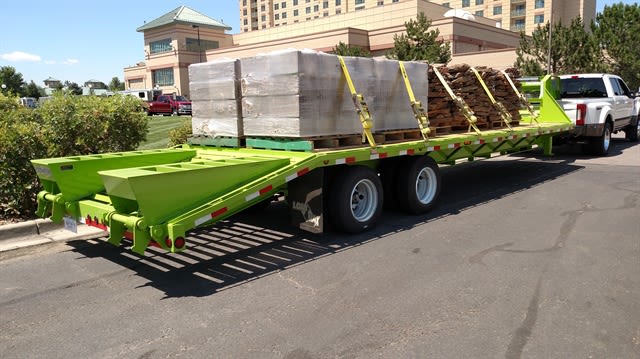
This Load Max gooseneck trailer, laden with block and stone, weighed 29,960 pounds, a Ford engineer said. The F-450 easily handled it. Photos: Tom Berg
Trailer towing is a big deal for some pickup-truck owners, and Ford says its next-generation 2017-model SuperDuty pickups are more capable than ever. Tow ratings have gone up and weight has come down, as we’ve previously reported.
Ford showed reporters how good the new SuperDuties are at a demonstration in and near Denver in late July. Three “waves” of magazine writers, including me, traveled to the Mile High City (it’s official altitude really is 5,280 feet, but you probably knew that) to experience the new trucks. We got to pull several types of trailers with pre-production F-250, 350 and 450 pickups.
The heftiest trailer was a Gladiator Load Max gooseneck utility, loaded with eight pallets of concrete blocks and decorative limestone. A Ford engineer told us they were very close in weight, one scaling at 29,900 pounds and the other at 29,960 pounds. Each was hitched to an F-450 pickup, whose emphasis is on towing rather than hauling (that’s the F-350’s role), though the 450 will carry a lot, too.
Gross combination weight of this “tractor-trailer” was about 40,000 pounds, the F-450’s former maximum GCW rating. It’s now 41,800 pounds, thanks to higher torque (925 lb-ft, up from 860) of the revised, second-generation PowerStrike diesel. Those of us with commercial driver’s licenses were encouraged to take one for a spin, and I was the first to climb behind the wheel. Three other people, including that Ford engineer, also piled in (raising our GCW closer to the new maximum).
I headed out of the hotel’s parking area and onto wide boulevards that climbed up and down rolling hills in the upscale, hotel and office-populated neighborhood west of Denver. The PowerStroke diesel ably propelled the truck and trailer up the hills, some of them with grades of about 5 and 6%. On downhill stretches, the exhaust brake kept the rig’s speed in check, almost rendering the large disc brakes redundant.
With the Tow/Haul mode switched on, the 6-speed TorqShift transmission automatically downshifted two or three gears to raise engine revs and maximize the exhaust brake’s effectiveness. That happened when I touched the brake pedal, signaling a need for more retardation. It was quite impressive, though competitors’ powertrains can do that, too.
Now, sooner or later every trailer has to be backed up. That can be tricky for drivers who haven’t done it, so Ford now offers a Reverse Guidance system. It displays views of the trailer in the dashboard screen via rearward-facing cameras. Graphic arrows tell a rooky which way to turn the steering wheel to keep the trailer heading where he or she wants it. If the trailer is turning in either direction, colored lines show where it’s going – up a curved driveway, toward a cliff, whatever – like the backup picture in your car’s screen (if you’ve got that).
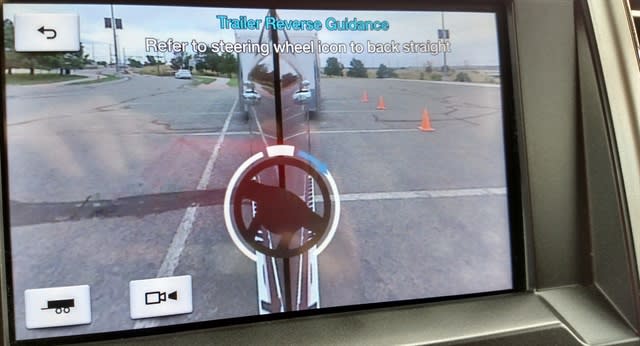
Reverse Guidance tells inexperienced drivers which way to swing the steering wheel to keep the trailer heading in the desired direction.
I appreciate the engineering and graphics design that went into this system. But I found it of little use because over the years I’ve learned to back trailers the old fashioned way, using the mirrors and remembering that swinging the bottom of the steering wheel right or left moves the trailer in the same direction.
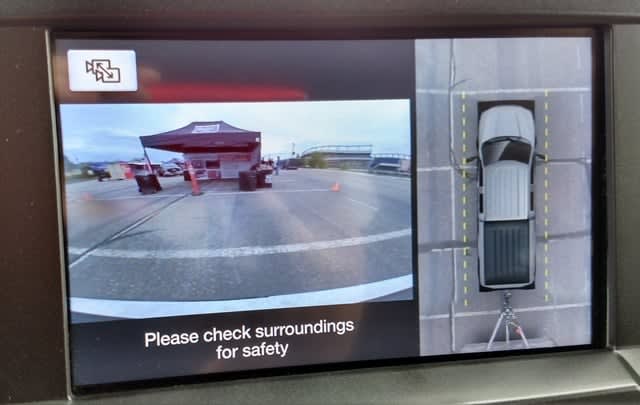
SuperDuty's multiple cameras give a 360-degree view around the truck and to the rear of the trailer. A pressure monitoring system for trailer tires is also available.
For me, there are other, more useful options for the SuperDuty, such as an extra camera placed on the trailer’s rear to see what’s behind the rig – small child, fire hydrant, cop with a citation book, etc.
And there’s a pressure monitoring system for trailer-tires that broadcasts PSI values to an in-cab display. Sensor/transmitters must be installed on the wheels inside the tires for this to work. A contractor might do that on his own trailer’s tires, but not on someone else’s. This is something I'd want to have if I towed regularly.
Competitors have, or are planning, similar features, imitating equipment and capacities of today’s big rigs. In fact, Ford’s publicists referred to the previous 40,000-pound GCW rating as “half an 18-wheeler’s.” Now they can say, “less than half….”
More Blog Posts
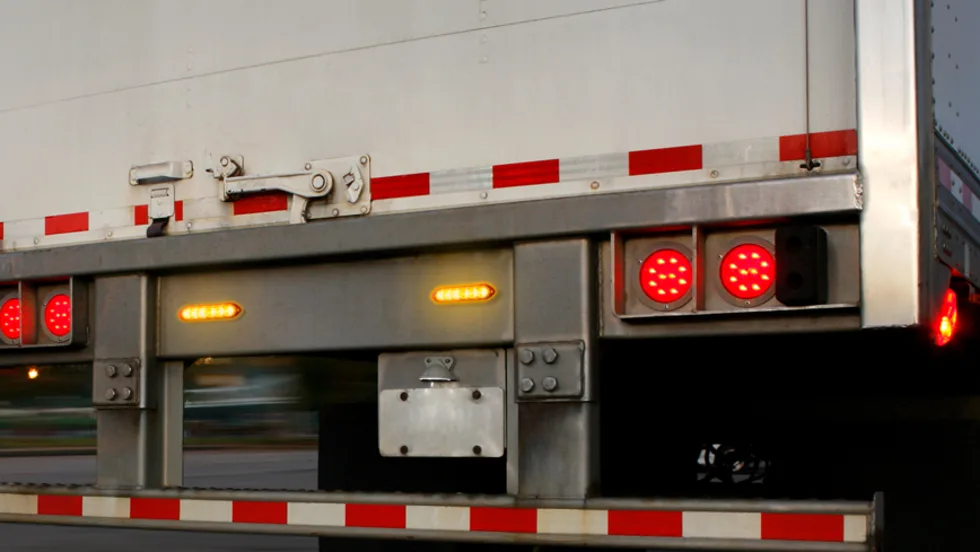
Pulsing Back-of-Trailer Lamps Aim to Prevent Crashes
Can the addition of a pulsing brake lamp on the back of a trailer prevent rear-end collisions? FMCSA seems to think so, if its exemptions are any indication.
Read More →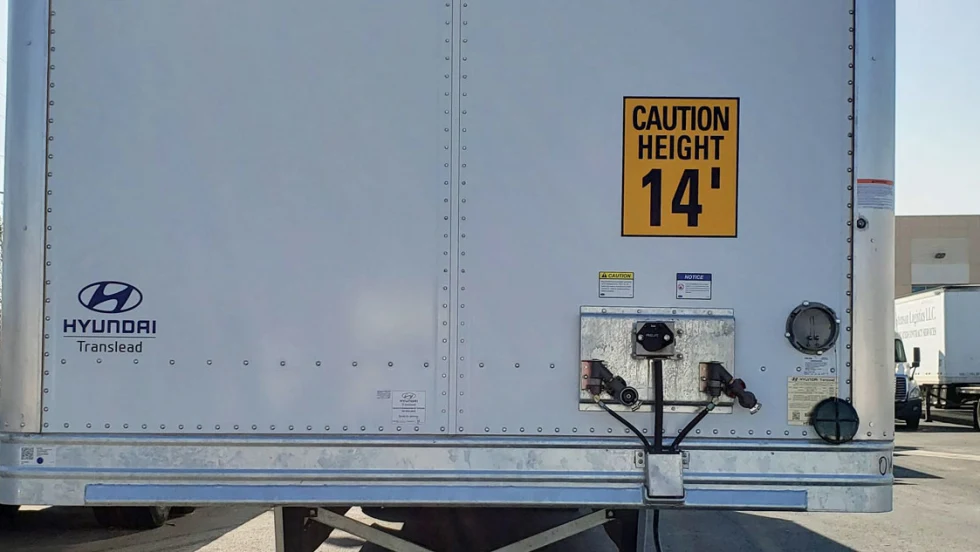
Designing a 14-Foot Trailer
Trailers are 13 feet, 6 inches high, right? Not for Hub Group, which developed a special 14-foot-high trailer spec for a dedicated customer based in California. Learn more in the Trailer Talk blog.
Read More →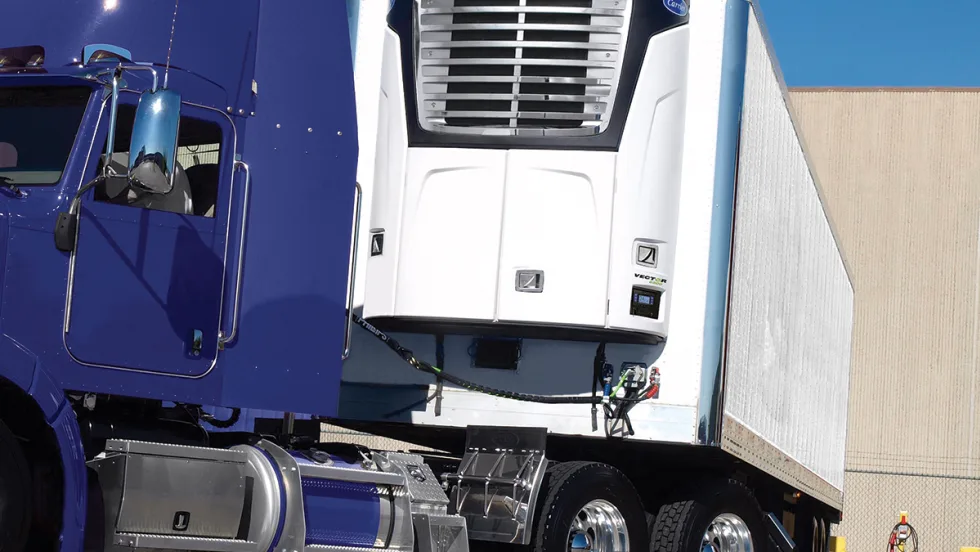
CARB Comes for Reefer Trailers
A new round of emissions control regulations decreed by the California Air Resource Board will begin affecting refrigerated trailer and TRU design and operations next year.
Read More →
5 Ways Data Analysis Maximizes the Value of Trailer Telematics
Are you getting the most out of your trailer telematics investment?
Read More →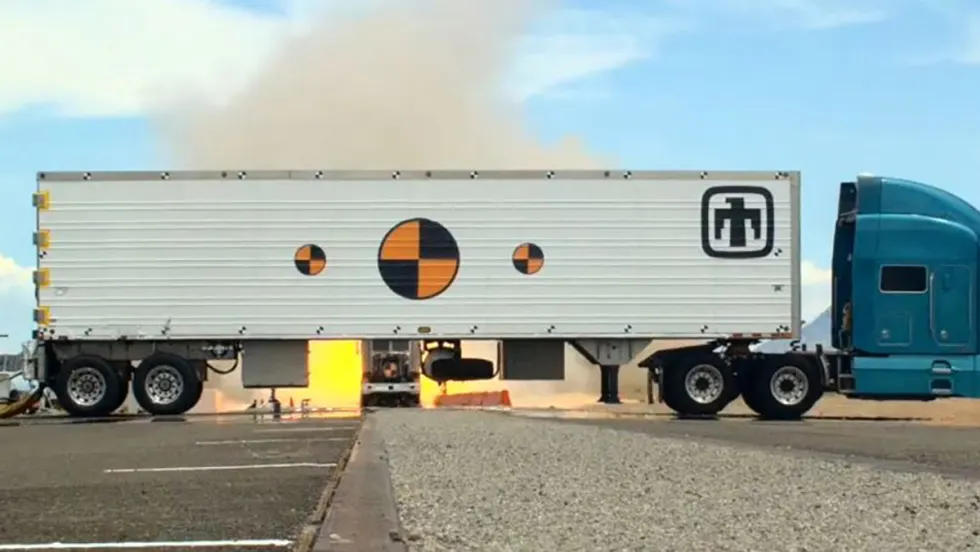
Can You Guess What's in That Trailer?
You don’t always know what’s in the trailers that pass you on the road. But some of those trailers are carrying something a little more dangerous that frozen food or new bedding…like, maybe, a nuclear weapon. But this isn’t an ordinary trailer; this is a trailer specifically made to not only carry this type of payload, but protect it at all costs.
Read More →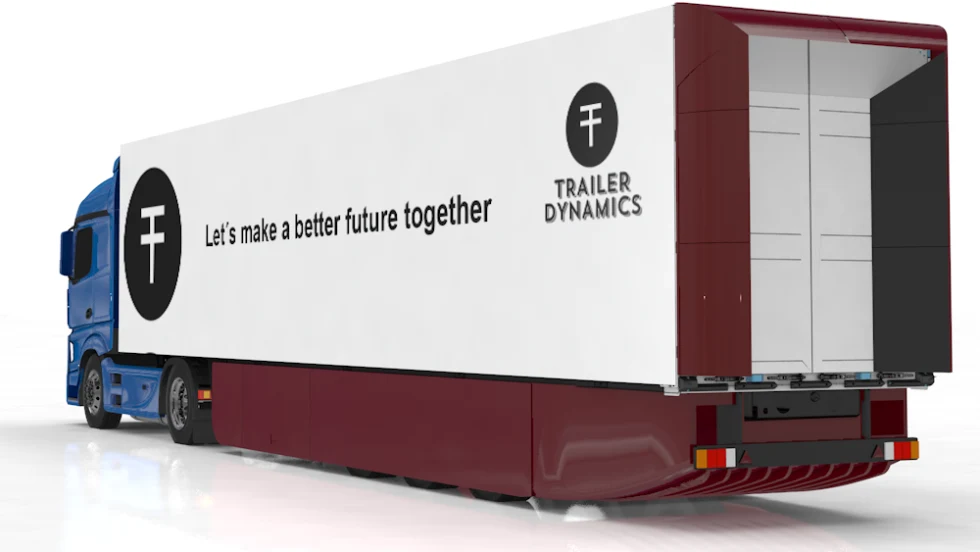
How Trailers Are Harnessing 'Free' Energy
Can trailers play a more active role in sustainable transport beyond aerodynamic add-ons or low-rolling-resistance tires? Some companies think so.
Read More →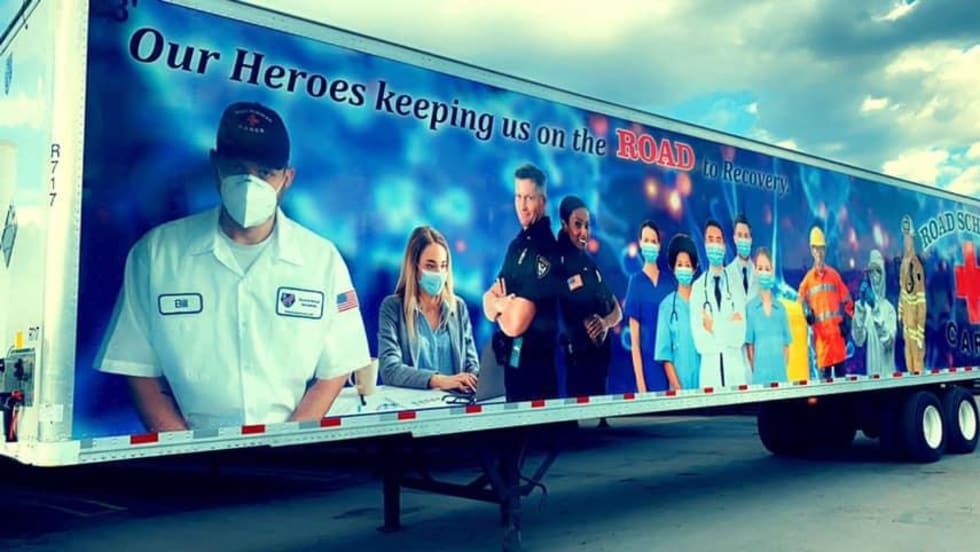
Wrapping a Trailer for COVID’s Everyday Heroes
“We don’t only deliver freight. We deliver awareness.” That’s what Jim Barrett, president and CEO of Road Scholar Transport, likes to say about the Dunmore, Pennsylvania-based carrier’s “awareness fleet.” Its latest trailer wrap honors the everyday heroes of the pandemic.
Read More →
How a Tanker Fleet is Using Unorthodox Trailer Lighting to Fight Rear-End Collisions
Groendyke Transport watched the number of rear-end collisions with its trailers rise steadily until it tried an unorthodox and then unapproved method of alerting following drivers that its trucks were applying brakes and slowing down.
Read More →
The Role Trailers are Playing in COVID-19 Funerals
In places such as New York City and Detroit, overwhelmed hospitals and mortuaries are using refrigerated trailers to store the bodies of people killed by COVID-19.
Read More →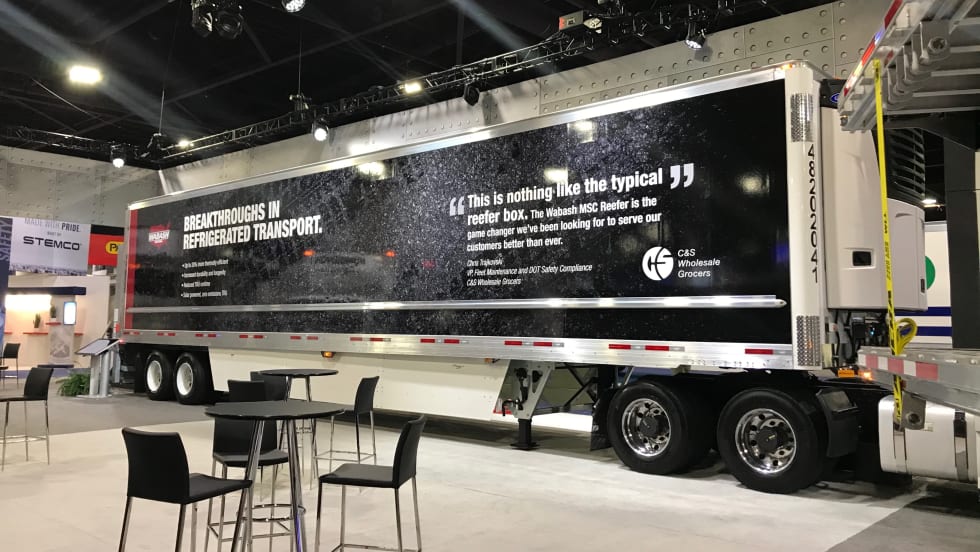
Reefer Trailer Aims to Help Reach Zero Emissions
Wabash National is partnering with C&S Wholesale Grocers to test a new type of zero-emissions refrigerated trailer.
Read More →