





Related: Some Trailers Are Exempt From Rear Impact Guard Regulations
Suicide by Flatbed on TV’s ‘Blue Bloods’ is Guilty of Technical Errors
Senior Contributing Editor Tom Berg thinks he could've made this crash scene's technical details — an under-ride crash — more realistic.
February 19, 2019
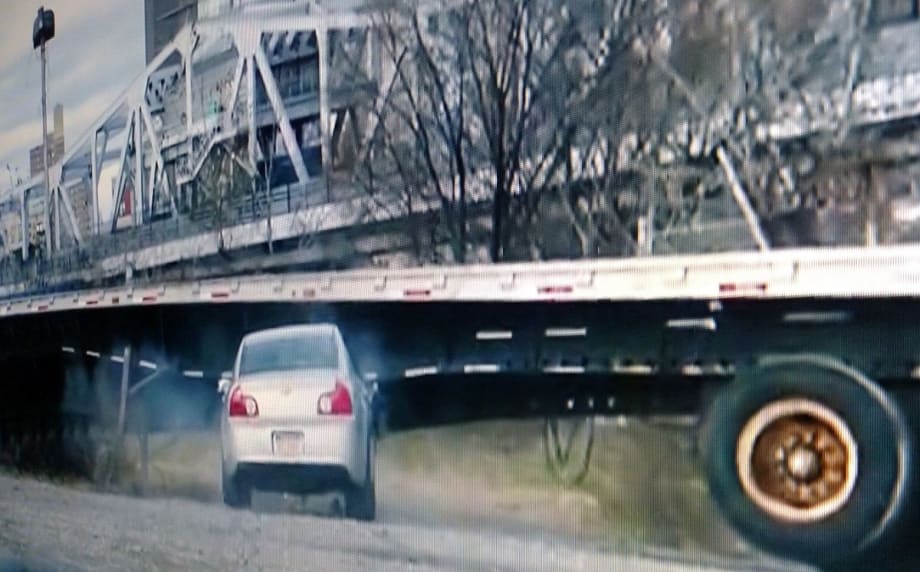
Racing across a vacant lot and away from a pursuing detectives’ car, a murder suspect smashes his Chevy Malibu into an old parked trailer, which is jolted upward by the impact. The suspect succeeds in killing himself.
Screenshots from “Blue Bloods,” CBS-TV
3 min to read
Many years ago I intently watched cop shows on TV, and for a while my favorites were the 1970s “Police Story,” set in Los Angeles, and late ‘50s through early ‘60s “Naked City,” filmed in New York. Both were heavy dramas with good acting, excellent production, and what seemed like believable story lines.
Cop shows are still with us, and I now watch this one: “Blue Bloods,” another NYC drama in its ninth season on CBS. It stars Tom Sellick as Frank Reagan, the police commissioner and a third generation cop who heads a family of law enforcement people. One is son Danny Reagan (played by Donny Wahlberg), a hard-bitten detective who looks nothing like his TV kid brother, Jamie, a uniformed NYPD sergeant, or father Frank, for that matter. Wayward genetics?
Aside from that, it’s really a well-done show, also with rather believable story lines, and I like it even though it has nothing to do with trucks or trucking. Except for a recent episode, when a young murder suspect jumps in a Chevy Malibu and runs away from Det. Reagan and his partner, Det. Maria Baez (played by Marissa Ramirez), who chase him across an unused parking lot in their unmarked Dodge Charger.
The mentally disturbed suspect had all but admitted killing a young woman (“She wouldn’t stop screaming”) and seems remorseful, but doesn’t want to face the music, as they used to say on older cop shows. That’s why he jumps in his car and races toward a conveniently parked flatbed trailer and T-bones it. Smash! Flying bits of plastic (in the old days they were glass)! Trailer’s jolted upward! Car nose dives slightly, but not enough for the cabin to completely under-ride the trailer’s structure. Car rests. Dust begins clearing.
Reagan and Baez’s prowl car (that’s what we used to call unmarked police cars when I was a kid) has come to a howling halt, and they run to the driver’s window of the Chevy. The suspect is slumped over the wheel. His head is still attached to his torso, which wouldn’t be the case if most of the car had slammed under the trailer, which it should’ve at the 40 mph or so the car was going.
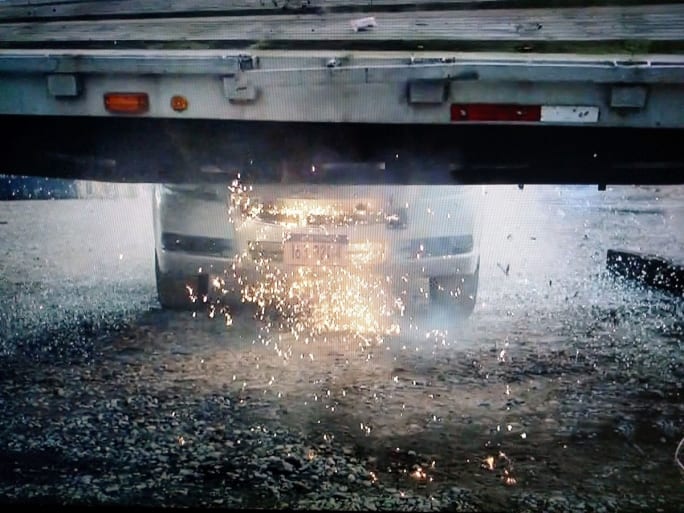
Debris flies as the fictional suspect’s car hits the other side of the steel flatbed. The scene was shot using four or five cameras, including those inside the cars. Oh -- did the impact pop the weld under that bent rub rail? More likely it was busted in years of hard, real-world service in New York City.
(Incidentally, side under-ride guards for large trailers and trucks are on their way to being mandated in the USA, as they already are in the UK, Japan and elsewhere. But that’s another story.)
Reagan reaches in and feels for a pulse on a carotid artery in the man’s neck. None. He’s dead. Sad, but just as well, given the fictional circumstances and the reality that the episode is almost over. Thus there are no attempts at CPR.
By the way, the Chevy’s driver-side airbag did not deploy. Will the fictional suspect’s distraught relatives sue General Motors and Takata or whoever made the bag? Will they sue the NYPD for wrongful death? Maybe I’ve also watched too many newscasts.
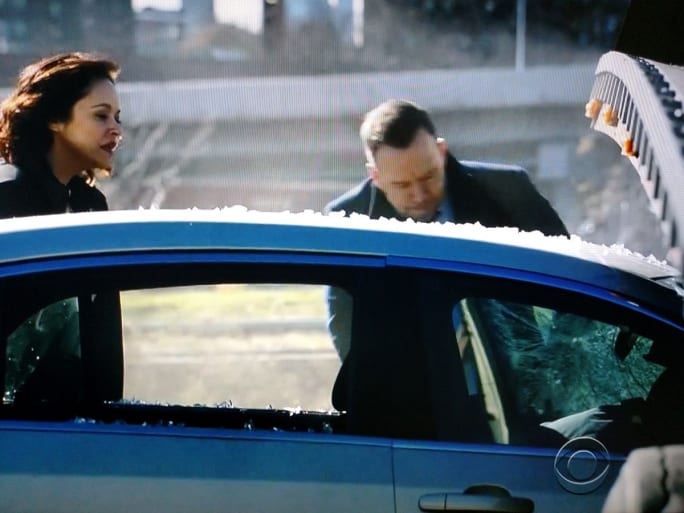
“Blue Bloods” Detectives Maria Baez (played by Marissa Ramirez) and Danny Reagan (Donny Wahlberg) check the now-dead suspect, who’s slumped over the wheel. He wasn’t decapitated because the car’s cabin didn’t underride the trailer as it probably should have. The airbag didn’t deploy, either. The script needs fixing.
But I still like Blue Bloods, even though the technical details of the suspect’s suicide by flatbed seem a little off. Why didn’t they consult with me on that script? I could’ve made it more believable, and wouldn’t have had to describe that scene in such a snide manner. Because like the Reagans, I prefer to be a good guy, even though I’m not a cop.
Subscribe to Our Newsletter
More Blog Posts
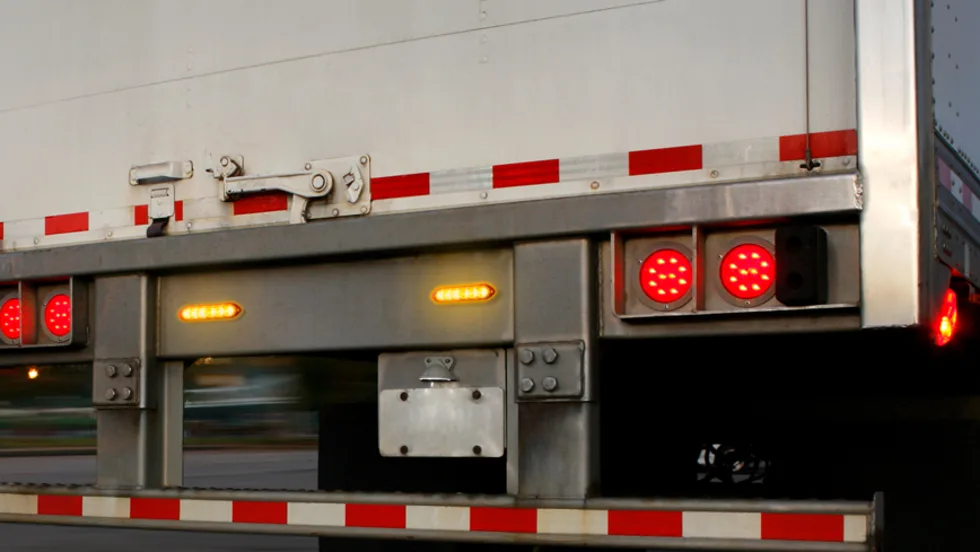
Pulsing Back-of-Trailer Lamps Aim to Prevent Crashes
Can the addition of a pulsing brake lamp on the back of a trailer prevent rear-end collisions? FMCSA seems to think so, if its exemptions are any indication.
Read More →
Designing a 14-Foot Trailer
Trailers are 13 feet, 6 inches high, right? Not for Hub Group, which developed a special 14-foot-high trailer spec for a dedicated customer based in California. Learn more in the Trailer Talk blog.
Read More →
CARB Comes for Reefer Trailers
A new round of emissions control regulations decreed by the California Air Resource Board will begin affecting refrigerated trailer and TRU design and operations next year.
Read More →
5 Ways Data Analysis Maximizes the Value of Trailer Telematics
Are you getting the most out of your trailer telematics investment?
Read More →
Can You Guess What's in That Trailer?
You don’t always know what’s in the trailers that pass you on the road. But some of those trailers are carrying something a little more dangerous that frozen food or new bedding…like, maybe, a nuclear weapon. But this isn’t an ordinary trailer; this is a trailer specifically made to not only carry this type of payload, but protect it at all costs.
Read More →
How Trailers Are Harnessing 'Free' Energy
Can trailers play a more active role in sustainable transport beyond aerodynamic add-ons or low-rolling-resistance tires? Some companies think so.
Read More →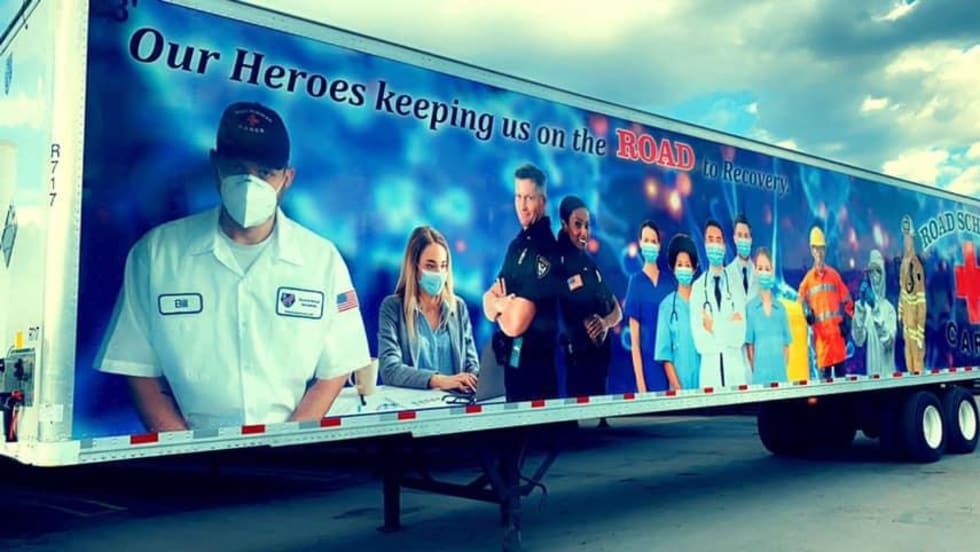
Wrapping a Trailer for COVID’s Everyday Heroes
“We don’t only deliver freight. We deliver awareness.” That’s what Jim Barrett, president and CEO of Road Scholar Transport, likes to say about the Dunmore, Pennsylvania-based carrier’s “awareness fleet.” Its latest trailer wrap honors the everyday heroes of the pandemic.
Read More →
How a Tanker Fleet is Using Unorthodox Trailer Lighting to Fight Rear-End Collisions
Groendyke Transport watched the number of rear-end collisions with its trailers rise steadily until it tried an unorthodox and then unapproved method of alerting following drivers that its trucks were applying brakes and slowing down.
Read More →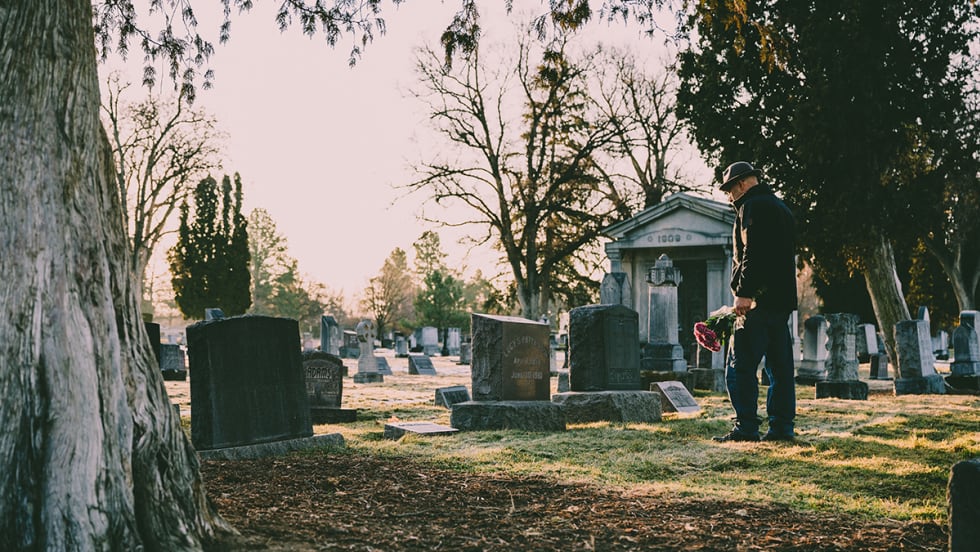
The Role Trailers are Playing in COVID-19 Funerals
In places such as New York City and Detroit, overwhelmed hospitals and mortuaries are using refrigerated trailers to store the bodies of people killed by COVID-19.
Read More →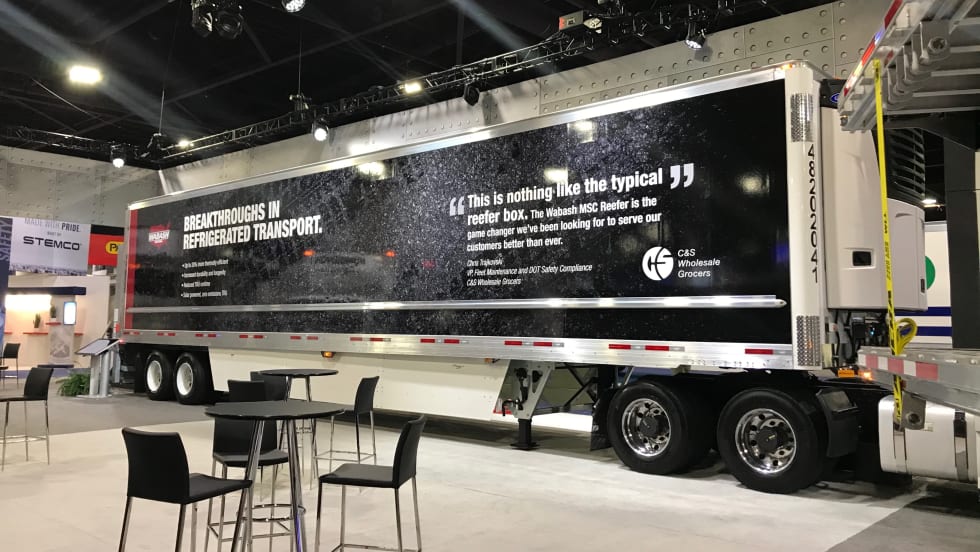
Reefer Trailer Aims to Help Reach Zero Emissions
Wabash National is partnering with C&S Wholesale Grocers to test a new type of zero-emissions refrigerated trailer.
Read More →