




Squinty Tail Lights Have a Reliability Benefit
Tom Berg spots an unusual trailer lighting system on the road. Grote LED light bars need only three pigtails to connect to the sealed wiring harness, reducing the chances for corrosion and electrical failures, he explains in his Trailer Talk blog.

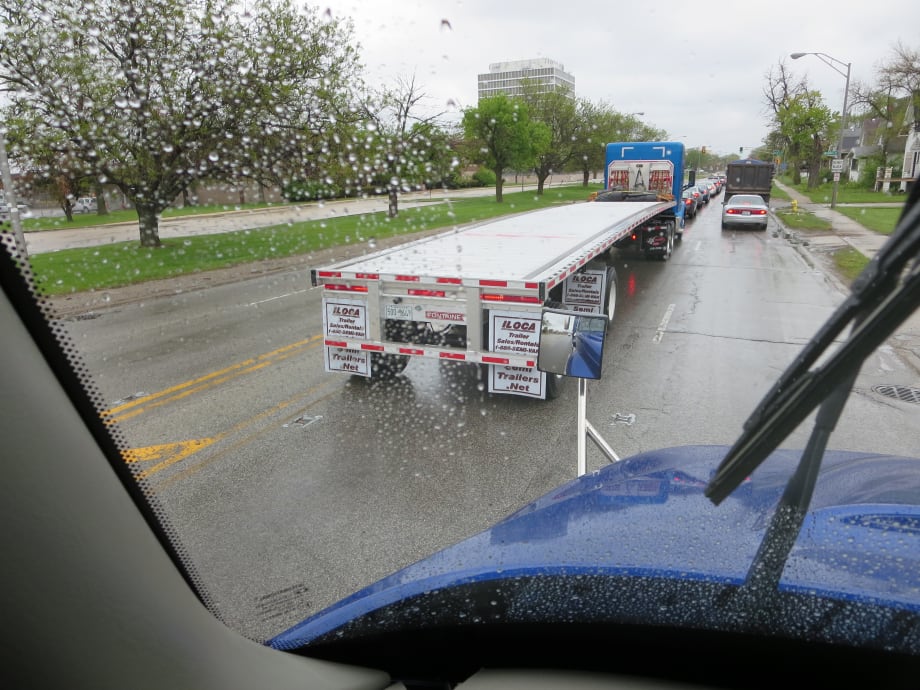
While driving a semi around the streets of Melrose Park, Ill., back in May, I spied this nice-looking aluminum flatbed up ahead. It had a spread tandem – something that for some reason usually gets my attention – and as I got closer I could see that it was a Fontaine.
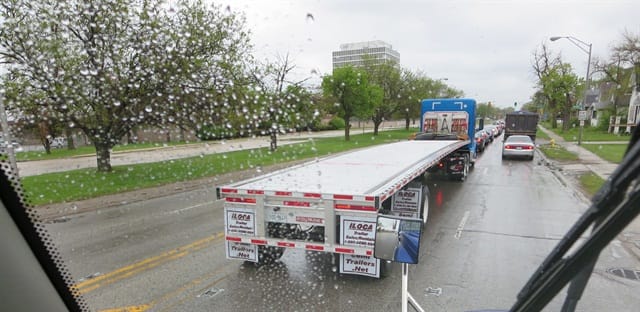
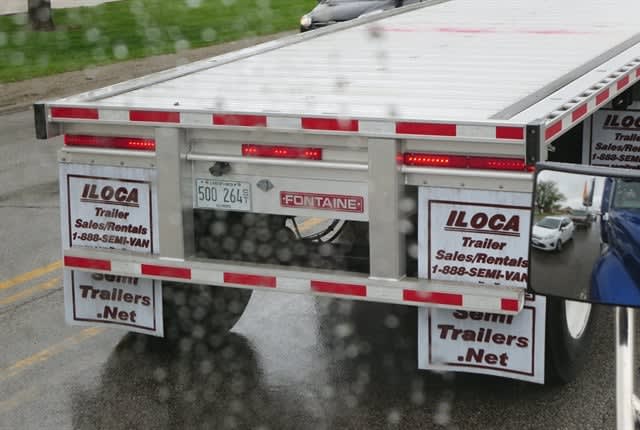
What really caught my eye were its wide and squinty tail lamps, which I had not seen before. So while stopped for traffic (there’s always a lot of that in Chicagoland) I shot a couple of pics.
This week I called the number printed on the mudflaps and was connected with Tom Greifhahn, a sales representative at ILoca Trailer Sales in Aurora, Ill. He exactly knew what I was asking about.
“That’s a Fontaine Revolution flatbed, a really advanced design with a number of features,” he said enthusiastically. “It has Grote LED light bars with sealed wiring and a 10-year warranty, one of the things they’re using to reduce problems.
“With CSA [the federal compliance, safety and accountability program], there’s more concern about reliability, so instead of multiple pigtails at the rear for separate lights, there are just three pigtails,” one for each of the tail/stop/turn-signal lamps and one for the center marker lamps, also LEDs.
“Fontaine and Grote will stand behind those light bars to where if one diode among all of them goes out, they will replace that light bar,” he said. “You have to go through channels – bring it in to a Fontaine dealer and they’ll replace it.”
According to Grote’s website, those light bars are made specifically for the Fontaine Revolution trailer.
Each light bar is nearly 24 inches wide and just 2 inches high, resulting in that squinty look. Each has 18 light-emitting diodes divided into two panels, one working as stop/tail lamps and the other as a tail/turn-signal lamp.
Along with the center marker lamp’s nine diodes, there are a total of 45 red LEDs and lots of lumens facing to the trailer’s rear. The lamps are recessed in a full-width channel, which protects them from impacts.
Fontaine’s Revolution series includes flatbed and dropdeck trailers with aluminum or steel main beams, hidden crossmembers and extruded side rails.
Greifhahn noted that in addition to winch tie-downs at the sides, optional chocks can be slid into channels on the deck, and the chocks serve as tie-down points to secure loads fore-and-aft.
More Blog Posts
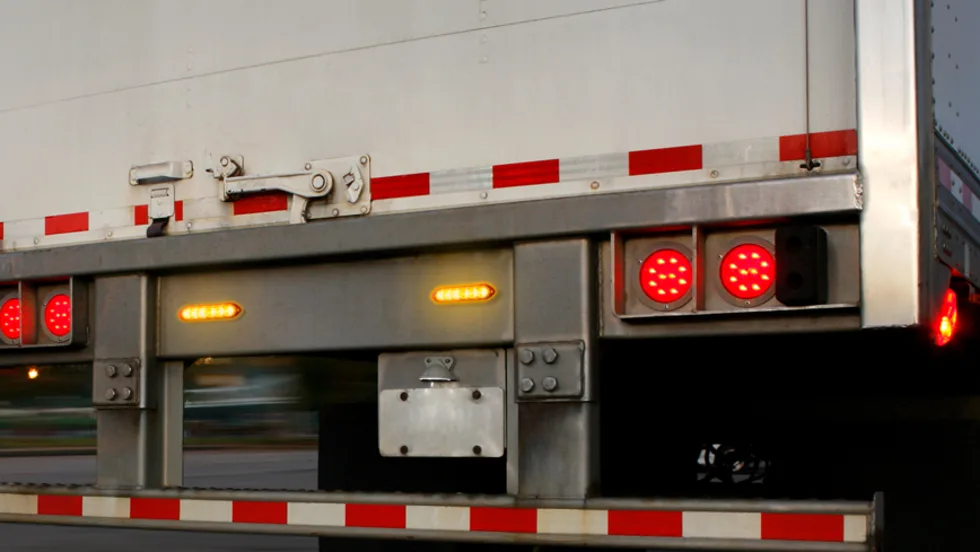
Pulsing Back-of-Trailer Lamps Aim to Prevent Crashes
Can the addition of a pulsing brake lamp on the back of a trailer prevent rear-end collisions? FMCSA seems to think so, if its exemptions are any indication.
Read More →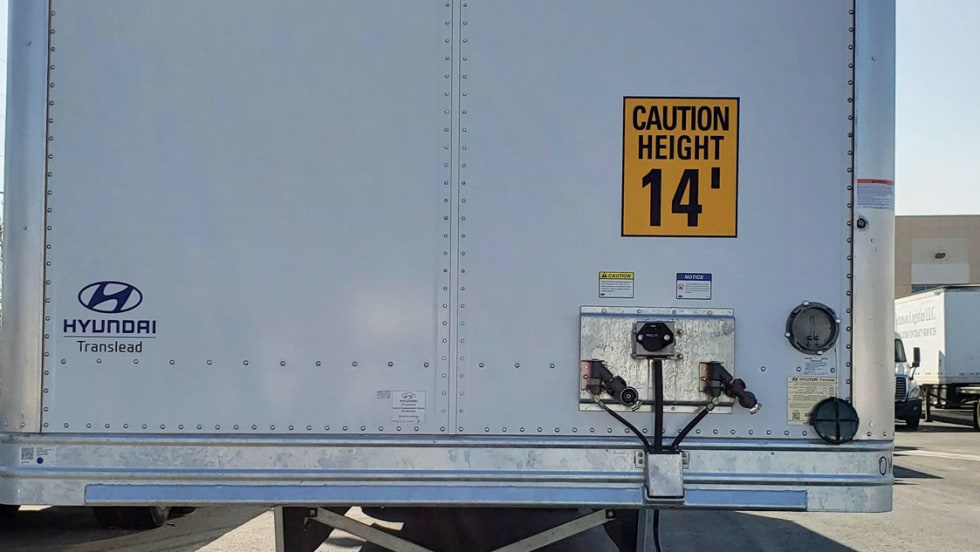
Designing a 14-Foot Trailer
Trailers are 13 feet, 6 inches high, right? Not for Hub Group, which developed a special 14-foot-high trailer spec for a dedicated customer based in California. Learn more in the Trailer Talk blog.
Read More →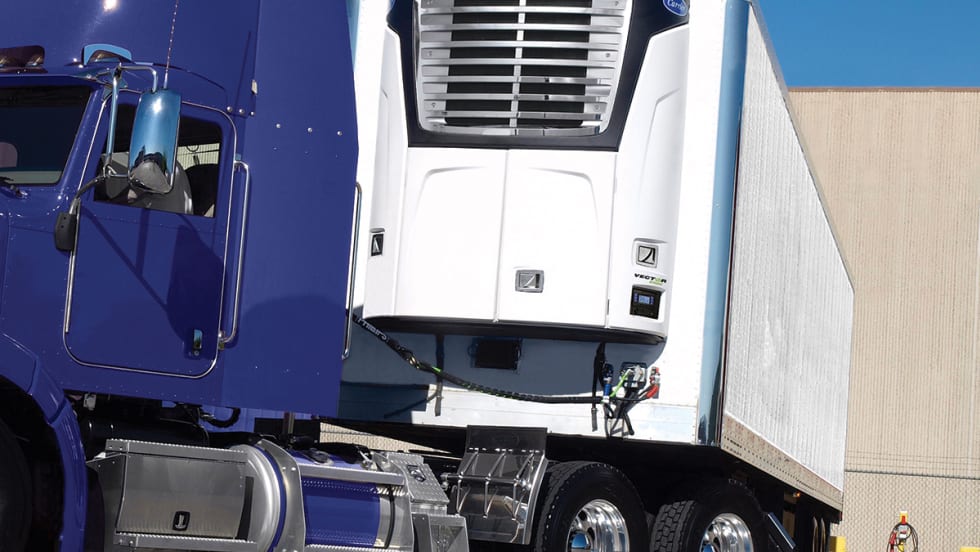
CARB Comes for Reefer Trailers
A new round of emissions control regulations decreed by the California Air Resource Board will begin affecting refrigerated trailer and TRU design and operations next year.
Read More →
5 Ways Data Analysis Maximizes the Value of Trailer Telematics
Are you getting the most out of your trailer telematics investment?
Read More →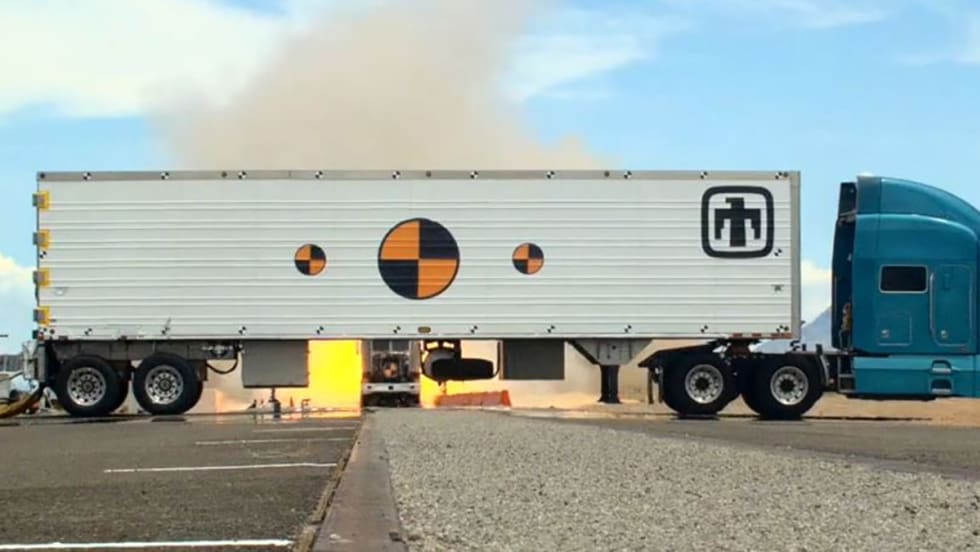
Can You Guess What's in That Trailer?
You don’t always know what’s in the trailers that pass you on the road. But some of those trailers are carrying something a little more dangerous that frozen food or new bedding…like, maybe, a nuclear weapon. But this isn’t an ordinary trailer; this is a trailer specifically made to not only carry this type of payload, but protect it at all costs.
Read More →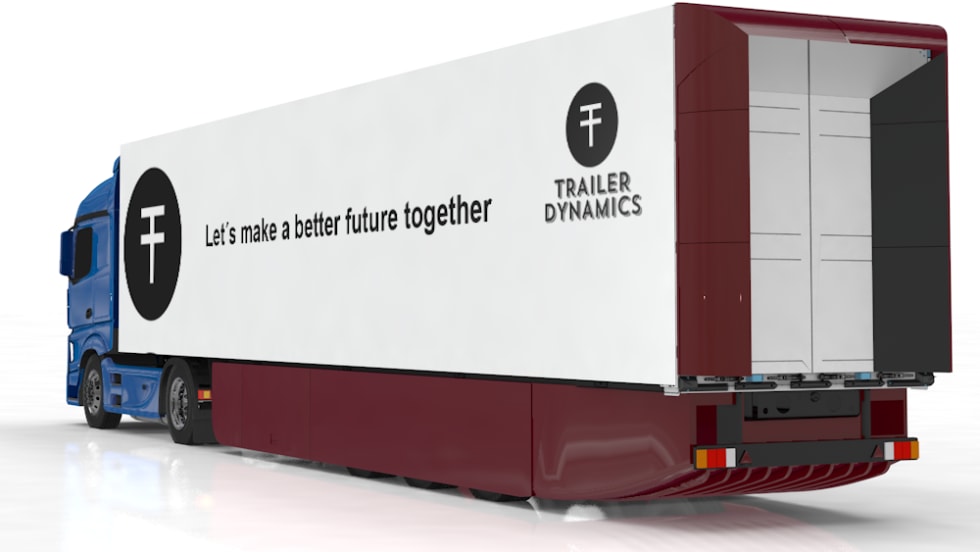
How Trailers Are Harnessing 'Free' Energy
Can trailers play a more active role in sustainable transport beyond aerodynamic add-ons or low-rolling-resistance tires? Some companies think so.
Read More →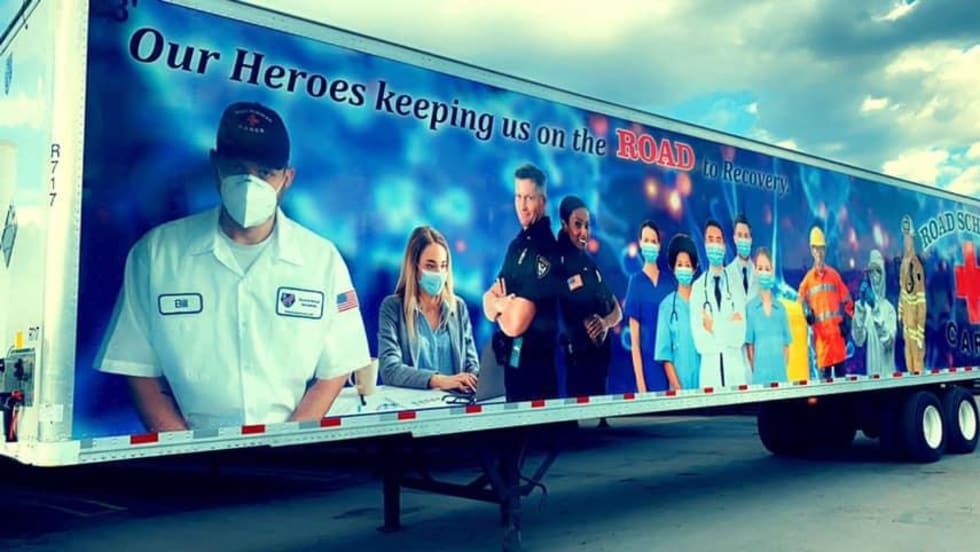
Wrapping a Trailer for COVID’s Everyday Heroes
“We don’t only deliver freight. We deliver awareness.” That’s what Jim Barrett, president and CEO of Road Scholar Transport, likes to say about the Dunmore, Pennsylvania-based carrier’s “awareness fleet.” Its latest trailer wrap honors the everyday heroes of the pandemic.
Read More →
How a Tanker Fleet is Using Unorthodox Trailer Lighting to Fight Rear-End Collisions
Groendyke Transport watched the number of rear-end collisions with its trailers rise steadily until it tried an unorthodox and then unapproved method of alerting following drivers that its trucks were applying brakes and slowing down.
Read More →
The Role Trailers are Playing in COVID-19 Funerals
In places such as New York City and Detroit, overwhelmed hospitals and mortuaries are using refrigerated trailers to store the bodies of people killed by COVID-19.
Read More →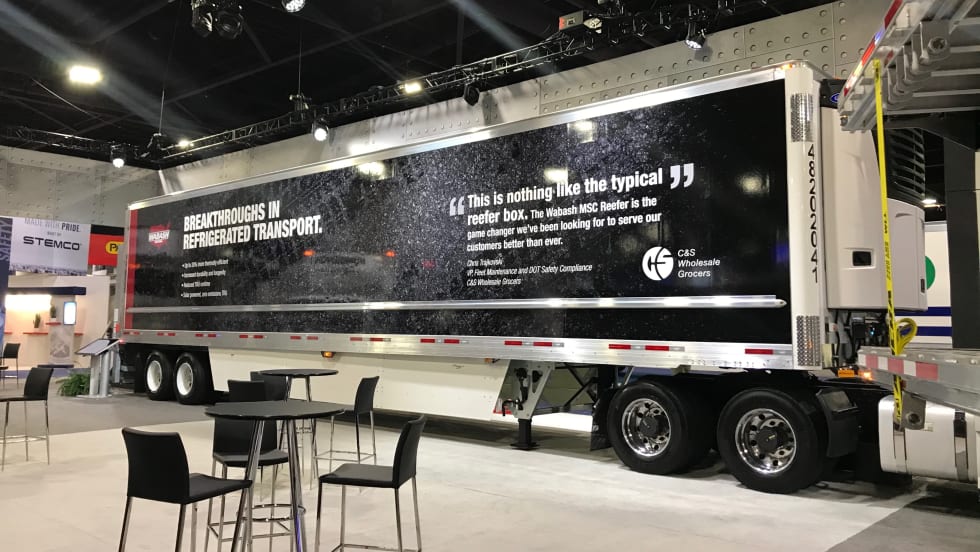
Reefer Trailer Aims to Help Reach Zero Emissions
Wabash National is partnering with C&S Wholesale Grocers to test a new type of zero-emissions refrigerated trailer.
Read More →