





Related: End Dump Plays the Middle Man in Grain Transfer Operation
Special Vans Haul Horses from the Fairgrounds
For horse trailers, corrosion resistance is important because of urine. Strength is, too, so trailer structures don’t twist on rough ground and its doors can freely open. Learn more in Tom Berg's Trailer Talk blog.
November 28, 2017
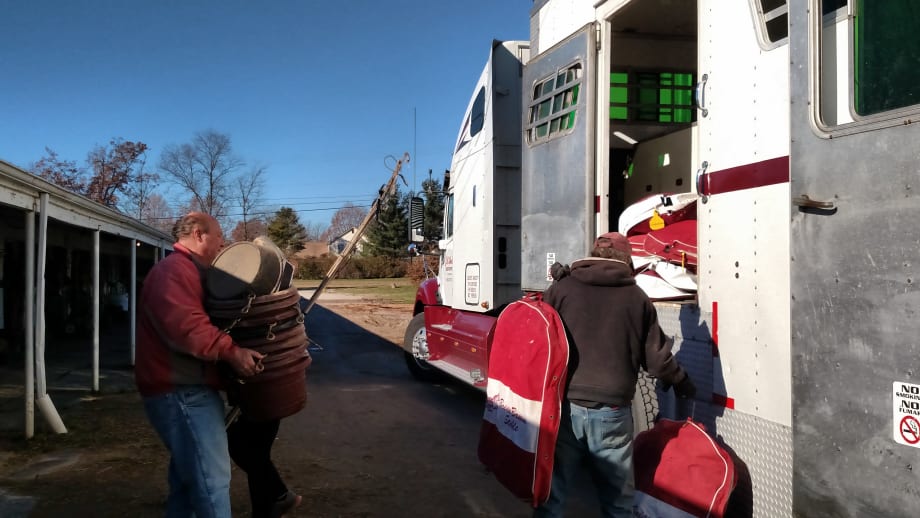
“If a trailer’s not full, they make it full” with tack and other items needed where the horses are going. In this case, it’s to winter quarters in central Florida, more than 900 miles away.
3 min to read
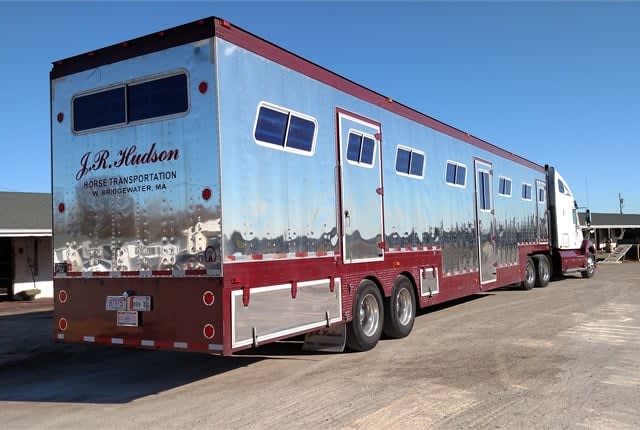
A shiney 53 by 102 van waits to be loaded with 15 horses at the Delaware County (Ohio) Fairgrounds. The Fleet Equine trailer’s made mostly of stainless and galvanized steel. Photos: Tom Berg
My spare-bedroom office in Delaware, Ohio, faces the main entrance to the county fairgrounds, whose national claim to fame is harness racing and the annual Little Brown Jug competition. Harness racing, also called trotting, uses Standardbred horses, so I see a lot of horse-hauling rigs go into and out of the grounds at all hours of the day and night. Most are small to medium-size units pulled by heavy duty pickups.
This morning I saw the largest and sharpest horse trailer I can remember. It was big-rig size, and its polished metal sides glistened in the sun. I had to go see it, and had no excuse not to because it takes me all of five minutes to drive from my garage to the stables area on the fairgrounds.
Turns out this rig was one of four, all owned by J.R. Hudson Horse Transportation out of Massachusetts. Three had polished stainless steel sides and looked fairly new, and the fourth looked like painted aluminum. All were 53 by 102s, but to me they looked shorter. They had polished aluminum wheels and showed signs of good maintenance.
The one I spotted earlier was made by Fleet Equine, a specialty builder in Shorewood, Illinois, near Joliet. The company’s owner, Jerry Feyrzzula, said his trailers are built mostly of steel, using high-nickel-content stainless with galvanized underframes, running gear, and other parts. These materials resist corrosion from urine, a common problem with horse vans, and of course road salt.
Most vans are highly customized to suit customers’ preferences. Aside from the number and placement of horse stalls along the lower floor, there are compartments in the floor and the higher area near the nose. Size and location of doors, loading ramps and axles are other custom-spec items.
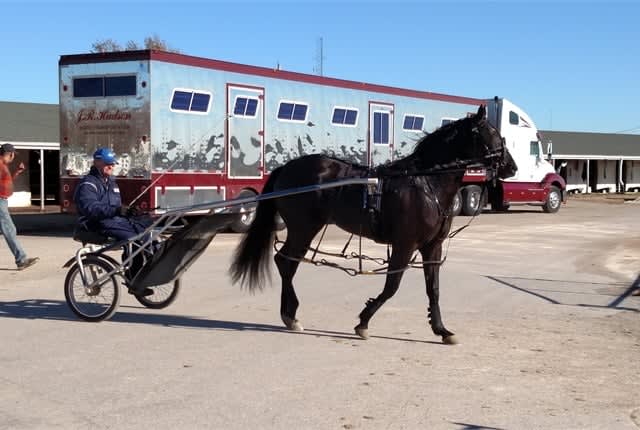
Standardbred racer with sulky and rider trots by a horse van. Harness racing on oval dirt tracks is big in Ohio and other states.
The drivers said they were hauling 120 “head” – a word I usually associate with cattle – to winter pastures near Deland, Florida. That’s a trip of about 23 hours, one of the guys said. They drive team, so can keep rolling except for regular breaks for basic personal needs, and to refuel the Freightliner tractors and water the horses. The horses stay aboard during such trips.
Each trailer carries 15 horses, the Hudson drivers said, so half the herd will leave today and the other half on Thursday. That’s two quick round trips of about 1,900 miles each. A Hudson rig can cover more than 300,000 miles a year, one guy said. The work is steady, though it slows down in January and February.
Standardbred horses are even-tempered and fairly easy to load and unload, but “babies can hurt you,” said a driver named Billy, talking about rambunctious colts. An adult Standardbred typically weighs between 800 and 1,000 pounds, so a basic payload is light by big-rig measure. However, “if a trailer isn’t full, they make it full,” Feyrzzula explained.
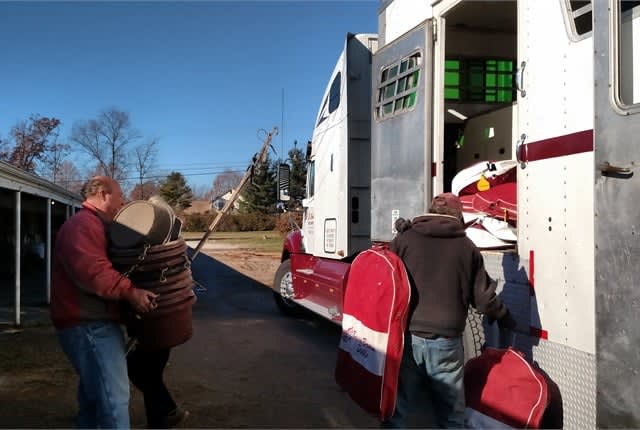
“If a trailer’s not full, they make it full” with tack and other items needed where the horses are going. In this case, it’s to winter quarters in central Florida, more than 900 miles away.
So handlers load tack – harnesses, blankets, and grooming tools -- plus their personal gear, hay, medicines, golf carts, and whatever else needs to get to where the horses are going. Sulkies, the lightweight buggies that the horses pull in harness racing, are placed atop the trailers in 16-inch-deep wells, he explained. Wheels are removed to make the cart-like conveyances more compact. Other gear goes up there too, and everything is tied down.
Although my wife and I once owned and worked with horses out in California, I never knew much about horse vans. Thanks to a look out my window this morning and some interesting and informative conversations, now I do.
Subscribe to Our Newsletter
More Blog Posts
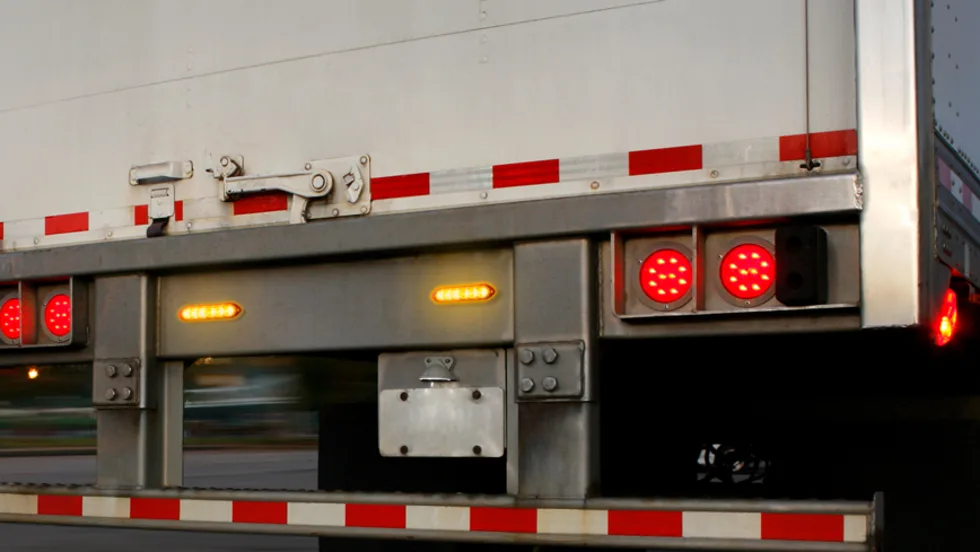
Pulsing Back-of-Trailer Lamps Aim to Prevent Crashes
Can the addition of a pulsing brake lamp on the back of a trailer prevent rear-end collisions? FMCSA seems to think so, if its exemptions are any indication.
Read More →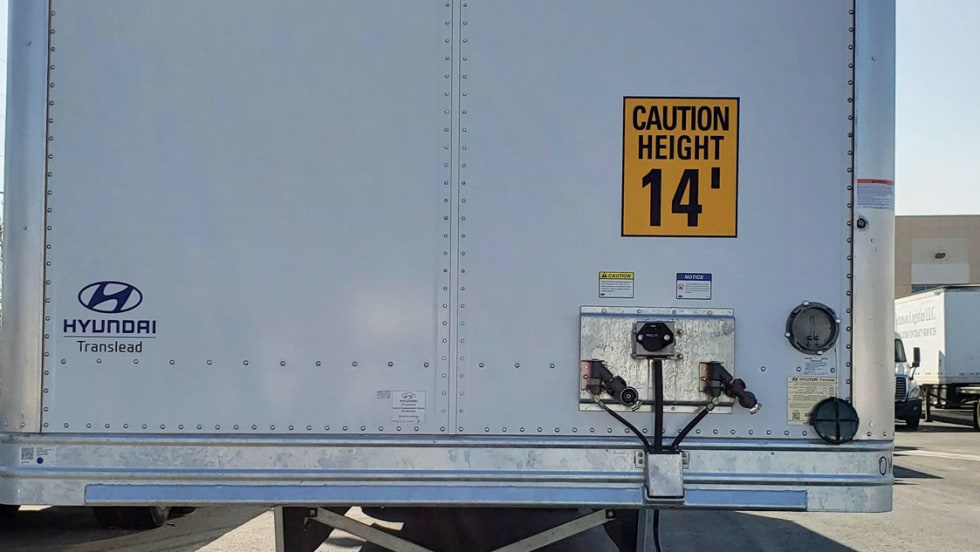
Designing a 14-Foot Trailer
Trailers are 13 feet, 6 inches high, right? Not for Hub Group, which developed a special 14-foot-high trailer spec for a dedicated customer based in California. Learn more in the Trailer Talk blog.
Read More →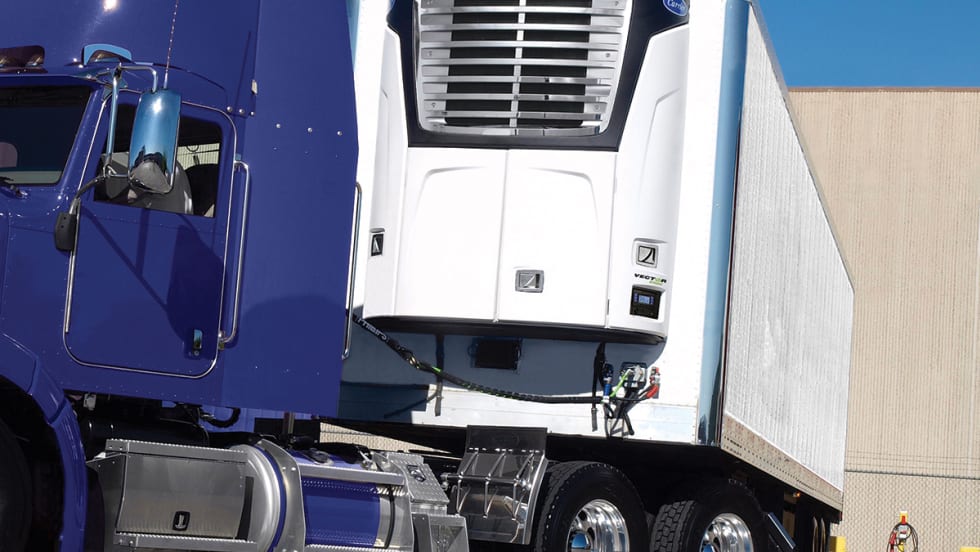
CARB Comes for Reefer Trailers
A new round of emissions control regulations decreed by the California Air Resource Board will begin affecting refrigerated trailer and TRU design and operations next year.
Read More →
5 Ways Data Analysis Maximizes the Value of Trailer Telematics
Are you getting the most out of your trailer telematics investment?
Read More →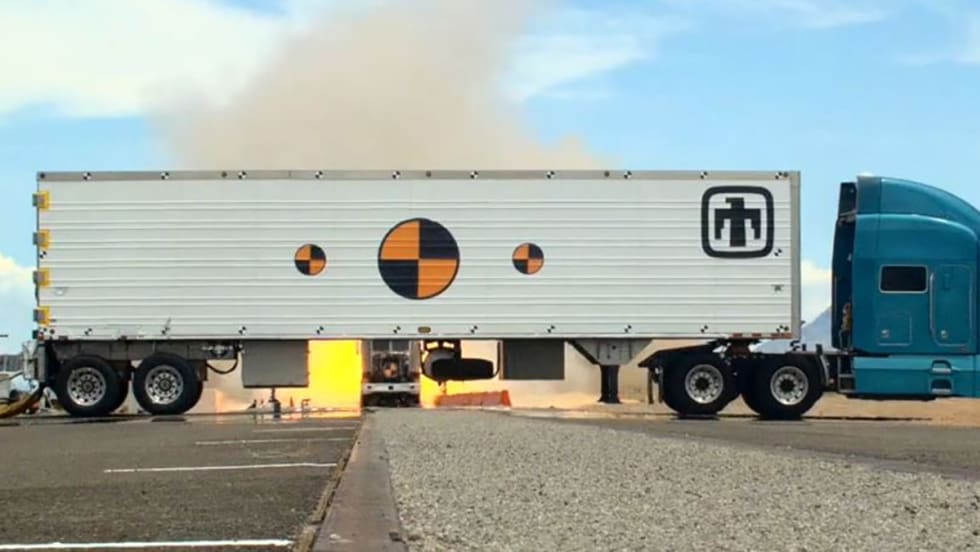
Can You Guess What's in That Trailer?
You don’t always know what’s in the trailers that pass you on the road. But some of those trailers are carrying something a little more dangerous that frozen food or new bedding…like, maybe, a nuclear weapon. But this isn’t an ordinary trailer; this is a trailer specifically made to not only carry this type of payload, but protect it at all costs.
Read More →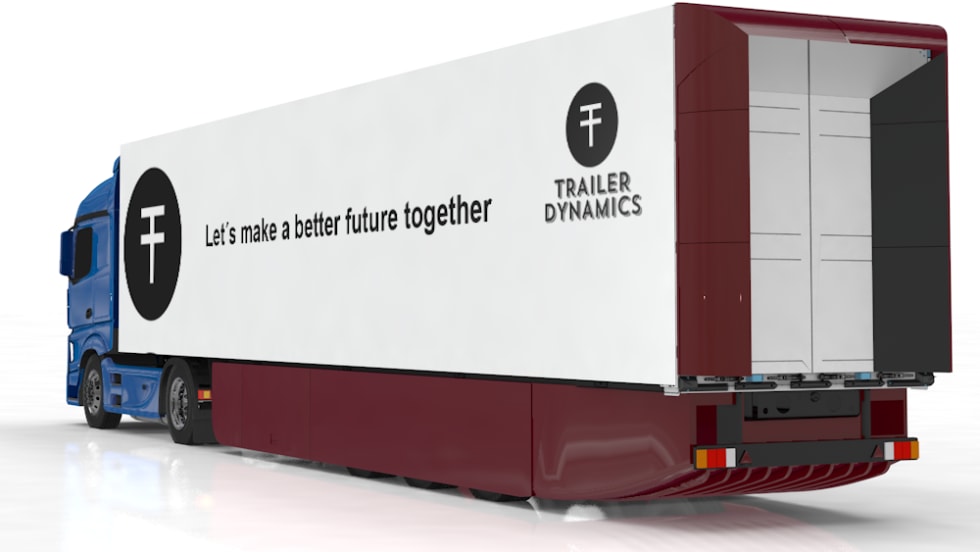
How Trailers Are Harnessing 'Free' Energy
Can trailers play a more active role in sustainable transport beyond aerodynamic add-ons or low-rolling-resistance tires? Some companies think so.
Read More →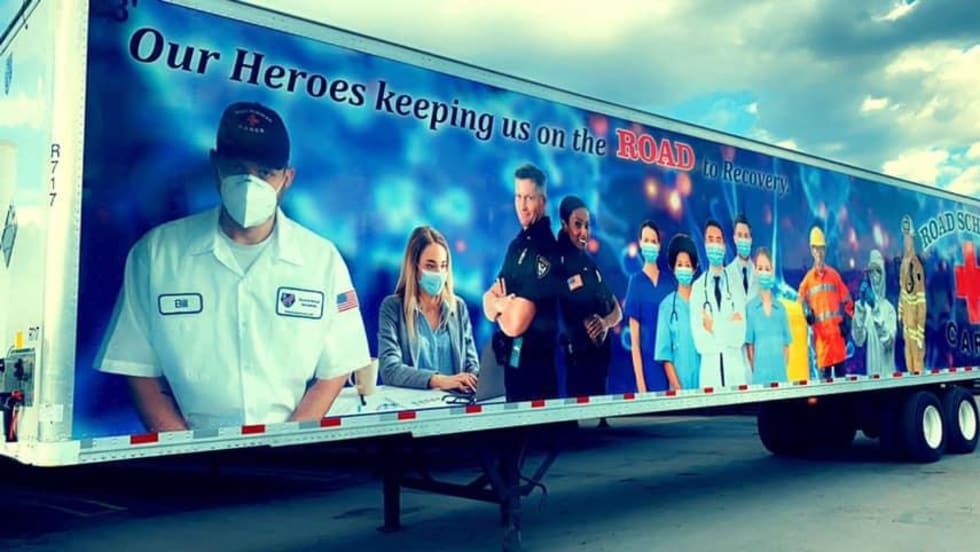
Wrapping a Trailer for COVID’s Everyday Heroes
“We don’t only deliver freight. We deliver awareness.” That’s what Jim Barrett, president and CEO of Road Scholar Transport, likes to say about the Dunmore, Pennsylvania-based carrier’s “awareness fleet.” Its latest trailer wrap honors the everyday heroes of the pandemic.
Read More →
How a Tanker Fleet is Using Unorthodox Trailer Lighting to Fight Rear-End Collisions
Groendyke Transport watched the number of rear-end collisions with its trailers rise steadily until it tried an unorthodox and then unapproved method of alerting following drivers that its trucks were applying brakes and slowing down.
Read More →
The Role Trailers are Playing in COVID-19 Funerals
In places such as New York City and Detroit, overwhelmed hospitals and mortuaries are using refrigerated trailers to store the bodies of people killed by COVID-19.
Read More →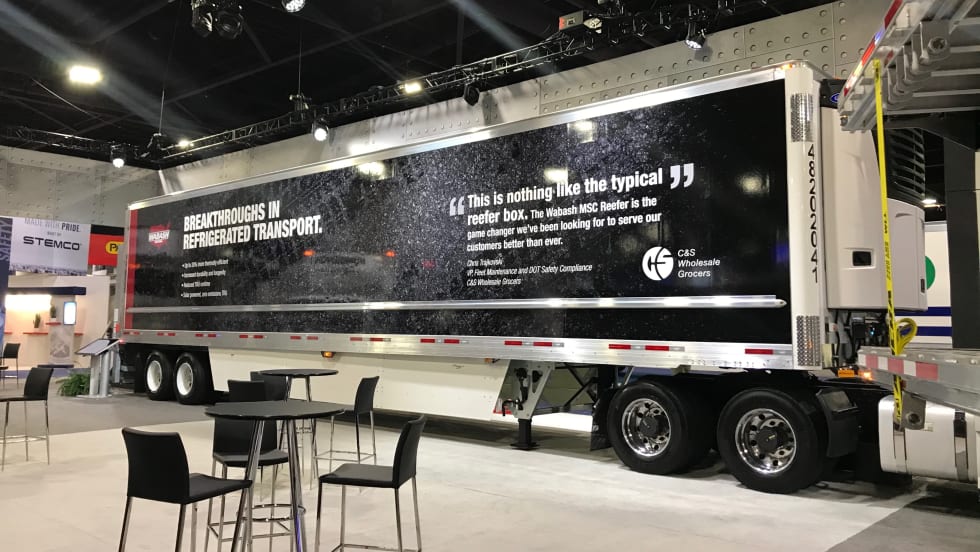
Reefer Trailer Aims to Help Reach Zero Emissions
Wabash National is partnering with C&S Wholesale Grocers to test a new type of zero-emissions refrigerated trailer.
Read More →