




Solar Panels Cure Problem of Run-Down Liftgate Batteries
A single 100-watt solar panel keeps the trailer's four Group 31 batteries charged and the liftgate operating reliably.

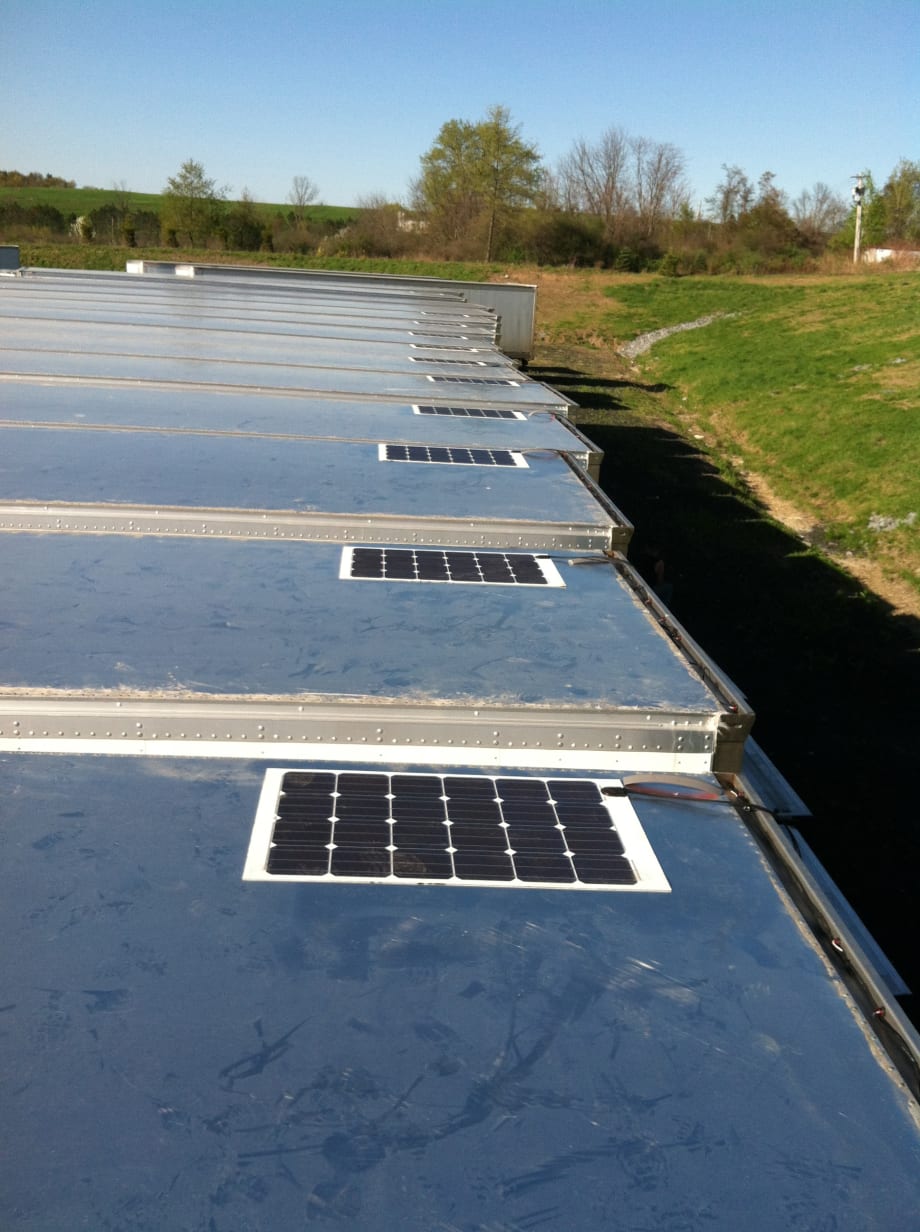
Darry Stuart, a contract maintenance consultant, had a client with a problem: Run-down liftgate batteries on the wholesale grocery fleet’s trailers. This too often crippled reefer rigs on city routes, where runs between stops are too short for tractor alternators to recharge the trailer batteries.
Sometimes expensive service calls were required because batteries were too weak to raise the ‘gates, which sat on the pavement as drivers waited. There are various remedies, but Stuart, who runs DWS Fleet Services and is a former general chairman of ATA’s Technology & Maintenance Council, looked to the sun for a solution.
“Prices for solar panels have come down to where they’re affordable,” he says, “and they work. I put one on the roof of each trailer, back at the rear where they’re close to the battery box. And they keep the batteries charged and the tail gates operating.” He did a short test on a few trailers, then put them on 75 more.
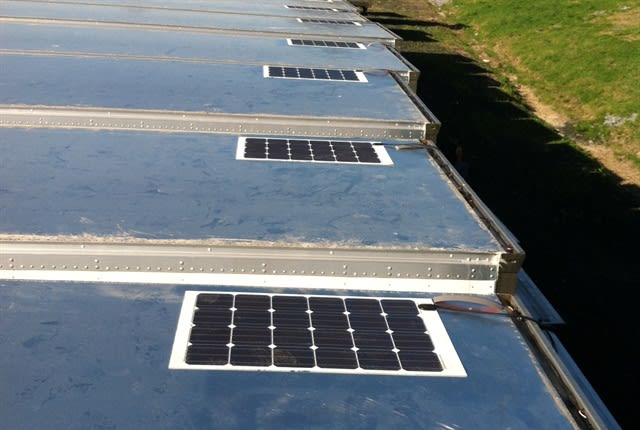
Stuart installed 3 by 4-foot, 100-watt panels at a cost of under $1,000 per trailer. Panels are from eNow. The wire from the panel snakes down a rear side post and into the battery box.
For reliability, he specs four Group 31s for the liftgates. “You can run ‘em on two batteries but if anything goes wrong, you’re in trouble,” he says. “And if you’re in New York City, you’re in real trouble. It takes three hours to get somebody there.”
Liftgates are PAL Interlift tuck-unders with a 5,500 pound capacity. Trailers are Wabash National DuraPlate vans and ArcticLite reefers. They’re an unusual 46 feet long so they can haul 16 pallets of merchandise but are not too long for city runs. Reefer units are Carrier and Thermo King, “depending on the stronger local service provider,” Stuart says.
Galvanized steel frames with closely spaced crossmembers are among the long-lasting components he chooses to attain 15 years of service.
And the sun will still be shining after that.
More Blog Posts

Pulsing Back-of-Trailer Lamps Aim to Prevent Crashes
Can the addition of a pulsing brake lamp on the back of a trailer prevent rear-end collisions? FMCSA seems to think so, if its exemptions are any indication.
Read More →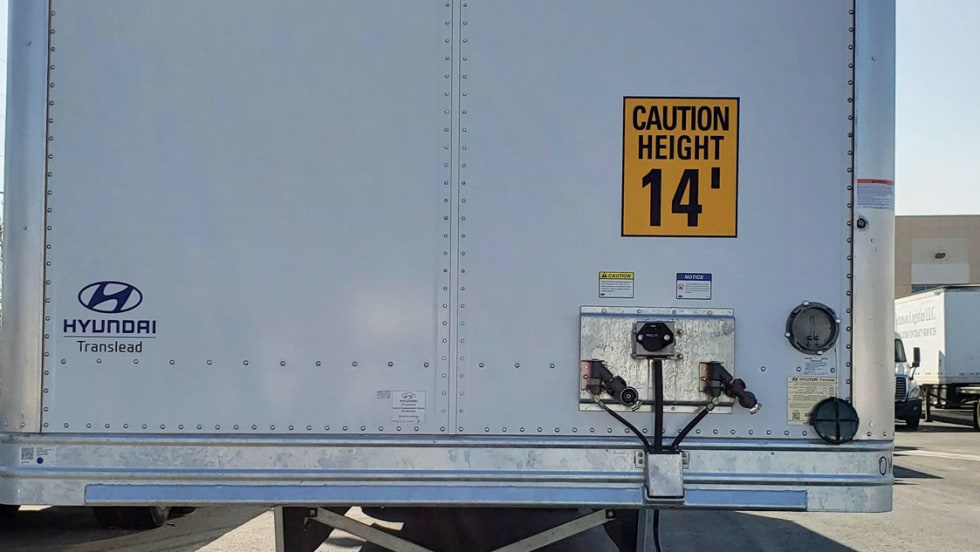
Designing a 14-Foot Trailer
Trailers are 13 feet, 6 inches high, right? Not for Hub Group, which developed a special 14-foot-high trailer spec for a dedicated customer based in California. Learn more in the Trailer Talk blog.
Read More →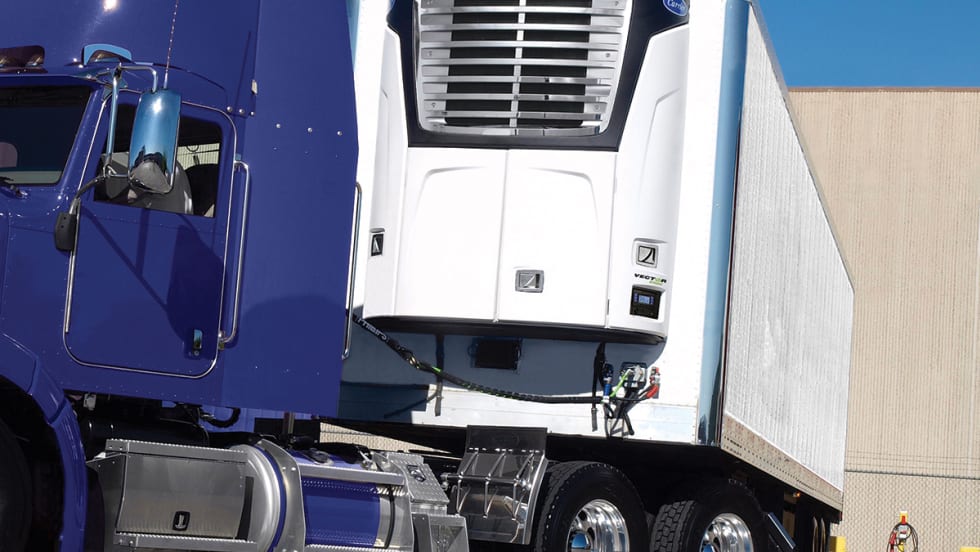
CARB Comes for Reefer Trailers
A new round of emissions control regulations decreed by the California Air Resource Board will begin affecting refrigerated trailer and TRU design and operations next year.
Read More →
5 Ways Data Analysis Maximizes the Value of Trailer Telematics
Are you getting the most out of your trailer telematics investment?
Read More →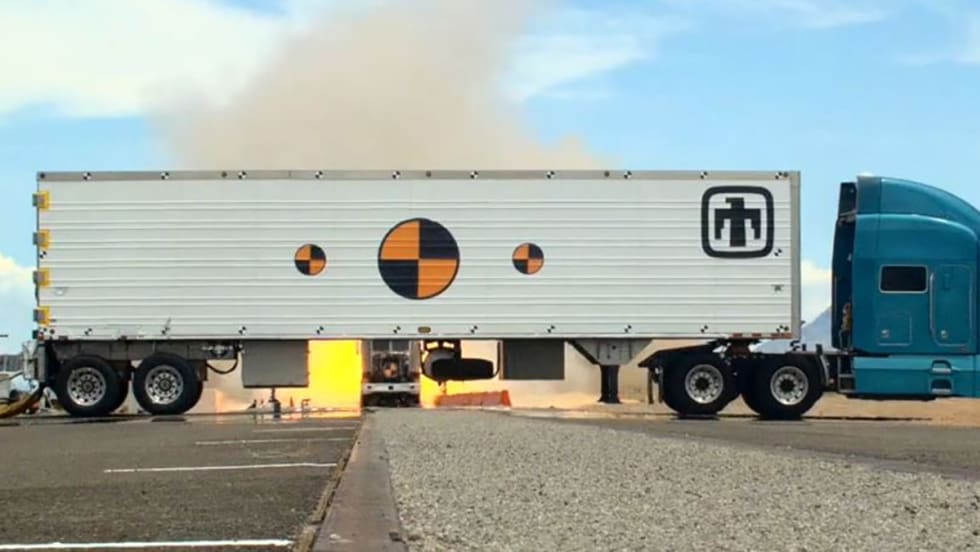
Can You Guess What's in That Trailer?
You don’t always know what’s in the trailers that pass you on the road. But some of those trailers are carrying something a little more dangerous that frozen food or new bedding…like, maybe, a nuclear weapon. But this isn’t an ordinary trailer; this is a trailer specifically made to not only carry this type of payload, but protect it at all costs.
Read More →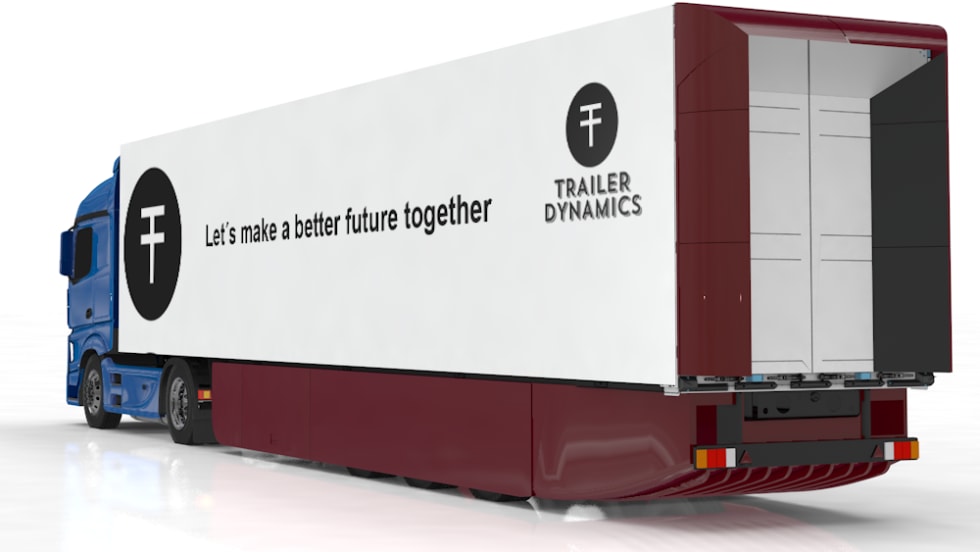
How Trailers Are Harnessing 'Free' Energy
Can trailers play a more active role in sustainable transport beyond aerodynamic add-ons or low-rolling-resistance tires? Some companies think so.
Read More →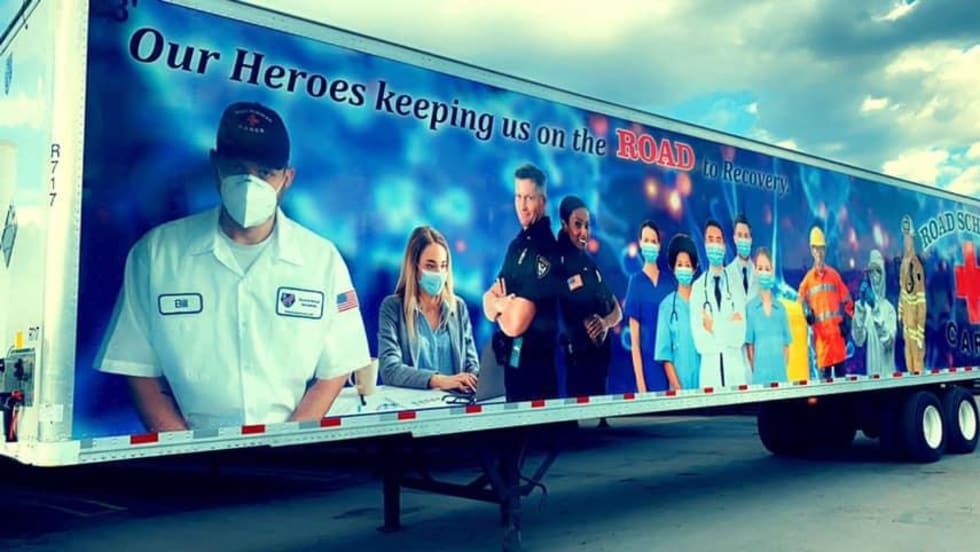
Wrapping a Trailer for COVID’s Everyday Heroes
“We don’t only deliver freight. We deliver awareness.” That’s what Jim Barrett, president and CEO of Road Scholar Transport, likes to say about the Dunmore, Pennsylvania-based carrier’s “awareness fleet.” Its latest trailer wrap honors the everyday heroes of the pandemic.
Read More →
How a Tanker Fleet is Using Unorthodox Trailer Lighting to Fight Rear-End Collisions
Groendyke Transport watched the number of rear-end collisions with its trailers rise steadily until it tried an unorthodox and then unapproved method of alerting following drivers that its trucks were applying brakes and slowing down.
Read More →
The Role Trailers are Playing in COVID-19 Funerals
In places such as New York City and Detroit, overwhelmed hospitals and mortuaries are using refrigerated trailers to store the bodies of people killed by COVID-19.
Read More →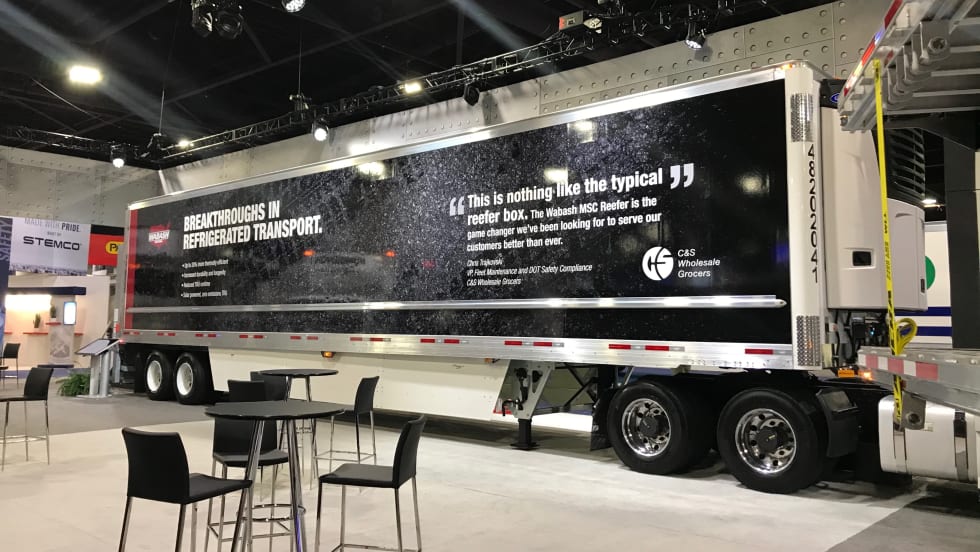
Reefer Trailer Aims to Help Reach Zero Emissions
Wabash National is partnering with C&S Wholesale Grocers to test a new type of zero-emissions refrigerated trailer.
Read More →