




Snow on the Roof? Knock It Off with Compressed Air, Driver Says
Snow is spreading across much of the country, and maybe everyone’s biggest worry is just getting there. But if you’re motoring down the highway and a trailer ahead of you starts shedding sheets of snow and ice, that’ll make your trip even more interesting.

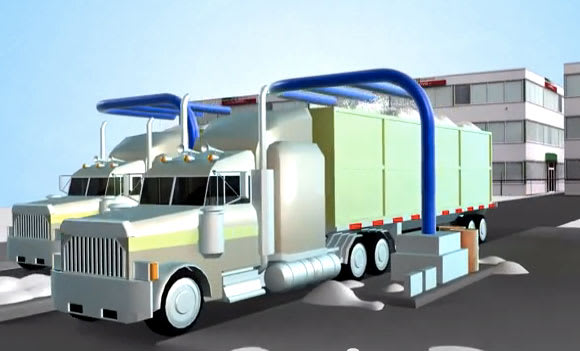

Snow is spreading across much of the country, and maybe everyone’s biggest worry is just getting there. But if you’re motoring down the highway and a trailer ahead of you starts shedding sheets of snow and ice, that’ll make your trip even more interesting.
You might get angry at the rig’s driver, but what’s he supposed to do? He can’t crawl up on top of the van and sweep or shovel off the snow, even if various ordinances and laws expect it. Products that actively brush off the tops of vans are on the market, but they contact the roof and can damage it, causing leaks.
That’s the view of Henry Thissen, a longtime truck driver (since age 16, and he’s now 57) from central Pennsylvania, who believes he’s got a better idea: Remove the snow and ice with compressed air, which simulates what causes it to blow off roofs at highway speeds. He’s designed a device, and formed Arctic Air Snow Removal Systems LLC to build and sell it.
Thissen has posted an explanatory video on YouTube that’ll take you just 40 seconds to watch:
That’s the rough idea, but Thissen has done more planning and has identified components he’ll use, including a large scroll-type compressor driven by a 49-horsepower diesel, with piping that would extend over a travel lane. Air at 100 psi would blast out of nozzles set at a 45-degree angle to kick snow in one direction, preferably to one side where it wouldn’t have to be removed.
Overhead piping could be shaped to knock snow off round and semi-round roofs, like on tank trucks and school buses, he says.
The apparatus will mount on a skid so it could be moved by a forklift around a property. He envisions it parked toward the edge of a property where trucks can drive under it after a snow storm. As weather finally warms up in the spring, a forklift could stow it out of the way.
“I’d like to put these things in every rest area, every rail yard, at truck terminals, school bus yards and truck stops,” Thissen says. “I’d get the government involved, and they could put them in rest areas, install card readers to accept payments to pay for them. People could start their own businesses and make money on it” by buying them and putting them in places where trucks and buses are.
For fleet use, an electric-eye motion detector would crank up the diesel and quickly spin up the compressor; the rig would creep through in Low gear, and the machine would shut down.
He’s gathering components and will have one assembled by mid January, and will mount it on a small trailer to take it around for demonstrations. One of them will “tentatively” cost $22,000 to $25,000, he figures.
“The biggest thing for me is safety,” he says, “safety for the public, and for my family. I’ve got grandkids now.”
He’s named the company for the cold air the machine will blow in winter, down to minus 40, by the way. He hasn’t thought of a name for the device, though. I suggested “Blow ‘N’ Go.” Thissen laughed. But he hopes he’ll be laughing all the way into retirement if the product catches on.
More Blog Posts

Pulsing Back-of-Trailer Lamps Aim to Prevent Crashes
Can the addition of a pulsing brake lamp on the back of a trailer prevent rear-end collisions? FMCSA seems to think so, if its exemptions are any indication.
Read More →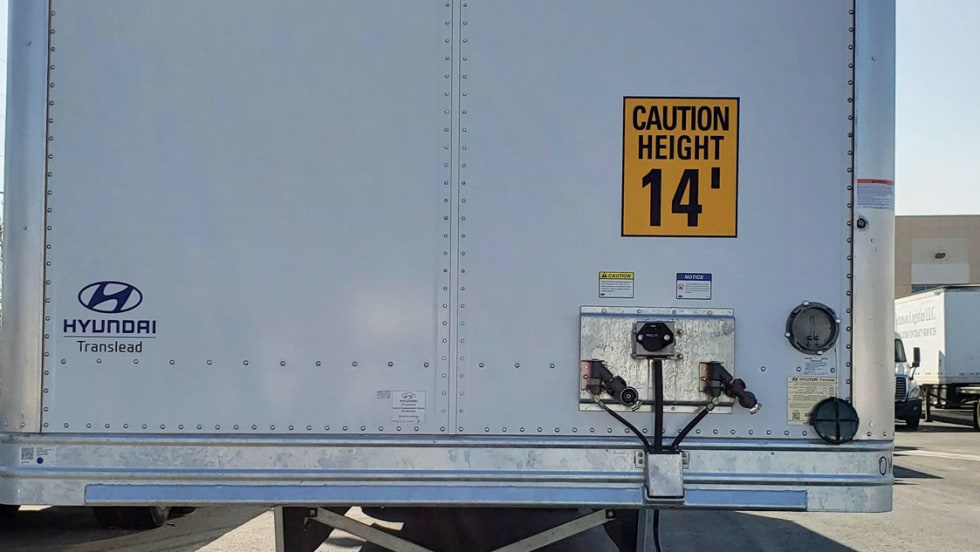
Designing a 14-Foot Trailer
Trailers are 13 feet, 6 inches high, right? Not for Hub Group, which developed a special 14-foot-high trailer spec for a dedicated customer based in California. Learn more in the Trailer Talk blog.
Read More →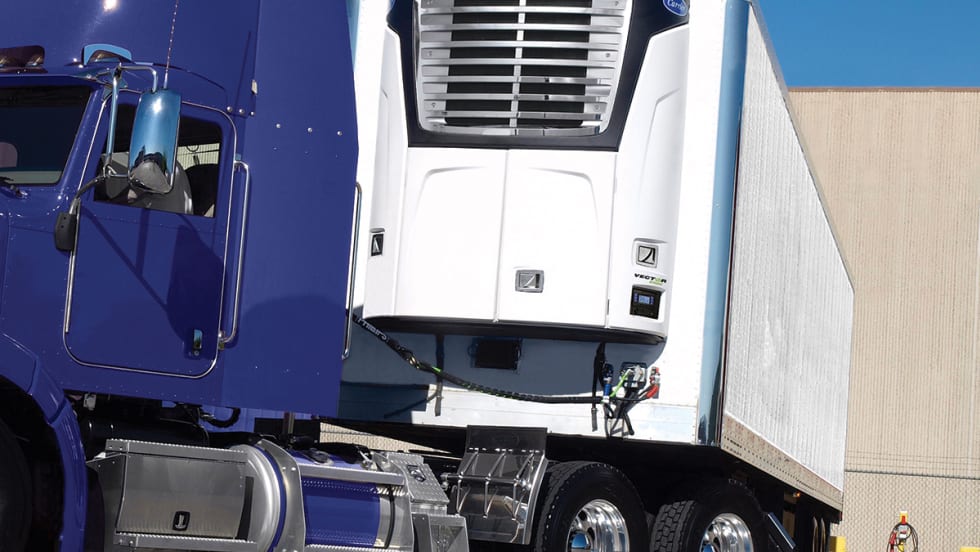
CARB Comes for Reefer Trailers
A new round of emissions control regulations decreed by the California Air Resource Board will begin affecting refrigerated trailer and TRU design and operations next year.
Read More →
5 Ways Data Analysis Maximizes the Value of Trailer Telematics
Are you getting the most out of your trailer telematics investment?
Read More →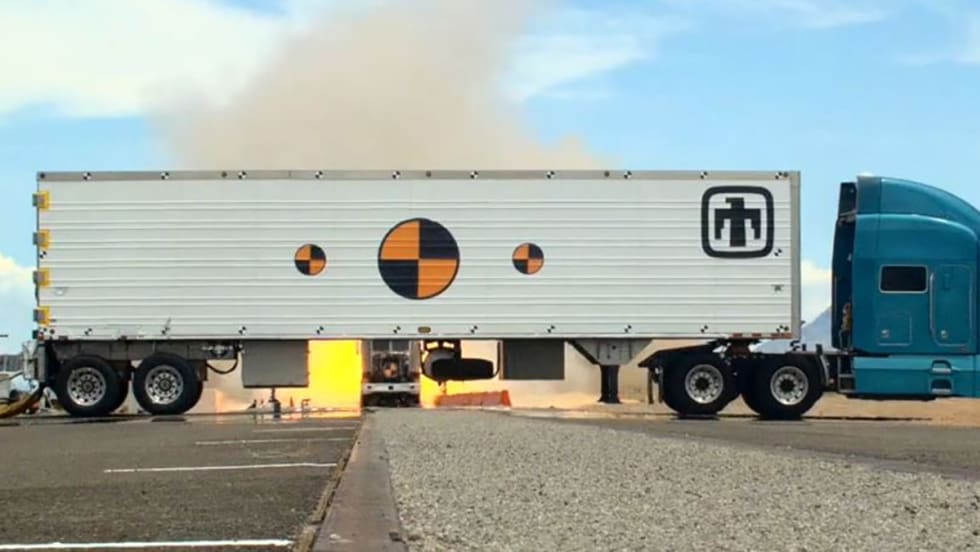
Can You Guess What's in That Trailer?
You don’t always know what’s in the trailers that pass you on the road. But some of those trailers are carrying something a little more dangerous that frozen food or new bedding…like, maybe, a nuclear weapon. But this isn’t an ordinary trailer; this is a trailer specifically made to not only carry this type of payload, but protect it at all costs.
Read More →
How Trailers Are Harnessing 'Free' Energy
Can trailers play a more active role in sustainable transport beyond aerodynamic add-ons or low-rolling-resistance tires? Some companies think so.
Read More →
Wrapping a Trailer for COVID’s Everyday Heroes
“We don’t only deliver freight. We deliver awareness.” That’s what Jim Barrett, president and CEO of Road Scholar Transport, likes to say about the Dunmore, Pennsylvania-based carrier’s “awareness fleet.” Its latest trailer wrap honors the everyday heroes of the pandemic.
Read More →
How a Tanker Fleet is Using Unorthodox Trailer Lighting to Fight Rear-End Collisions
Groendyke Transport watched the number of rear-end collisions with its trailers rise steadily until it tried an unorthodox and then unapproved method of alerting following drivers that its trucks were applying brakes and slowing down.
Read More →
The Role Trailers are Playing in COVID-19 Funerals
In places such as New York City and Detroit, overwhelmed hospitals and mortuaries are using refrigerated trailers to store the bodies of people killed by COVID-19.
Read More →
Reefer Trailer Aims to Help Reach Zero Emissions
Wabash National is partnering with C&S Wholesale Grocers to test a new type of zero-emissions refrigerated trailer.
Read More →