





Related: Do Your Trailers Have Legal RIGs with Labels That Say So?
Simple 'Bumpers' Still Needed on Exempt Trailers
Many trailers need energy absorbing rear impact guards, but many don't. Senior Contributing Editor Tom Berg talks about them.
October 4, 2018
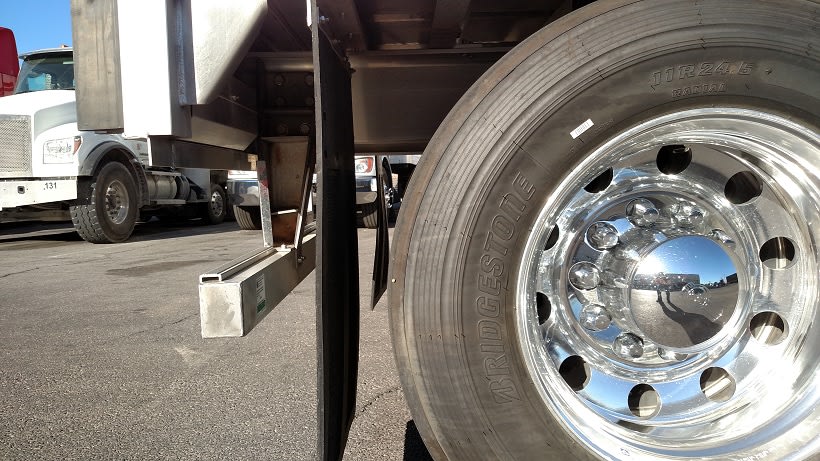
Livestock trailer’s simple bumper meets the 1952 portion of the regulation. It would keep smaller and slower vehicles from under-riding the semi.
3 min to read
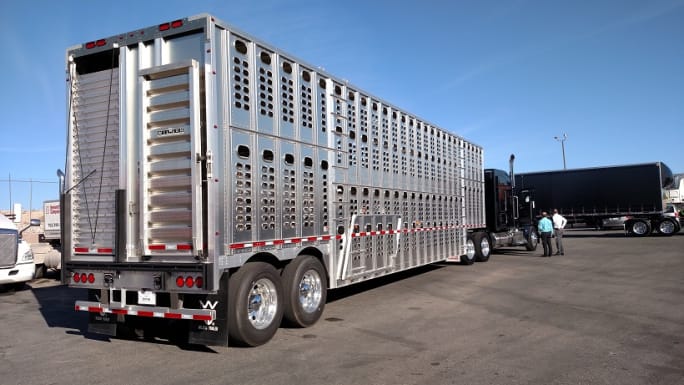
Wilson livestock trailer is an example of a “wheels back” type exempt from the shock-absorbing RIG requirement under 393.86 of the motor carrier safety rules. Its rearmost axle and tire-wheel assemblies would keep a car from riding under the trailer’s structure, where its bumper covers most of the lateral area.
Photos: Tom Berg
The recent flap over rear impact guards, or RIGs, has got me looking at bumpers on the rear of trailers. All heavy trailers need some type of guard, and those with forward-set tandems need properly labeled, energy absorbing RIGs (see the previous Trailer Talk).
These are required on trailers built on or after January 26, 1998. I remember the runup to this, in the mid 1990s, when some fleet managers complained about the extra cost compared to simple “ICC bumpers” that were in use for more than 40 years.
I had little sympathy with the cost argument because a good friend of mine from college was killed when his car under-rode a stopped trailer in 1973. And I still pay attention whenever this subject comes up.
I’ve spotted variations in bumper design for those trailers exempt under the regulation (393.86, Sections 1 and 6 of the commercial vehicle safety code). These include pole trailers, pulpwood trailers, low chassis and special purpose vehicles, wheels back vehicles, and trailers towed in driveaway-towaway operations, the reg says.
None of those trailers need shock-absorbing RIGs because their low chassis height or rear-set axles and tire-wheel assemblies will stop a car from under-riding the trailers. Under-ride is what kills or badly injures motorists, often by decapitating them. That’s what happened to my friend.
At a recent event near Las Vegas (Kenworth’s unveiling of its new W990), I eyeballed the bumpers on trailers gathered for the ride-and-drive portion. All four had rear-set axles and their bumper designs varied in the ways they filled in the lateral area between their wheels.
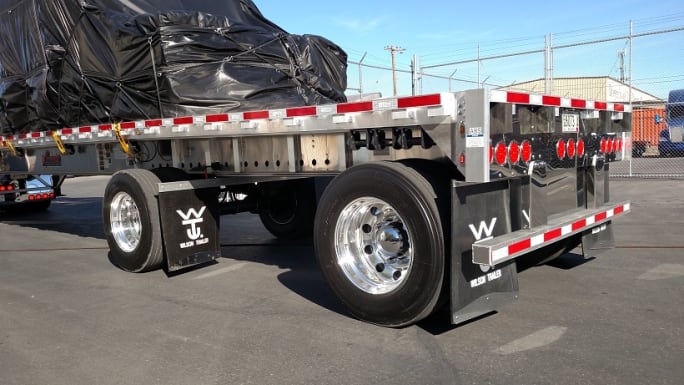
Common spread-axle flatbeds, like this Wilson aluminum unit, have a rear-set axle and wheels whose tire surfaces are within 12 inches of the trailer’s rear. Thus it’s exempt from needing an impact-absorbing guard. This bumper appears stout, but it needn’t be energy absorbing as described by motor vehicle safety standards.
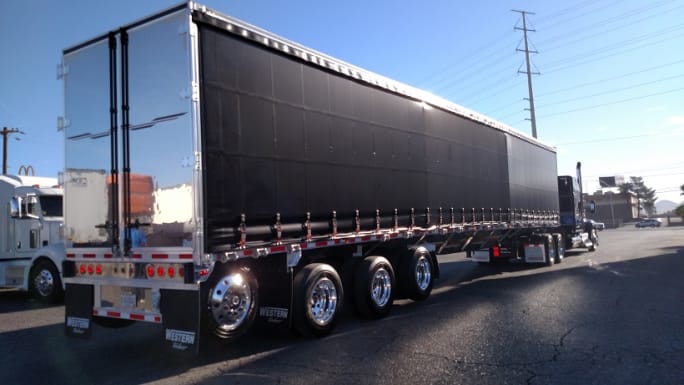
Liftable tag axle on this Western curtain-sider meets the wheels-back definition, so the trailer also needs only a simple bumper.
For clarity, I’m calling the less complex guards “bumpers.” Actually, the regulation calls all of these appendages “rear impact guards.”
These simple bumpers must be present on trailers built after Dec. 31, 1952. They are neither as strong nor as energy-absorbing as modern (since 1998) RIGs. Exceptions: truck-tractors, pole and plywood trailers, and vehicles in driveaway and towaway operations. Certain dimensions differ, including minimum distance from the ground – 24 inches for RIGs and 30 inches for bumpers.
Note that “pole trailers” are included as exemptions in both the older and newer rules, but “plywood trailers” are mentioned only in the older rule. Maybe plywood manufacturers actively lobbied federal safety authorities in 1950 or ’51, when the rule was written, and not in the mid ‘90s, when the more stringent reg was composed. And maybe pole makers were active at both times.
Wait – are trailers that carry particle board or wall board — more modern products with dimensions like plywood — also exempt? Maybe so, under the low-chassis or wheels-back provisions, if those types of trailers carry those boards. Y’know, a guy could go nuts trying to understand all of this.
Subscribe to Our Newsletter
More Blog Posts
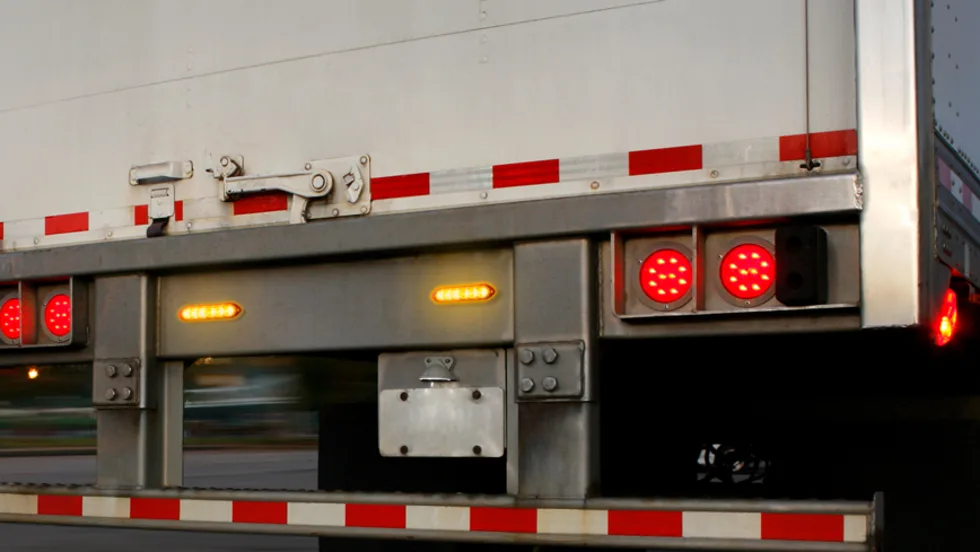
Pulsing Back-of-Trailer Lamps Aim to Prevent Crashes
Can the addition of a pulsing brake lamp on the back of a trailer prevent rear-end collisions? FMCSA seems to think so, if its exemptions are any indication.
Read More →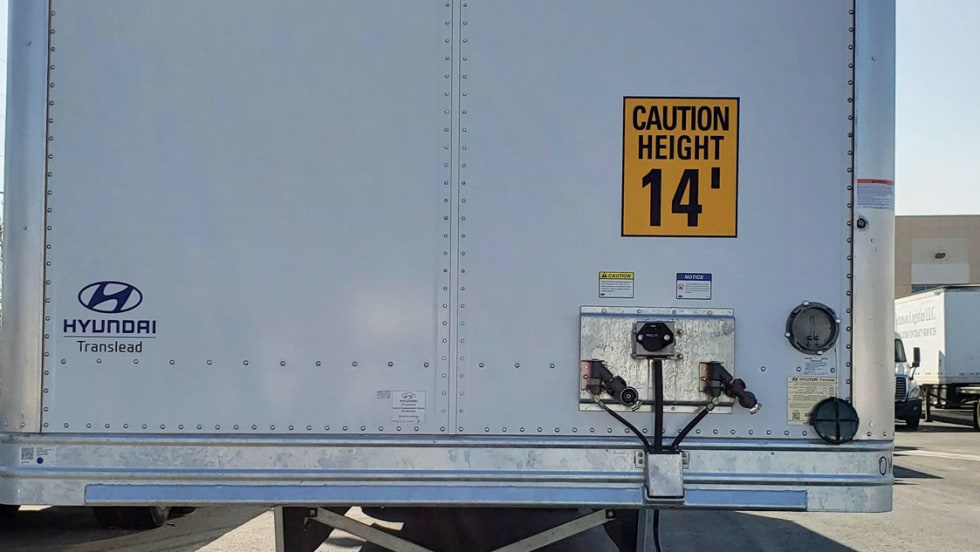
Designing a 14-Foot Trailer
Trailers are 13 feet, 6 inches high, right? Not for Hub Group, which developed a special 14-foot-high trailer spec for a dedicated customer based in California. Learn more in the Trailer Talk blog.
Read More →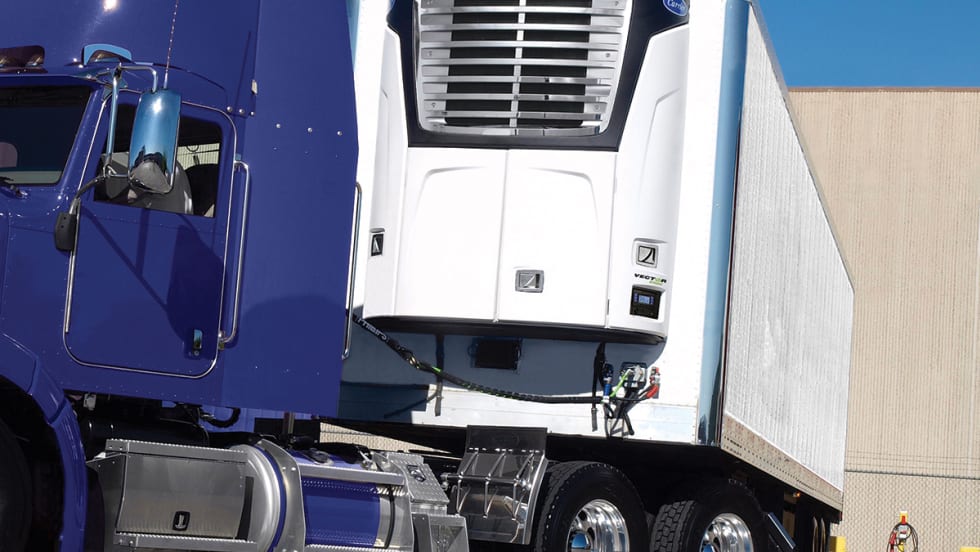
CARB Comes for Reefer Trailers
A new round of emissions control regulations decreed by the California Air Resource Board will begin affecting refrigerated trailer and TRU design and operations next year.
Read More →
5 Ways Data Analysis Maximizes the Value of Trailer Telematics
Are you getting the most out of your trailer telematics investment?
Read More →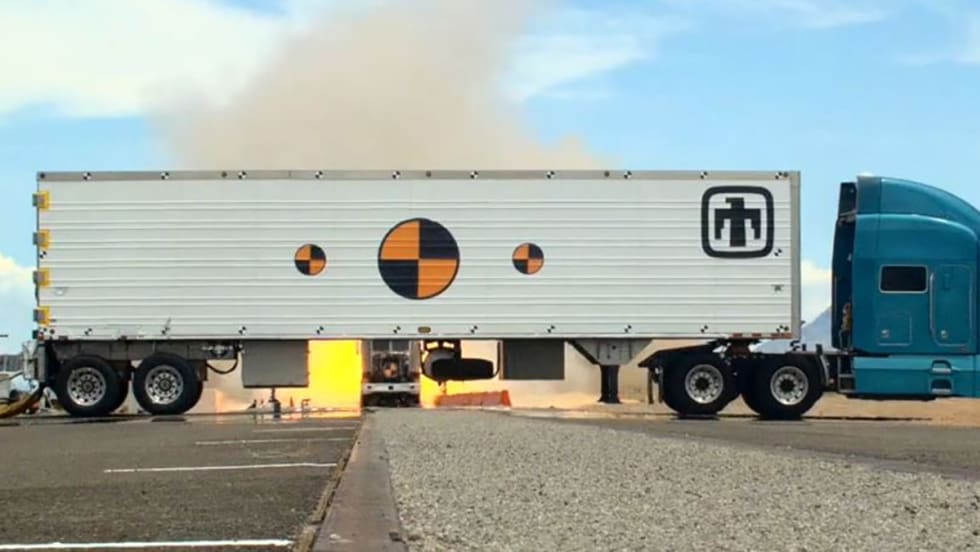
Can You Guess What's in That Trailer?
You don’t always know what’s in the trailers that pass you on the road. But some of those trailers are carrying something a little more dangerous that frozen food or new bedding…like, maybe, a nuclear weapon. But this isn’t an ordinary trailer; this is a trailer specifically made to not only carry this type of payload, but protect it at all costs.
Read More →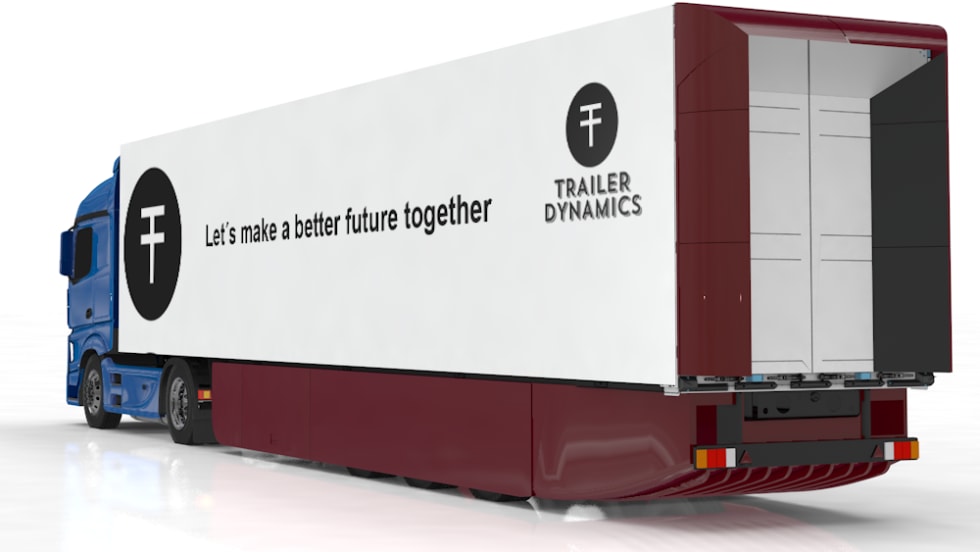
How Trailers Are Harnessing 'Free' Energy
Can trailers play a more active role in sustainable transport beyond aerodynamic add-ons or low-rolling-resistance tires? Some companies think so.
Read More →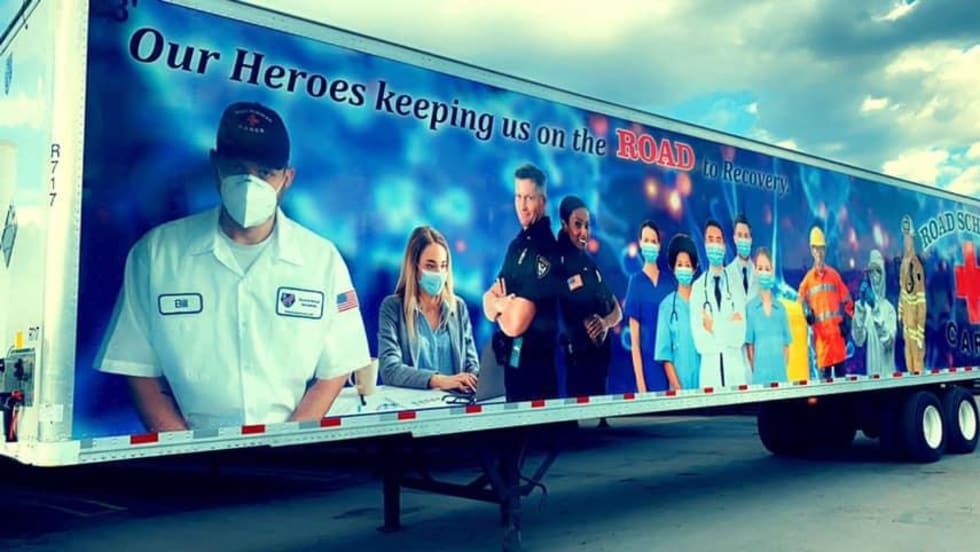
Wrapping a Trailer for COVID’s Everyday Heroes
“We don’t only deliver freight. We deliver awareness.” That’s what Jim Barrett, president and CEO of Road Scholar Transport, likes to say about the Dunmore, Pennsylvania-based carrier’s “awareness fleet.” Its latest trailer wrap honors the everyday heroes of the pandemic.
Read More →
How a Tanker Fleet is Using Unorthodox Trailer Lighting to Fight Rear-End Collisions
Groendyke Transport watched the number of rear-end collisions with its trailers rise steadily until it tried an unorthodox and then unapproved method of alerting following drivers that its trucks were applying brakes and slowing down.
Read More →
The Role Trailers are Playing in COVID-19 Funerals
In places such as New York City and Detroit, overwhelmed hospitals and mortuaries are using refrigerated trailers to store the bodies of people killed by COVID-19.
Read More →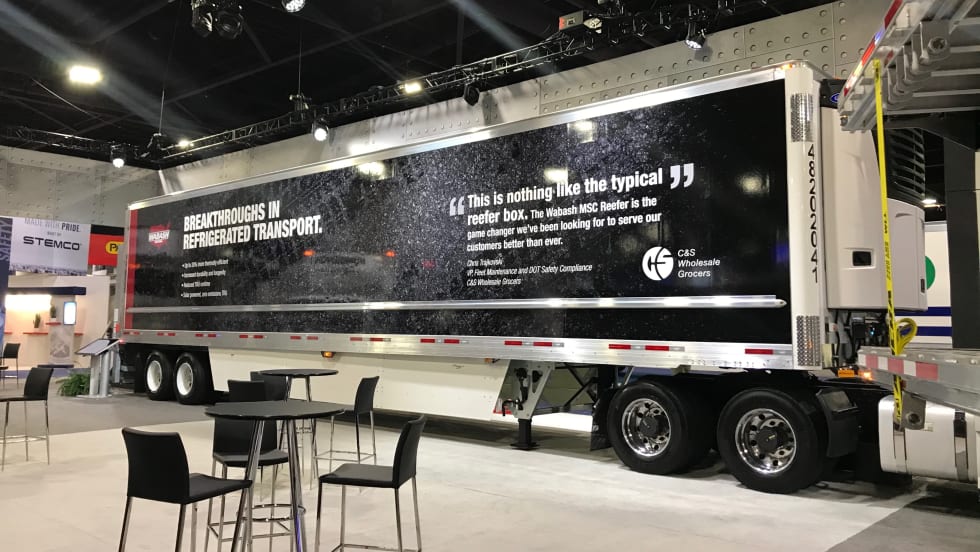
Reefer Trailer Aims to Help Reach Zero Emissions
Wabash National is partnering with C&S Wholesale Grocers to test a new type of zero-emissions refrigerated trailer.
Read More →